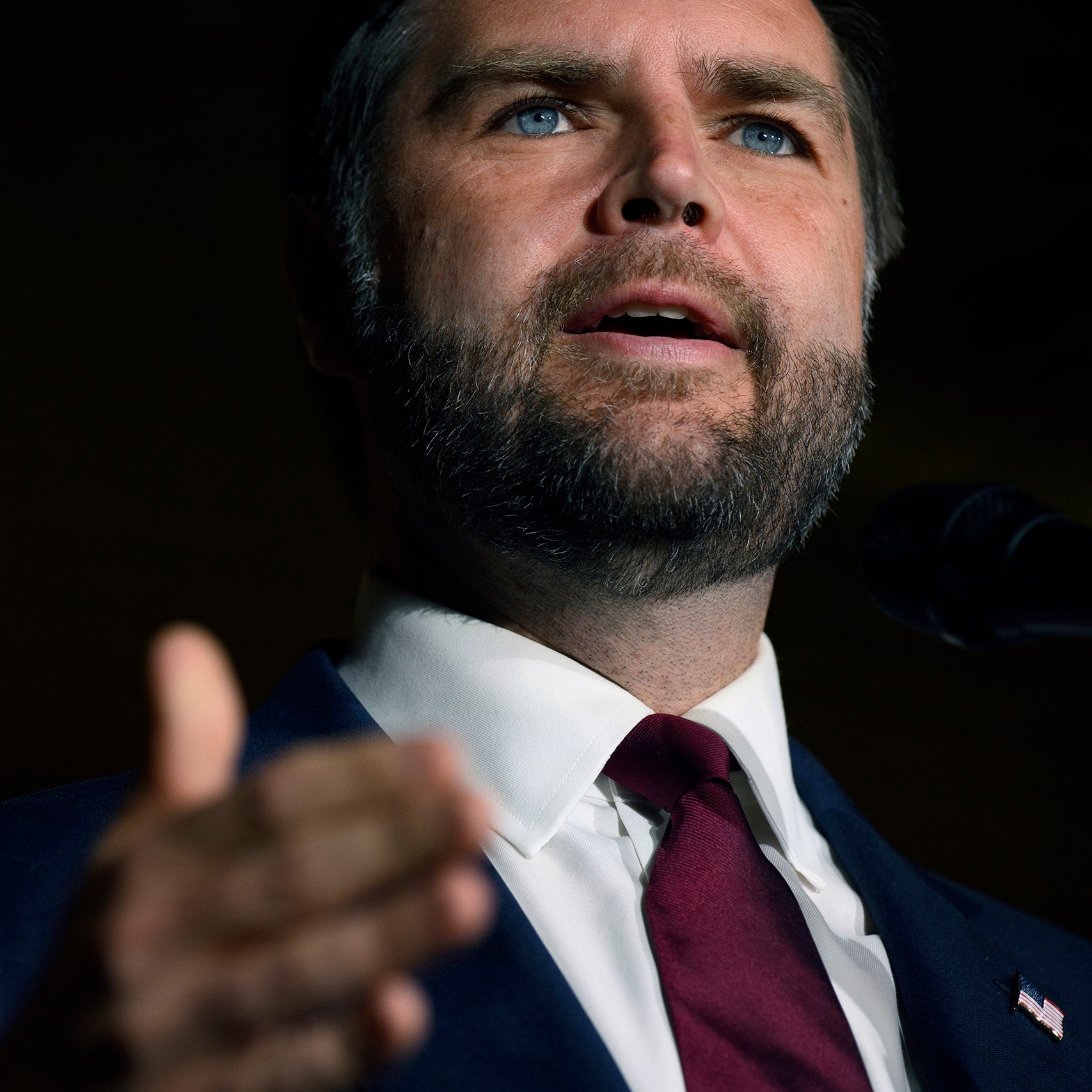
레이블이 J. D. Vance인 게시물을 표시합니다. 모든 게시물 표시

2026년 7월 13일 월요일

이병한의 어메리카 탐문에서 다루는 주제를 다루는 미국 책들

Post: Edit
이병한의 어메리카 탐문


이병한의 어메리카 탐문 책에서 다루는 주제를 다루는 미국 책들을 소개해주세요.
===

1. 피터 틸과 실리콘밸리 올리가르히의 실체를 해부한 책

<반골: 피터 틸과 실리콘밸리 올리가르히의 부상> (원제: The Contrarian: Peter Thiel and the Rise of the Silicon Valley Oligarchs / 맥스 차프킨 저)

  • 핵심 내용: <아메리카 탐문>의 가장 중추적인 사상적 대부인 피터 틸을 정면으로 다룬 본격 비평 전기다. 저자는 피터 틸이 어떻게 실리콘밸리의 극단적 자유주의를 넘어 워싱턴의 권력 중심부로 진입했는지를 추적한다. 특히 그가 후원한 정치적 제자 J.D. 밴스와의 관계, 도널드 트럼프 진영과의 결탁 과정을 치밀하게 폭로하며 기술 자본이 어떻게 미국의 민주주의 체제를 막후에서 흔들고 있는지 보여준다.

2. 신우파와 기술 권위주의의 사상적 뿌리를 추적한 책

<신우파: 미국 정치의 변두리로 떠나는 여행> (원제: The New Right: A Journey to the Fringe of American Politics / 마이클 말리스 저)

  • 핵심 내용: 기존의 온건한 보수주의와 결별하고 미국 정치를 뒤흔들고 있는 '신우파(New Right)' 운동의 사상적 지형을 내부자적 시각에서 기록한 책이다. 인터넷 트롤, 가속주의자, 테크노-아나키스트, 그리고 피터 틸 등이 영감을 받은 신재반동주의(Neo-reactionary) 사상이 어떻게 미국의 주류 정치 체제를 붕괴시키려 하는지 그 계보를 상세히 탐구한다.

3. 빅데이터와 AI 기술이 국가 권력과 결합한 감시 사회를 고발한 책

<테크 쿠데타: 실리콘밸리로부터 어떻게 민주주의를 구할 것인가> (원제: The Tech Coup: How to Save Democracy from Silicon Valley / 마리etje 샤케 저)

  • 핵심 내용: 알렉스 카프의 팔란티어로 대변되는 빅데이터, AI 기술 기업들이 어떻게 국가의 고유 기능(안보, 정보 감시, 행정)을 잠식하고 있는지를 다룬다. 저자는 거대 테크 기업들이 단순한 비즈니스를 넘어 사실상 선출되지 않은 권력으로서 대중을 지배하는 '테크 쿠데타'를 감행하고 있다고 경고하며, 이 독점적 기술 권력이 민주적 법치주의를 어떻게 훼손하는지 날카롭게 비판한다.

4. 러스트 벨트의 절망과 신우파 정치의 탄생을 알린 고전

<힐빌리의 노래> (원제: Hillbilly Elegy / J.D. 밴스 저)

  • 핵심 내용: <아메리카 탐문>에서 신우파 정치의 기수로 등장하는 J.D. 밴스 본인의 자전적 에세이다. 백인 하층 노동자 계급의 문화적 붕괴와 절망을 생생하게 증언한 이 책은, 왜 미국의 소외된 대중이 기존 민주당 엘리트의 자유주의 노선에 분노하고 일론 머스크나 피터 틸 같은 기술 영웅, 그리고 포퓰리즘 정치에 열광하게 되었는지를 이해할 수 있는 감정적·사회적 배경을 제공한다.

이 책들은 실리콘밸리의 압도적인 기술력이 미국의 쇠락한 노동자 계급의 정치적 분노와 결합하여 어떻게 팍스 아메리카나의 새로운 질서를 재편하고 있는지 다각도로 조망할 수 있는 텍스트들이다.

세진님, 소개된 책들 중에서 특별히 관심이 가거나 저자의 사상적 배경을 더 자세히 알고 싶은 도서가 있으신가요?

===

이병한의 <아메리카 탐문>과 가장 가까운 미국 책들은 크게 세 종류로 나뉩니다.

첫째는 피터 틸·머스크·팔란티어 같은 인물을 직접 추적하는 책, 

둘째는 이들이 공유하는 신우파·포스트리버럴 사상을 설명하는 책, 

셋째는 기술기업과 국가권력의 결합을 비판적으로 분석하는 책입니다.

1. 가장 먼저 읽을 책

1) Max Chafkin, <The Contrarian: Peter Thiel and Silicon Valley’s Pursuit of Power>

맥스 채프킨, <반대자―피터 틸과 실리콘밸리의 권력 추구>, 2021

<아메리카 탐문>과 가장 직접적으로 겹치는 책입니다. 피터 틸의 성장 과정, 페이팔과 팔란티어 창업, 실리콘밸리 인맥, 트럼프와 J.D. 밴스에 대한 정치적 후원을 추적합니다.

특히 이 책은 틸을 독특한 기업가 한 사람이 아니라 실리콘밸리의 경제권력을 정치권력으로 전환시킨 조직가로 묘사합니다. 틸이 자유시장주의자이면서도 경쟁보다 독점을 선호하고, 개인의 자유를 말하면서 민주주의에는 회의적이라는 모순도 잘 보여줍니다. 출판사는 이 책을 틸의 전기인 동시에 실리콘밸리의 성장과 권력을 분석한 책으로 소개합니다.

이병한의 책이 틸의 사상을 비교적 문명사적으로 해석한다면, 채프킨은 취재와 인물 추적을 통해 그 권력이 실제로 형성된 과정을 보여줍니다.

<추천도: 최우선>


2) Jacob Silverman, <Gilded Rage: Elon Musk and the Radicalization of Silicon Valley>

제이컵 실버먼, <도금된 분노―일론 머스크와 실리콘밸리의 급진화>, 2025

머스크 개인의 전기라기보다 실리콘밸리 억만장자들이 어떻게 자유주의적·세계시민적 이미지를 버리고 우파 정치와 결합했는지를 분석합니다.

저자는 저금리 시대에 막대한 부를 축적한 기술기업가들이 자신을 인류의 구원자로 여기게 되었고, 그 자기신화가 정치적 극단주의로 발전했다고 봅니다. 머스크뿐 아니라 피터 틸, 마크 앤드리슨 등 기술 엘리트 집단 전체를 다룬다는 점에서 <아메리카 탐문>의 문제의식과 매우 가깝습니다.

다만 이병한이 이들의 미래 구상에 일정한 지적 관심과 매혹을 보인다면, 실버먼은 훨씬 더 비판적입니다. 두 책을 함께 읽으면 균형이 맞습니다.

<추천도: 최우선>


3) Alexander C. Karp and Nicholas W. Zamiska, <The Technological Republic: Hard Power, Soft Belief, and the Future of the West>

알렉산더 카프·니컬러스 자미스카, <기술공화국―하드파워, 신념 그리고 서구의 미래>, 2025

팔란티어 CEO 알렉스 카프가 직접 자신의 사상을 설명한 책입니다. 따라서 외부 관찰이 아니라 <아메리카 탐문>에 등장하는 주인공의 선언문에 해당합니다.

카프는 실리콘밸리가 광고, 쇼핑, 소셜미디어처럼 소비자의 편의를 높이는 기술에 몰두하면서 국가안보, 국방, 우주, 공공 인프라 같은 거대한 과제를 외면했다고 비판합니다. 미국과 서구가 인공지능 군비경쟁에서 살아남으려면 기술기업이 정부 및 군대와 적극 협력해야 한다고 주장합니다.

이 책의 핵심은 다음과 같습니다.

<기술은 중립적이지 않으며, 기술자는 자신이 지키려는 문명과 국가를 선택해야 한다.>

이는 <아메리카 탐문>에서 설명한 ‘실리콘밸리와 군산복합체의 결합’을 당사자의 언어로 확인하게 해줍니다. 그러나 카프가 자유민주주의를 지키기 위해 감시기술과 군사적 인공지능을 강화해야 한다고 주장한다는 점에서 심각한 역설이 생깁니다.

<추천도: 최우선>


4) Michael Steinberger, <The Philosopher in the Valley: Alex Karp, Palantir, and the Rise of the Surveillance State>

마이클 스타인버거, <실리콘밸리의 철학자―알렉스 카프, 팔란티어와 감시국가의 부상>, 2025

카프와 팔란티어를 외부에서 조사한 전기적 탐사서입니다. 카프의 철학적 배경과 팔란티어의 창업 과정, 정보기관·군대·경찰·이민 단속기관과의 관계를 다룹니다.

<The Technological Republic>가 카프의 자기변론이라면, 이 책은 그 자기변론이 가리는 감시와 권력의 문제를 드러냅니다. 팔란티어가 국가의 행정능력을 높이는 동시에 시민을 추적·분류·예측의 대상으로 만드는 과정을 살펴보기에 좋습니다.

두 책은 반드시 짝으로 읽을 필요가 있습니다.

  • 카프의 주장: <기술로 서구 민주주의를 방어한다>
  • 스타인버거의 질문: <그 기술이 민주주의를 감시국가로 바꾸지는 않는가>

<추천도: 매우 높음>

2. J.D. 밴스와 포스트리버럴 신우파를 이해하는 책

5) Patrick J. Deneen, <Why Liberalism Failed>

패트릭 드닌, <왜 자유주의는 실패했는가>, 2018

J.D. 밴스와 미국의 포스트리버럴 우파를 이해하는 데 가장 중요한 사상서입니다.

드닌은 자유주의가 외부의 적 때문에 실패한 것이 아니라 자유주의 자체의 논리를 충실히 실현했기 때문에 실패했다고 주장합니다. 개인의 자유를 극대화한 결과 공동체, 가족, 종교, 지역문화가 약화되었고, 자유시장은 오히려 극심한 불평등과 거대한 관료국가를 낳았다는 것입니다.

밴스가 왜 전통적인 공화당의 작은 정부·자유시장 노선에서 벗어나 산업정책, 가족보호, 제조업 부흥, 이민 제한을 주장하는지 이해하려면 이 책이 필요합니다.

다만 드닌은 자유주의의 병폐를 예리하게 지적하지만, 자유주의 이후의 질서에서 개인의 권리와 소수자를 어떻게 보호할지는 불분명합니다.

<추천도: 필독>


6) Patrick J. Deneen, <Regime Change: Toward a Postliberal Future>

패트릭 드닌, <체제 전환―포스트리버럴 미래를 향하여>, 2023

<Why Liberalism Failed>이 자유주의에 대한 진단이라면, <Regime Change>는 그 이후의 정치질서를 제안하는 책입니다.

드닌은 기존의 자유주의 엘리트를 새로운 ‘공익 중심의 엘리트’로 교체해야 한다고 주장합니다. 시장과 국가를 모두 가족, 공동체, 노동, 종교적 가치에 봉사하도록 재편해야 한다는 것입니다.

제목의 ‘체제 전환’은 선거를 통한 단순한 정권교체가 아니라 국가를 지배하는 가치와 계급의 교체를 뜻합니다. 이 점에서 이 책은 <아메리카 탐문>이 묘사한 새로운 미국 우파의 정치적 야심을 가장 노골적으로 보여줍니다.

다만 누가 ‘공익’을 정의하며, 새로운 엘리트가 기존 엘리트보다 더 민주적이라는 보장이 있는지는 여전히 의문입니다.


7) J.D. Vance, <Hillbilly Elegy: A Memoir of a Family and Culture in Crisis>

J.D. 밴스, <힐빌리의 노래>, 2016

이 책은 밴스의 현재 정치사상을 직접 설명하지는 않습니다. 그러나 밴스가 자신의 정치적 기반으로 삼은 러스트벨트 백인 노동계층의 빈곤, 약물중독, 가족해체, 지역공동체 붕괴를 이해하는 출발점입니다.

중요한 점은 이 책이 처음 출간되었을 때는 가난을 개인의 책임과 문화적 문제로 설명하는 보수적 회고록으로 읽혔지만, 밴스가 이후에는 자유무역·금융세계화·산업 공동화에 대한 구조적 비판으로 이동했다는 것입니다. 밴스의 정치적 급진화와 변신 자체가 미국 신우파의 변화를 보여줍니다.


8) Michael Lind, <The New Class War: Saving Democracy from the Managerial Elite>

마이클 린드, <신계급 전쟁―관리자 엘리트로부터 민주주의 구하기>, 2020

미국 정치의 대립을 단순히 좌파와 우파가 아니라 ‘관리자 엘리트’와 노동계급의 충돌로 설명합니다.

린드가 말하는 관리자 엘리트는 대기업, 금융기관, 대학, 언론, 전문직, 관료조직을 장악한 고학력 계층입니다. 이들은 자유무역과 이민, 세계화를 지지하면서 그 비용을 지방과 노동계급에 전가했다고 봅니다.

이 책은 밴스의 러스트벨트 정치와 틸의 반관료주의가 왜 결합할 수 있었는지를 설명합니다. 다만 억만장자 기술기업가가 어떻게 반엘리트 운동의 지도자가 될 수 있는가라는 모순은 충분히 해결하지 못합니다.

3. 기술기업과 국가권력의 결합을 비판하는 책

9) Shoshana Zuboff, <The Age of Surveillance Capitalism>

쇼샤나 주보프, <감시 자본주의 시대>, 2019

구글·페이스북 같은 플랫폼 기업이 인간의 행동을 데이터로 수집하고, 이를 예측하고 조종할 수 있는 상품으로 바꾸었다고 분석합니다.

팔란티어를 직접 중심에 놓지는 않지만, 개인의 경험이 데이터 원료가 되고 기업이 인간의 행동을 수정하는 권력을 갖게 되는 과정을 이론적으로 설명합니다.

카프가 국가안보를 위해 데이터를 통합해야 한다고 주장한다면, 주보프는 바로 그러한 데이터 권력이 민주적 통제를 벗어날 때 어떤 사회가 만들어지는지를 경고합니다.


10) Yasha Levine, <Surveillance Valley: The Secret Military History of the Internet>

야샤 러빈, <감시의 계곡―인터넷의 숨겨진 군사사>, 2018

인터넷이 원래부터 자유와 탈중앙화를 위해 만들어졌다는 실리콘밸리의 신화를 비판합니다.

저자는 인터넷의 기원이 미국 국방부와 군사적 정보처리 사업에 있으며, 구글과 같은 민간 플랫폼과 국가 감시기관의 관계도 단절된 적이 없다고 주장합니다. 팔란티어와 미국 군산기술 체제의 역사적 뿌리를 이해하는 데 매우 유용합니다.

<아메리카 탐문>이 최근의 ‘기술기업과 국가의 재결합’을 강조한다면, 러빈은 애초에 둘이 완전히 분리된 적이 없었다고 말합니다.


11) Kashmir Hill, <Your Face Belongs to Us>

캐시미어 힐, <당신의 얼굴은 우리의 것이다>, 2023

얼굴인식 기업 클리어뷰 AI가 인터넷에서 수십억 장의 얼굴사진을 수집하고 이를 경찰과 기업에 제공한 과정을 추적합니다.

팔란티어와 동일한 기업을 다루지는 않지만, 작은 기술기업이 법률과 공적 토론보다 앞서 대규모 감시 체계를 구축하는 과정을 생생하게 보여줍니다. 출판사는 이 책을 얼굴인식 기술이 법집행기관과 기업에 제공되면서 사생활 자체를 위협한 사건의 기록으로 설명합니다.

추상적인 이론보다 실제 사례를 선호한다면 주보프보다 읽기 쉽습니다.

4. 기술 엘리트가 꿈꾸는 미래를 내부에서 읽는 책

12) Peter Thiel with Blake Masters, <Zero to One>

피터 틸·블레이크 매스터스, <제로 투 원>, 2014

일반적으로 창업서로 알려져 있지만, 사실 틸의 정치철학을 이해하는 기초 문헌입니다.

틸은 경쟁을 자본주의의 미덕으로 보지 않습니다. 경쟁은 모두를 비슷하게 만들고 수익을 소모시키므로, 진정한 혁신기업은 독점을 만들어야 한다고 주장합니다. 그는 합의보다 독창성, 다수의 판단보다 소수 창업자의 통찰을 높이 평가합니다.

이 사고방식을 정치에 적용하면 다음과 같은 결론으로 이어질 수 있습니다.

<민주적 경쟁과 토론보다 뛰어난 설계자의 장기적 결단이 중요하다.>

따라서 이 책은 창업 안내서이면서 틸의 엘리트주의적 세계관을 압축한 책입니다.


13) Balaji Srinivasan, <The Network State: How to Start a New Country>

발라지 스리니바산, <네트워크 국가―새로운 나라를 시작하는 방법>, 2022

온라인 공동체가 암호화폐와 디지털 기술로 조직된 뒤 토지를 매입하고, 궁극적으로 기존 국가와 동등한 외교적 승인을 받는 ‘네트워크 국가’를 만들자는 구상입니다.

이 책은 국가를 역사적 공동체나 민주적 공화국이라기보다 창업할 수 있는 플랫폼으로 봅니다. 시민은 구성원 또는 이용자가 되고, 창업자는 사실상 건국자가 됩니다.

피터 틸 계열의 ‘국가 탈출’, 민간도시, 암호화폐 공동체, 기술 엘리트 통치라는 상상력을 이해하는 데 중요합니다. 동시에 민주주의를 소비자의 선택이나 플랫폼 가입으로 대체하려는 위험도 보여줍니다.

5. 제가 권하는 독서 순서

<아메리카 탐문>의 내용을 더 깊게 이해하려면 다음 순서가 좋습니다.

  1. <The Contrarian>
  2. <Gilded Rage>
  3. <The Technological Republic>
  4. <The Philosopher in the Valley>
  5. <Why Liberalism Failed>
  6. <Regime Change>
  7. <The New Class War>
  8. <Surveillance Valley>
  9. <The Age of Surveillance Capitalism>

이 가운데 세 권만 고른다면 다음 조합이 가장 좋습니다.

  • 인물과 권력: <The Contrarian>
  • 당사자의 선언: <The Technological Republic>
  • 비판적 종합: <Gilded Rage>

결국 <아메리카 탐문>의 주제는 단순히 ‘괴짜 억만장자 네 명’이 아닙니다. 더 큰 질문은 이것입니다.

<민주주의 국가의 미래를 시민과 의회가 아니라 기술기업가, 벤처투자가, 데이터 분석가와 새로운 보수 엘리트가 설계하게 되는가?>

위의 책들은 각각 그 변화의 내부 논리, 사회적 기반, 기술적 수단, 민주주의적 위험을 서로 다른 방향에서 보여줍니다.

2026년 4월 14일 화요일

Vance Says Pope Leo Should Stay Out of U.S. Affairs - The New York Times

Vance Says Pope Leo Should Stay Out of U.S. Affairs - The New York Times


Vance Says Pope Leo Should Stay Out of U.S. Affairs

The vice president, a Catholic, defended President Trump, who had accused the pope of being too liberal and “weak on crime.” The pontiff has said that he has “no fear of the Trump administration.”

Listen · 4:57 min

Share full article


Vice President JD Vance in Pakistan on Sunday.Credit...Pool photo by Jacquelyn Martin


By Chris Cameron


Reporting from Washington
April 13, 2026

Vice President JD Vance, the highest-ranking Catholic in the federal government, said in an interview on Fox News on Monday that the pope should stay out of American affairs.

Mr. Vance, a convert to Catholicism who is about to publish a book detailing his turn to the faith, brushed off a backlash among Christians across the political spectrum to President Trump’s attacks against Pope Leo XIV. He said “that in some cases it would be best for the Vatican to stick to matters of morality.” Mr. Trump has clashed with the pontiff over matters of war and immigration, and on Sunday attacked him as “weak on crime.”

“Stick to matters of, you know, what’s going on in the Catholic Church,” Mr. Vance said on Fox News’s “Special Report with Bret Baier” when asked by Mr. Baier if he agreed with Mr. Trump’s attacks against the pope. “And let the president of the United States stick to dictating American public policy.” He added: “When they are in conflict, they are in conflict. I don’t worry about it too much.”

He continued: “I think it’s a natural thing. I’m sure it will happen in the future and it’s not that big of a deal that it happened in the past.”


Mr. Vance converted to Catholicism in 2019 at age 35, after private instruction with Dominican friars in Cincinnati. But his newfound faith has come with complications, as his views, particularly on immigration, have prompted strong denunciations from leaders in the Vatican and are in opposition to the priorities set by Leo, the first American pope.

Senior leaders in the American Catholic Church have also openly criticized the Trump administration and opposed the mass deportation of immigrants. In one high-profile case, a Catholic group successfully sued for the right to give communion to detained migrants, after they had been denied access for months.

In a joint interview of three American cardinals on CBS’s “60 Minutes” that aired on Sunday, one, Robert McElroy, the archbishop of Washington, said that “under Catholic teaching,” the U.S. war with Iran was “not a just war.” Another, Blase Cupich, the archbishop of Chicago, said that the Trump administration’s messaging, which has portrayed the conflict as gleeful entertainment, was also “dehumanizing the victims of war.”

The clash between Mr. Trump and the Vatican came just days after Mr. Vance and a team of American diplomats failed to reach a peace deal with Iran amid a cease-fire in the conflict. Leo is one of the world’s most powerful critics of the U.S. war with Iran, and has sharply disagreed with suggestions from the Trump administration that the war has divine sanction.

In a recent homily, Leo said that the Christian mission had often been “distorted by a desire for domination, entirely foreign to the way of Jesus Christ.”


AdvertisementSKIP ADVERTISEMENT


Mr. Vance, who has often viciously attacked critics in much the same manner as Mr. Trump, offered a diplomatic tone as he spoke of Leo. “I think it’s a good thing, actually, that the pope is advocating for the things that he cares about,” the vice president said, adding: “We’re also going to disagree on substantive questions from time to time. I think that’s a totally reasonable thing.”

The vice president’s suggestion that Leo “stick to matters of morality” is also a notable distinction. Being a Roman Catholic requires acknowledgment of and adherence to the pope’s authority over the church, but not his political views. President John F. Kennedy, defending his Catholic faith during his 1960 presidential campaign, said that he believed in an America “where no public official either requests or accepts instructions on public policy from the pope.”

The president’s social media tirade against Pope Leo on Sunday night accused him of being too liberal, “weak on crime,” and “terrible for foreign policy.” He even falsely claimed credit for the pope’s election.

Leo, speaking on Monday at the start of a trip to Africa, told reporters he had “no fear of the Trump administration.” He added that he was not afraid of “speaking out loudly about the message of the Gospel, which is what I believe I am here to do.”

Mr. Vance was also asked about the president’s posting of an A.I.-generated image that depicted him as a Jesus-like figure, said that the president “was posting a joke.” Mr. Trump, speaking at the White House, told reporters that he had deleted that post, and Mr. Vance said that was done because Mr. Trump “recognized that a lot of people weren’t understanding his humor in that case.”


Earlier, Mr. Trump, in an interview with CBS News, said that he had meant the post to portray him as a doctor.

“I viewed that as a picture of me being a doctor in fixing — you had the Red Cross right there, you had, you know, medical people surrounding me,” Mr. Trump said in that interview. “And I was like the doctor, you know, as a little fun playing the doctor and making people better. So that’s what it was viewed as. That’s what most people thought.”


Chris Cameron is a Times reporter covering Washington, focusing on breaking news and the Trump administration.
See more on: Donald Trump, JD Vance

2025년 3월 26일 수요일

J. D. Vance’s Sad, Strange Politics of Family | The New Yorker

J. D. Vance’s Sad, Strange Politics of Family | The New Yorker

J. D. Vance’s Sad, Strange Politics of Family
The Vice-Presidential candidate’s memoir reveals the roots of his ideas about parents, children, and who should run the country.
By July 25, 2024


J. D. Vance, with his son, greets supporters in Ohio, during Vance’s Senate campaign in 2022.Photograph by Drew Angerer / Getty

Save this story


Bonnie Blanton was thirteen years old in 1946, when she became pregnant by her soon-to-be husband, Jim Vance, who was three years older. They lived in a town called Jackson, in hardscrabble Appalachian Kentucky. To get away from Bonnie’s possibly vengeful family, and to improve their economic prospects, the young couple moved to Middletown, a thriving steel center in Ohio, where Jim got an excellent union job—when he retired, he did so with stock and a pension—and a four-bedroom house. But their baby, a girl, lived less than a week. On the infant’s birth certificate, Bonnie lied about her age to keep Jim out of jail.

In the best-selling 2016 memoir “Hillbilly Elegy: A Memoir of Family and Culture in Crisis,” Bonnie and Jim’s grandchild J. D. Vance portrays Bonnie’s pregnancy as a fulcrum in a generational saga. “Without the baby, would she have ever left Jackson?” Vance asks. His grandmother’s “entire life—and the trajectory of our family—may have changed for a baby who only lived six days.” “Hillbilly Elegy” charts how Vance brushed off the last of whatever Kentucky coal dust still clung to his gray flannel suit jacket, launched himself through Yale Law School, and landed in a pile of Silicon Valley venture capital; within six years of its publication, he was the junior U.S. senator from Ohio. Bonnie, for her part, never completed middle school. She gave birth to three more children and suffered eight miscarriages.

Vance speculates in “Hillbilly Elegy” that extreme domestic strife may have caused some of Bonnie’s pregnancy losses: Jim was a “violent drunk,” whereas Bonnie was a “violent nondrunk.” “I can’t help but wonder how many additional aunts and uncles I’d have today without my grandparents’ difficult early transition, no doubt intensified by Papaw’s years of hard drinking,” Vance writes. Tied to a no-good husband, far from her family and friends back in Kentucky, Bonnie was miserable. “Mamaw had little help when the children were young and required constant supervision, and she had nothing else to do with her time,” her grandson explains. “Decades later she would remember how isolated she felt in the slow suburban crawl of midcentury Middletown.” The house fell into awful disarray; Bonnie began hoarding. On one occasion, she split Jim’s forehead open with a vase. On another, she set him on fire. One of her kids—who was then eleven years old—snuffed out the flames.


Get the News & Politics newsletter
The latest from Washington and beyond, covering current events, the economy, and more, from our columnists and correspondents.


Sign up
By signing up, you agree to our user agreement (including class action waiver and arbitration provisions), and acknowledge our privacy policy.

Vance’s mother, Bev, raised amid violence, chaos, and alcohol, raised her own children amid violence, chaos, drugs, and strange men. But, by the time Vance was growing up, Jim had quit drinking and reached something of a cranky equanimity with Bonnie. The aging couple was able to provide the boy with a refuge from the tsunami of Bev’s addictions and frightening explosions and her revolving door of husbands and boyfriends, whose presence (or sudden absence) only compounded the volatility of young J. D.’s home life. Vance dedicates “Hillbilly Elegy” to his grandparents, who were, he writes, “without question or qualification, the best things that ever happened to me.” In his speech at the Republican National Convention, in which Vance accepted his party’s nomination as Vice-President, he referred to Bonnie as “a guardian angel by my side.” Perhaps to bolster his Second Amendment bona fides, he shared an affectionate anecdote about the nineteen loaded handguns that Mamaw kept scattered around her house. “That’s who we fight for, that’s the American spirit,” he said.
Advertisement


Vance concedes in “Hillbilly Elegy” that “Mamaw and Papaw may have failed Bev in her youth.” But, he adds, “they spent the rest of their lives making up for it.” He may see his mother on the same redemptive path; during his R.N.C. speech, he proudly introduced Bev—“ten years clean and sober”—to the audience, who gave her a warm ovation. In his memoir, Vance’s understandable anger at Bev is palpable, even if, in other passages, he acknowledges that he and his mother and her mother are all inheritors of generational trauma. In one key respect, though, Vance’s mother broke with her inheritance, and this departure at once brings her son’s politics into focus and explains why he chose to portray her calamitously incompetent parents as the heroes of his bootstrapping, career-making, only-in-America narrative: Mamaw and Papaw stayed married, and Mom didn’t.

It’s possible that, if J. D. Vance had his way, citizenship in the United States would be conferred not solely by birthright but by marriage and children. He has spoken admiringly of efforts made by Hungary’s far-right Prime Minister, Viktor Orbán, to boost his nation’s marriage and birth rates, including a policy that offers subsidized loans to couples who wed before the bride’s forty-first birthday: if the couple has two kids, a third of the loan is forgiven; if they have three kids, the loan is zapped entirely. “Why can’t we do that here?” Vance asked in a speech during his Senate campaign, in 2021. “Why can’t we actually promote family formation?” To this end, Vance also saw a lever to pull inside the voting booth. “When you go to the polls in this country, as a parent, you should have more power,” he said. “You should have more of an ability to speak your voice in our democratic republic than people who don’t have kids.”

It was immediately apparent that, for Vance, fertility is a Republican. He lamented the “childless left,” who have no “physical commitment to the future of this country.” In conversation with Tucker Carlson, he despaired that the U.S. was run by “a bunch of childless cat ladies who are miserable at their own lives and the choices that they’ve made, and so they want to make the rest of the country miserable, too.” Vance cited several Democrats as having no meaningful interest in the nation’s continued prosperity, including Vice-President Kamala Harris, who is now the presumptive Democratic nominee for President, and whose stepchildren famously call her Mamala. (Vance is not alone in his natalist spin on qualifications for holding public office. The day that President Joe Biden announced he would not seek reëlection, the conservative activist and attorney Will Chamberlain posted to X a “simple, underdiscussed reason why Kamala Harris shouldn’t be president”: “No children.”)


Video From The New Yorker

The Epic Promise of Wedding Vows


Vance also mentioned Alexandria Ocasio-Cortez, the congresswoman from New York (who, at the time of Vance’s comments, was younger than Vance was when he had his first child), and Pete Buttigieg, the Secretary of Transportation, who has since had twins with his husband. Buttigieg, alas, is probably not forming a family to Vance’s liking, as the senator has indicated his opposition to same-sex marriage. Vance also voted against a bill insuring access to in-vitro fertilization—another means of family formation—which is in keeping with his hard-line anti-abortion stance. In a statement that was recently scrubbed from Vance’s Web site, he said, “Eliminating abortion is first and foremost about protecting the unborn, but it’s also about making our society more pro-child and pro-family.” About sixty per cent of women who seek abortions are mothers, and presumably pro the children they already have, but no matter.

The nativist, tariff-happy brand of economic populism that Vance espouses is exemplary of the New Right, the young conservative movement that sees itself as the heir to Trump’s MAGA throne. Vance’s policy portfolio is somewhat friendlier to working families than that of the typical establishment Republican, but, again and again, the flavor of his positions matches his particular taste in family. “If you work hard and play by the rules,” he has said, you should be able to “support a middle-class family on a single wage.” When he introduced a bill that would modestly expand provisions under the Family and Medical Leave Act, he called it the Fairness for Stay-at-Home Parents Act. He voiced support for the Missouri senator Josh Hawley’s 2021 plan to expand the child tax credit, which included a “marriage bonus” and catered to two-parent, single-income households. “Millions of working people want to start a family and would like to care for their children at home, but current policies do not respect these preferences,” Hawley said when the bill was introduced.


One of Vance’s spiciest takes on family-first policy appeared shortly before he announced his Senate candidacy, when he tweeted, “ ‘Universal day care’ is class war against normal people.” To support this provocation, he linked to a survey that presented parents with a range of child-care scenarios and asked which of them “would be best for their family while they have children under age 5.” Forty-four per cent of those without a four-year degree preferred that one parent work full time while the other care for the children at home; just thirty-five per cent of those with a college degree shared that preference. It was unclear whether Vance was defining “normal people” as those without a bachelor’s degree or those who offered what he believed to be the correct answer to this poll. Either way, “normal Americans,” he went on, “want a family policy that doesn’t shunt their kids into crap daycare.” An abnormal American, it follows, is somebody like Harris, who, in her first speech as the Democratic Presidential nominee, on July 22nd, imagined a country of the near future “where every person has access to paid family leave and affordable child care.”
Advertisement


There are close to a million day-care workers in the U.S., the vast majority of them women, most of them with a high-school education, virtually all of them underpaid. If Vance and others in power saw these workers as constituents deserving of higher wages and a brighter future, it would be more difficult for him to describe all day-care services as “crap.” But it would also contradict Vance’s essential ideological position. The text of his Fairness for Stay-at-Home Parents Act, for example, castigates the F.M.L.A. for “penalizing mothers who choose to prioritize their child’s early development” rather than returning to work after maternity leave. Normal people want their kids at home with one of their parents, and we all know which one.

In his acceptance speech at the R.N.C., Vance said, “Our movement is about single moms like mine who struggled with money and addiction but never gave up.” Of course, a person can be a single parent or a stay-at-home parent; it is exceedingly difficult to be both. One must choose. The survey that Vance cites as indicative of “normal” views about child care doesn’t include single parents at all. His movement is, nonetheless, “about” women like his mother, in the sense that it seems deeply motivated by what she didn’t give him, and by what Vance longed for most: a traditional nuclear family.

Marriage, in Vance’s rhetoric and policy stances, is almost always better than the alternative. Having a family makes you a sovereign adult and a political actor, but it is marriage alone that makes the family possible. In 2021, Vance told an audience of high-school students that the sexual revolution of the nineteen-sixties convinced people of the mistaken idea that ending imperfect marriages would improve people’s lives. Such marriages “were maybe even violent, but certainly they were unhappy, and so getting rid of them and making it easier for people to shift spouses like they change their underwear—that’s going to make people happier in the long term.” They were maybe even violent. Aptly, he invoked Bonnie and Jim. “My grandparents had an incredibly chaotic marriage in a lot of ways, but they never got divorced, right?” Vance said. “They were together to the end, ’til death do us part. That was a really important thing to my grandmother and my grandfather.” Vance also made the flabbergasting assertion that easier access to divorce causes domestic-violence rates to increase, which is patently false—in fact, the rate has been shown to decrease by thirty per cent. Appearing on “Morning Joe” to endorse Harris’s candidacy, Andy Beshear, the governor of Mamaw and Papaw’s home state of Kentucky, excoriated Vance for suggesting “that women should stay in abusive relationships.”

Did Mamaw stick it out with Papaw out of piety and Appalachian grit? Or was she just stuck? She had meagre education, no skills or training, little in the way of a social network, and, quite possibly, serious mental-health challenges. For about a decade, she was almost constantly pregnant, which can be physically and emotionally debilitating, and which was a fireable offense in the workplaces of that era. The state of Ohio effectively lacked any mechanism of child-support enforcement until 1975, when the youngest of her three kids was a teen-ager. A close read of Bonnie’s plight, incidentally, reveals striking similarities between Vance’s “guardian angel” and the ideal matriarch who emerges from his political platform. Their place is at home. Their job, which they have no choice whether to quit, is to have babies. Their entire material well-being is tied to one fallible man. It is clear, on a primal, emotional level, why Vance sees this as the better deal than what he got. But what results is a blinkered, grotesquely narcissistic vision of the social contract—an identity politics of one grown child. And it’s precisely this inability, or refusal, to see past one’s own subjectivity that allows Vance to write off a person such as Kamala Harris as having no stake in the country’s fortunes.

When Vance says that it was a baby who altered his family’s trajectory, it’s a sentimental flourish, a fillip of “Choose Life” romance. Another writer might have identified the agent of change as child abuse, or statutory rape, or limited access to contraception in postwar Appalachia. At some point during his upbringing, Vance writes, Bonnie entertained a vague notion of becoming a children’s-rights lawyer. “She seemed to feel the pain of neglected kids in a deeply personal way and spoke often of how she hated people who mistreated children,” he explains. “I never understood where this sentiment came from—whether she herself was abused as a child, perhaps, or whether she just regretted that her childhood had ended so abruptly. There is a story there, though I’ll likely never hear it.” But, in his own way, he’s been telling that story all along. ♦


New Yorker Favorites


The luxury liner that sailed into a hurricane.


A professor claimed to be Native American. Did she know she wasn’t?


Kanye West bought an architectural treasure—then gave it a violent remix.


Why so many people are going “no contact” with their parents.


Ina Garten and the age of abundance.


How a homegrown teen gang punctured the image of an upscale community.


Sign up for our daily newsletter to receive the best stories from The New Yorker.

Jessica Winter joined The New Yorker as an editor in 2017 and became a staff writer in 2024, covering family and education. She is the author of the novels “Break in Case of Emergency” and “The Fourth Child.”

2025년 3월 11일 화요일

The Story That “Hillbilly Elegy” Doesn’t Tell | The New Yorker

The Story That “Hillbilly Elegy” Doesn’t Tell | The New Yorker

The Story That “Hillbilly Elegy” Doesn’t Tell
Like many memoirs, J. D. Vance’s book misses a few details, some of which complicate the story upon which he has based much of his politics.
By August 16, 2024

Photograph by Jeff Swensen / Getty
Save this story


Last month, after I published an article about the Republican Vice-Presidential candidate J. D. Vance and his fixation on the traditional nuclear family, I received an e-mail from Donna Morel, an attorney in San Diego. Morel is a fact-checking hobbyist—notably, she exposed major fabrications in best-selling books by the late celebrity biographer C. David Heymann. After Donald Trump named Vance as his running mate, Morel had begun looking closely at “Hillbilly Elegy,” the 2016 memoir that brought Vance to national prominence and provided the springboard for his foray into politics. Morel suspected that the book was “a little too made for Hollywood,” she told me—in 2020, it was adapted into a movie starring Glenn Close and Amy Adams—and she wanted to see if her hunch was correct.


The Lede
Reporting and commentary on what you need to know today.

Vance, it must be stressed, is no C. David Heymann. Judging by what Morel has unearthed from the archives, Vance has blurred some details, perhaps unintentionally, in a manner that likely comports with most memoirs, especially those that rely heavily on family lore. Vance is careful to acknowledge spots in “Elegy” where he may not have all the facts in place; in the introduction, he writes, “I am sure this story is as fallible as any human memory.” Still, Morel has identified discrepancies and omissions that complicate the family narrative upon which Vance has based so much of his conservative politics and ideology. Some of what was left out of “Elegy” undermines Vance’s larger political project, in which matrimony and the nuclear family are the foundation of a civil society that stigmatizes divorce, single parenthood, same-sex marriage, and, of course, “childless cat ladies.”


“Two generations ago, my grandparents were dirt-poor and in love,” Vance writes toward the start of “Hillbilly Elegy.” “They got married and moved north in the hope of escaping the dreadful poverty around them.” Bonnie and Jim Vance, who are immortalized in “Elegy” as Mamaw and Papaw, left their Appalachian home town in Kentucky in their teens, eventually settling in Middletown, Ohio, where Jim got a union job at the Armco steel mill; tragically, their first child died in infancy. (“Without the baby, would she have ever left Jackson?” Vance asks in “Elegy.” His grandmother’s “entire life—and the trajectory of our family—may have changed for a baby who lived only six days.”) Vance describes Bonnie and Jim as “alone in their new city” and “isolated” from the family they felt closest to. He allows that Jim’s mother, Goldie, was “nearby,” but that Bonnie disliked her, and that she was “mostly a stranger to her own son.”

Morel dug up census records and other documents that add nuance to this tale. “Hillbilly Elegy” doesn’t name Jim’s stepfather, Julius Blackmon, who had worked at Armco for years before Jim was hired there. (“Applicants with a family member working at Armco would move to the top of the employment list,” Vance notes in his memoir, without making the connection.) Despite any disdain that Bonnie may have felt toward her mother-in-law, Bonnie and Jim lived with Jim’s mother and stepfather at two different residences following their move to Middletown, according to the census records. Uncle Jimmy’s birth announcement, in 1951, also shows the young couple living in the Blackmon home. When Bonnie and Jim did get their own place, it was less than a mile away. And, when Julius Blackmon died, Jim was named the executor of his estate—yet another data point that contradicts the picture of estrangement that Vance sketches in “Elegy.”

None of these findings destroys the portrait of two teen-agers leaving their lives behind in Appalachia and striking out to create a better life for themselves in the industrializing Midwest. But the surprising elisions work to exaggerate Bonnie and Jim’s circumstances, putting dents in Vance’s version of their plucky, up-by-the-bootstraps story.


Bonnie and Jim’s marriage was, at times, deeply troubled—in Vance’s telling, both of his grandparents were violent, and Jim was a vicious drunk. But Vance praises them in his memoir and elsewhere for sticking it out. Later in the marriage, Vance writes in “Elegy,” they “separated and then reconciled, and although they continued to live in separate houses, they spent nearly every waking hour together.” (The relationship seems to have improved immensely, Vance observes, after Jim Vance quit drinking, in 1983.) During a 2021 talk in which Vance discussed how divorce harms children, he suggested that, following the sexual revolution of the nineteen-sixties, too many couples in flawed marriages began falling back on divorce as an easy way out, and he offered up Mamaw and Papaw as an aspirational counterexample. His grandparents, he said, “had an incredibly chaotic marriage in a lot of ways, but they never got divorced, right? They were together to the end, ’til death do us part. That was a really important thing to my grandmother and my grandfather.” By the nineteen-seventies and eighties, Vance told his audience, couples were more likely to see marriage as a “basic contract,” one that could be entered into and exited with ease, even caprice:
Advertisement


But that recognition that marriage was sacred, I think, was a really powerful thing that held a lot of families together, and when it disappeared, unfortunately, a lot of kids suffered. And this is one of the great tricks that I think the sexual revolution pulled on the American populace, which is this idea that, like, well, O.K., these marriages were fundamentally—you know, they were maybe even violent, but certainly they were unhappy, and so getting rid of them and making it easier for people to shift spouses like they change their underwear—that’s going to make people happier in the long term.
Advertisement


According to records sourced by Morel, Bonnie and Jim—Vance’s flawed but heroic avatars of traditional marriage—entered divorce proceedings twice. In the first instance, according to court documents and also an announcement in the March 22, 1955, edition of the Middletown Recorder, Bonnie, then twenty-one, filed for divorce from Jim on grounds of “extreme cruelty” and “gross neglect of duty.” Joseph Nigh, a family-law attorney in Columbus, Ohio, told me that “ ‘extreme cruelty’ is a broad spectrum,” and can encompass physical assault, verbal abuse, or “demeaning conduct.” “Gross neglect of duty” is even more of a catchall term, Nigh said, intended to be left to a court’s broad discretion. (Nigh spoke with me about Ohio family law as a general matter, and did not address the Vance case specifically.)


The timing of Bonnie’s divorce petition is out of step with “Elegy,” in which Vance’s Uncle Jimmy compares the early years of his parents’ marriage to “Leave It to Beaver,” and says that, while their bond was always volatile, before the nineteen-sixties, “they were united, they were getting along with each other.” In the divorce petition, Bonnie asked the court for a restraining order against Jim as well as alimony, child support, and custody of three-year-old Jimmy. In August, 1957, the divorce filing was dismissed “without record,” leaving no documented clue as to why. Bonnie and Jim went on to have two more children.

Taylor Van Kirk, a spokeswoman for Vance, said, in an e-mailed statement, “JD’s grandparents lived difficult lives amid struggles with poverty, miscarriages, and alcoholism. But in their later years, they became overwhelmingly positive forces in the lives of their children. The decision for a married couple to divorce is deeply personal and individual—JD respects those decisions.” A representative for Vance also cited recent comments that the candidate made on Fox News in which he stressed that he has never “supported women staying in violent marriages.”

It’s entirely possible that Bonnie and Jim Vance reconciled because of their commitment to the sanctity of marriage. But it’s also useful to place Mamaw and Papaw’s first aborted divorce—which goes unmentioned in “Hillbilly Elegy”—in some historical context. Before the state of Ohio introduced no-fault divorce, in 1974, anyone unilaterally seeking a divorce needed to prove that her spouse had committed a misdeed that was enumerated in Ohio’s divorce code; in addition to “extreme cruelty” and “gross neglect of duty,” these faults included adultery, bigamy, impotence, and “habitual drunkenness.” Prosecuting such a case against one’s spouse required money and resources. In seeking divorce, “the problem that so many women had was that they weren’t financially independent from their husbands,” Elaine Tyler May, a professor emerita of history and American studies at the University of Minnesota, said. “It’s not a coincidence that divorce rates went up as an increasing number of women began working outside the home and were able to support themselves.” (Bonnie Vance, it might be noted, was not employed, did not complete middle school, and did not seem to have any family in Ohio.)

Vance is correct that the nationwide advent of no-fault divorce in the nineteen-seventies did make marriage more akin to a “basic contract.” But a range of statistics drawn from subsequent decades is highly suggestive of the kinds of contracts that some women wanted to break. Research by the economists Betsey Stevenson and Justin Wolfers has shown that, as no-fault divorce became the norm in state after state, domestic-violence rates dropped by some thirty per cent, suicides among women dropped by as much as sixteen per cent, and the number of women murdered by their partners dropped by ten per cent.
Advertisement


In 2020, Vance, who had recently been baptized and confirmed as a Catholic, published an essay in the Catholic journal The Lamp about how his grandmother influenced his decision to convert. “I felt desperate for a worldview that understood our bad behavior as simultaneously social and individual, structural and moral,” he wrote. The philosophy he craved, Vance went on, “could speak against rising rates of divorce and addiction, not as sanitized conclusions about their negative social externalities, but with moral outrage. And I realized, eventually, that I had already been exposed to that worldview: it was my Mamaw’s Christianity.”

Divorce rates have not been rising for some time—they peaked in the U.S. at the turn of the eighties, before Vance was born. Still, it is his prerogative to imagine that his grandmother might have felt a sense of moral outrage about the evolution of divorce law. And Vance’s reader is free to feel a sense of moral outrage on behalf of any young mother of the nineteen-fifties who might have sought to escape a marriage that was characterized by “extreme cruelty.”

A quarter century after Bonnie Vance’s first divorce petition was dismissed, her marriage appears to have reached another breaking point. According to a decree that Morel procured from a court in Butler County, Ohio, Jim filed for divorce from Bonnie; Bonnie filed a counterclaim, and, in 1981—incidentally, around the time that the rate of divorce in the U.S. reached its historical apex—the court found Jim “guilty of gross neglect of duty.” Still, the couple did not divorce. Instead, they legally separated. Nigh, the Ohio family-law attorney, said that a couple might pursue a legal separation instead of a divorce if one or both spouses had religious objections to divorce, for example, or if there was a question of one spouse forfeiting health-insurance coverage. Yet, despite these considerations, “it’s very rarely used,” Nigh said. “In nineteen-plus years of practicing, I’ve only done one or two legal separations.”

The decree ordered that the “parties to said contract shall live separate and apart,” and Jim was required to pay Bonnie seven hundred dollars a month in alimony. He also had to “relinquish all claim” to “the family residence,” cede property he co-owned with Bonnie’s brother to their mother, and hand over the title of the 1980 Buick to Bonnie, even as he continued to make the monthly payments on it. Yet the “marriage contract” between them, the decree states, “shall continue in full force and effect.” Mamaw and Papaw may have looked and sounded divorced. But, technically, they never did give up their claim to “ ’til death do us part.” ♦


Jessica Winter joined The New Yorker as an editor in 2017 and became a staff writer in 2024, covering family and education. She is the author of the novels “Break in Case of Emergency” and “The Fourth Child.”

2025년 3월 1일 토요일

The Story That “Hillbilly Elegy” Doesn’t Tell | The New Yorker

The Story That “Hillbilly Elegy” Doesn’t Tell | The New Yorker


The Story That “Hillbilly Elegy” Doesn’t Tell
Like many memoirs, J. D. Vance’s book misses a few details, some of which complicate the story upon which he has based much of his politics.
By August 16, 2024

Photograph by Jeff Swensen / Getty
Save this story


Last month, after I published an article about the Republican Vice-Presidential candidate J. D. Vance and his fixation on the traditional nuclear family, I received an e-mail from Donna Morel, an attorney in San Diego. Morel is a fact-checking hobbyist—notably, she exposed major fabrications in best-selling books by the late celebrity biographer C. David Heymann. After Donald Trump named Vance as his running mate, Morel had begun looking closely at “Hillbilly Elegy,” the 2016 memoir that brought Vance to national prominence and provided the springboard for his foray into politics. Morel suspected that the book was “a little too made for Hollywood,” she told me—in 2020, it was adapted into a movie starring Glenn Close and Amy Adams—and she wanted to see if her hunch was correct.


The Lede
Reporting and commentary on what you need to know today.

Vance, it must be stressed, is no C. David Heymann. Judging by what Morel has unearthed from the archives, Vance has blurred some details, perhaps unintentionally, in a manner that likely comports with most memoirs, especially those that rely heavily on family lore. Vance is careful to acknowledge spots in “Elegy” where he may not have all the facts in place; in the introduction, he writes, “I am sure this story is as fallible as any human memory.” Still, Morel has identified discrepancies and omissions that complicate the family narrative upon which Vance has based so much of his conservative politics and ideology. Some of what was left out of “Elegy” undermines Vance’s larger political project, in which matrimony and the nuclear family are the foundation of a civil society that stigmatizes divorce, single parenthood, same-sex marriage, and, of course, “childless cat ladies.”


“Two generations ago, my grandparents were dirt-poor and in love,” Vance writes toward the start of “Hillbilly Elegy.” “They got married and moved north in the hope of escaping the dreadful poverty around them.” Bonnie and Jim Vance, who are immortalized in “Elegy” as Mamaw and Papaw, left their Appalachian home town in Kentucky in their teens, eventually settling in Middletown, Ohio, where Jim got a union job at the Armco steel mill; tragically, their first child died in infancy. (“Without the baby, would she have ever left Jackson?” Vance asks in “Elegy.” His grandmother’s “entire life—and the trajectory of our family—may have changed for a baby who lived only six days.”) Vance describes Bonnie and Jim as “alone in their new city” and “isolated” from the family they felt closest to. He allows that Jim’s mother, Goldie, was “nearby,” but that Bonnie disliked her, and that she was “mostly a stranger to her own son.”


Morel dug up census records and other documents that add nuance to this tale. “Hillbilly Elegy” doesn’t name Jim’s stepfather, Julius Blackmon, who had worked at Armco for years before Jim was hired there. (“Applicants with a family member working at Armco would move to the top of the employment list,” Vance notes in his memoir, without making the connection.) Despite any disdain that Bonnie may have felt toward her mother-in-law, Bonnie and Jim lived with Jim’s mother and stepfather at two different residences following their move to Middletown, according to the census records. Uncle Jimmy’s birth announcement, in 1951, also shows the young couple living in the Blackmon home. When Bonnie and Jim did get their own place, it was less than a mile away. And, when Julius Blackmon died, Jim was named the executor of his estate—yet another data point that contradicts the picture of estrangement that Vance sketches in “Elegy.”

None of these findings destroys the portrait of two teen-agers leaving their lives behind in Appalachia and striking out to create a better life for themselves in the industrializing Midwest. But the surprising elisions work to exaggerate Bonnie and Jim’s circumstances, putting dents in Vance’s version of their plucky, up-by-the-bootstraps story.
Advertisement


Bonnie and Jim’s marriage was, at times, deeply troubled—in Vance’s telling, both of his grandparents were violent, and Jim was a vicious drunk. But Vance praises them in his memoir and elsewhere for sticking it out. Later in the marriage, Vance writes in “Elegy,” they “separated and then reconciled, and although they continued to live in separate houses, they spent nearly every waking hour together.” (The relationship seems to have improved immensely, Vance observes, after Jim Vance quit drinking, in 1983.) During a 2021 talk in which Vance discussed how divorce harms children, he suggested that, following the sexual revolution of the nineteen-sixties, too many couples in flawed marriages began falling back on divorce as an easy way out, and he offered up Mamaw and Papaw as an aspirational counterexample. His grandparents, he said, “had an incredibly chaotic marriage in a lot of ways, but they never got divorced, right? They were together to the end, ’til death do us part. That was a really important thing to my grandmother and my grandfather.” By the nineteen-seventies and eighties, Vance told his audience, couples were more likely to see marriage as a “basic contract,” one that could be entered into and exited with ease, even caprice:
Advertisement


But that recognition that marriage was sacred, I think, was a really powerful thing that held a lot of families together, and when it disappeared, unfortunately, a lot of kids suffered. And this is one of the great tricks that I think the sexual revolution pulled on the American populace, which is this idea that, like, well, O.K., these marriages were fundamentally—you know, they were maybe even violent, but certainly they were unhappy, and so getting rid of them and making it easier for people to shift spouses like they change their underwear—that’s going to make people happier in the long term.
Advertisement


According to records sourced by Morel, Bonnie and Jim—Vance’s flawed but heroic avatars of traditional marriage—entered divorce proceedings twice. In the first instance, according to court documents and also an announcement in the March 22, 1955, edition of the Middletown Recorder, Bonnie, then twenty-one, filed for divorce from Jim on grounds of “extreme cruelty” and “gross neglect of duty.” Joseph Nigh, a family-law attorney in Columbus, Ohio, told me that “ ‘extreme cruelty’ is a broad spectrum,” and can encompass physical assault, verbal abuse, or “demeaning conduct.” “Gross neglect of duty” is even more of a catchall term, Nigh said, intended to be left to a court’s broad discretion. (Nigh spoke with me about Ohio family law as a general matter, and did not address the Vance case specifically.)


The timing of Bonnie’s divorce petition is out of step with “Elegy,” in which Vance’s Uncle Jimmy compares the early years of his parents’ marriage to “Leave It to Beaver,” and says that, while their bond was always volatile, before the nineteen-sixties, “they were united, they were getting along with each other.” In the divorce petition, Bonnie asked the court for a restraining order against Jim as well as alimony, child support, and custody of three-year-old Jimmy. In August, 1957, the divorce filing was dismissed “without record,” leaving no documented clue as to why. Bonnie and Jim went on to have two more children.


Video From The New Yorker

How the Artist Barry Blitt Turns Politics Into Cartoon Cover Gold


Taylor Van Kirk, a spokeswoman for Vance, said, in an e-mailed statement, “JD’s grandparents lived difficult lives amid struggles with poverty, miscarriages, and alcoholism. But in their later years, they became overwhelmingly positive forces in the lives of their children. The decision for a married couple to divorce is deeply personal and individual—JD respects those decisions.” A representative for Vance also cited recent comments that the candidate made on Fox News in which he stressed that he has never “supported women staying in violent marriages.”
Advertisement


It’s entirely possible that Bonnie and Jim Vance reconciled because of their commitment to the sanctity of marriage. But it’s also useful to place Mamaw and Papaw’s first aborted divorce—which goes unmentioned in “Hillbilly Elegy”—in some historical context. Before the state of Ohio introduced no-fault divorce, in 1974, anyone unilaterally seeking a divorce needed to prove that her spouse had committed a misdeed that was enumerated in Ohio’s divorce code; in addition to “extreme cruelty” and “gross neglect of duty,” these faults included adultery, bigamy, impotence, and “habitual drunkenness.” Prosecuting such a case against one’s spouse required money and resources. In seeking divorce, “the problem that so many women had was that they weren’t financially independent from their husbands,” Elaine Tyler May, a professor emerita of history and American studies at the University of Minnesota, said. “It’s not a coincidence that divorce rates went up as an increasing number of women began working outside the home and were able to support themselves.” (Bonnie Vance, it might be noted, was not employed, did not complete middle school, and did not seem to have any family in Ohio.)

Vance is correct that the nationwide advent of no-fault divorce in the nineteen-seventies did make marriage more akin to a “basic contract.” But a range of statistics drawn from subsequent decades is highly suggestive of the kinds of contracts that some women wanted to break. Research by the economists Betsey Stevenson and Justin Wolfers has shown that, as no-fault divorce became the norm in state after state, domestic-violence rates dropped by some thirty per cent, suicides among women dropped by as much as sixteen per cent, and the number of women murdered by their partners dropped by ten per cent.
Advertisement


In 2020, Vance, who had recently been baptized and confirmed as a Catholic, published an essay in the Catholic journal The Lamp about how his grandmother influenced his decision to convert. “I felt desperate for a worldview that understood our bad behavior as simultaneously social and individual, structural and moral,” he wrote. The philosophy he craved, Vance went on, “could speak against rising rates of divorce and addiction, not as sanitized conclusions about their negative social externalities, but with moral outrage. And I realized, eventually, that I had already been exposed to that worldview: it was my Mamaw’s Christianity.”

Divorce rates have not been rising for some time—they peaked in the U.S. at the turn of the eighties, before Vance was born. Still, it is his prerogative to imagine that his grandmother might have felt a sense of moral outrage about the evolution of divorce law. And Vance’s reader is free to feel a sense of moral outrage on behalf of any young mother of the nineteen-fifties who might have sought to escape a marriage that was characterized by “extreme cruelty.”

A quarter century after Bonnie Vance’s first divorce petition was dismissed, her marriage appears to have reached another breaking point. According to a decree that Morel procured from a court in Butler County, Ohio, Jim filed for divorce from Bonnie; Bonnie filed a counterclaim, and, in 1981—incidentally, around the time that the rate of divorce in the U.S. reached its historical apex—the court found Jim “guilty of gross neglect of duty.” Still, the couple did not divorce. Instead, they legally separated. Nigh, the Ohio family-law attorney, said that a couple might pursue a legal separation instead of a divorce if one or both spouses had religious objections to divorce, for example, or if there was a question of one spouse forfeiting health-insurance coverage. Yet, despite these considerations, “it’s very rarely used,” Nigh said. “In nineteen-plus years of practicing, I’ve only done one or two legal separations.”

The decree ordered that the “parties to said contract shall live separate and apart,” and Jim was required to pay Bonnie seven hundred dollars a month in alimony. He also had to “relinquish all claim” to “the family residence,” cede property he co-owned with Bonnie’s brother to their mother, and hand over the title of the 1980 Buick to Bonnie, even as he continued to make the monthly payments on it. Yet the “marriage contract” between them, the decree states, “shall continue in full force and effect.” Mamaw and Papaw may have looked and sounded divorced. But, technically, they never did give up their claim to “ ’til death do us part.” ♦


New Yorker Favorites


A photographer’s college classmates, then and now.


The repressive, authoritarian soul of “Thomas the Tank Engine.”


Why the last snow on Earth may be red.


Harper Lee’s abandoned true-crime novel.


How the super-rich are preparing for doomsday.


What if a pill could give you all the benefits of a workout?


Sign up for our daily newsletter to receive the best stories from The New Yorker.

Jessica Winter joined The New Yorker as an editor in 2017 and became a staff writer in 2024, covering family and education. She is the author of the novels “Break in Case of Emergency” and “The Fourth Child.”

2024년 7월 25일 목요일

Hillbilly Elegy - Wikipedia Amazon Goodreads

Hillbilly Elegy - Wikipedia


Hillbilly Elegy
10 languages

From Wikipedia, the free encyclopedia

For the film based on the memoir, see Hillbilly Elegy (film).
Hillbilly Elegy
Author JD Vance
Language English
Subject Rural sociology, poverty, family drama
Published June 2016 (Harper Press)
Publisher Harper
Pages 264
Awards 2017 Audie Award for Nonfiction
ISBN 978-0-06-230054-6
OCLC 952097610
LC Class HD8073.V37

This article is part of a series on
Conservatism
in the United States


show
Schools

show
Principles

show
History

show
Intellectuals

show
Politicians

show
Jurists

show
Commentators

show
Activists

hide
Literature
Democracy in America (1835–1840)
Democracy and Leadership (1924)
I'll Take My Stand (1930)
Our Enemy, the State (1935)
The Managerial Revolution (1941)
Ideas Have Consequences (1948)
God and Man at Yale (1951)
The Conservative Mind (1953)
The Conscience of a Conservative (1960)
A Choice Not an Echo (1964)
Losing Ground (1984)
A Conflict of Visions (1987)
The Closing of the American Mind (1987)
The Bell Curve (1994)
A Republic, Not an Empire (1999)
Hillbilly Elegy (2017)
The Benedict Option (2017)
Why Liberalism Failed (2018)

show
Parties

show
Think tanks

show
Other organizations

show
Media

show
Movements

show
Related
Conservatism portal
United States portal

v
t
e


Hillbilly Elegy: A Memoir of a Family and Culture in Crisis is a 2016 memoir by JD Vance about the Appalachian values of his Kentucky family and the socioeconomic problems of his hometown of Middletown, Ohio, where his mother's parents moved when they were young.

It was adapted into the 2020 film Hillbilly Elegy, directed by Ron Howard and starring Glenn Close and Amy Adams. The film received mixed reviews.[1]

Summary[edit]

Vance describes his upbringing and family background while growing up in Middletown, Ohio. He writes about a family history of poverty and manual labor jobs, and compares this life with his perspective after leaving it.

Though Vance was born and raised in Middletown, his mother and her family were from Breathitt County, Kentucky. Their Appalachian culture include traits such as loyalty and love of country despite family violence and verbal abuse. He recounts his grandparents' alcoholism as well as his unstable mother's history of drug addictions and failed relationships. Vance's grandparents reconciled and became his guardians. His strict but loving grandmother pushed him and Vance was able to leave Middletown for undergraduate studies at Ohio State and post-graduate studies at Yale Law School.[2]

Alongside his personal history, Vance raises questions about the responsibility of his family and local people for their misfortunes. Vance cites hillbilly culture and its encouragement of social disintegration, along with the economic insecurity of Appalachia. Vance's arguments rely on personal experience, such as when he worked as a grocery store cashier he watched welfare recipients talking on cell phones, whereas the working Vance could not afford one.[2]

His antipathy of those who seemed to profit from poor behavior while he struggled, especially combined with his values of personal responsibility and tough love, is presented as a rationale for Appalachia's political swing from a strong Democratic bias to a strong Republican affiliation. Likewise, he tells stories highlighting the lack of work ethic of the local people, including the story of a man who quit his job after expressing dislike over his work hours, as well as a co-worker with a pregnant girlfriend who would simply skip work unexcused.[2]

Publication[edit]

In July 2016, the book was popularized by an interview with the author published by The American Conservative.[3] The volume of requests briefly disabled the website. Halfway through August, The New York Times wrote that the title had remained in the top ten Amazon bestsellers since the interview's publication.[2]

Vance credits his Yale contract law professor Amy Chua as the "authorial godmother" of the book, who persuaded him to write the memoir.[4]

Reception[edit]

The book reached the top of The New York Times Best Seller list in August 2016[5] and January 2017.[6]

American Conservative contributor and blogger Rod Dreher expressed admiration for Hillbilly Elegy, saying that Vance "draws conclusions... that may be hard for some people to take. But Vance has earned the right to make those judgments. This was his life. He speaks with authority that has been extremely hard won."[7] The following month, Dreher posted about his theories about why liberals loved the book.[8] New York Post columnist and editor of Commentary John Podhoretz described the book as among the year's most provocative.[9]

The book was positively received by conservatives such as National Review columnist Mona Charen[10] and National Review editor and Slate columnist Reihan Salam.[11] By contrast, other journalists criticized Vance for generalizing too much from his personal upbringing in suburban Ohio.[12][13][14][15] Jared Yates Sexton of Salon criticized Vance for his "damaging rhetoric" and for endorsing policies used to "gut the poor". He argues that Vance "totally discounts the role racism played in the white working class's opposition to President Obama."[16] Sarah Jones of The New Republic mocked Vance as "the false prophet of Blue America," dismissing him as "a flawed guide to this world" and the book as little more than "a list of myths about welfare queens repackaged as a primer on the white working class."[13]

Historian Bob Hutton wrote in Jacobin that Vance's argument relied on circular logic and eugenics, ignored existing scholarship on Appalachian poverty, and was "primarily a work of self-congratulation."[12] Sarah Smarsh with The Guardian noted that "most downtrodden whites are not conservative male Protestants from Appalachia" and called into question Vance's generalizations about the white working class from his personal upbringing.[14]

The New York Times wrote that Vance's confrontation of a social taboo is admirable, regardless of whether the reader agrees with his conclusions. The newspaper writes that Vance's subject is despair, and his argument is more generous in that it blames fatalism and learned helplessness rather than indolence.[2]

A 2017 Brookings Institution report noted that "J. D. Vance's Hillbilly Elegy became a national bestseller for its raw, emotional portrait of growing up in and eventually out of a poor rural community riddled by drug addiction and instability." Vance's account anecdotally confirmed the report's conclusion that family stability is essential to upward mobility.[17]

The book provoked a response in the form of an anthology, Appalachian Reckoning: A Region Responds to Hillbilly Elegy, edited by Anthony Harkins and Meredith McCarroll. The essays in the volume criticize Vance for making broad generalizations and reproducing myths about poverty.[15]

A key reason for Hillbilly Elegy's widespread popularity following its publication in 2016 was its role in explaining Donald Trump's rise to the top of the Republican Party.[18] In particular, it purported to explain why white, working-class voters became attracted to Trump as a political leader.[19] Vance himself offered commentary on how his book provides perspective on why a voter from the "hillbilly" demographic would support Trump.[20]

Although he does not mention Trump in the book, Vance openly criticized the now-former president while discussing his memoir in interviews following its release.[21] Vance walked these comments back when he joined the 2022 U.S. Senate race in Ohio, and now openly endorses Trump.[22][23] In July 2024, Vance was picked by Trump to be his running mate on the Republican ticket for the 2024 U.S. Presidential election.[24] After the announcement, sales of the book and viewership for the film on Netflix increased dramatically.[25]

In an interview with Süddeutsche Zeitung in July 2023, German chancellor Olaf Scholz called the book "a very touching personal story of how a young man with poor starting conditions makes his way." Scholz said the book had moved him to tears, but that he found the positions Vance later took to be "tragic."[26]

Film adaptation[edit]
Main article: Hillbilly Elegy (film)

A film adaptation was released in select theaters in the United States on November 11, 2020, then digitally on Netflix on November 24. It was directed by Ron Howard and stars Glenn Close, Amy Adams, Gabriel Basso[27][28] and Haley Bennett. Although a few days of filming were done in the book's setting of Middletown, Ohio,[29] much of the filming in the summer of 2019 was in Atlanta, Clayton and Macon, Georgia, using the code name "IVAN."[30][31]

References[edit]
^ Howard, Ron (November 24, 2020), Hillbilly Elegy (Drama), Amy Adams, Glenn Close, Gabriel Basso, Imagine Entertainment, Netflix, retrieved July 15, 2024
^ Jump up to:a b c d e Senior, Jennifer (August 10, 2016). "Review: In 'Hillbilly Elegy,' a Tough Love Analysis of the Poor Who Back Trump". The New York Times. Archived from the original on October 11, 2016. Retrieved October 11, 2016.
^ Dreher, Rod (July 22, 2016). "Trump: Tribune Of Poor White People". The American Conservative. Retrieved July 16, 2024.
^ Heller, Karen (February 6, 2017). "'Hillbilly Elegy' made J.D. Vance the voice of the Rust Belt. But does he want that job?". The Washington Post. Archived from the original on November 25, 2020. Retrieved March 13, 2017.
^ Barro, Josh (August 22, 2016). "The new memoir 'Hillbilly Elegy' highlights the core social-policy question of our time". Business Insider. Archived from the original on February 13, 2017. Retrieved March 13, 2017.
^ "Combined Print & E-Book Nonfiction Books – Best Sellers – January 22, 2017". The New York Times. Archived from the original on January 27, 2017. Retrieved February 12, 2017.
^ Dreher, Rod (July 11, 2016). "Hillbilly America: Do White Lives Matter?". The American Conservative. Archived from the original on March 22, 2017. Retrieved March 22, 2017.
^ Dreher, Rod (August 5, 2016). "Why Liberals Love 'Hillbilly Elegy'". The American Conservative. Archived from the original on October 12, 2016. Retrieved March 22, 2017.
^ Podhoretz, John (October 16, 2016). "The Truly Forgotten Republican Voter". Commentary. Archived from the original on February 25, 2017. Retrieved March 12, 2017.
^ "Hillbilly Elegy: J.D. Vance's New Book Reveals Much about Trump & America". National Review. July 28, 2016. Archived from the original on March 18, 2017. Retrieved March 22, 2017.
^ Salan, Reihan [@Reihan] (April 30, 2016). "Very excited for @JDVance1. HILLBILLY ELEGY is excellent, and it'll be published in late June" (Tweet). Archived from the original on April 17, 2017. Retrieved March 22, 2017 – via Twitter.
^ Jump up to:a b "Hillbilly Elitism". Jacobin. Archived from the original on May 7, 2020. Retrieved April 2, 2020.
^ Jump up to:a b Jones, Sarah (November 17, 2016). "J.D. Vance, the False Prophet of Blue America". The New Republic. Archived from the original on March 17, 2017. Retrieved March 22, 2017.
^ Jump up to:a b Smarsh, Sarah (October 13, 2016). "Dangerous idiots: how the liberal media elite failed working-class Americans". The Guardian. ISSN 0261-3077. Archived from the original on April 18, 2020. Retrieved April 19, 2020.
^ Jump up to:a b Garner, Dwight (February 25, 2019). "'Hillbilly Elegy' Had Strong Opinions About Appalachians. Now, Appalachians Return the Favor". The New York Times. ISSN 0362-4331. Archived from the original on February 21, 2020. Retrieved April 2, 2020.
^ Jared Yates Sexton (March 11, 2017). "Hillbilly sellout: The politics of J. D. Vance's 'Hillbilly Elegy' are already being used to gut the working poor". Salon. Archived from the original on March 18, 2017. Retrieved March 22, 2017.
^ Krause, Eleanor; Reeves, Richard V. (September 2017). "Rural Dreams: Upward Mobility in America's Countryside" (PDF). Brookings Institution. pp. 12–13. Archived (PDF) from the original on December 6, 2020.
^ McClurg, Jocelyn (August 17, 2016). "Best-selling 'Hillbilly Elegy' helps explain Trump's appeal". USA Today. Retrieved April 20, 2022.
^ "The Lives of Poor White People". The New Yorker. September 12, 2016. Retrieved April 20, 2022.
^ "J.D. Vance on 'Hillbilly Elegy' and Translating for Trump Supporters". Vogue. February 8, 2017. Retrieved April 20, 2022.
^ "'Hillbilly Elegy' Recalls A Childhood Where Poverty Was 'The Family Tradition'". NPR. August 17, 2016. Retrieved April 20, 2022.
^ Gabriel, Trip (August 8, 2021). "J.D. Vance Converted to Trumpism. Will Ohio Republicans Buy It?". The New York Times. ISSN 0362-4331. Retrieved April 20, 2022.
^ van Zuylen-Wood, Simon (January 4, 2022). "The radicalization of J.D. Vance". The Washington Post. Retrieved April 20, 2022.
^ Steinhauser, Paul; Gillespie, Brandon (July 15, 2024). "Trump announces Ohio Sen JD Vance as his 2024 running mate". Fox News. Retrieved July 15, 2024.
^ Aguirre, Kimberley (July 17, 2024). "J.D. Vance's 'Hillbilly Elegy' streams skyrocket by 1,180%; book tops Amazon bestsellers list, sees spike in library borrows". LA Times. Retrieved July 18, 2024.
^ "Germany's Scholz found book written by Trump's VP pick 'touching'". Yahoo News. July 16, 2024. Retrieved July 22, 2024.
^ Williams, Trey (April 12, 2019). "Ron Howard-Directed 'Hillbilly Elegy' Casts Gabriel Basso in Lead Role". TheWrap. Archived from the original on May 13, 2019. Retrieved July 5, 2019.
^ WKRC (April 16, 2019). "'Hillbilly Elegy' expected to be filmed locally; more cast members sign on". Local 12/WKRC-TV. Archived from the original on April 17, 2019. Retrieved July 5, 2019.
^ Kiesewetter, John (June 3, 2019). "Glenn Close, Amy Adams, Visit Middletown For 'Hillbilly Elegy' Meeting". WVXU Cincinnati Public Radio. Archived from the original on June 7, 2019.
^ Walljasper, Matt (June 27, 2019). "What's filming in Atlanta now? Lovecraft Country, The Conjuring 3, Waldo, Hillbilly Elegy, and more". Atlanta Magazine. Archived from the original on June 28, 2019. Retrieved July 5, 2019.
^ Chandler, Tom (July 3, 2019). "Netflix to begin filming movie 'Ivan' in Macon". The Georgia Sun. Archived from the original on July 5, 2019. Retrieved July 5, 2019.

30. William Allan Kritsonis, PhD - Founding Editor-in-Chief, NATIONAL FORUM JOURNALS (Since 1982), Houston, Texas

External links[edit]Official website
C-SPAN Q&A interview with Vance on Hillbilly Elegy, October 23, 2016


show
v
t
e
JD Vance

Portals: Books
Society
United States
Categories: 2016 non-fiction books
American memoirs
HarperCollins books
English-language books
Sociology books
Books about Ohio
Memoirs adapted into films
Appalachian culture in Ohio
Rural society in the United States
Middletown, Ohio
Memoirs about alcoholism
J. D. Vance


===
Toys & Games
›
Games & Accessories
›
Tabletop Games


Kindle
$14.99

Available instantly

Audiobook
1 CreditAvailable instantly

Hardcover
$57.90
Paperback
$30.90

Other Used and New from $18.00


$57.90$57.90


FREE delivery 29 August - 5 September. Details
Or fastest delivery 26 - 28 August. Details

Deliver to Sejin - Campbelltown 5074‌


Usually dispatched within 2 to 3 weeks


Quantity:Quantity:1


Roll over image to zoom in


Read sample


Audible sample


Follow the author

J.D. VanceJ.D. Vance
Follow


Hillbilly Elegy: A Memoir of a Family and Culture in Crisis Hardcover – 28 June 2016
by J. D. Vance (Author)
4.1 4.1 out of 5 stars 95,265 ratings


See all formats and editions


Hillbilly Elegy recounts J.D. Vance's powerful origin story...

From a former marine and Yale Law School graduate now serving as a U.S. Senator from Ohio and the Republican Vice Presidential candidate for the 2024 election, an incisive account of growing up in a poor Rust Belt town that offers a broader, probing look at the struggles of America's white working class.

THE #1 NEW YORK TIMES BESTSELLER

"You will not read a more important book about America this year."--The Economist

"A riveting book."--The Wall Street Journal

"Essential reading."--David Brooks, New York Times

Hillbilly Elegy is a passionate and personal analysis of a culture in crisis--that of white working-class Americans. The disintegration of this group, a process that has been slowly occurring now for more than forty years, has been reported with growing frequency and alarm, but has never before been written about as searingly from the inside. J. D. Vance tells the true story of what a social, regional, and class decline feels like when you were born with it hung around your neck.

The Vance family story begins hopefully in postwar America. J. D.'s grandparents were "dirt poor and in love," and moved north from Kentucky's Appalachia region to Ohio in the hopes of escaping the dreadful poverty around them. They raised a middle-class family, and eventually one of their grandchildren would graduate from Yale Law School, a conventional marker of success in achieving generational upward mobility. But as the family saga of Hillbilly Elegy plays out, we learn that J.D.'s grandparents, aunt, uncle,
and, most of all, his mother struggled profoundly with the demands of their new middle-class life, never fully escaping the legacy of abuse, alcoholism, poverty, and trauma so characteristic of their part of America. With piercing honesty, Vance shows how he himself still carries around the demons of his chaotic family history.

A deeply moving memoir, with its share of humor and vividly colorful figures, Hillbilly Elegy is the story of how upward mobility really feels. And it is an urgent and troubling meditation on the loss of the American dream for a large segment of this country.
Read less


Report an issue with this product


Print length

272 pages
Language

What separates the successful from the unsuccessful are the expectations that they had for their own lives. Yet the message of the right is increasingly: It’s not your fault that you’re a loser; it’s the government’s fault.
Highlighted by 4,499 Kindle readers
Next page


Product description

Review


"[A] compassionate, discerning sociological analysis...Combining thoughtful inquiry with firsthand experience, Mr. Vance has inadvertently provided a civilized reference guide for an uncivilized election, and he's done so in a vocabulary intelligible to both Democrats and Republicans. Imagine that." -- Jennifer Senior, New York Times

"[Hillbilly Elegy] is a beautiful memoir but it is equally a work of cultural criticism about white working-class America....[Vance] offers a compelling explanation for why it's so hard for someone who grew up the way he did to make it...a riveting book." -- Wall Street Journal

"[Vance's] description of the culture he grew up in is essential reading for this moment in history." -- David Brooks, New York Times

"[Hillbilly Elegy] couldn't have been better timed...a harrowing portrait of much that has gone wrong in America over the past two generations...an honest look at the dysfunction that afflicts too many working-class Americans." -- National Review

"[A]n American classic, an extraordinary testimony to the brokenness of the white working class, but also its strengths. It's one of the best books I've ever read... [T]he most important book of 2016. You cannot understand what's happening now without first reading J.D. Vance." -- Rod Dreher, The American Conservative

"J.D. Vance's memoir, "Hillbilly Elegy", offers a starkly honest look at what that shattering of faith feels like for a family who lived through it. You will not read a more important book about America this year." -- The Economist

"[A] frank, unsentimental, harrowing memoir...a superb book..." -- New York Post

"The troubles of the working poor are well known to policymakers, but Vance offers an insider's view of the problem." -- Christianity Today

"Vance movingly recounts the travails of his family." -- Washington Post

"What explains the appeal of Donald Trump? Many pundits have tried to answer this question and fallen short. But J.D. Vance nails it...stunning...intimate..." -- Globe and Mail (Toronto)

"[A] new memoir that should be read far and wide." -- Institute of Family Studies

"[An] understated, engaging debut...An unusually timely and deeply affecting view of a social class whose health and economic problems are making headlines in this election year." -- Kirkus Reviews (starred review)

"Both heartbreaking and heartwarming, this memoir is akin to investigative journalism. ... A quick and engaging read, this book is well suited to anyone interested in a study of modern America, as Vance's assertions about Appalachia are far more reaching." -- Library Journal

"Vance compellingly describes the terrible toll that alcoholism, drug abuse, and an unrelenting code of honor took on his family, neither excusing the behavior nor condemning it...The portrait that emerges is a complex one...Unerringly forthright, remarkably insightful, and refreshingly focused, Hillbilly Elegy is the cry of a community in crisis." -- Booklist

To understand the rage and disaffection of America's working-class whites, look to Greater Appalachia. In HILLBILLY ELEGY, J.D. Vance confronts us with the economic and spiritual travails of this forgotten corner of our country. Here we find women and men who dearly love their country, yet who feel powerless as their way of life is devastated. Never before have I read a memoir so powerful, and so necessary. -- Reihan Salam, executive editor, National Review

"A beautifully and powerfully written memoir about the author's journey from a troubled, addiction-torn Appalachian family to Yale Law School, Hillbilly Elegy is shocking, heartbreaking, gut-wrenching, and hysterically funny. It's also a profoundly important book, one that opens a window on a part of America usually hidden from view and offers genuine hope in the form of hard-hitting honesty. Hillbilly Elegy announces the arrival of a gifted and utterly original new writer and should be required reading for everyone who cares about what's really happening in America." -- Amy Chua, New York Times bestselling author of The Battle Hymn of the Tiger Mother

"Elites tend to see our social crisis in terms of 'stagnation' or 'inequality.' J. D. Vance writes powerfully about the real people who are kept out of sight by academic abstractions." -- Peter Thiel, entrepreneur, investor, and author of Zero to One
From the Back Cover


From a former marine and Yale Law School graduate, a probing look at the struggles of America's white working class through the author's own story of growing up in a poor Rust Belt town

Hillbilly Elegy is a passionate and personal analysis of a culture in crisis--that of poor, white Americans. The disintegration of this group, a process that has been slowly occurring now for over forty years, has been reported with growing frequency and alarm, but has never before been written about as searingly from the inside. In Hillbilly Elegy, J.D. Vance tells the true story of what a social, regional, and class decline feels like when you were born with it hanging around your neck.

The Vance family story began with hope in postwar America. J.D.'s grandparents were "dirt poor and in love" and moved north from Kentucky's Appalachia region to Ohio in the hopes of escaping the dreadful poverty around them. They raised a middle-class family, and eventually one of their grandchildren would graduate from Yale Law School, a conventional marker of success in achieving generational upward mobility. But as the family saga of Hillbilly Elegy plays out, we learn that J.D.'s grandparents, aunt, uncle, sister, and, most of all, his mother struggled profoundly with the demands of their new middle-class life, never fully escaping the legacy of abuse, alcoholism, poverty, and trauma so characteristic of their part of America. With piercing honesty, Vance shows how he himself still carries around the demons of his chaotic family history.

A deeply moving memoir, with its share of humor and vividly colorful figures, Hillbilly Elegy is the story of how upward mobility really feels. And it is an urgent and troubling meditation on the loss of the American dream for a large segment of this country.

About the Author


J. D. Vance grew up in the Rust Belt city of Middletown, Ohio, and the Appalachian town of Jackson, Kentucky. He enlisted in the Marine Corps after high school and served in Iraq. A graduate of Ohio State University and Yale Law School, he was elected to the United States Senate representing Ohio in 2022. In 2024, he became the Republican nominee for Vice President. Vance lives in Columbus, Ohio, with his family.

Read less

Product details
ASIN ‏ : ‎ 0062300547
Publisher ‏ : ‎ HarperCollins (28 June 2016)
Language ‏ : ‎ English
Hardcover ‏ : ‎ 272 pages


===

From Australia

debbie

5.0 out of 5 stars Excellent thoughtful bookReviewed in Australia on 17 July 2024
Verified Purchase
This book is very clearly written and easy to read.
I would recommend it to everyone who cares to learn more about how other people live, and how to help others.
I read this in one sitting.
It's very compelling and at times makes you want to cry for little JD and his life of instability.
Thank you.
This well written book helped me understand how people's childhoods affect them. And what we can do to help children succeed.
God bless you JD

2 people found this helpful


HelpfulReport

Amazon Customer

4.0 out of 5 stars What makes some people so resilient and others not?Reviewed in Australia on 4 May 2017
Verified Purchase
An interesting book giving an insight to Vance's underprivileged life in a white community in the Appalachian mountains area. He feels trapped, his parents provide limited help, but his grandmother provides support that enables Vance to eventually works out a way of finding fulfilment in a highly educated part of America. Fascinating to see him achieve a life that 'works' for him and I often wonder how some people have or develop resilience whilst others don't.

One person found this helpful


HelpfulReport

Kindle Customer

3.0 out of 5 stars ... bit rambling (often a problem with memoirs) - some useful insights about this part of US societyReviewed in Australia on 13 February 2018
Verified Purchase
OK - a bit rambling (often a problem with memoirs) - some useful insights about this part of US society.

2 people found this helpful


HelpfulReport

Summit

5.0 out of 5 stars A WinnerReviewed in Australia on 22 July 2024
Verified Purchase
I had to read this book after Vance was on the ticket with Trump what a wonderful story of life the most honest thing it is real Vance had put his story warts and all that shows he will run the USA the same way. I look forward to the coming years with Vance and Trump cleaning up the mess America is in today.
A wonderful story and a must read

One person found this helpful


HelpfulReport

Marie Ritchie

4.0 out of 5 stars Understanding the plight when education is not a must when money is scarce and one persons way out.Reviewed in Australia on 6 June 2017
Verified Purchase
Well worth reading. Gives a great insight into the poorer Americans their standards, morals, priorities and loyalties. Humorous and sad well written congratulations to Vance.


HelpfulReport

NicShef❤️Reading

5.0 out of 5 stars A must read...Reviewed in Australia on 28 July 2017
Verified Purchase
The outcome of the election made me want to better understand how Donald Trump was able to appeal to middle America. After reading this book, I get it. This former marine and Yale Law School graduate provides a probing look at the struggles of America’s white working class through the author’s own story of growing up in a poor Rust Belt town. This is an especially fascinating book and a must read. It gives us a peek into the 21st century lives of some stubborn, fearless folks in Eastern Kentucky who do not assimilate well into the larger society. It really helped me after the election of Trump to better understand why so many workers no longer identified with the Democratic Party and how desperate they were to find an alternative political option. The author provides examples and quantifiable, sociological analysis on how extensive the gap between the wealthy and poor continues to grow in the US.

The fact is J.D. Vance has written a revealing book about his childhood life in the hillbilly subculture of impoverished Eastern Kentucky and parts of southern Ohio. One of his goals is to describe for the reader why the people of Eastern Kentucky have not been able to break out of poverty, why generation after generation of children in this subculture follow the behavioral patterns set by their parents and neighbours when these patterns of behaviour have not greatly improved the education of their people nor their economic condition in the larger society.

The moving memoir has its share of humour and introduces us to a number of vividly colourful figures. It is the story of how upward mobility really feels as well as being an urgent and troubling meditation on the loss of the American dream for an ever growing segment of the country.

It is very obvious after reading it why 'Hillbilly Elegy: A Memoir of a Family and Culture in Crisis' by J.D. Vance has been on the NY Times Best Seller List for over a year now. This touching, revealing, warm, sad, and inspiring memoir, opens many sores while explaining in the most human and personal terms possible the pain and misunderstanding that harms working class and poor white Americans in the heartlands.

Throughout, Vance painstaking honesty and courage are never in doubt. Ultimately, Vance fully understands the necessity for a compassionate government and individual acceptance of responsibility working together to make progress possible for all. I found it so fascinating I've bought the hardback when it was originally released and have now bought the kindle edition to store and reference back to. A must read.

9 people found this helpful


HelpfulReport

John Stackhouse

4.0 out of 5 stars Part answer to the American conundrumReviewed in Australia on 19 May 2017
Verified Purchase
From where I live in Sydney, America is an unfathomable mess. I have frequently visited the US, admired it greately, lived for a couple of years as a guest of the US Army as a correspondent in Korea. But so far only bumped into the edges of its failures : color, a non-functioning political structure, health costs, guns , Christianity gone feral and insane public discussion. I'm not boasting when I claim we do all these things better. If you banned politicians from setting electoral boundaries, for instance (we do this with an independent commission) and of course ordered
Compulsory attendance at polling stations. Not voting, note. You can write anything on your ballot paper but even if it's just a ribald comment. But our pollies take note of the "informal vote". When these ethics form part of your life view, a Trump event can't be understood. '"Hillbilly Elegy" helps us understand, if not appreciate. I was glued to my Kindle as the story unfolded. At the begining of the last century , political leaders were attracted to the newly forged Australian federal policy model. It's a pity they couldn't embrace it. Vance's frank and compelling testament shows we were on the right track.

4 people found this helpful


HelpfulReport

"davidreimers"

5.0 out of 5 stars Excellent readingReviewed in Australia on 4 September 2022
Verified Purchase
Vance’s writing style is both eloquent and meaningful. This is an excellent autobiographical account of life in a world that many of us wouldn’t otherwise be aware of. It’s a story of family loyalty, respect and hope, but also despair and concern. J.D. Vance will one day make a great leader, so this is a book to read in order to understand the man far better than relying on op-eds.

2 people found this helpful


HelpfulReport

Eddie Ozols

5.0 out of 5 stars The lost people of USAReviewed in Australia on 1 April 2018
Verified Purchase
A fascinating read by a hillbilly from the Appalachian Mountains who recalls his childhood and the values u dergirxing a culture which though poor was proud.

Retracing his life and the disadvantages of a single mother with addiction problems and multiple husbands and boyfriends, He analyses the supports which avoided him following I her footsteps.

Good fortune through loving grandparents and the Marines enabled him to rise above his upbringing and attend an Ivy League university, meet a patient woman and become a successful lawyer.

Analysing the changing socio economic trends in his communities which saw employment disappear and once proud communities neglected by their political party, this provides an insight into Trumps ascendancy.

Excellent reading from so many perspectives.

One person found this helpful


HelpfulReport

B. Michel

5.0 out of 5 stars Eye openingReviewed in Australia on 30 September 2018
Verified Purchase
I started by reading Paul Theroux's 'Deep South' and was discussing it with some friends when an eavesdropper popped her head in and suggested that I read 'Hillbilly Elegy'. Both books were stupendous, both discussing that insular deep south without prejudice, wide-eyed and clarity. This one, Hillbilly Elegy was a deeply personal story of growing up in a very different lifestyle than 'typical' USA. Especially in that this was not taking place in the traditional deep south where we anticipate hillbillies to evolve from but from coal mining mountains of Ohio, Indiana with a shaker of Kentucky tossed in. My eyes were opened. It felt more like 1920s America and that's the way it is. Great book.

One person found this helpful


HelpfulReport


===

Community Reviews

3.86
416,903 ratings34,226 reviews
5 stars

122,630 (29%)
4 stars

163,658 (39%)
3 stars

93,396 (22%)
2 stars

25,484 (6%)
1 star

11,735 (2%)
Search review text

Filters

Displaying 1 - 10 of 34,225 reviews


Jessica J.
1,050 reviews2,281 followers

Follow
November 29, 2020
I read this book as an advance galley, long before it became a Thing and I did not read this book because I wanted Vance to explain Trump, though he's somehow been chosen by liberal media as the person to do just that (though the handful of interviews I saw seemed more like Chris Matthews wanted to pat himself on the back for having a guest with hillbilly cred than actually listening to what Vance had to say). I didn't think this book would have mass appeal because no one outside of Appalachia seems to give a shit about Appalachia, and its success has surprised me. It's not a perfect book, but I do think it's an okay starting point as long as you remember that this is just one guy's perspective on his own experiences.

I picked this up because Vance is from the same part of the world as me and I wanted to read about something that I could relate to. That cover photo looks like it could have been taken on the road that I grew up on, in one of the poorest places in Ohio where Appalachia and the Midwest intersect. It was so poor that a girl who made me cry in first grade was featured on a CBS news story on American Poverty.

I always knew it was different from the cities and suburbia reflected in pop culture, but moving away and realizing just how different it is from other places was still a weird experience for me. It’s so rural that I struggle to describe it adequately to the people I’ve met since living in Philadelphia and the DC Metro area. It matches stereotypes to some extent, but the stereotypes also often miss the mark. People not from Appalachia really don’t get it, and they’re often way too quick to dismiss it. I never really fit in in Appalachia, for so many different reasons, but I’ll also fiercely defend it. Put me in a room of East-Coast natives making jokes about “uneducated rednecks” and I will probably grow a second head. Poor rural white people are the last group that you can make fun of without being considered un-PC, and I think that’s a huge problem that creates a lot of divisiveness. Books like this one show a culture that is underrepresented.

Vance grew up in a small town between Cincinnati and Dayton. His family experienced many of the same migration patterns, cultural touchstones, and poverty-related struggles that describe the lives of my extended family and the families of my high-school peers. His father was never a consistent presence in his life, his mother struggled with drug addiction. His grandparents were the greatest source of normalcy in his life, but they taught him to live by a hillbilly code of loyalty and self-sufficiency. Though they encouraged him to take his education seriously, wanted a better life for him than they’d had, he didn’t do well in school and didn’t seems to think he’d ever have a future outside of Appalachia.

But then he joined the Marines and it turned his life around. With a new sense of self-determination, a broader perspective of the larger world, and developed leadership skills, Vance enrolled at Ohio State University and, eventually, went on to Yale Law School—an unheard of achievement for someone from his family, his hometown, and his struggling public high school. A lot of the experiences he had in New Haven frustrated him, and that was definitely something I could relate to. However, I think those experiences caused Vance to dig into his conservative values in a way that I can not relate to.

There's been some sociocultural analysis of Appalachia, but I don't think anything's ever focused so specifically on Appalachia Ohio. I'm also unaware of any exploration of the region that's actually been done by a native and therefore possesses an insider understanding of what makes the people tick. There really are a lot of very specific personality traits that are unique to the people who settled in the Ohio River Valley, and these traits make no sense to outsiders. When people talk about how ridiculous it is that West Virginia tends to vote Republican even though it seems to be against their interests, they are fundamentally misunderstanding a lot of these traits that are so ingrained in the psychology of the state and that frustrates me to no end.

Vance focuses primarily on his own personal story. He does cite some research about the region in general—but this is mostly for context and is not meant to be exhaustive. I think it’s important to remember that Vance is conservative, though he doesn’t seem to be as far right-wing as the Tea Party, so his ideas may not appeal to the point of view of many liberals coming to this book trying to make sense of Trump. By giving this book three stars, that’s not to say I necessarily agree with his political point of view but I think it’s important to hear different voices and his I'd certainly one that I recognize from my time in Southeastern Ohio.

Vance makes an attempt to extrapolate from his own experience to explain why social welfare is not enough to help address the problems of Appalachia. The short answer is: there are no easy solutions, because so many of the problems are circular. People don't succeed because they don't see anything to be hopeful about, and they don't see any room for hope because so few have succeeded. Without hope, no one bothers to take baby steps towards the kind of changes that can move the region into a better economic reality. I think some people see that as blaming the poor for being poor but I do think there are some things that need to be changed from inside the house (I just think those things are different than Vance).

I do wish I'd come away from this book feeling a little more optimistic, that it offered up some more concrete solutions, but I suppose that wasn't really Vance's stated purpose. And it's not really something that falls squarely on his shoulders. He's still young—just 31, he likely only finished Yale two years before this book was written, if I've done the math correctly. Regardless, I do think it's important to listen to the voices of Appalachia. Change is never going to happen until we all start listening to each other and not just applying our own prejudices to each other's words.
arc-digital biography-memoir nonfiction
1,475 likes
12 comments
Like
Comment


Rebecca Robinson
143 reviews12 followers

Follow
August 4, 2016
I'll be honest I didn't totally finish the book before giving up. I hear Vance on NPR and the story caught my attention. Yet, what I thought would be a better analysis of American economics and poverty proved to be very different.

It's one of those conservative love stories of " I got my shit together so everyone can". While I respect the struggle Vance had, I also believe it's a very naive picture of what is going on. It explains why people FEEL a way. It does not explain the systemic issues that are also at play.

Skip it if you want anything profound.

692 likes
19 comments
Like
Comment


Lauren Cecile
Author 4 books346 followers

Follow
February 11, 2017
Very candid account of growing up disadvantaged and white. The parallels between his demographic and a historically, systematically marginalized Black America are evident. Both populations deserve understanding and empathy, but I tend to think the author thinks his people are somehow more noble. I would have like to seen an acknowledgment that the two groups should not be antagonistic but work together to achieve mutually beneficial economic goals.

2,217 likes
8 comments
Like
Comment


Jon
128 reviews36 followers

Follow
August 15, 2016
2016 is the year of Donald Trump, and J.D. Vance's Hillbilly Elegy should be at the top of every politico and thought leader's reading list living in the Acela corridor. Vance is both an excellent writer and a thoughtful person—and when combined with a compelling story, he's able to shed some light on the lives of those living on the other side of the Appalachian Mountains.

Let's start with what this book isn't. It's not an explanation of why Donald Trump is the Republican nominee, or at least not directly. Nor is it a guide for how to alleviate Appalachian poverty. Vance is too smart to offer simplistic explanations or solutions. Rather, it is one man's experience living in the culture of Appalachia and placing his experience in the broader context of American society. It is the fact that he doesn't try to do too much that makes this book as compelling as it is.

Vance grew up in southeastern Ohio and eastern Kentucky, largely raised by his grandmother (Mamaw) and having a complicated relationship with his family members. Hillbilly Elegy is a story that demonstrates the full measure of the brokenness that wracks Appalachia, but it is also a story that exemplifies the depths of familial love and opportunity.

Vance's description of Yale Law School is interesting, because while he portrays it as an institution in which he feels out of place (very few people from poor backgrounds go to Yale Law School), he also was afforded the opportunity to go there. That tension—the fact that he managed to "beat the odds" while still acknowledging the deep cultural divide between elite institutions and wide swaths of middle America (the region of the United States sometimes derisively referred to as "flyover country")—pervades the book and ultimately makes it such an important book.

For that tension exists not merely in the people like Vance who have a foot in both worlds—one in southeastern Ohio with his hillbilly family and the other in downtown San Francisco working for an investment fund. It also exists in the United States writ large, as college-educated urbanites express confusion at the values of those outside of their spheres. There are, therefore, two Americas—one divided less by race or geography (though those certainly matter), but by class and values. In order to break down those barriers, we need books like Hillbilly Elegy and people like Vance to help us build bridges across those cultural barriers we have today.
memoirs
507 likes
4 comments
Like
Comment


Jessaka
952 reviews190 followers

Follow
July 28, 2022
HILLBILLY ELEGIST: YOUR BOOK SMELLS BAD ENOUGH TO KNOCKA BUZZARD OFF A SHIT WAGON

Ma lives in the holler
way back yander thar.
she plays the fiddle and sings
just like Emmy Lou.

Mamaw chews tobacco
and spits the wad right
in her old Styrofoam cup.
even in front of company.

my pa was a coal miner
and beats us younguns
cus he meaner than a polecat
and a little touched
when he is drunker
than Cootey Brown.

We refused welfare
don't believe in eating
high on the hog,
so I picked my poor self up
and so can y'all.
just go out and git a job
cus it is y'alls falt
if y'all ain't a workin'

And if you read this far
I got your attention
so I want to say that
this here writer feller
plumb needs some more book larnin,
and a whole lotta more empathy.

He makes me fit to be tied;
I am madder than a wet hornet.
cus getting anywhere in life
takes luck and opportunity.
and that means it has to
come up and bite you
in the butt.

it isn't always their fault
if they are down and out,
but now you have written
a book for republicans
to use against your kinfolk.

written by Jessica Slade, 2017
non-fiction politics
480 likes
9 comments
Like
Comment


Lark Benobi
Author 1 book2,947 followers

Follow
May 22, 2022
The first problem I had with this book is the author is a bonehead. On page 8 he tells us “I have known many welfare queens; some were neighbors, and all were white.”

I have no idea what I’m supposed to make of that statement. Or actually yes I do know but even so I try to look away. Because of course “welfare queen” is a derogatory term used by people of means to deride the poor, and of course it’s most commonly used to demean and dehumanize urban black poor women, but an author bragging that he knows white “welfare queens” doesn’t really get to the core problem of using a derogatory term to describe poor women, does it? I guess he thinks himself enlightened for declaring that poor people of all colors are equally lazy and undeserving. The entire book is based on the premise that the poor are poor because they are lazy and bitter.

The second problem I had with this supposed memoir is it has all the depth and compassion of a Three Stooges episode. It’s an endless string of anecdotes that involve outrageous behavior, destruction of property, and/or grave bodily harm. Take for instance a time when someone douses another someone with gasoline and sets that someone on fire. Don’t worry! No one was seriously hurt! It’s okay to laugh! Or if anyone was hurt, they deserved it! Also don’t forget that hillbilly folk actually like to hurt one another, because we’re all kind of stupid and lazy! Except me, because I went to Yale and made something of myself, just like anyone can, if they have grit and spitfire!

Ok. That's about it.
2018 male-identified-authors
456 likes
32 comments
Like
Comment


Bill Kerwin
Author 2 books83.4k followers

Follow
November 27, 2019

Have you ever wondered what became of the Scotch-Irish, who dug America’s coal, forged America’s steel and built America’s automobiles, who worked for the American Dream Monday through Friday. prayed to The Good Lord on Sunday, and revered F.D.R. and J.F.K. every day of the week? The last thing I heard, they elected Donald Trump. And I am still looking for explanations.

If you want somebody who knows Appalachian culture from inside to explain it all to you, I highly recommend Hillbilly Elegy by J.D. Vance. Vance has his roots in Eastern Kentucky, a troubled childhood in the rustbelt city of Middletown, Ohio, and yet has succeeded in graduating from Ohio State and matriculating from The Yale Law School. He tells us about his family of “crazy hillbillies,” and, in the process of telling us the story of his family, he tells us the story of America too.

The hillbilly seeking the American Dream in industrial Ohio was always “a stranger in a strange land”, for he cleaved to his Appalachian identity—the church in the wildwood, the old folks in the hollers—and returned to the welcoming hills every chance he could get. But economic decline left its mark on both mountain culture and urban manufacturing. Opportunities shrunk, hard liquor was supplemented by painkillers and heroin, church attendance fell and so did belief in the American Dream.

J.D.’s were most powerful influences were his grandparents Mamaw and Papaw: fierce, hard-drinking battlers with a proud belief in individual honor and family solidarity. They might beat their kids, sure, only when they deserved it...but no outsider better say one harsh word to them, much less lay a finger on them. They probably did their own children little good—especially J.D.’s mother, addicted to heroin and a bewildering succession of men—but by the time J.D. needed them they had mellowed a little, and gave him the love and determination he needed to succeed.

The early chapters about family are compelling, but the last few chapters, touching on the cultural hurdles a hillbilly in a high class East Coast law school must overcome, are fascinating too. J.D. shows us how many things the upper middle class takes for granted—how to dress for an interview, how to schmooze a prospective employer, how to strive for what you really want not what you’re supposed to want—are difficult for a young man from a poor background.

J.D. Vance’s insights are noteworthy not only because of his family background but also because of his political philosophy. He is a conservative, one of those cautious, reflective conservatives who are growing increasingly rare these days. (Former Indiana Governor Mitch Daniels is one of his heroes, David Frum is a former employer and mentor). He is critical of specific government practices (the high barriers grandparent’s face if they wish to be foster parents, for example), but he also realizes that government has a role—although limited—in raising the Appalachian people from poverty. The major responsibility, however, he puts squarely on the shoulders on the hillbilly himself:

There is a cultural movement in the white working class to blame problems on society or the government, and that movement gains adherents by the day.

Here is where the rhetoric of modern conservatives (and I say this as one of them) fails to meet the real challenges of their biggest constituents. Instead of encouraging engagement, conservatives increasingly foment the kind of detachment that has sapped the ambition of so many of my peers...What separates the successful from the unsuccessful are the expectations that they had for their own lives. Yet the message of the right is increasingly: It’s not your fault that you’re a loser; it’s the government’s fault.
autobiography memoir
339 likes
1 comment
Like
Comment


reading is my hustle
1,558 reviews322 followers

Follow
February 13, 2023
Update, 02/06/23
A Tale of Moral Degeneration:


...People talk about hard work all the time in places like Middletown. You can walk through a town where 30 percent of the young men work fewer than twenty hours a week and find not a single person aware of his own laziness.

Why is this guy the darling of the talk show circuit right now? He thinks his fellow hillbillies just need to work harder. Problem solved! He thinks because he made it everyone else should be able to do the same. He asserts social programs won't help his lazy people but then is short on solutions.

...There is a cultural movement in the white working class to blame problems on society or the government, and that movement gains adherents by the day.

True- so when he is asked in interviews and by the media about Trump's appeal he needs to be more honest. He indicates that it is because Trump is a political outsider & not part of the political elite, speaks to their issues, & sounds like one of them. He doesn't talk about the racism & xenophobia that is much a part of his people. That is also part of Trump's appeal & needs to be included in his narrative.
history-or-politics memoirs-biographies
339 likes
Like
Comment


Miranda Reads
1,589 reviews162k followers

Follow
December 10, 2020
This books had so much more depth than I expected and honestly, I am more than a little overwhelmed.
What separates the successful from the unsuccessful are the expectations that they had for their own lives.J.D. Vance, an ex-marine, a Yale law school graduate and self-proclaimed hillbilly, provides an absolutely unique, heart-wrenching and poignant analysis of his culture - the poor white working class.
If you believe that hard work pays off, then you work hard; if you think it’s hard to get ahead even when you try, then why try at all?J.D. Vance's family originated from the Appalachia region in Kentucky but he spent most of his childhood in Ohio. And while he felt the all-consuming love from his grandparents, he also suffered through a tumultuous childhood, unstable mother and unending poverty.
Psychologists call it “learned helplessness” when a person believes, as I did during my youth, that the choices I made had no effect on the outcomes in my life.And yet, he managed to pull himself out of the dregs and live a relatively normal life. So, what made him unique? What events occurred to ensure that his life was different? What kept him from being a statistic?
I don't know what the answer is, precisely, but I know it starts when we stop blaming Obama or Bush or faceless companies and ask ourselves what we can do to make things better.This book was enthralling - I was thoroughly hooked from start to finish. Definitely one to check out!

Audiobook Comments
Read by the author! I always love it when that happens. And J.D. Vance was a superb reader - an absolute delight to listen to!

YouTube | Blog | Instagram | Twitter | Facebook | Snapchat @miranda_reads
audiobook
294 likes
Like
Comment


Matthew
1,221 reviews9,624 followers

Follow
October 27, 2017
This is an incredibly fascinating and well done book. I think that the thoughts and opinions of the author might be controversial, but he lived through it and saw the good and the bad so I will give him the benefit of the doubt on how he sees things after the way he grew up!

When I saw the name, I figured this would be reading about a real life Deliverance-esque town. However, this is more about how a boy develops into a man when dealing with being raised by a family with a “Hillbilly” background. The setting is suburban Ohio where many Hillbillies have relocated for blue collar jobs. In fact, the town is Middletown, Ohio, which is not far from where I was growing up at the same time that the events of this book were taking place (Northern Kentucky/Cincinnati). Because of this, it hit home even more for me.

When I say that his opinions might come across as controversial, it is because he gives his opinions about his upbringing and the Hillbilly culture and how he had to struggle to overcome it. Some of what he says might get people riled up if it came from an outsider. But, again, since he lived with it – I feel like his input and opinion are a very important viewpoint.

I did a little background search on this book and the author online. It sounds like there are some people who scoff at this book because it isn’t about a Deliverance-esque town, the author is well spoken, and he does not necessarily paint the Hillbilly culture in the best light. I agree that all these things are true about the book, but I think that is what makes it even more fascinating and amazing to me. When you read this, you will probably be surprised that he made it away from abuse, drug use, poverty, and crime at all. Is he supposed to feel bad about that? I think that some people think that he should; kind of like he turned his back on his roots

If a thought provoking book about growing up in lower middle class suburbia over the past 30-40 years sounds interesting to you, this is your book. I can easily recommend this book to anyone who loves a good memoir.


===