08.17.2025United StatesPolitics
Literature
Race
The Many Lives of James Baldwin
ByJohn Livesey
James Baldwin shaped a generation of American writers, many of whom later dismissed his humanistic outlook as naive. Today he is once again celebrated, but a new biography shows that his life was more complex than his viral fame suggests.
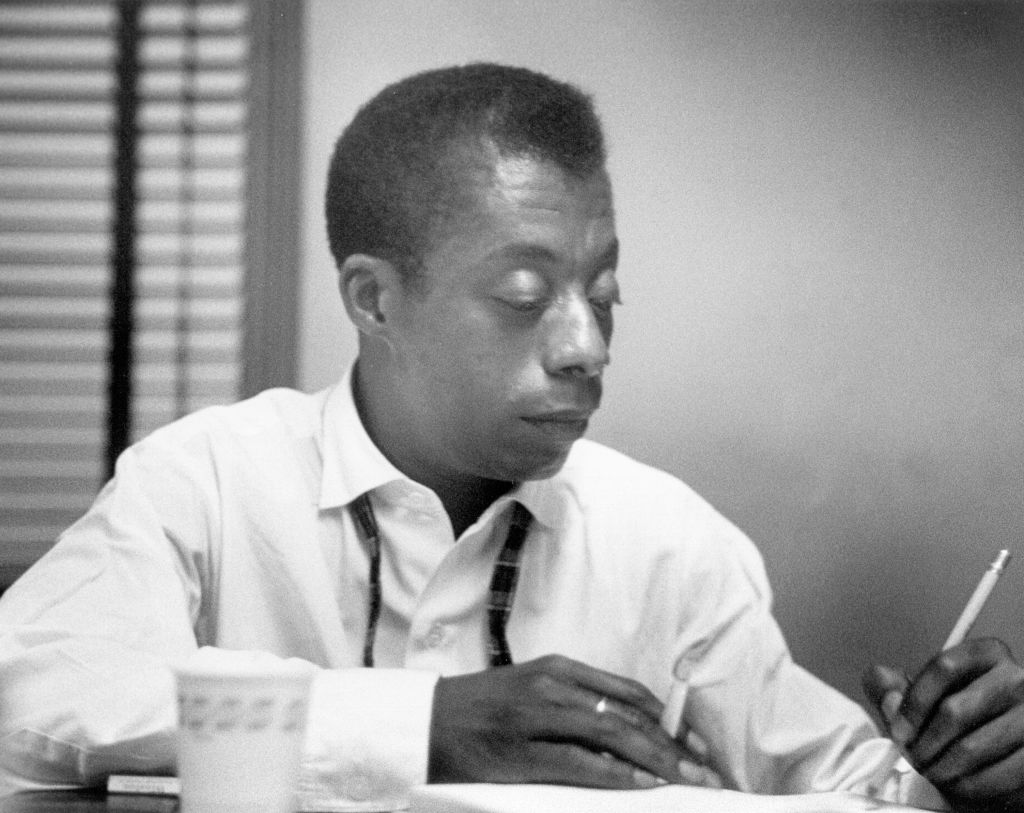
As social media distills James Baldwin’s prose into soundbites, a new biography restores the politics and nuance behind his often misunderstood writing. (Getty Images)
Review of Baldwin: A Love Story by Nicholas Boggs (Farrar, Straus and Giroux, 2025)
James Baldwin has become the literary pinup of a generation. In 2025, he is everywhere: his most famous quotations stamped on viral infographics while his face is sold on mugs, t-shirts, and tote bags. The Fire Next Time has become a bestseller on both sides of the Atlantic, redesignated as a how-to guide for dismantling structural racism. Perhaps unsurprisingly, Baldwin has even reached TikTok, where five million videos are currently tagged under his name.
We can trace the arc of this resurgent popularity back to 2014. On August 9 of that year, Michael Brown — an unarmed black teenager — was shot and killed by white police officers in Ferguson, Missouri. The following day, Ferguson was flooded by demonstrators, and over the course of two weeks, thousands more protesters from across the country would take to the streets, inaugurating the largest social-justice movement of the twenty-first century, Black Lives Matter.
It was during this period of unrest that many of Baldwin’s most iconic quotations first started to recirculate on social media, frequently attached to the hashtag #BLM. The author’s frank analysis of American racism resonated with protesters, and the aphoristic qualities of his prose — perfected during his days as a child preacher — proved ideally suited to a the new era of digital activism, distilling complex ideas into a number of memorable slogans under the essential 140 character limit.
Buoyed by this initial spike in interest, Baldwin’s profile has only continued to grow in the decade since. In 2016, Raoul Peck’s wildly successful documentary I Am Not Your Negro used Baldwin’s unpublished work to retell the history of the civil rights era, while a year later Barry Jenkins adaptation of If Beale Street Could Talk was met with similar acclaim. Almost all of Baldwin’s books have now been reissued and translated into over thirty languages. Neglected for over thirty years, Baldwin is now hard to avoid.Readers seem more interested in raiding Baldwin’s work for slogans that affirm a narrow form of identity politics than in contemplating the more complex humanist ideals he espoused.
While the overdue reclamation of Baldwin’s work comes as a welcome surprise, this new wave of engagement remains largely superficial. There appears to be scant interest, for instance, in Baldwin’s troubled personal life — which is only fleetingly mentioned in Peck’s film — or in the real substance of the author’s political project. Indeed, the majority of readers seem more interested in raiding Baldwin’s work for slogans that affirm a narrow form of identity politics than in contemplating the more complex humanist ideals he espoused. As Hilton Als argues in his own account of the Baldwinaissance “I feel badly that the blood has been drained out of Baldwin . . . in order to make a point about a stupid administration. I think the contemporary world that has claimed him needs to read him more deeply.”
Unexpected Beauty
It is against this backdrop that Baldwin: A Love Story, Nicholas Boggs’s magisterial new biography, attempts to reintroduce Baldwin to a new generation of readers. At no point does Boggs explicitly mention his subject’s newfound celebrity status. Nonetheless, the book’s thoughtful and thorough retelling of his life serves to undermine the memeified version of the author that we have come to recognize from social media. The result is an enlightening, frequently revelatory volume that revitalizes the legacy of a deeply complex writer who has too often been misquoted, misread, and misunderstood.
As Boggs describes, James Baldwin was born in Harlem on August 2, 1924. He never met his biological father but, at the age of three, was adopted by his mother’s second husband, David Baldwin, a tyrannical figure who looms large in the author’s memories of childhood. Fueled by alcohol, his stepfather would frequently mock Baldwin’s appearance, calling him “the ugliest boy he’d ever seen” and making fun of his large, bulbous eyes. These insults had a lasting impact. For the rest of Baldwin’s life, he remained self-conscious about his looks and doubtful of his capacity to produce desire in others. Boggs cites a particularly revealing interview, in which Baldwin describes his childhood habit of placing pennies on his eyes before he went to sleep, in a misguided effort to make them smaller.
While Baldwin may have suffered at home, he succeeded in finding a number of unconventional mentors elsewhere. The first was his elementary school teacher, Orilla “Bill” Miller, a twenty-four-year-old white woman, who took a fondness for Baldwin, having quickly recognized his exceptional brightness. Miller gave Baldwin books to read — including his favorite, Charles Dickens — and took the boy on weekend trips to art galleries and movies. These adventures proved formative and Baldwin would later credit Miller’s stewardship with rescuing him from the same racial hatred that had consumed his stepfather. It was because of her, he writes in The Devil Finds Work, that “I never really managed to hate white people — though, God knows, I have often wished to murder more than one or two.”
Even more miraculous was Baldwin’s first encounter with the Black abstract expressionist painter Beauford Delaney, to whom Boggs dedicates significant attention. Baldwin met Delaney in 1941 when he was only seventeen years old, and the artist quickly became a kind of surrogate father. He taught Baldwin about Black music and literature and welcomed him into the creative milieu of New York’s Greenwich Village. Like Miller, Delaney also encouraged the young boy to disregard the rigid categories of color and race, which for so long had set the horizon of what he believed possible. In the place of these epistemic “traps,” the painter modeled an alternate “way of seeing,” one that was sensible to the diversity of human experience, and that he materialized in the bright, swirling impastos of his canvasses. “Baldwin was learning to see the world around him as an artist sees it,” Boggs writes of Delaney’s tutelage, “alive with color and shades of difference and detail and unexpected beauty.”
Uncharted Chaos
While it is clear that Baldwin started developing his key aesthetic principles under Delaney’s mentorship, his literary career did not begin in earnest until 1948, following his move to Paris. In making the long journey across the Atlantic, Baldwin was not only pursuing a romantic vision of himself as an expatriate in the various demimondes of Europe, but seeking much needed respite from the virulent racism he continued to experience in America. The city’s permissiveness also created space for him to explore his burgeoning same-sex desire, and Boggs is not coy in describing the relish with which Baldwin made his entrance into Paris’s lively gay scene.Baldwin thought it was the responsibility of the artist to harness the ‘power of revelation’ in order to do justice to the ‘always inexplicable’ form of human experience.
From the moment he put pen to paper, Baldwin was conscious of avoiding the trap that had been set for many black writers: pigeonholing them as spokespeople for their race. In “Everybody’s Protest Novel,” an essay published a year after his arrival in Europe, Baldwin took issue with the American tradition of protest literature, characterizing it as a thinly veiled form of “sociology.” The practice of protest writing, Baldwin argues, relies on an overly deterministic view of human behavior — “life fitted neatly into pegs.” By contrast, he thought it was the responsibility of the artist to harness the “power of revelation” in order to do justice to the “always inexplicable” form of human experience.
This would set the blueprint for the six novels that Baldwin would produce over the next thirty years. Emulating the great works of late-nineteenth-century psychological realism, he employs an earnest and sermonic prose style in his fiction, recreating the drumming rhythms of human consciousness and dramatizing the most intimate thoughts and feelings of his protagonists. His first novel, Go Tell it on the Mountain, follows one day in the life of John Grimes, capturing all anxieties and epiphanies of growing up, and culminates in a vivid description of an ecstatic religious experience on the “threshing floor” of his father’s church. It is clear that throughout the novel Baldwin is drawing on his own experiences as the son of a preacher, an approach that no doubt helped him slip inside the skin of his protagonist .
Of course, this focus on characters’ interior worlds was not just a formal choice, but a political one. As “Everybody’s Protest Novel” makes apparent, Baldwin was wary of polemic and too skeptical of overarching theories to become an ideologue himself. Nonetheless, he believed that there was radical potential in art’s ability to map the “uncharted chaos” of human experience. It was only through such revelation, Baldwin argued, that an individual or a society might come to know themselves and begin the difficult work of social transformation. As he writes in the 1962 essay, “The Creative Process”: “the war of an artist with his society is a lover’s war, and he does, at his best, what lovers do, which is to reveal the beloved to himself and, with that revelation, to make freedom real.” In his mind, art could offer a form of revolutionary consciousness, free from political absolutes.
Not a Public Speaker
Having published two acclaimed novels, and a significant body of essays, Baldwin would eventually return to New York in 1954. Thanks to the success of his work, Baldwin was now something of a celebrity. “One of the reasons I had fought so hard, after all, was to wrest from the world fame and money and love,” he wrote in 1961. But this renown also came at a cost. For one thing, it suddenly became far harder for Baldwin to maintain the lines he had previously drawn to separate art and politics. He found himself increasingly called upon to participate in the battle for civil rights. A hectic schedule of political rallies, lectures, and TV appearances consumed his life.
During this period, Baldwin’s central focus turned from his novels to his nonfiction, and the latter became absorbed by what he describes as the “racial nightmare.” His most famous intervention remains “Letter From a Region of my Mind,” which was originally published in the New Yorker in 1962, before being repackaged and issued as The Fire Next Time. Reading the essay, one can sense Baldwin’s frustration at the failures of liberal America to live up to its increasingly fraudulent promises: their persistent belief in the idea of “progress,” despite the ongoing plight of Black citizens. Nonetheless, Baldwin concludes the essay with an appeal to “the relatively conscious whites and the relatively conscious blacks, who must, like lovers, insist on, or create, the consciousness of others.” In spite of his own powerful sense of despair, Baldwin once again rests hope on the power of revelation, the idea that it might be possible to look beyond the existing political order and discover a new form of common understanding. This had, of course, always been his worldview and the effect he hoped his own work would achieve.One can sense Baldwin’s frustration at the failures of liberal America to live up to its increasingly fraudulent promises.
The Fire Next Time was warmly received by the press, and during the 1960s, Baldwin would continue to publish nonfiction about the Civil Rights movement to much acclaim. And yet, despite the praise, he was growing increasingly frustrated at having to occupy the role of spokesperson — constantly moving between typewriter and microphone — and in 1968 felt he needed to clarify his position: “I am not a public speaker. I am an artist.”
He perhaps needn’t have worried, however. With the development of a new radical black nationalism, Baldwin was also facing criticisms from other black writers and intellectuals. A new generation of black activists now considered much of his work passé, his calls for racial unity a relic of the early civil rights years. One of the most bruising critiques came from the writer Eldridge Cleaver. In his 1968 collection of essays and letters, Soul on Ice, Cleaver writes that “there is in James Baldwin’s work the most grueling, agonizing, total hatred of the blacks, particularly of himself, and the most shameful, fanatical, fawning, sycophantic love of the whites that one can find in the writings of any black American writer of note in our time.” Barely concealing his own homophobia, Cleaver accuses Baldwin of abandoning the political cause of black Americans. By the end of the decade, it was clear that a new generation had come to see his worldview as out of step with the time.
To Be News Is to Be Nothing
In his fourth novel Tell Me How Long the Train’s Been Gone, published toward the end of the decade, Baldwin attempts to dramatize the many competing tensions he was faced during this period of his life. The book follows the character of Leo Proudhammer, a successful black, queer movie star, not unlike Baldwin. Consigned to hospital after a severe heart-attack, Leo is forced to reflect upon his life and the novel. The result is a meditation on fame and shifting perceptions within the black community. “It does not take long to realize that to be news is really to be nothing; that the attention paid to one’s vicissitude is merely the most cunning way yet devised of making the adventure of one’s life a farce.” Baldwin writes. Like his protagonist Leo, Balwin was coming to the same realization: success had left him unhappy, unsatisfied, and unloved.By the end of the decade, it was clear that a new generation had come to see his worldview as out of step with the time.
Baldwin hoped that the book, undoubtedly one of his most personal projects, would return him to prominence within the literary scene after seven years without publishing a novel. However, upon release, it received scathing criticism. Eliot Fremont Smith of the New York Times described the novel as “a disaster in virtually every particular.” In even more morbid terms, Irving Howe dismissed it as “literary suicide.” This overwhelmingly negative response marked the beginning of the Baldwin’s literary decline. While his later work includes many flashes of brilliance, a critical consensus quickly emerged that he was unable to recreate the masterpieces of his early career, and that the increasingly conflicting messages of both his fiction and nonfiction had consigned him to irrelevance.
Undeterred, throughout the 1970s Baldwin would continue working, publishing two further novels and attempting several times to enter the world of cinema. However, he was largely unable to shift the dial on his own public perception and spent more and more time abroad, in Paris or Istanbul, where he developed a tight circle of associates. No longer energetic enough to maintain his peripatetic lifestyle, Baldwin eventually moved to the South of France where he took up permanent residence. Indeed, it was here in the small village of Saint-Paul-de-Vence — in a house that became known as Chez Baldwin — where he finished his final novel, Just Above My Head. Following a short battle with cancer, it was also here where he would die on December 1, 1987. As Boggs describes, it was Baldwin’s brother David that sat by him as Baldwin took his last breath, telling him: “It’s all right, Jimmy, you can cross over now.”
A week later, the great luminaries of black America congregated on the steps of St. John the Divine on the Upper West Side of Manhattan to celebrate Baldwin’s life. It must have been a striking image to passersby: Toni Morrison, Amiri Baraka, and Stokely Carmichael, shivering on the sidewalk, waiting to be shown to their seats. The cathedral had not been used for a funeral since the death of the legendary jazz-pianist Duke Ellington over a decade before. And yet this rare honor seemed only fitting to mark the passing of another legend, whose contribution to black American culture was of equal significance.
Maya Angelou was one of the readers at Baldwin’s funeral that day, and in her eulogy she movingly recalls the man that she came to call her brother. The two had first met in Paris in the 1940s but did not become friends until over a decade later, amid the turbulence of the civil rights era. Of that second encounter, Angelou recalls: “We discussed courage, human rights, God, and justice. We talked about black folks and love, about white folks and fear.”
Rereading this eulogy today, what stands out even more than these personal anecdotes, however, is Angelou’s words of caution regarding Baldwin’s legacy. She had no doubt that Baldwin would continue to be remembered for generations to come, and yet she also describes her fear for the many ways he might be misremembered: “Speeches will be given, essays written and hefty books will be published on the various lives of James Baldwin,” Angelou aptly forecasts. “Some fantasies will be broadcast and even some truths will be told.”
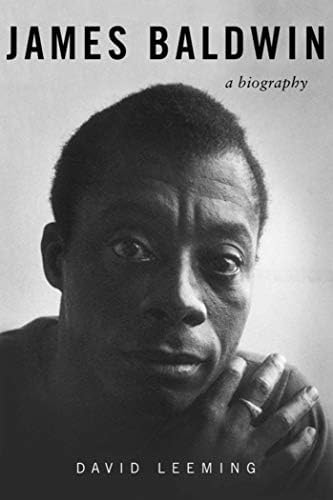
These words appear prophetic. In 2025, thanks to the global reach of the internet, Baldwin’s image has proliferated beyond what Angelou could have imagined possible, and there can be no doubt that the version of him we receive today is entangled with the fears and desires of our own moment. In this context, Boggs’s biography is a powerful attempt at corrective. It is a rare example of a “hefty book” of the sort Angelou predicted that offers clarity, marshaling an astonishing body of research to recapture the man whose influence we feel so presently today. Without doubt the most significant account of Baldwin’s life since David Leeming’s biography of the author thirty years ago, Baldwin: A Love Story is a triumphant work of scholarship and issues a robust challenge to a new generation of readers to confront the man they have claimed as their prophet.
Contributors
John Livesey is a PhD candidate at University College London specializing in the work of James Baldwin. His writing has appeared in the Guardian, Little White Lies, and the Oxford Review of Books.