레이블이 Elizabeth Kata인 게시물을 표시합니다. 모든 게시물 표시

2025년 10월 24일 금요일

Someone Will Conquer Them by Elizabeth Kata - Dymocks

Someone Will Conquer Them by Kata Elizabeth Kata - 9781448215577 - Dymocks

https://archive.org/details/someonewillconqu0000unse/page/46/mode/2up


Someone Will Conquer Them


Overview

Mary Ogata, the American wife of a Japanese scientist, finds herself under house arrest in a mountain village during the Second World War with her steadfast and stubborn servant Suzuki. Enduring suffering at the hands of the sadistic Captain Tanaka who is tormented by desire for the woman he hates, Mary's miserable existence is suddenly disrupted when she helps to conceal a wounded American airman in her cottage. 

Mary, Suzuki, and the easy-going black market trader Ludi Hoffer, must now elude the investigations of police officer Noguchi in order to protect the airman and themselves. 

But will Noguchi's beguiling daughter unravel their secret? And how will their fortunes change in the aftermath of the atomic bomb and the destruction of Hiroshima?

 In Someone Will Conquer Them, first published in 1962, Kata draws on her own experience of life in wartime Japan, and brings to life a dynamic cast of characters, each unique yet united by a common humanity in spite of cultural differences and the hardships of war. 
The defeat and subsequent occupation of Japan serves as a backdrop to Mary Ogata's own journey to understanding friendship, love, and, ultimately, herself.
—-


Chapter 1

Asama Yama lorded it over

the village. He was a vulgar old mountain, suffering

continuously from stomach disorders and a hole in the head.

Usually, a wisp of grey smoke drifted from his lacerated topknot, but at times, rumbling and grumbling, he would give a thunderous roar, vomit crimson fire skyward, shower the surrounding countryside with fine ashes, and fill the people's nostrils with the harsh stink of sulphur.

When this happened at night-time, the foreign people who were living in the village that crouched at the volcano's foot leapt from their sleep-mats and beds in terror, thinking that they were at last the target of American bombing planes, those gigantic silver sharks so often seen swimming through the sky, on their ways to attack, mutilate and destroy other villages, towns and cities in Japan.

Before the war, the village near Asama Yama had been a summer resort for wealthy Japanese and for foreign residents of Japan; but, in 1944, it had become an eerie place, where the cream and dregs of many lands and nationalities huddled in overcrowded villas

Diplomats and international adventurers, business men and their families, people from all walks of life, stood in the queues for meagre food rations. They were a polyglot crowd, distrustful of each other, awed by the despotic village police, and intimidated by war's most potent weapon - starvation.

They had fled from the terror of Japan's bombed cities, and many were refugees here who had been refugees before, to escape persecution and death in their home lands.

Others, for varied reasons, had come to settle in, or visit Japan before the war. Belonging to neutral countries, they were not interned, but left to fend for themselves. As the war years dragged by they felt that being interned would have simplified their lives.

The village had at first appeared to them as a safe haven, but just as the soft air of summer and the stark beauty of winter became a mockery, throwing misery into greater relief, so did the village become a prison. Once they were registered as residents there, a special pass to travel had to be obtained. War-torn, starving Japan had little time and thought for these foreign liabilities in her midst, during this, surely the most savage war in the history of mankind.

A rough track led from the village into the wooded hills. At a turn in the track a grey boulder protruded. From here, the entire village could be viewed. Further up, isolated in a hollow and surrounded by pinewoods, was a fragile Japanese house. This was the wartime refuge and home of Mary, the American wife of Goro Ogata, a Japanese.

A kindly man, her husband was twelve years older than Mary. During a stay in San Francisco, Goro had been offered the opportunity of working as assistant to her father, a brilliant biochemist.

With interest and pleasure he had moved into the home of the

American man, and it had embarrassed him when he saw that the daughter of the house was also the servant, overworked, unpaid and ill-treated.

He could not help noticing that some mornings Mary's hands were swollen, at times even bleeding, from beatings inflicted by her father. Her eyes were filled with shame, because of the sympathy that she saw in his eyes. As she served his morning meal he would talk to her, attempt to interest and amuse her. This was not difficult, and her fleeting smiles delighted him.

When he knew her better, he asked why her father treated her so cruelly. She told him that it was because of her mother's death. 'My mother died at my birth. My father loved her, and he hates me because I caused his tragedy.'

'Your father should have taken another wife,' Goro had said philosophically. 'It was his duty to give you a new mother. Sorrow should be aired in the open - never kept in the

He spoke of Japan, of the beauty, ancient customs and remarkable family unity in his homeland. When it was time for him to return there, and he saw the loneliness, the bereft expression on the girl's face, he had blurted out, almost without thought - which was unusual, for he was a thoughtful man - 'Come with me, marry me, Mary! Leave this life you are living. I promise you at least something better ...'

He had expected opposition from her father, and had again been shocked and puzzled

when the older man had said, 'So you wish to marry my daughter - when?' If Mary's father had not objected to his daughter marrying an Oriental, Goro's conventional Japanese parents had been infuriated and horrified by the marriage of their only son to a blue-eyed Occidental, and they had shown their dislike plainly.

A few months after Goro and Mary arrived in Japan, the Japanese attack on Pearl Harbor had occurred. Instead of the better life she had been promised, Mary was once more under parental disfavour.

Goro had taken her into his parents' household to live, in Japanese style. No one treated her cruelly - unless coldness and dislike is cruelty. She had learned to speak Japanese, but had no interest in learning their ways, especially after the order that Goro's mother, the mistress of the house, had given her, 'Please do nothing! I do not need your

For more than a year, Goro, knowing that he had made a fatal mistake, did all in his power to make his American wife's life as pleasant as possible, under the difficult domestic and even more difficult wartime conditions. Eventually he had lost interest and openly agreed with his parents that he had done a foolish thing

When the Ogata home was burnt to the ground during an airraid, it was decided that this was the chance to rid themselves of the embarrassing enemy-American member of the family. They decided to send her to the foreign village near Asama Yama.


Goro had engaged as companion for Mary an English-speaking servant, Suzuki San, who had spent more than fifty of her seventy years working for British and American families in Tokyo. He had explained the situation to her; she understood perfectly and had no scruples against working for an American, war or no war.

Together, the old woman and the twenty-two-year-old girl had travelled to the mountain village, carrying with them a few personal possessions that had been salvaged from the fire. As the unbearably crowded train covered mile after mile, Suzuki was amazed and delighted to see the change that took place in her young mistress. 'She's pretty,' the old woman had at first decided, 'but, maa! she's a dull one.' The trip, to Mary, seemed a journey to freedom. This, she felt sure, was the real beginning of her life. At least she was on her own, free of her father, her parents-in-law, and yes - Goro.

When they had eventually reached their destination, Suzuki's opinion was: 'She's pretty, and maa! she's a gay bright girl.

8 / 221


Elizabeth Kata: An Australian in Japan during World War 2 - Nicole Cama

Elizabeth Kata: An Australian in Japan during World War 2 - Nicole Cama

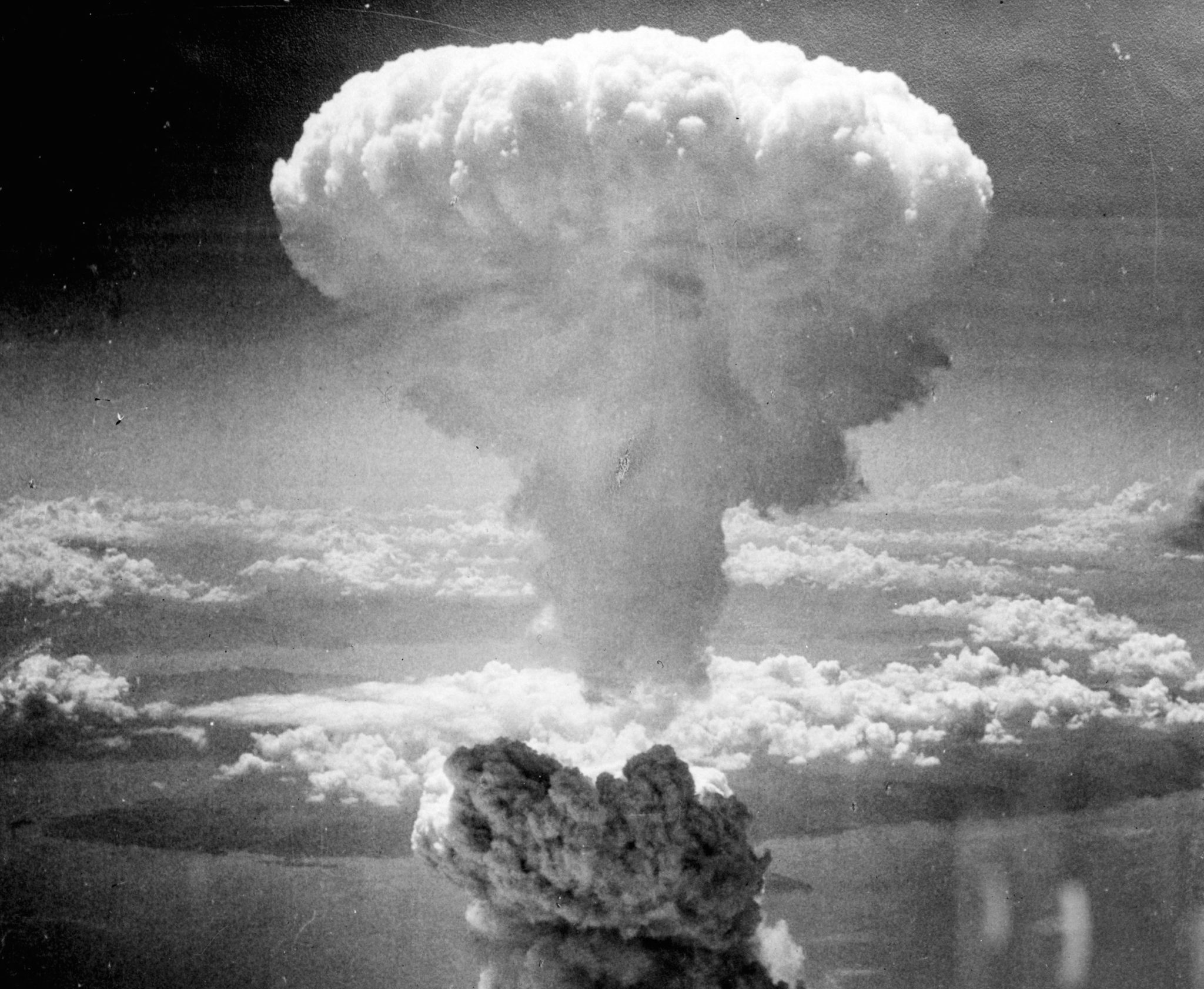
Atomic bombing Nagasaki

The mushroomed cloud of the atomic bomb dropped over Nagasaki, 9 August 1945. Photo taken by Charles Levy from one of the B-29 Superfortresses used in the attack. Wikimedia Commons

It’s 70 years since the atomic bombs were dropped on Hiroshima and Nagasaki in Japan. As the bombs fell and killed an estimated 250,000 people, Sydney-born author Elizabeth Kata was interned in the mountain resort village of Karuizawa. The Dictionary of Sydney has more about her amazing story of love in a hostile world and her attempts to fight racial intolerance, an issue that continues to be relevant today. I spoke to Mitch about her story on 2SER Breakfast.

Elizabeth Kata was born Elizabeth McDonald in 1912 and spent most of her life in northern Sydney. In 1936, Kata met the Japanese concert pianist and her future husband, Shinshiro Katayama, while he was studying in Sydney. Her family encouraged their relationship and by the following year, the couple were living in Tokyo, Japan.

Audio Player
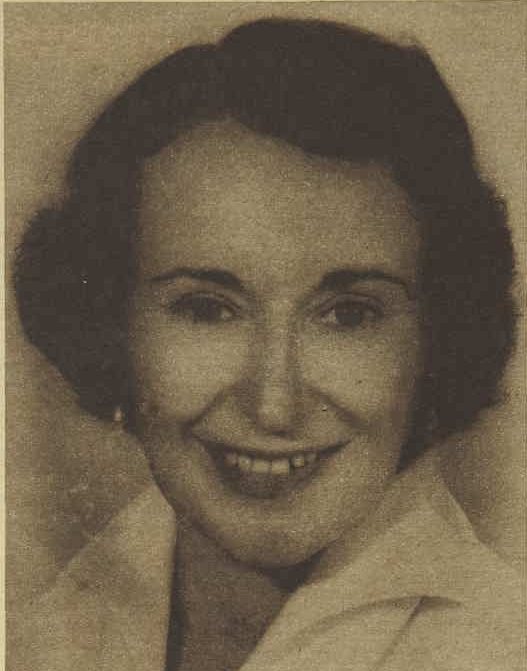
Elizabeth Kata

Elizabeth Kata, Australian Women’s Weekly, 1961. National Library of Australia

Before World War 2, Kata experienced a privileged life in the bustling capital city, however, after Pearl Harbour was attacked in 1941, her situation changed dramatically. According to Damian Kringas’s article in the Dictionary, of the 41 Australians interned in Japan, it is believed there were only two women – one of them was Kata. She initially spent time teaching English in a high school, but as conditions deteriorated, she and her husband were moved to the mountain resort town of Karuizawa. In an interview in 1963, she said ‘those four dreadful years taught me how to appreciate peace and to hope that one wonderful day the world will really be peaceful’.1

Though they were safely tucked away from the major cities, the winter was harsh and the food supply dwindled. Then, three weeks before the atomic bomb was dropped on Hiroshima, Kata gave birth to her son David. She would later tell the Australian press she received no help from the Australian government in her desperate predicament.

In 1947, Kata managed to return to Sydney with her son David. Their return was reported widely, with many Australian newspapers reflecting the hatred felt for all things Japanese. Some made pointed remarks about her son’s appearance, describing him as ‘dark -haired’, ’dark-eyed’ and ‘olive-skinned’.2 Others made more overt racist and offensive remarks and in the time that followed their return, Kata would campaign to have her son become an Australian citizen.

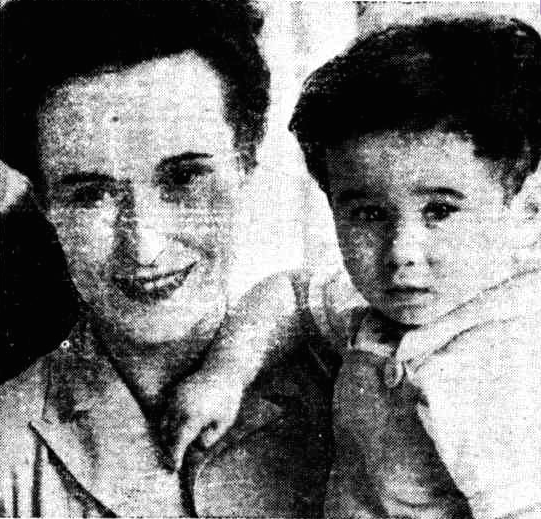
Elizabeth Kata and son

Elizabeth Kata and her young son, David, arrive in Australia, Sunday Times, 1947. National Library of Australia

Her first novel, Be Ready with Bells and Drums, was written from her Mosman home in 1959, and details the story of a blind girl who falls in love with an African American man. Her book became very successful, was published in different languages and adapted into an award-winning film called A Patch of Blue (1965). Although she was the first Australian writer to have a work adapted to an Academy Award-winning film, Kata did not receive significant royalties for her work.

Kata continued to write for film and television both in Australia and overseas. Two of her books were directly influenced by her experiences in Japan. She and her husband never reunited, though they remained close and she regularly travelled to Japan. Kata died at her Sydney home in 1998. Her famous first book was used in schools in Australia and the United States as part of a curriculum aimed at developing racial tolerance. She said in 1963:

I’ve always thought very deeply about racial intolerance, to me its the greatest pain and greatest sorrow in this world today, worse than anything that ever has been.

Her words ring true, even today.


Check out the original article at the Dictionary of Sydney and listen to my segment at 2SER radio. For other interesting segments, see my Dictionary of Sydney project post and visit the Dictionary of Sydney blog.


References

References
↑1’Elizabeth Kata interviewed by Hazel de Borg‘, 7 May 1963, National Library of Australia
↑2’Australian Wife of Jap Returns‘, News, 24 March 1947, p. 7 ; ‘Praise for Japanese Family‘, Truth, 2 March 1947, p. 35

Tilda - Elizabeth Kata - Google 도서

Tilda - Elizabeth Kata - Google 도서


Tilda

Elizabeth Kata
Bolinda Press, 1999 - 190페이지

I had been born in Duffy's house. I was Mum's only child. I was never punished, slapped or scolded seriously and I can seldom recall one single day when Mum was not happy and smiling. 
Happiness seemed to spill out of her. 

Tilda is the daughter of a Sydney prostitute. Increasingly frustrated by her mother's apparent contentment with her harsh life, Tilda sets about creating a better existence for herself. Through a combination of guile and determination she establishes her independence, and comes painfully close to real happiness until the secrets of her past are revealed.


도서 문헌정보

제목 Tilda
저자 Elizabeth Kata
에디션 큰글자
발행인 Bolinda Press, 1999
ISBN 1864423986, 9781864423983
길이 190페이지


With Kisses On Both Cheeks by Elizabeth Kata | Goodreads

With Kisses On Both Cheeks by Elizabeth Kata | Goodreads

With Kisses On Both Cheeks

Elizabeth Kata
3.33
3 ratings1 review

The 1960s were a time of contrasts; of a younger generation resisting the constrictive attitudes of their parents, and parents looking on with incredulity at their children's liberal ideals and alien lifestyles. In title novella 'With Kisses on Both Cheeks' Kata encapsulates this time of flux within the Kay household. 

Julie Kay, the only child of conservative suburban parents, looks with longing at the free loving atmosphere of the migrant family next door. Desperate for friendship, she sneaks into this forbidden world and begins a double life, that of light and warmth with the Bitinas, and that of smothering control at home. 

When Julie finally moves out, her rebellion leads her to a way of life so far from her upbringing that it may be too progressive even for her.The short stories that make up the rest of the collection are an eclectic mix of themes, from the moving 'Friendship', where two families, one Jewish and one German, have their bond tested by the Second World War, to the bizarre and humorous 'The Gazing Ball' in which we see a lonely New York store assistant's obsession with a crystal ball.With Kisses on Both Cheeks , first published in 1981, demonstrates Kata's remarkable ability to entertain with thoughtful and current themes, no matter what the subject matter.
Hardcover

Published January 1, 1981


Book details & editions


7 people want to read
About the author
Profile Image for Elizabeth Kata.
Elizabeth Kata
9 books6 followers

Follow
Elizabeth Katayama (1912 – 4 September 1998) was an Australian writer under the pseudonym Elizabeth Kata, best known for Be Ready with Bells and Drums (1961), which was made into the award-winning film A Patch of Blue (1965).

She was born of Scottish parents in Sydney in 1912. After marrying a Japanese man named Katayama in 1937, she lived for ten years in Japan. During the last years of World War II she was interned at the mountain resort village of Karuizawa, Nagano. She returned to Australia in 1947 with her baby son, battling the Australian Government for permission.

As well as writing novels, she also wrote for television and several Hollywood scripts. Her first novel, Be Ready with Bells and Drums (written in 1959, first published in 1961), was produced as the film A Patch of Blue (1965). Shelley Winters playing the role of Rose-Ann D'Arcey won an Academy Award for Best Actress in a Supporting Role. Guy Green, who directed, also adapted Kata's book and his screenplay was nominated for a Writers Guild of America award. After the success of the film, the novel was re-released as A Patch of Blue. The book was for many years included in the "school book list" both in the US and Australia. The book Mrs Katayama and Her Splash of Blue (2010, Independence Jones), covers how Elizabeth Kata's first book became the film A Patch of Blue.

Elizabeth Katayama died in Sydney in 1998.

Show more
Ratings & Reviews
Profile Image for Sejin.
What do you think?


Rate this book

Write a Review

Friends & Following
No one you know has read this book. Recommend it to a friend!
Community Reviews
3.33
3 ratings1 review
5 stars
0 (0%)
4 stars
1 (33%)
3 stars
2 (66%)
2 stars
0 (0%)
1 star
0 (0%)
Search review text

Search review text

Filters
Displaying 1 of 1 review
Profile Image for John.
John
76 reviews
3 followers

Follow
June 29, 2012
This is a short novella from the perspective of a young girl growing up in Sydney during the early sixties. I wish it was longer. It is easy to read, and charming. There are other short stories in the collection - all well worth reading (so far).

1 like


Child of the Holocaust eBook : Kata, Elizabeth: Amazon.com.au: Kindle Store

Child of the Holocaust eBook : Kata, Elizabeth: Amazon.com.au: Kindle Store

Kindle
$8.37


Child of the Holocaust Kindle Edition
by Elizabeth Kata (Author) Format: Kindle Edition


5.0 5.0 out of 5 stars (1)

Orphaned by the holocaust that consumed Germany during World War II, Hans Herman Baum has no clue to his identity other than a battered name tag. He cannot remember either his parents or his home – his only memories are of many other faceless, homeless children who never smiled or laughed. Brought to live in New York with his great-aunt Trudy, the frightened, bewildered child that was Hans becomes Harm, the warm friendly boy who gradually grows in self-confidence within the close community of the street. But when the tragedy of his past comes back to haunt him, he must try to understand what it truly means to be a child of the holocaust.


The Death of Ruth eBook : Kata, Elizabeth: Amazon.com.au: Kindle Store

The Death of Ruth Kata, Elizabeth

Kindle
$18.84


The Death of Ruth Kindle Edition
by Elizabeth Kata (Author) Format: Kindle Edition


4.0 4.0 out of 5 stars (7)


Molly Blake is a woman with a gruesome secret from which she cannot escape. A secret which lies buried beneath her husband's camellias – and the fear of its discovery will drive her to madness. and the fear of its discovery will drive her to madness.

John and Molly Blake are a quiet suburban couple leading a quiet suburban life. It comes as a shock to John when their happy relationship suddenly begins to break down. Why has a certain waspishness crept into Molly's voice? Why is she withdrawing from him?

First published in 1981, The Death of Ruth demonstrates Kata's gift for compelling storytelling in this psychological thriller with a chilling twist.
Read less


Print length

136 pages
Language

===
The Death of Ruth

Elizabeth Kata
3.73
37 ratings12 reviews
When her neighbor Ruth vanishes, suburban housewife Molly Blake, driven by powerful feelings of guilt, tries to cover up the hideous truth about Ruth's disappearance and becomes engulfed in a nightmare of deception and madness
128 pages, Hardcover

Published January 1, 1982


Book details & editions


2 people are currently reading


33 people want to read
About the author
Profile Image for Elizabeth Kata.
Elizabeth Kata
9 books6 followers

Follow
Elizabeth Katayama (1912 – 4 September 1998) was an Australian writer under the pseudonym Elizabeth Kata, best known for Be Ready with Bells and Drums (1961), which was made into the award-winning film A Patch of Blue (1965).

She was born of Scottish parents in Sydney in 1912. After marrying a Japanese man named Katayama in 1937, she lived for ten years in Japan. During the last years of World War II she was interned at the mountain resort village of Karuizawa, Nagano. She returned to Australia in 1947 with her baby son, battling the Australian Government for permission.

As well as writing novels, she also wrote for television and several Hollywood scripts. Her first novel, Be Ready with Bells and Drums (written in 1959, first published in 1961), was produced as the film A Patch of Blue (1965). Shelley Winters playing the role of Rose-Ann D'Arcey won an Academy Award for Best Actress in a Supporting Role. Guy Green, who directed, also adapted Kata's book and his screenplay was nominated for a Writers Guild of America award. After the success of the film, the novel was re-released as A Patch of Blue. The book was for many years included in the "school book list" both in the US and Australia. The book Mrs Katayama and Her Splash of Blue (2010, Independence Jones), covers how Elizabeth Kata's first book became the film A Patch of Blue.

Elizabeth Katayama died in Sydney in 1998.

Show more
Ratings & Reviews
My Review
Profile Image for Sejin.
Sejin
3 reviews
Want to read.


Rate this book

Write a Review

Friends & Following
No one you know has read this book. Recommend it to a friend!
Community Reviews
3.73
37 ratings12 reviews
5 stars
9 (24%)
4 stars
15 (40%)
3 stars
8 (21%)
2 stars
4 (10%)
1 star
1 (2%)
Search review text

Search review text

Filters

English
Displaying 1 - 10 of 12 reviews
Profile Image for PattyMacDotComma.
PattyMacDotComma
1,762 reviews
1,052 followers

Follow
June 28, 2016
3.5★
A short, peculiar study of a woman haunted into madness. As the title says, there’s a death. Ruth is a violent, abusive mother who lives with her two kids and husband, Ralph, next door to Molly and John, who have no kids. They’ve been reasonably friendly neighbours for eleven years, but Molly is being driven to distraction by the shouts and noise when Ruth gets going.

John is often away on business trips, and thus has at least some respite. Ruth is also pretty careful not to go overboard in front of Ralph, but Molly knows how bad it gets and has even spoken to a doctor about the kids’ bruises, asking what she can do.

Finally, fed up one morning while John’s away and after Ralph and their kids have left for the day, she goes next door to “warn” Ruth about her concerns. Molly has to shout over the noise of the radio to be heard, Ruth turns around quickly, and suddenly … everything changes.

There is an investigation, time passes, and Molly becomes a grey, withdrawn, compulsive gardener who talks to herself. John is a tender, concerned, solicitous carer for Molly, letting her take over his beloved garden and doing everything possible to bring her back to the perfect little wife she'd been before.

“If he knew the truth he would realize how mistaken his opinion of me is, for I am bent only on preservation, and I am not powerful. I resemble a mouse crouching between the claws of a well-fed cat, awaiting the moment that the cat will feel the pangs of hunger. Last night it was as though the claws of the cat pressed in on me and pricked my skin, drew a little blood.”

This began as straight-forward suspense, became a character study, a good one, but for me it would have been better with either more story or less of the time-passing middle section. I’m a great fan of short stories and novellas of any length, and I think this story and writing style would be perfect for either.

I did like the ending when I got there. I’d have been ready for it a bit earlier, but it was satisfying.

Thanks to the publisher, Bloomsbury Reader, for allowing me copy for review.
arc-done
 
kindle
 
mystery-crime-thriller

11 likes

Like

Comment


Profile Image for Les.
Les
325 reviews
19 followers

Follow
October 3, 2019
*SPOILERS*

Ruth is this bitch of a mother who beats on her kids and well, shes dead.
i didn't spoil that for you because its says so right at the beginning. ..and its the tittle of the book.
Molly is her neighbor who is tired of hearing the abuse so she goes over to once and for all confront her. when she sees Ruth, shes facing the sink so when she finally turns around, she think shes about to choke her out and as self defense, pushes her.
she falls, boom, she's dead.

or so she thiiiiinks!....

she's dead.

so then her husband (Ruth's) comes home and finds out what happened (this is where i am currently having an AHA! moment. i realize what just did as a matter of fact happened.) and sees whats going on and his instinct is finish what Molly has started (i didn't tell you cause I'm not that mean!)

so basically, for 4 years, Molly drives herself crazy. shes super paranoid with getting caught with what happened. she lets herself go, she lets her marriage go, she decides to tend to the garden and only she can. her husband John used to be in charge of that but hes no longer allowed. and she goes nuts. she goes insane.

finally she decides ef this shiz I'm going to tell the truth, I'm going to clear an innocent mans name and the day before she decides to be honest, she gets caught.
she hauled off to jail but because shes basically insane shes in the hospital.
she goes to court finally and BOOM! plot twist.

wanna know?


***SPOILER FOR REALS!!!!***
turns out that Ruth's husband, Ralph, had mixed her stomach pills with potassium cyanide and killed her but poor Molly was in the wrong place at the wrong time, so her life went to shits while Ralph got to walk free.
*SPOILERS OVER*


did you read that!!!??
i was like whattt!!!?
i finished it last night but i was like ? and then it just hit me right now. (kinda slow on that one but i got it.

i liked this book. i like it for the plot twist that it gave you at the end. legit the very, very, very end. i cant recall the last time i read a book that gave it all to you in the beginning to twist it under you at the end like this one did.
very good Job E. Kata.
VERY good job.

with that being said, i HATED reading all of their drama. sometimes i felt like telling Molly to shut the f*ck up (sorry for my outburst)
you know shes going crazy but daaaamn! and John, her husband, ahhhh!!! like i felt bad for him because he had to care for her and he resented her but sometimes i wanted him to act like a man. grow a pair.
and Grey (no, not Christian) !!!!!!!!!!!!! poor dude. hes going to be haunted by this one.
who is Grey you ask, haha! i never completely spoil it! as always, there's a lot i left out.

overall, i do recommend this quick read.
pick it up and let me know.
---------
http://lovewhatyouread14.blogspot.com...

3 likes

Like

Comment

Profile Image for Mon.
Mon
666 reviews
17 followers

Follow
January 22, 2016
I received a free copy of this book through NetGalley

3.5 stars

This was a really quick read that took you for a ride. I really like that the main event isn't left hidden and you know in the beginning what has happened...or so you think. I thought this was a really great exploration of guilt and as a main character, Molly's psyche was really interesting to read about.

Show more

2 likes

Like

Comment

Profile Image for Darcia Scates.
Darcia Scates
150 reviews
6 followers

Follow
July 29, 2017
The surprise ending will amaze you.
mystery

2 likes

Like

Comment

Profile Image for Mandy.
Mandy
3,593 reviews
329 followers

Follow
January 10, 2016
This short novel, first published in 1981, is well worth this re-release. It’s a compelling psychological thriller set in suburbia, where Molly Blake and her husband lead a quiet and peaceful existence until their world is turned upside down when something happens to their neighbour Ruth. I found it compelling and engaging and not at all predictable. Hardly a literary masterpiece but a good fun read.

1 like

Like

Comment


Ranjana
1,152 reviews
3 followers

Follow
May 3, 2020
A fantastic psychological thriller written in a very simple but effective prose. I never saw the ending coming.
2020

1 like

Like

Comment

Profile Image for Les.
Les
325 reviews
19 followers

Follow
January 25, 2021
just as good as the first time.
And the ending took me by surprise because I could've sworn it ended a bit differently but I still really liked it this time around.

Like

Comment

Profile Image for Heather.
Heather
587 reviews
1 follower

Follow
December 13, 2021
The pace of this novel was slow and almost methodical. I knew something was coming at the end but it still surprised me. Very well done.

Like

Comment

Profile Image for Chris Waterguy.
Chris Waterguy
123 reviews
35 followers

Follow
May 20, 2023
Remarkable story. I read it in one day in 10th grade, and the next day I wondered why I was depressed.
I still sometimes recall the story, decades later.

Like

Comment


Profile Image for Daniella.
Daniella
62 reviews
3 followers

Follow
July 11, 2018
The Death of Ruth by Elizabeth Kata takes on an interesting psychological view of a woman tortured by her own wrongdoings. Molly Blake’s life is set up as perfect compared to that of her neighbour Ruth Malston. When Molly confronts Ruth for her abusive actions towards her children, the confrontation will change the course of Molly’s life. Molly finds an unlikely partnership with Ruth’s husband who helps hide her secret. We see her completely deteriorate and find comfort in talking to spirits that haunt her mind. Meanwhile, the world around is moving onwards and upwards, while Molly is stuck with her guilt. The novel also exposes the consequential tension that uncovers while a husband and wife find themselves changing and sinking into a life of complete monotony. Molly spends her life carefully calculating what will free her shattered mind. The unfolding narration shows to prove that her entire identity buried with her secret in the camellias.

The novel starts off with an eerie narration right from the start. The action is instant, and the novel continues to be fast-paced. The writing is skillfully reflected as disjointed thoughts, and I found myself wondering from the start whether Molly was the crazy one to begin with. The barely formed sentences show completely irrational thoughts and incite a sense of panic. The novel is set up as Molly’s perspective alongside her husband, John’s perspective. John’s perspective presents an outside view as to what is going on and acts as an address to the readers rather than digging inside his mind as Molly’s perspective does. John's outside perspective is a great way to show readers how Molly’s actions are perceived. He gives us a peek into their past and gives readers an idea of exactly how their relationship has changed over the years. Overall, the narration works well for the type of novel.
The duo-perspective is not my favourite. It works well for certain novels as I have found in other books, but I think this novel would have been more interesting if it focused more on Molly’s perspective. There were times when the narration switched in the middle of the chapter which was really irritating. I found the detective too cliché, and the time moves too quickly for my liking. There was also an affair in the plot, and I’m not sure if that was to add extra scandal, but I’m never a fan of a love story in the middle of action. I expected this story to be more mysterious. There were certainly some exciting moments, but I was disappointed. The last bit is a piece of a novel that the detective is writing, and I am not sure what the purpose of that was. It does provide a good inner and outer view, but I did not think it was necessary to the story. I found a lack of a “chilling twist” that is stated in the description of the book. It starts and ends on an eerie note, but by the end, it was too late for me. This novel was an easy read, and I would suggest it for someone who likes secrecy and instant actions.

Like

Comment

Displaying 1 - 10 of 12 reviews
More reviews and ratings

===
12 results
Profile Image for Linda.
Linda
383 reviews
11 followers

Follow
January 27, 2016
A pleasurable read about murder, guilt and the subsequent mental breakdown of an accidental killer. The plot twists were surprising & a good book to read while having a beach day. I'll always think of Ruth when I see camellias. I received this as a free ebook via Net Galley.
netgalley

Like

Comment


Profile Image for Donna Davis.
Donna Davis
1,927 reviews
308 followers

Follow
Read
June 1, 2016
This one didn't take. By agreement with Bloomsbury Reader, I won't be reviewing since it didn't gel for me.
books-i-abandoned
 
fiction-adult
===

===