10 books that remind us there is no singular Asian American experience
May 03, 2024Kristin T. Lee
 The author, reading. (Courtesy Kristin T. Lee)
As a kid, the only Asian American literature that crossed my path was heavily stylized and historical. Books like Laurence Yep’s “Dragonwings” and Ed Young’s “Lon Po Po” were important, but felt radically different from my own American life in Iowa in the 1990s. My invisibility and illegibility to others were echoed back to me by the resounding absence of books that reflected my experiences at school and at the public library.
It wasn’t until I was in my 30s that I finally recognized parts of myself in literature, starting with books like
- Lisa Ko’s “The Leavers”,
- Nicole Chung’s “All You Can Ever Know”, and
- Charles Yu’s “Interior Chinatown”.
Getting that taste made me voracious for more.
Thankfully, in the past several years, more books by Asian American authors have been published as reader demand has grown and publishing houses have hired more people of color. With this upsurge has come the development of leitmotifs beyond the immigrant parent-child dynamics and interracial romantic relationships that dominate the narrative landscape. While those themes deserve exploration, they can serve to reinforce stereotypes when read in isolation.
It's my joy to discover and recommend books that go beyond the usual tropes to probe the depths and breadth of the Asian American experience. As someone who could be a poster child for the so-called model minority (I’m a Chinese American physician), reading has been a key starting place for me to expand my conception of community and solidarity and break out of the scripts we’re given by society.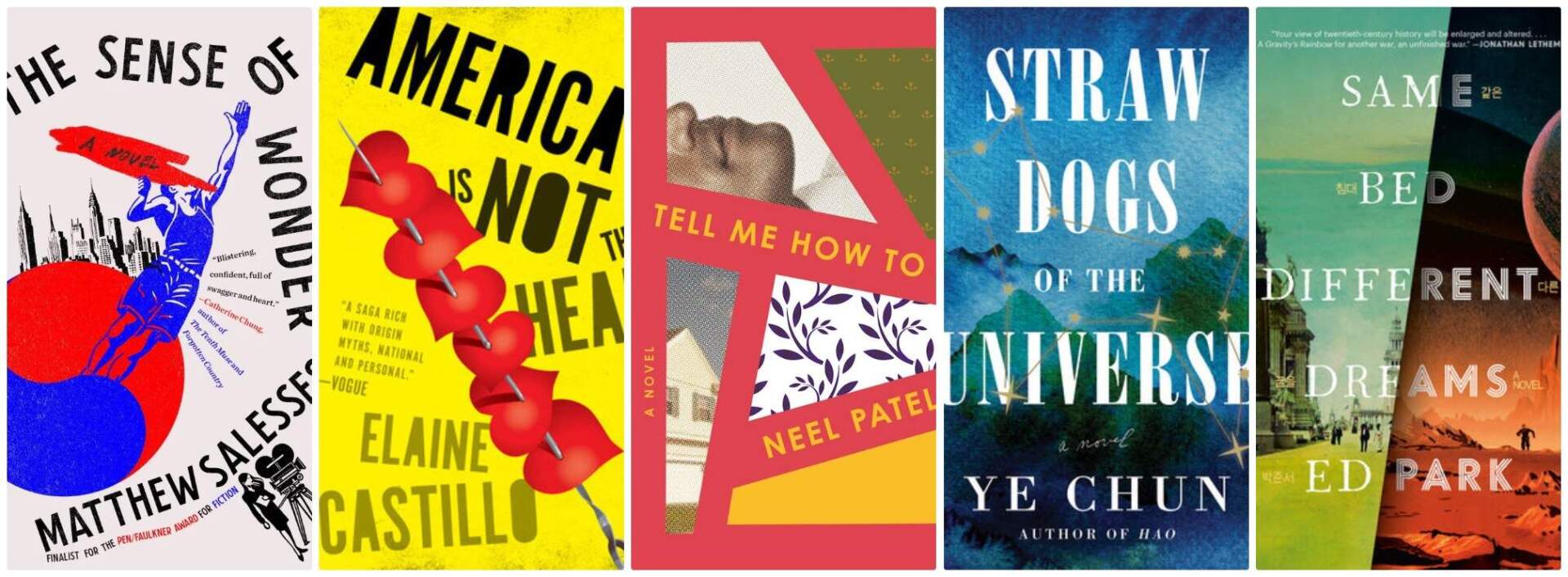 The author recommends these five novels by Asian American authors. (Courtesy the publishers)
“The Sense of Wonder” by Matthew Salesses does just this by following the sensational rise of fictional NBA star Won Lee, whose basketball skills are questioned by the press, his teammates, his coach and the public. Salasses’s characters, including Won’s girlfriend Carrie, a K-drama producer, wrestle with others not having a “frame of reference” for them; they’re not STEM nerds or quiet sycophants, but brash, bold innovators carving out spaces for themselves in industries where Asian Americans aren’t often represented. Books like this help me “imagine otherwise” for myself and for my children, spurring me to pursue my creative side and even become a writer.
Elaine Castillo’s “America is Not the Heart” also pushes against the model minority myth in its raw, unapologetic ode to the Filipino American community of the Bay Area. The protagonist, Hero De Vera, has gone from privileged scion of a powerful family to injured resistance fighter in the anti-Marcos rebellion by the time she washes up in the U.S. to try to start over. The prologue, told from Hero’s aunt’s perspective, contains some of the most emotionally impactful writing I’ve ever read about why we — or our parents or ancestors — come to America: for survival.
“Tell Me How to Be” by Neel Patel is an intimately told story of how a queer songwriter struggles with coming out to his mother while his mother attempts to hide her own secrets. It’s a humanizing portrait of immigrant parenthood, rendered with vulnerability and undergirded by a soulful R&B soundtrack, reminding me that my parents are people with their own interiority, too. Lamya H’s “Hijab Butch Blues” is a memoir-in-essays that explores the earnest quest of a queer Muslim girl to find belonging and acceptance. She refuses to give up either her devout faith or her sexuality, and the way she wrestles with God and the Quran is both honest and hopeful, reminiscent of my own grappling with American evangelicalism.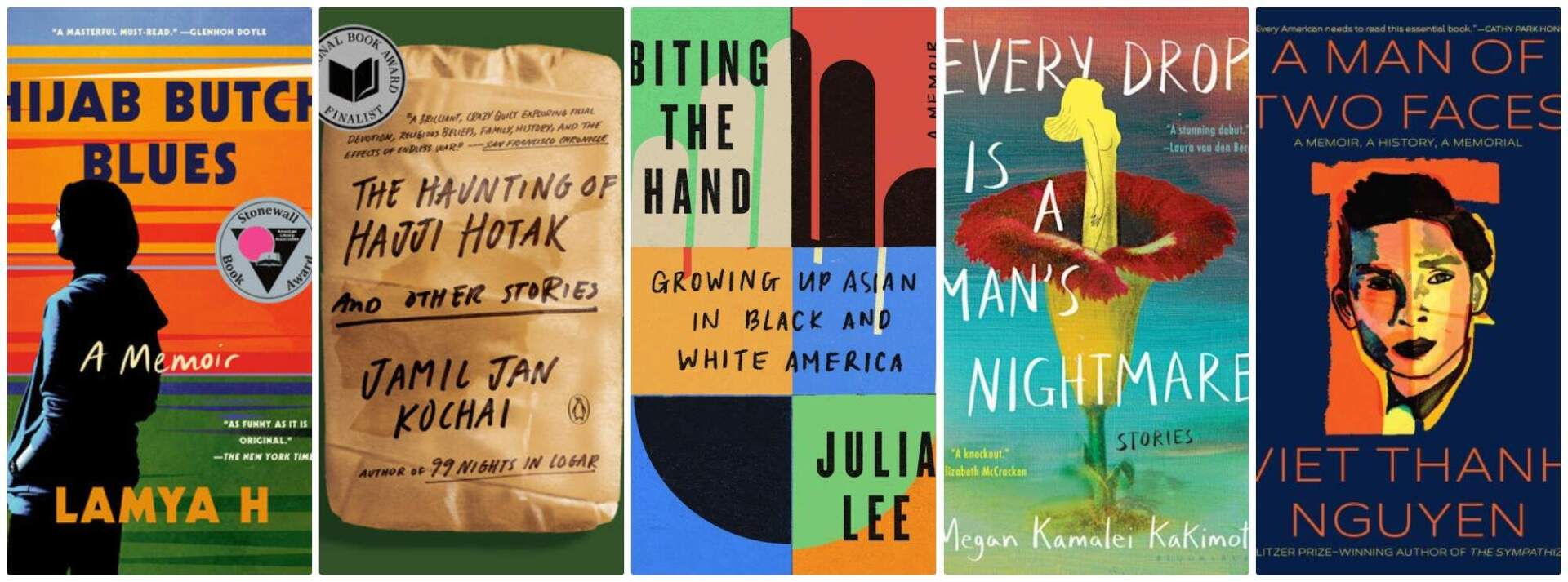 The author recommends these three memoirs and two short story collections by Asian American authors. (Courtesy the publishers)
Stepping back into the historical, “Straw Dogs of the Universe” by Ye Chun highlights the role of Chinese American workers in building the transcontinental railroad and the violent backlash they faced. With lyrical prose, this novel reminds us that Asian Americans have been in this country for a long time. Sadly, it also reminds us that anti-Asian racism is nothing new. In his wildly experimental and vigorously researched “Same Bed Different Dreams,” Ed Park pieces together episodes of Korean and Korean American history to craft a mind-bending symphony that won’t fail to astound. Park questions history itself and does his darndest to remind readers that the U.S. has its fingerprints all over Korea. So many Americans — myself included — were never taught Asian or Asian American history in school, leaving huge holes in how we understand the world. Books like these start to fill in the gaps.
Closer to home, Megan Kamalei Kakimoto reveals a kaleidoscopic portrait of Hawaiian life that is too often overlooked in her fiercely feminist short story collection, “Every Drop is a Man’s Nightmare”. Though the stories cover the gritty concerns of modern life for mixed native Hawaiian and Japanese women, the aftermath of U.S. annexation of the kingdom is the backdrop. “The Haunting of Hajji Hotak and Other Stories” by Jamil Jan Kochai is a blazingly written short story collection that examines the lives of Afghans and Afghan Americans in the wake of the U.S. war on terror. My hope is that more Americans will read this and be moved to support those whom we abandoned when we withdrew from Afghanistan.
Two memoirs published this past year add complexity and insight to readers’ understanding of Asian American experiences. In “Biting the Hand: Growing Up Asian in Black and White America,” Julia Lee situates Asian Americans within the racial dualism of the U.S., informed by her childhood amidst the Korean-Black community tensions of the 1992 Los Angeles riots as well as by the mentorship by two renowned Black scholars: Henry Louis Gates, Jr. and Jamaica Kincaid. She delineates a distinct Asian American existence that preserves authentic solidarity with other marginalized people, giving me hope.
Lee’s memoir pairs perfectly with Pulitzer Prize-winning author Viet Thanh Nguyen’s “A Man of Two Faces: A Memoir, A History, A Memorial.” With clarity, wit and historical grounding, Nguyen captures the hypocrisy of American exceptionalism, racialization, the U.S.’s devastating war in Vietnam and his own family’s refugee story. While he excoriates America’s role in global bloodbaths and ongoing racism, he also engages in sharp self-examination, making for a profound amalgamation of personal narrative and cultural commentary. If only we could all see ourselves and our country so honestly.
Reading just one Asian American-authored book is never going to capture the full range of stories coming out of the diverse communities that make up Asian America today. But after decades of being rendered invisible by majority culture, the sheer talent and storytelling genius of these books give readers an opportunity to expand their historical understanding and reject pigeonholing our communities — an opportunity that I hope many will seize.
Follow Cognoscenti on Facebook and Instagram .
Thankfully, in the past several years, more books by Asian American authors have been published as reader demand has grown and publishing houses have hired more people of color. With this upsurge has come the development of leitmotifs beyond the immigrant parent-child dynamics and interracial romantic relationships that dominate the narrative landscape. While those themes deserve exploration, they can serve to reinforce stereotypes when read in isolation.
It's my joy to discover and recommend books that go beyond the usual tropes to probe the depths and breadth of the Asian American experience. As someone who could be a poster child for the so-called model minority (I’m a Chinese American physician), reading has been a key starting place for me to expand my conception of community and solidarity and break out of the scripts we’re given by society.
The author recommends these five novels by Asian American authors. (Courtesy the publishers)“The Sense of Wonder” by Matthew Salesses does just this by following the sensational rise of fictional NBA star Won Lee, whose basketball skills are questioned by the press, his teammates, his coach and the public. Salasses’s characters, including Won’s girlfriend Carrie, a K-drama producer, wrestle with others not having a “frame of reference” for them; they’re not STEM nerds or quiet sycophants, but brash, bold innovators carving out spaces for themselves in industries where Asian Americans aren’t often represented. Books like this help me “imagine otherwise” for myself and for my children, spurring me to pursue my creative side and even become a writer.
Elaine Castillo’s “America is Not the Heart” also pushes against the model minority myth in its raw, unapologetic ode to the Filipino American community of the Bay Area. The protagonist, Hero De Vera, has gone from privileged scion of a powerful family to injured resistance fighter in the anti-Marcos rebellion by the time she washes up in the U.S. to try to start over. The prologue, told from Hero’s aunt’s perspective, contains some of the most emotionally impactful writing I’ve ever read about why we — or our parents or ancestors — come to America: for survival.
“Tell Me How to Be” by Neel Patel is an intimately told story of how a queer songwriter struggles with coming out to his mother while his mother attempts to hide her own secrets. It’s a humanizing portrait of immigrant parenthood, rendered with vulnerability and undergirded by a soulful R&B soundtrack, reminding me that my parents are people with their own interiority, too. Lamya H’s “Hijab Butch Blues” is a memoir-in-essays that explores the earnest quest of a queer Muslim girl to find belonging and acceptance. She refuses to give up either her devout faith or her sexuality, and the way she wrestles with God and the Quran is both honest and hopeful, reminiscent of my own grappling with American evangelicalism.
The author recommends these three memoirs and two short story collections by Asian American authors. (Courtesy the publishers)Stepping back into the historical, “Straw Dogs of the Universe” by Ye Chun highlights the role of Chinese American workers in building the transcontinental railroad and the violent backlash they faced. With lyrical prose, this novel reminds us that Asian Americans have been in this country for a long time. Sadly, it also reminds us that anti-Asian racism is nothing new. In his wildly experimental and vigorously researched “Same Bed Different Dreams,” Ed Park pieces together episodes of Korean and Korean American history to craft a mind-bending symphony that won’t fail to astound. Park questions history itself and does his darndest to remind readers that the U.S. has its fingerprints all over Korea. So many Americans — myself included — were never taught Asian or Asian American history in school, leaving huge holes in how we understand the world. Books like these start to fill in the gaps.
Closer to home, Megan Kamalei Kakimoto reveals a kaleidoscopic portrait of Hawaiian life that is too often overlooked in her fiercely feminist short story collection, “Every Drop is a Man’s Nightmare”. Though the stories cover the gritty concerns of modern life for mixed native Hawaiian and Japanese women, the aftermath of U.S. annexation of the kingdom is the backdrop. “The Haunting of Hajji Hotak and Other Stories” by Jamil Jan Kochai is a blazingly written short story collection that examines the lives of Afghans and Afghan Americans in the wake of the U.S. war on terror. My hope is that more Americans will read this and be moved to support those whom we abandoned when we withdrew from Afghanistan.
Two memoirs published this past year add complexity and insight to readers’ understanding of Asian American experiences. In “Biting the Hand: Growing Up Asian in Black and White America,” Julia Lee situates Asian Americans within the racial dualism of the U.S., informed by her childhood amidst the Korean-Black community tensions of the 1992 Los Angeles riots as well as by the mentorship by two renowned Black scholars: Henry Louis Gates, Jr. and Jamaica Kincaid. She delineates a distinct Asian American existence that preserves authentic solidarity with other marginalized people, giving me hope.
Lee’s memoir pairs perfectly with Pulitzer Prize-winning author Viet Thanh Nguyen’s “A Man of Two Faces: A Memoir, A History, A Memorial.” With clarity, wit and historical grounding, Nguyen captures the hypocrisy of American exceptionalism, racialization, the U.S.’s devastating war in Vietnam and his own family’s refugee story. While he excoriates America’s role in global bloodbaths and ongoing racism, he also engages in sharp self-examination, making for a profound amalgamation of personal narrative and cultural commentary. If only we could all see ourselves and our country so honestly.
Reading just one Asian American-authored book is never going to capture the full range of stories coming out of the diverse communities that make up Asian America today. But after decades of being rendered invisible by majority culture, the sheer talent and storytelling genius of these books give readers an opportunity to expand their historical understanding and reject pigeonholing our communities — an opportunity that I hope many will seize.
Follow Cognoscenti on Facebook and Instagram .


