레이블이 아시아계 미국인인 게시물을 표시합니다. 모든 게시물 표시

2026년 5월 24일 일요일

이 땅의 이방인들: 배제, 소속, 그리고 미국 내 중국인의 서사시 - Wikipedia

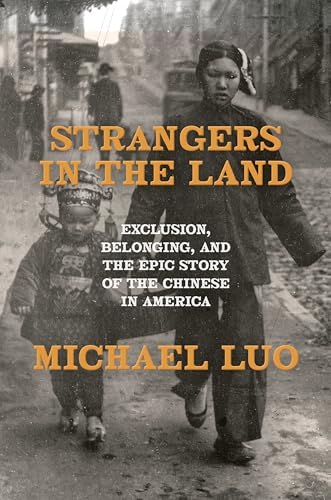
Strangers in the Land: Exclusion, Belonging, and the Epic Story of the Chinese in America - Wikipedia
From Wikipedia, the free encyclopedia

Strangers in the Land: Exclusion, Belonging, and the Epic Story of the Chinese in America


Author Michael Luo
Publisher Doubleday

Publication date April 29, 2025
Pages 560
ISBN 978-0-385-54857-1


Strangers in the Land: Exclusion, Belonging, and the Epic Story of the Chinese in America is a debut nonfiction book by New Yorker writer Michael Luo. The book traces the history of Chinese Americans from the mid-nineteenth century to the present. It was published by Doubleday on April 29, 2025.[1]

Background

In 2016, Luo wrote an open letter, in The New York Times, to a woman who had hurled a racist insult to Luo and his family on a street on the Upper East Side of Manhattan.[2] The open letter then became viral on social media, after which Luo considered writing an entire book about the lineage of the Chinese in America. Through the COVID-19 pandemic, Luo began working on Strangers in the Land while at the same time writing several pieces in The New Yorker about incidents of hate crimes against Asian Americans, such as the 2021 Atlanta spa shootings.[3][4]

Luo's research for the book required extensive investigation into archives wherein he found "various episodes known among historians but usually overlooked by the general public" such as a massacre in Los Angeles in 1871 which took the lives of 17 Chinese people, the Supreme Court case United States v. Wong Kim Ark in 1898, the expulsion of Chinese residents from many neighborhoods across America, and many others.[3] Amid rising xenophobia against immigrant communities in the 2020s, Luo felt that it was imperative to understand "how fury about an entire people can spill over the way it did against Chinese immigrants at the end of the nineteenth century."[5]

An excerpt of the book, "When an American Town Massacred Its Chinese Immigrants," was published in The New Yorker on March 3, 2025.[6]

Critical reception

The book was considered a widely anticipated release of 2025 by Time and The New York Times.[7][8] Time later called the book one of the best releases of April 2025.[9]

In a starred review, Kirkus Reviews called the book "An estimable and vital work of history that honors the Chinese American experience" and said that any reader of American history, not just Chinese American history, would find a lot to appreciate in its pages.[10]

Steve Inskeep, writing for The New York Times, called the book a convincing account of Chinese migration and lauded the depth of Luo's "fascinating details" and "biographies of individuals—a range of quirky and fascinating figures, both Chinese and white, who drive the narrative." Inskeep found no weakness to the book other than the challenge of its breadth: "He offers us so many characters that it can be hard to keep track, but readers who do are rewarded with a view on the full complexity of American immigration."[11]

Bloomberg News called the book "a terrifying yet compelling narrative," a "deeply researched and heartbreaking rendition of blighted lives, crippled promises and murderous politics," and a revealing part of "an ugly and violent saga, suffuse with race hatred, gunfire and lynching, greed and cruelty—and the twisting of American ideals to win votes and sate bloodthirsty populist furies."[12]

Axios called the book "powerful and engaging" in its "story about Chinese Americans that isn't taught in schools," as well as identified Luo's book as a contribution to history in a manner like that of Ronald Takaki or Erika Lee's works.[3]

References
Luo, Michael (2025). Strangers in the Land: Exclusion, Belonging, and the Epic Story of the Chinese in America (1st ed.). New York: Doubleday. ISBN 978-0-385-54857-1.
Luo, Michael (2016-10-10). "An Open Letter to the Woman Who Told My Family to Go Back to China". The New York Times. ISSN 0362-4331. Retrieved 2025-04-30.
Contreras, Russell (2025-04-29). "New Yorker editor uncovers Chinese American history that most Americans don't know". Axios. Retrieved 2025-04-30.
Luo, Michael (2025-01-05). "History's Lessons on Anti-Immigrant Extremism". The New Yorker. ISSN 0028-792X. Retrieved 2025-04-30.
Luo, Michael (2025-03-06). "An Atrocity Still Being Unearthed". The New Yorker. ISSN 0028-792X. Retrieved 2025-04-30.
Luo, Michael (2025-03-03). "When an American Town Massacred Its Chinese Immigrants". The New Yorker. ISSN 0028-792X. Retrieved 2025-04-30.
"Spring Preview: A Few Books We're Excited For". The New York Times. 2025-03-07. ISSN 0362-4331. Retrieved 2025-04-30.
Carlin, Shannon (2024-12-17). "The 39 Most Anticipated Books of 2025". TIME. Retrieved 2025-04-30.
Carlin, Shannon (2025-04-01). "The Best New Books to Read in April 2025". TIME. Retrieved 2025-04-30.
STRANGERS IN THE LAND | Kirkus Reviews.
Inskeep, Steve (2025-04-29). "Book Review: 'Strangers in the Land,' by Michael Luo". The New York Times. ISSN 0362-4331. Retrieved 2025-04-30.
Chua-Eoan, Howard (2025-01-24). "America Versus China, the Troubling Prequel". Bloomberg.
==


==
Strangers in the Land: Exclusion, Belonging, and the Epic Story of the Chinese in America Hardcover – 29 April 2025
by Michael Luo (Author)
4.6 4.6 out of 5 stars (179)
See all formats and editions
Or $13.36 /payment at 0% (Pay in 4). View 3 plans
LONGLISTED FOR THE NATIONAL BOOK CRITICS CIRCLE AWARD FOR NONFICTION - From New Yorker writer Michael Luo comes a masterful narrative history of the Chinese in America that traces the sorrowful theme of exclusion and documents their more than century-long struggle to belong.
ONE OF THE BEST BOOKS OF THE YEAR:
THE NEW YORKER, THE WASHINGTON POST, TIME, BOSTON GLOBE, BLOOMBERG BUSINESSWEEK, KIRKUS REVIEWS, LIBRARY JOURNAL, CHINA BOOKS REVIEW
"A story about aspiration and belonging that is as universal as it is profound."--Patrick Radden Keefe, author of Say Nothing
"A gift to anyone interested in American history. I couldn't stop turning pages."--Charles Yu, author of Interior Chinatown
In Strangers in the Land, award-winning journalist Michael Luo tells the story of a people who, beginning in the middle of the nineteenth century, migrated by the tens of thousands to a distant land they called Gum Shan--Gold Mountain. Americans initially welcomed these Chinese arrivals, but, as their numbers grew, horrific episodes of racial terror erupted on the Pacific coast. Federal lawmakers enacted legislation aimed at excluding Chinese laborers from the country, the first time the United States barred a people based on their race. The Chinese became the country's earliest undocu­mented immigrants: hounded, counted, suspected, surveilled.
In 1889, while upholding Chinese exclusion, Supreme Court Justice Stephen J. Field characterized them as "strangers in the land." Only in 1965 did America's gates swing open to people like Luo's parents, immigrants from Taiwan. Today there are more than twenty-two million people of Asian descent in the United States and yet the "stranger" label, Luo writes, remains. Drawing on archives from across the country and written with style and sweep, Strangers in the Land is a revelatory and unforgettable American story
==

Review
A NEW YORKER ESSENTIAL READ A WASHINGTON POST NOTABLE BOOK A TIME MUST-READ BOOK A BOSTON GLOBE BEST BOOK OF THE YEAR A BLOOMBERG BUSINESSWEEK BEST BOOK OF THE YEAR A KIRKUS BEST BOOK OF THE YEAR A LIBRARY JOURNAL BEST BOOK OF THE YEAR A CHINA BOOKS REVIEW BEST BOOK OF THE YEAR A TIME MOST ANTICIPATED BOOK OF 2025 A NEW YORK TIMES NONFICTION BOOK TO READ THIS SPRING

"Strangers in the Land is more than a story of an immigrant group accepting a wretched fate. Luo wisely puts the human experience at the center of this narrative. . . . In the process, he restores a voice to the forgotten men and women who endured endless broadsides in their adoption of a new country. . . . It's these people who animate the book, filling the pages with stories of endurance and hard-fought victories but also searing accounts of sorrow, violence and injustice. Along the way, Luo reveals something essential about America: Any democracy's promises should be measured against the way it treats its most marginalized members. At once an indictment of how our nation failed that test before and a reminder of how some pushed back, Strangers in the Land deserves a place on the shelf beside other essential works of American history." --The Washington Post

"You can't paint a complete picture of America without [the story of Chinese Americans], and the New Yorker journalist Michael Luo tells it persuasively in Strangers in the Land, a granular account of Chinese migration to the United States. In an evenhanded style that yields neither a woke polemic nor a sanitized past, he traces the lives of immigrants to a country that actively drew them in and then tried to push them out. . . [The book] succeeds through its little biographies of individuals - a range of quirky and fascinating figures, both Chinese and white, who drive the narrative. . . [and offer] a view on the full complexity of American immigration." --The New York Times Book Review

"Michael Luo's important study reminds us that without such indemnities, any group--but particularly the most vulnerable among us--could find itself excluded or expelled." --The Wall Street Journal

"In Strangers in the Land, Michael Luo has written a sweeping history that somehow feels intimate, a narrative of irrational bigotry and legal violence that somehow shines with hope. In a moment of anti-immigrant fever, this work arrives like a balm." --Boston Globe

"The story of the Chinese in America has been told before, but this history -- written by New Yorker editor Michael Luo -- does so with aplomb and verve. . . . Through individual stories he puts flesh on the bones of this history, combining assiduous research with compelling prose to complicate our understanding of Chinese migration to America over the last century and a half." -- China Books Review

"Luo celebrates the vitality and persistence of Chinese Americans while lamenting feelings of precariousness that pervade even today. His chronicle adds a much-needed Asian and Pacific voice to primarily Eurocentric narratives of nineteenth-century immigration." --Booklist (starred review)

"Giv[es] voice to the first Asian Americans. . . Narrative history[ies] of the Chinese experience in America [are], of course, legion. . . What distinguishes [Strangers in the Land] from the others, however, is that Luo's book, though sweeping in scope, is also microscopic when it comes to stories. . . Readers interested in American history, not only Chinese American history, will savor these pages. An estimable and vital work of history that honors the Chinese American experience." --Kirkus Reviews (starred review)

"The scope of Luo's book is massive and its recounting of history impressively detailed. . . . [Strangers in the Land] is a meticulous triumph of research and testimony, and its greatest strength is its attention to the individuals of this history--both known and unknown. . . . [The book] firmly asserts Chinese humanity in a history that has sought to exclude it. . . . With this book, Luo asks what makes a real American, ultimately demonstrating the ever-shifting goalposts of how to answer the question. . . . By bringing light to this history, Strangers in the Land suggests to Americans today that this [anti-Asian] political force is older, darker, and more enduring than we even know." --Foreign Policy

"A remarkable book. . . . Michael Luo. . . has taken a subject that most people of Chinese descent, like me, are aware of in a vaguely ominous way and turned it into a terrifying yet compelling narrative." --Bloomberg

"A lavishly detailed, inspiring, and sometimes infuriating exploration of why a true sense of belonging remains elusive for so many Chinese Americans." --Washington Independant Review of Books

"Sweeping. . . Amid the current paroxysms concerning immigration, diversity, and race, his history of earlier, often dismaying, confrontations and crises could not be more important." --Harvard Magazine

"An impressive feat. . . Strangers in the Land is an important book." --Rain Taxi

"This book is a gift to anyone interested in American history. I learned something on every page. And I couldn't stop turning pages. Michael Luo has somehow synthesized two hundred years of history into a compelling narrative that manages to be comprehensive, illuminating, and deeply moving. I'll treasure this work and return to it often and I imagine many others will, too." --Charles Yu, author of Interior Chinatown, winner of the National Book Award

"This book is an astonishing feat of urgent history. Michael Luo has unearthed a buried chapter of America's rise, in which Chinese immigrants fought their way through violence and scapegoating to build the nation's future. But he illuminates much more than the past; Strangers in the Land reimagines how the idea of Asia reverberates in American culture today, pulled between belonging, rejection, success, and suspicion. A powerful new entry in the canon on American identity." --Evan Osnos, author of Age of Ambition: Chasing Fortune, Truth, and Faith in the New China, winner of the National Book Award

"Strangers in the Land is what history should be--richly detailed, authoritative, and compelling. Luo pieces together the stunning and shocking story of a people's journey to this country, and in the process reveals an essential part of the story of America." --David Grann, New York Times-bestselling author of The Wager and Killers of the Flower Moon

"An epic of both the best and worst aspects of the American experiment, Strangers in the Land is a work of history that is deeply researched, deftly written, and highly relevant today. In the vivid, often heartbreaking, and ultimately inspiring experiences of Chinese immigrants and Chinese Americans, Luo finds a deeper story about aspiration and belonging that is as universal as it is profound." --Patrick Radden Keefe, New York Times-bestselling author of Say Nothing

"This is not the story of a people being hated. This is the moving story of a people's persistence and resistance -- how individuals, families, and changing communities looked hard at rejection, endured violence, consumed daily bitterness, and yet sought the higher purposes of humanity and better lives. With profound feeling, clear narrative, and unyielding hope for a greater understanding, Michael Luo has written a definitive biography of the first Asians in America. Luo's book serves as a witness of how powerful the love and aspirations of immigrants make real the most beautiful promises of a new homeland." --Min Jin Lee, New York Times-bestselling author of Free Food for Millionaires and Pachinko

"In Strangers in the Land, Michael Luo shines a bright light on the unwavering patriotism and determination that is the Chinese American legacy. By unearthing in intimate, empathic details US immigration law's roots in Chinese exclusion, Luo writes into the record what history books and courses have long buried but what every Chinese American feels in their bones. This book has enriched my understanding of American law, of Asian American identity, and of my own sense of self. I cannot think of a human being who would not be bettered by reading this canonical work. Strangers in the Land is powerful, essential reading for us all." --Qian Julie Wang, New York Times-bestselling author of Beautiful Country

"Tracing echoes of today's debates around immigration and exclusion to the past, Luo's vividly told, carefully researched, and deeply compassionate book is an essential contribution to the continually unfolding story of the Chinese in America." --Hua Hsu, Pulitzer Prize-winning author of Stay True

"Impressively researched and beautifully told, Strangers in the Land offers a new and much-needed history of a people and community that have always been central to the American story." --Erika Lee, Bae Family Professor of History, Harvard University, and author of The Making of Asian America: A History

"The violent, terrible history of Chinese exclusion and xenophobia is told with feeling and expansive research. Michael Luo's excellent recovery of this vital story is critical in this difficult time." --Gordon H. Chang, Professor, Department of History and Olive H. Palmer Professor in Humanities, Stanford University, and author of Ghosts of Gold Mountain: The Epic Story of the Chinese Who Built the Transcontinental Railroad

"Michael Luo's new history of the Chinese in the U.S. is a book for our time, when anti-Chinese sentiment has again gripped American politics. In Luo's masterful account, Chinese emigrants' and Chinese Americans' stories and voices are front and center. They encountered and resisted racist harassment, violence, and laws from the California gold rush to today's new gilded age. Shaping Chinese American communities and America at large, it is a story told with sensitivity and renewed urgency." --Mae M. Ngai, Lung Family Professor of Asian American Studies and Professor of History, Columbia University, and author of The Chinese Question: The Gold Rushes and Global Politics

About the Author
MICHAEL LUO is an executive editor at The New Yorker and writes regularly for the magazine on politics, religion, and Asian American issues. He joined The New Yorker in 2016. Before that, he spent thirteen years at the New York Times, as a metro reporter, national correspondent, and investigative reporter and editor. He is a recipient of a George Polk Award and a Livingston Award for Young Journalists.

Top
About this itemSimilarFrom the AuthorQuestionsReviewsStrangers in the Land: Exclusion, Belonging, and the Epic Story of the Chinese in America

Product details
Publisher ‏ : ‎ Doubleday Books
Publication date ‏ : ‎ 29 April 2025
Language ‏ : ‎ English
Print length ‏ : ‎ 560 pages
==

About the author
Follow authors to get new release updates, plus improved recommendations.

Follow

Michael Luo


MICHAEL LUO is an executive editor at The New Yorker and writes regularly for the magazine on politics, religion, and Asian American issues. He joined The New Yorker in 2016. Before that, he spent thirteen years at The New York Times, as a metro reporter, national correspondent, and investigative reporter and editor. He is a recipient of a George Polk Award and a Livingston Award for Young Journalists.
==
From other countries


J
5.0 out of 5 stars An excellent overview that is well worth reading
Reviewed in the United States on 20 December 2025
Format: HardcoverVerified Purchase
Truly an impressive book - it’s not only well researched, it’s very well written from beginning to end.


The book is an excellent overview of Chinese immigrants and their treatment in America, with a focus on the latter half of the 1800’s. Historical events are interspersed with accounts of people who lived them. I’m in a nonfiction book club and sometimes the books we read can be informative but dry. That is not the case here. The author truly has a gift for prose - chapter transitions leave you wanting to read more, and the stories are masterful in quickly painting a picture of people and events, really bringing history to life.


Sometimes the books can be hard to read because the stories are so sad, with people forced to leave their communities, suffering injuries or even lynching, and too many injustices to list. But I am glad to have read them, because these events should not be forgotten. As William Faulkner wrote, “The past is never dead. It's not even past.” A counterpoint to that is humans have the ability to preserve knowledge through writing, thereby allowing future generations to build on that knowledge and both remember and learn from the past. The author has done a commendable job here in preserving this history, and it is well worth reading.
Report


KL
5.0 out of 5 stars Highly recommend!
Reviewed in the United States on 20 September 2025
Format: HardcoverVerified Purchase
This book is an absolute masterpiece that sheds light on an important and often overlooked chapter of American history. "Strangers in the Land" goes beyond just telling the story of the Chinese in America—it brings to life the struggles, resilience, and contributions of a community that faced extraordinary challenges and systemic exclusion for generations. The author’s storytelling is vivid and deeply engaging, weaving together personal narratives, historical context, and socio-political analysis in a way that feels both informative and emotionally compelling.


What stands out most is how the book captures the complexity of belonging and identity. It explores not just the hardships and discrimination faced by Chinese immigrants, but also their efforts to carve out a place in the fabric of America despite relentless opposition. The research is thorough and well-documented, yet the writing never gets bogged down in academic jargon. Instead, it’s accessible, moving, and thought-provoking.


I learned so much about how policies and public sentiment shaped the lives of Chinese Americans, and how those historical stories still resonate today in conversations about immigration, race, and belonging. This book is a must-read for anyone interested in American history, social justice, or simply a powerful story of perseverance. Highly recommend!
Report


mc
5.0 out of 5 stars An incredibly important book for our time
Reviewed in the United States on 12 July 2025
Format: HardcoverVerified Purchase
This book blew me away. Even as an Asian-American who is relatively knowledgeable about our country's history, I was completely unaware of most of the events described in this book until I read it. By the end, it was clear to me that the story of the Chinese in America is an essential part our country's history. Sadly, this story includes decades of widespread mass violence against Chinese immigrants with almost no accountability, efforts (very often successful) to eradicate Chinese immigrants from communities across the country through intimidation and force, and of course, the Chinese Exclusion Act. But the story also includes the persistence and triumph of the Chinese as they fought through seemingly insurmountable obstacles and formed what is today a vital and thriving community in this country. How is it that I, and probably most Americans, do not know any of this history? Well, most of it is simply not taught in our schools. Unfortunately, the powerless and marginalized are so often left out by those who write history. I'm so grateful to the author for digging into some of the most obscure archives to find these stories and tell them in such a compelling and relevant way.


U.S. history courses in our schools should devote time to teaching the events covered in this book. I am hoping this book prompts a serious discussion about such a change. As the final page of this book observes, a sense of belonging for Asian-Americans in this country remains elusive. What's worse, even as Asian-Americans have made massive progress in this country, a resurgence of anti-Asian sentiment and even anti-Asian violence is never far away. But to guard against that outcome, not just for Asian-Americans but all immigrant groups, it is critical that enough of us (including non-Asian Americans) understand how our country came to embrace such hatred before. This book gives me hope that it's never too late to change what we teach about our country's history, to learn new lessons from that history, and to use that knowledge to create a better country for all of us. Thank you, Michael Luo!
Report


Reader 612
4.0 out of 5 stars Good Book!
Reviewed in the United States on 30 August 2025
Format: HardcoverVerified Purchase
Well researched book.
Report


Irene W.
5.0 out of 5 stars Fascinating Read on American Stories
Reviewed in the United States on 3 June 2025
Format: HardcoverVerified Purchase
This work is well-written and important for everyone who wants to know and understand American history, not only the history of Chinese in the U.S. The stories are fascinating and easy to read and the history is relevant for today's conversations about how the U.S. treats immigrants and nonwhite outsiders. This is an important book that should become required reading for anyone wanting to learn about the history of Chinese and immigration history in the U.S.
Report


Kamikawa San
5.0 out of 5 stars A Great Informative Read On The Chinese Immigration Story In America
Reviewed in the United States on 13 October 2025
Format: HardcoverVerified Purchase
A most informative and in depth story of the Chinese immigrant populace in America. Bought a dozen extra copies to give away as gifts.
Report


KH in San Diego
5.0 out of 5 stars Great book
Reviewed in the United States on 10 February 2026
Format: HardcoverVerified Purchase
Very good serious book on the history of the Chinese coming to America
They were treated so badly
Many parallels to today
Report


wytjasmine
5.0 out of 5 stars Good deal on an informational book
Reviewed in the United States on 6 December 2025
Format: HardcoverVerified Purchase
Super informational very thorough research I’m learning a lot
Customer image
Report


Faye
5.0 out of 5 stars Better Than Described
Reviewed in the United States on 20 January 2026
Format: HardcoverVerified Purchase
Book arrived on time and in excellent condition.
Report


History Fan
5.0 out of 5 stars Narrative history at its best
Reviewed in the United States on 18 May 2025
Format: HardcoverVerified Purchase
The Washington Post recently gave this book a rave review, saying that it "deserves a place on the shelf beside other essential works of American history." Hear, hear. It's a monumental work, but it's also an incredibly propulsive read. I found myself irresistibly drawn into the story of the Chinese in America and experiencing the twists and turns of their saga. There's a lot of darkness here but also light. I came away marveling at their story of persistence and resilience. Essential reading indeed.
Report


Olivia
5.0 out of 5 stars Educational
Reviewed in the United States on 12 September 2025
Format: HardcoverVerified Purchase
Still reading, but very informative! It is sad this is not in our history books in high school. This is why our country maintains division and exclusion. A must read for insight!
Report


J. A. Cho
5.0 out of 5 stars An Important Work for Our Time
Reviewed in the United States on 21 June 2025
Format: HardcoverVerified Purchase
This book is clearly incredibly well researched, but because the writer is a New Yorker writer, the narrative is strong. Don't let this book intimidate you by its size. From the first lines of the introduction, it captured my attention. This is such an important work, never more-so than in the times we're currently living in.
Report


wantonkuponoodles
5.0 out of 5 stars History that needed to be preserved.
Reviewed in the United States on 30 June 2025
Format: HardcoverVerified Purchase
1st Gen or ABC, should learn the history and struggles and of Chinese-Americans. Especially in light of landmark cases like Wong Kim Ark and the shift of Birthright Citizenship.
The numerous massacres are a dark history that needs to be remembered, as it is often sanitize or not taught at all.
Customer image
Report


Jack
5.0 out of 5 stars First Edition Signed by Author
Reviewed in the United States on 25 June 2025
Format: HardcoverVerified Purchase
Based on positive reviews of this well researched book, I decided to order a copy to read and eventually share with my children.
To save a few dollars I purchased a used copy. It arrived quickly and, to my surprise, I received a first edition which had been signed by the author. 👍🏻
Report


crazygardener
3.0 out of 5 stars A Must Read, but a Bummer
Reviewed in the United States on 18 November 2025
Format: HardcoverVerified Purchase
Somwhat repetitive and greatly too detailed biography of our national shame of the treatment of the Chinese. I highly recommend it, but you will need a anti-depressant.
Report


J. Gravener
5.0 out of 5 stars An absolutely stunning history
Reviewed in the United States on 6 May 2025
Format: HardcoverVerified Purchase
I have never forgotten Iris Chang's great book about the Chinese in America, and since having moved to San Francisco 25 years ago, I haven interested in reading about the Chinese experience here in the United States. Their tale echoes through the histories of other immigrants today. I'm so grateful for book like this so that I can continue to learn and appreciate ultimately appreciate my neighbors.
Report


==

세진님, 요청하신 마이클 루오의 저서 <이 땅의 이방인들: 배제, 소속, 그리고 미국 내 중국인의 서사시>에 대한 요약과 평론입니다. 나를 향하지 않은 글이므로 요청하신 바에 따라 <해라> 체를 사용하여 작성했습니다.

이 땅의 이방인들: 배제, 소속, 그리고 미국 내 중국인의 서사시 요약 및 평론

1. 요약

황금산의 꿈과 환대의 종말

19세기 중반, 수많은 중국인 이주민이 <금산(Gum Shan, 황금산)>이라 불리는 미지의 땅, 미국으로 향했다. 초기 미국 사회는 철도 건설과 광산 개발 등 대규모 노동력이 필요한 시기였기에 이들을 환대하는 듯했다. 대륙횡단철도 건설의 중추적 역할을 담당하며 중국인들은 미국 경제 발전에 거대한 기초를 놓았다. 그러나 이들의 숫자가 늘어나고 미국 내 경제적 불황이 닥치자 기류는 급격히 변했다. 백인 노동자 계층의 일자리 상실 분노는 중국인을 향한 적대감으로 변질되었으며, 태평양 연안을 중심으로 폭력과 학살 등 끔찍한 인종 테러가 발생하기 시작했다. 저자 마이클 루오는 1871년 로스앤젤레스에서 중국인 17명이 폭도들에게 학살당한 사건이나 진 통(Gene Tong)이라는 한약사가 집에서 끌려 나와 교수형을 당한 비극적인 일화 등을 발굴하여, 초기 이주 역사가 단순한 정착기가 아닌 피와 폭력으로 얼룩진 생존 투쟁이었음을 고발한다.

제도적 배제와 미등록 이주민의 탄생

인종적 적대감은 민간의 폭력을 넘어 국가의 제도적 장치로 고착화되었다. 1882년 미국 연방의회는 <중국인 배제법(Chinese Exclusion Act)>을 통과시켰다. 이는 미국 역사상 특정 민족이나 인종을 겨냥해 입국을 원천 봉쇄한 최초의 법령이었다. 이로 인해 중국인들은 미국 땅에서 합법적인 신분을 얻지 못하고 추적, 감시, 의심의 대상이 되었다. 1889년 미국 연방대법원의 스티븐 J. 필드 대법관은 이 배제법의 정당성을 옹호하면서 중국인들을 가리켜 <이 땅의 이방인들(strangers in the land)>이라고 공식적으로 규정했다. 저자는 이 시기의 중국인들이야말로 미국 역사상 최초의 <미등록 이주민(undocumented immigrants)>의 형태를 띠게 되었음을 지적하며, 현대 미국 이민 시스템의 통제와 감시 체계가 이 시기 중국인을 억압하는 과정에서 뿌리내렸음을 증명한다.

지속되는 저항과 1965년의 전환점

중국인들은 국가적 배제 속에서도 굴복하지 않았다. 그들은 법원에 소송을 제기하고, 서류상 가족 관계를 만들어 입국하는 <페이퍼 손(Paper Sons)> 방식을 동원하는 등 법적·제도적 틈새를 찾아 끊임없이 저항하고 생존을 도모했다. 영주권과 시민권의 획득을 위해 법정 투쟁을 벌인 <미국 대 웡킴아크(United States v. Wong Kim Ark, 1898)> 사건 등은 이들이 미국 헌법의 권리를 확장하는 데 기여한 결정적 순간들이었다. 이후 1965년 <이민 및 국적법(Immigration and Nationality Act)>이 개정되면서 비로소 미국의 빗장이 아시아인들에게 제대로 열리기 시작했다. 저자 마이클 루오의 부모 역시 이 시기에 타이완에서 미국으로 이주한 이들이었으며, 이 법 개정 이후 아시아계 미국인의 인구는 급격히 성장하게 된다.

현대의 영원한 이방인 신화

책의 후반부는 1965년 이후 아시아계 이주민이 급증한 현대 사회를 다룬다. 오늘날 미국에는 2,200만 명이 넘는 아시아계 인구가 존재하며, 소위 <모범 소수자(Model Minority)>라는 이름으로 사회적·경제적 성공을 이룬 것처럼 포장되기도 한다. 그러나 저자는 이러한 외형적 성공 뒤에 여전히 깊게 자리 잡은 불안정성을 폭로한다. 코로나19 팬데믹 시기에 폭발한 아시아계 증오 범죄와 2021년 애틀랜타 스파 총격 사건 등은 19세기에 작동했던 인종적 낙인과 배제의 논리가 사라진 것이 아니라 미국 사회의 심층에 잠복해 있었을 뿐임을 여실히 보여준다. 백 년이 지난 지금도 아시아계는 위기 상황이 닥치면 언제든 국가의 잠재적 적이나 불순한 <이방인>으로 취급받는 취약성을 안고 살아간다.

2. 평론

역사적 기억의 복원과 저널리틱한 치밀함

마이클 루오의 <이 땅의 이방인들>은 미국 주류 역사학이 오랫동안 변방으로 밀어내거나 의도적으로 묻어두었던 아시아계 미국인의 잔혹사를 정면으로 다룬 기념비적 저작이다. 저자는 <뉴요커>의 편집자이자 오랜 저널리스트로서의 역량을 십분 발휘하여, 방대한 아카이브와 법정 기록, 개인의 서신을 샅샅이 파헤친다. 이 책의 가장 큰 미덕은 역사를 거시적인 정치 체제의 변화로만 서술하지 않고, 폭력의 희생자, 법정에서 싸운 이주민 노동자 등 구체적인 개인의 삶과 목소리를 중심에 배치했다는 점이다. 감정에 치우친 고발 문학에 머무르지 않고, 객관적이고 치밀한 사료 분석을 통해 미국의 다인종 민주주의가 가진 구조적 모순을 차분하면서도 묵직하게 논증해 낸다.

소속감의 조건에 대한 철학적 질문

이 책이 지닌 진정한 가치는 과거의 불행을 기록하는 데 그치지 않고, <국가에 귀속된다는 것은 무엇인가>라는 근원적인 질문을 던지는 데 있다. 중국인 이주민들은 대륙횡단철도를 놓고 건국에 준하는 경제적 기여를 했음에도 불구하고 국가의 구성원으로 인정받지 못했다. 이는 애국심이나 충성심, 혹은 경제적 기여도가 소속의 절대적 기준이 될 수 없음을 시사한다. 주류 사회가 규정한 인종적·문화적 경계선 밖에 있는 이들은 아무리 시스템 내부에서 성실하게 기능하더라도 정치적·사회적 격변기에는 한순간에 <이방인>의 위치로 미끄러질 수 있다. 저자는 이를 통해 미국이 자랑하는 보편적 인권과 민주주의의 가치가 실제로는 얼마나 배타적이고 자의적으로 적용되어 왔는지를 통렬하게 비판한다.

현대적 시의성과 보편적 연대

이 저작은 19세기 말의 중국인 배제법이 현대 미국의 반이민 정서, 그리고 아시아계를 향한 잠재적 불신과 어떻게 혈연적으로 연결되어 있는지를 명확히 짚어낸다. 2020년대 들어 다시 머리를 드는 제노포비아(Xenophobia, 외국인 혐오)와 아시아계 증오 범죄는 과거의 역사가 청산되지 않은 채 반복되고 있음을 보여주는 증거다. 루오는 국가라는 거대한 울타리가 개인에게 요구하는 충성심의 허구성을 폭로하는 동시에, 억압에 맞서 삶을 일궈낸 이주민들의 끈질긴 생존력(Persistence)에 경의를 표한다. 결국 이 책은 특정 민족의 서사시를 넘어, 경계에 선 세계인들이 마주하는 정체성의 혼란과 그 안에서 피어나는 보편적인 인간 존엄성에 대한 강력한 증언이라 할 수 있다.

마이클 루오 저자 인터뷰 및 북토크

이 영상은 저자인 마이클 루오가 시민권 변호사이자 작가인 치안 줄리 왕과 함께 본 저서의 핵심 주제와 집필 배경에 대해 깊이 있는 대화를 나누는 북토크 회견이다. 책의 맥락을 이해하는 데 큰 도움이 될 것이다.

==

==

<《Strangers in the Land: Exclusion, Belonging, and the Epic Story of the Chinese in America》 요약+평론
마이클 루오(Michael Luo)>

Strangers in the Land: Exclusion, Belonging, and the Epic Story of the Chinese in America 는 중국계 미국인 역사를 단순한 이민 성공담이나 피해 서사로 다루지 않는다. 이 책은 미국이라는 국가가 “누가 미국인인가?”라는 질문을 어떻게 반복적으로 재정의해 왔는지, 그리고 그 과정에서 중국계 이민자들이 어떤 방식으로 배제·동화·저항·재구성되었는지를 장대한 역사 서사로 풀어낸다. 저자 Michael Luo 는 <뉴요커(The New Yorker)> 기자 출신답게 방대한 자료 조사와 개별 인물의 삶을 결합하여, 미국 민주주의의 이상과 현실 사이의 긴장을 추적한다.

이 책의 핵심은 단순하다. 중국인은 미국 경제 발전에 필수적 존재였지만, 동시에 미국 민족주의와 인종주의의 “영원한 타자”로 취급되었다는 점이다. 미국은 중국 노동력을 필요로 했지만 중국인을 완전한 시민으로 받아들이기를 거부했다. 이 모순이 책 전체를 관통한다.

책은 19세기 중반 골드러시 시기부터 시작한다. 캘리포니아 금광과 철도 건설에는 엄청난 노동력이 필요했고, 수많은 중국 남성들이 광둥 지역을 떠나 미국 서부로 향했다. 이들은 극심한 가난, 전쟁, 청조 말기의 혼란 속에서 살아남기 위해 미국으로 왔다. 초기 미국 사회는 이들을 값싼 노동력으로 활용했다. 특히 대륙횡단철도 건설에서 중국 노동자들은 가장 위험하고 고된 작업을 담당했다. 그러나 철도가 완성되고 경제 불황이 닥치자 분위기는 급변한다.

백인 노동자들은 중국인을 임금 하락과 실업의 원인으로 지목하기 시작했다. 여기서 중요한 것은, 반중 감정이 단순한 문화적 편견이 아니라 노동시장 경쟁과 정치적 선동 속에서 조직되었다는 점이다. 특히 서부 정치인들과 노동운동 지도자들은 중국인을 “동화 불가능한 인종”으로 규정하며 공포를 확산시켰다. 저자는 이것이 현대 미국의 반이민 정치와 놀라울 정도로 유사하다고 본다.

책에서 가장 중요한 역사적 전환점은 1882년의 중국인 배척법(Chinese Exclusion Act)이다. Chinese Exclusion Act 은 미국 역사상 특정 민족 집단 전체의 이민을 법적으로 금지한 최초의 대규모 연방법이었다. 이는 단순한 이민 제한이 아니라, “미국 국민”의 범위를 인종적으로 규정하는 제도적 선언이었다. 중국인은 노동자로는 허용되었지만 시민으로는 인정되지 않았다.

저자는 배척법이 단지 과거의 흑역사가 아니라 현대 미국 이민 체계의 원형이라고 본다. 국경 통제, 서류 검사, 추방 제도, 인종 기반 감시 등은 이후 다른 집단에게도 확대되었다. 즉 중국인은 미국의 현대적 이민 통제 시스템이 처음 실험된 대상이었다.

흥미로운 점은 책이 중국인을 단순 피해자로 묘사하지 않는다는 것이다. 중국계 공동체는 생존 전략을 발전시켰다. 차이나타운 형성, 상호부조 조직, 가족 네트워크, 법정 투쟁 등이 그것이다. 특히 일부 중국계 미국인들은 미국 헌법과 법률 체계를 이용해 시민권 문제를 끈질기게 다투었다. 이 과정에서 미국 법 자체도 변화했다.

예를 들어, 유명한 대법원 판례인 United States v. Wong Kim Ark 는 미국 출생 시민권 원칙을 확립했다. 중국계 부모에게서 태어난 웡 김 아크가 시민권을 인정받으면서, 미국 수정헌법 14조의 “출생 시민권” 원칙이 강화되었다. 오늘날 미국 시민권 개념의 핵심 중 하나가 사실상 중국계 미국인의 투쟁 속에서 확립된 셈이다.

책은 또한 미국 사회 내부의 복잡한 태도도 보여준다. 모든 백인이 반중 인종주의자였던 것은 아니다. 일부 선교사, 법률가, 언론인, 정치인들은 중국인 배척에 반대했다. 그러나 이들의 도덕적 목소리는 대중 정치와 경제적 불안 앞에서 자주 무력했다. 저자는 이를 통해 민주주의가 자동적으로 정의를 보장하지 않는다는 점을 강조한다.

20세기로 들어가면 중국계 미국인의 위치는 다시 변화한다. World War II 와 냉전은 중국인 이미지에 영향을 준다. 일본과 전쟁 중이던 미국은 갑자기 중국을 동맹국으로 필요로 했다. 그 결과 중국인 배척법은 폐지되지만, 완전한 평등은 오지 않는다. 이후 냉전기에는 “모범적 소수자(model minority)” 담론이 등장한다.

저자는 이 부분을 특히 비판적으로 다룬다. 중국계 미국인이 교육열과 근면함으로 성공했다는 이야기는 표면적으로는 칭찬처럼 보이지만, 실제로는 아시아계 내부의 다양성을 지우고 흑인·라틴계 공동체를 암묵적으로 비난하는 정치적 기능을 수행했다는 것이다. 다시 말해 “착한 소수자”라는 이미지 역시 백인 주류사회가 만든 틀이라는 비판이다.

책 후반부는 현대 미국으로 이어진다. 특히 코로나19 시기의 반아시아 혐오가 중요한 사례로 등장한다. 팬데믹 속에서 중국계와 아시아계 미국인들은 다시 “외부인”으로 취급되었다. 거리 폭행, 혐오 범죄, 음모론, 정치인의 선동이 이어졌다. 저자는 이것이 단절된 현상이 아니라 19세기 반중 정서의 반복이라고 본다.

여기서 책 제목 <Strangers in the Land>의 의미가 분명해진다. 중국계 미국인은 수세대 동안 미국에 살아왔지만, 위기 상황이 오면 언제든 “진짜 미국인”의 범주 밖으로 밀려날 수 있었다. 즉 시민권과 소속감은 법적으로는 획득 가능했지만 문화적으로는 끊임없이 의심받았다.

이 책의 가장 큰 장점은 역사와 개인 서사를 결합하는 능력이다. 저자는 거대한 구조적 분석만 하지 않는다. 개별 가족, 노동자, 학생, 사업가, 활동가의 이야기를 통해 역사를 살아 있는 인간 경험으로 만든다. 이 덕분에 독자는 단순한 연대기 이상의 감정적 현실을 느끼게 된다.

또 다른 장점은 미국사를 “중국계 미국인 주변부 이야기”가 아니라 미국 중심사 자체로 재해석한다는 점이다. 즉 중국계 역사는 미국사의 부록이 아니라 핵심이라는 것이다. 철도, 노동운동, 시민권, 대법원 판례, 이민법, 냉전, 현대 다문화주의 모두 중국계 경험과 깊게 연결되어 있다.

다만 책에는 약간의 한계도 있다. 저널리즘적 서사에 강점이 있는 반면, 이론적 분석은 비교적 절제되어 있다. 예를 들어 식민주의, 자본주의 세계체제, 제국주의 노동 이동 같은 구조적 틀은 깊게 전개되지 않는다. 또한 중국 본토 내부의 정치 변화와 중국계 미국인 정체성 사이의 관계도 상대적으로 덜 다루어진다. 어떤 독자에게는 역사 narrative가 지나치게 미국 중심적으로 느껴질 수도 있다.

그럼에도 이 책은 현재 세계적 반이민 정치와 연결해 읽을 가치가 크다. 미국뿐 아니라 유럽, 호주, 한국에서도 경제 불안이 커질 때 외국인 노동자와 이민자를 희생양으로 삼는 정치가 반복된다. 중국계 미국인의 경험은 단지 한 집단의 과거사가 아니라, 근대 국민국가가 “내부자”와 “외부자”를 어떻게 생산하는지 보여주는 사례다.

한국 독자에게도 이 책은 여러 층위에서 의미가 있다. 한국인은 미국에서 한편으로는 “성공한 아시아계”로 보이기도 하지만, 다른 한편으로는 언제든 지정학적 긴장 속에서 의심받을 수 있는 존재이기도 하다. 또한 한국 사회 내부에서도 이주노동자와 중국 동포에 대한 시선 문제가 존재한다. 따라서 이 책은 미국 역사책이면서 동시에 현대 한국 사회를 비추는 거울 역할도 한다.

결국 Strangers in the Land: Exclusion, Belonging, and the Epic Story of the Chinese in America 는 “미국은 누구의 나라인가?”라는 질문을 던지는 책이다. 그리고 그 질문에 대한 답이 단순히 법률이나 국적의 문제가 아니라, 기억·공포·경제·인종·권력의 문제임을 보여준다. 이 책은 중국계 미국인의 역사를 통해 민주주의 사회가 얼마나 쉽게 배제의 논리에 빠질 수 있는지, 그리고 동시에 그 안에서 어떻게 새로운 시민권과 소속의 가능성이 만들어지는지를 깊이 있게 보여주는 뛰어난 역사서다.

==
==

2026년 2월 21일 토요일

Asian Americans - Wikipedia

Asian Americans - Wikipedia

https://draft.blogger.com/blog/post/edit/4589653714980776009/1533637209227624538

Asian Americans - A Question of Loyalty (2020) | Full Documentary - YouTube

Asian Americans - A Question of Loyalty (2020) | Full Documentary - YouTube

Asian Americans - A Question of Loyalty (2020) | Full Documentary

PBS America
7,009 views  Feb 7, 2026

An American-born generation straddles their country of birth and their familial homelands in Asia. Family loyalties are tested during World War II, when Japanese Americans are imprisoned in detention camps, and brothers find themselves on opposite sides of the battle lines. For Koreans and other Asian Americans, joining the U.S. war effort also means the fight for independence in Asia.

Welcome to PBS America, a channel curated for an international audience from America's Public Broadcasting Service, PBS. This is a factual focussed channel including award-winning American history, current affairs and science. 

====

Transcript


Search in video
ROBERTA: This was their birth country and they're Americans and they fought on the side of the United States while
the rest of their family was incarcerated. SATSUKI: They never committed a crime except to have the
face of the enemy. WOMAN: I couldn't believe we were being corralled to this concentration camp.
WOMAN: Families were split up. SATSUKI: The government framed it as an issue of loyalty.
ROBERTA: My uncles felt compelled to renounce their brother. He was a very controversial figure.
SUSAN: I'm very proud of being Korean. Unless you respect your heritage, you'll never find identity.
SATSUKI: Many of us stand with the people who are being targeted today by speaking up.
KAY: Now I look back and I say, "Would my children believe me if I tried to explain it to him"
SATSUKI: I'm here today so the rest of this world hears what happened to us.
♪ ♪
(wind chimes)
SATSUKI: This is the metal box I found after my mother passed away.
I was surprised to see my mother's actual identification number
that she was assigned, number 14911.
I found her pin. Her mug shot.
And this was the beginning of the dehumanization for her.
My parents didn't know how long they would be incarcerated.
It's been heartrending to know the suffering that they endured during that time.
NEWSCASTER: The Japanese have attacked Pearl Harbor by air.
NARRATOR: As the United States enters World War II, many American-born Asians are forced to
make agonizing decisions. This is the story of how families are torn apart,
and how their actions will affect them for generations. One family in particular is shattered by conflicting
allegiances and accusations of treason.
Everyone will be impacted in radically different ways, but each face the same question:
What does it mean to be a loyal American?
At the beginning of a new century, immigrants are seeking opportunity.
One of them is George Kumemaro Uno, who arrives from Japan in 1905.
Raised as a Christian, he speaks English and is eager to start life as an American.
ROBERTA: He changed his name to George after George Washington, but what he found here didn't exactly measure up
to the ideals of democracy, because he couldn't own land, become a citizen, intermarry with a Caucasian,
had he wanted to. And yet he really believed in this country.
BRIAN: Asians were deemed not eligible to become naturalized US citizens.
Japanese immigrants were always unable to vote, and they were politically powerless,
and thus kind of easy to victimize, easy to scapegoat.
NARRATOR: Despite these limitations, Asian immigrants are planting roots across the country.
Little Tokyos, Chinese and Filipinotowns, alongside South Asian communities,
provide places for Asian Americans to flourish in a language and culture they understand.
George and his wife Riki eventually settle in Los Angeles where they have 10 children.
ROBERTA: When I was growing up, we heard these stories, how the Uno house on Broadway and 38th in LA was just this
place where all the young people wanted to be. There was music, the Uno boys were all great dancers.
They would just have a lot of fun, and our grandparents were so welcoming to everybody.
AMY: We were raised with the full American way of living.
We always said "mom and dad," where everybody else was saying Otosan, Okasan.
My father used to always say, "We must be Americans, but this is our adopted home."
NARRATOR: Parents George and Riki are part of the first generation of immigrants, the Issei.
Their American-born children are the second generation, the Nisei. BRIAN: The Nisei are in many ways just typical Americans.
The all-American Tom Sawyer, boyhood's, girlhoods, having the same kind of dreams
and aspirations of any other American youth at the time.
NARRATOR: The oldest child of the family is Buddy Uno. In many ways he is a typical Nisei,
but will prove later to be a controversial figure.
ROBERTA: Buddy's like a mystery to us.
My sister and I always used to look at our family albums and see this very handsome, distinguished-looking man,
who reminded us so much of our father and our uncles. And we knew them all so well, but we didn't know Buddy.
TAMIKO: What I knew of Buddy was very limited. Nothing too serious, never about the war,
or never about this sort of a bit of a
controversy around him.
BRIAN: There was a tremendous amount of anti-Japanese discrimination. Ironically, in many cases,
it was led by other immigrants, who were white. That, combined with stereotypes that immediately
came into play, created this large-scale anti-Japanese agitation.
NARRATOR: No matter how long they'd been in America, Asians are turned away from certain restaurants,
swimming pools, and movie theaters. In addition, restrictive covenants ban Asians from
living in white neighborhoods.
As for Buddy, he is rejected from his Boy Scout troop at age 12 because he is Japanese.
It is a humiliation he will carry with him for the rest of his life.
In high school, he finds an outlet to express himself, a column for a Japanese American newspaper,
where he writes about the dilemma of the Nisei generation.
Despite his ambitions, Buddy can never dream of getting a job in the mainstream press because of his race.
BRIAN: The classic story of Nisei coming of age in the ‘30s was ones who would go to the best schools in the country,
come back with degrees from UCLA or Stanford, and no one would hire them. They could not get a job with the government,
no corporation would hire them, so they ended up typically working in their
parents' market, or their parents' business, or their parents' farm.
NARRATOR: But across the Pacific, Asia is an attractive draw, especially for Nisei with limited opportunities.
(singing in Japanese)
If you are Japanese you are associated with modernization and power.
Japan has started its campaign of conquest in Asia, beginning with Manchuria and China.
BRIAN: Their propaganda message is this idea of Asia for Asians.
For many Nisei, that was attractive. People like Buddy who felt like their occupational dreams
were sort of thwarted in the US because of discrimination saw that as a place where there were greater opportunities.
NARRATOR: But other Asian communities in the US are incensed by Japanese imperialism.
Chinese communities are especially aggrieved by the occupation of Manchuria.
WOMAN: Like a streak of lightning out of a clear sky, Japan attacked and occupied Manchuria.
The Japanese army has overrun the whole country. NARRATOR: But Buddy is willing to overlook
Japan's transgressions. In 1937, Buddy Uno takes a freighter to Japan in hopes of
fulfilling his dreams of becoming a foreign correspondent. In an interview a year later, he explains his motivations.
BUDDY: I was treated like a yellow skibbie and not an American citizen. So I decided, "The hell with the US, I'd go to Japan
where my knowledge of the States would be appreciated."
NARRATOR: The 1930s are shaped profoundly by the Great Depression.
The Uno family, with so many mouths to feed, struggles to make ends meet.
Amy Uno, at age 12, moves in with a Caucasian family to become their domestic help.
AMY: I decided after talking to my mother that this would alleviate a lot of the hardships.
So I worked for this family for $8 a month. ROBERTA: She started working in service, um,
living with various families, taking care of their children and taking the streetcar to school,
then coming back and preparing dinner and giving what little she made to her mom to help with family expenses.
NARRATOR: In Asia, Buddy is able to achieve what he couldn't in the US: work as a mainstream reporter.
He sets out to cover the Sino-Japanese war. Caught up in the thrill of battle,
Buddy writes glowing dispatches from the Chinese front. BUDDY: Many believe Japan to be fanatical and mad,
but whatever she is, she faces the world with a clear conscience, and the world looks at her with wonderment,
fear, and suspicion. NARRATOR: Though his Japanese is limited,
Buddy finds a job with the Japanese army. He works as a liaison with the foreign press.
TAMIKO: He was very pro-Japan, and wanted to affirm that belief that he comes from a great country,
and that Japan is a great country. ROBERTA: When I look back at Buddy,
I think not only the issue of his response to American racism, but then the response that so many of us have when
we go to our countries of home origin of our parents, or grandparents, or great grandparents.
He probably had that feeling of being in a setting where he was no longer a marginalized person or a minority.
NARRATOR: But that pride he feels colors how he views the Japanese army. He writes numerous articles extolling its strengths,
while minimizing the violence and death committed by its soldiers. BRIAN: Many of the Nisei, because they'd been treated so
badly in the United States, I think there was a greater openness to overlook some of the atrocities the
Japanese were committing.
NARRATOR: Tamiko Ishidate is Buddy Uno's granddaughter. She was born in Japan, but has lived in the States
for almost 30 years. She's talking to relatives for the first time to understand why the family was split during the war.
She visits her uncle, Joe Uno. He's helped collect some of the family archive.
JOE: So I hope this is the box. These are the photos that Auntie Kay gave to me
to bring back, this whole box. Is that, is that Buddy? TAMIKO: That's Buddy! JOE: Yeah?
TAMIKO: Yeah! JOE: Wow.
Is that your grandmother, Tomoko? TAMIKO: Tomoko. Yeah. JOE: Wow. TAMIKO: They must be 38 here.
JOE: And they're in Shanghai there? TAMIKO: Yeah. Shanghai.
NARRATOR: 1940s Shanghai is a bustling international metropolis.
It is while working there that Buddy falls in love with a Japanese national.
TAMIKO: My grandmother, Tomoko, was working at the Japanese confectionery company. My grandmother Tomoko told me many times how he came back
for a bag of peanuts almost every day. I don't think they communicated that much.
That's partly limitation of Buddy's language skills. His Japanese was limited to conversational.
There's a lot of very nice photos of them, group dating, going out, picnics.
It seems like a really very joyous time in their life.
NARRATOR: They marry in 1941, a few months before the world will turn upside down.
ROOSEVELT: December 7th, 1941,
a date which will live in infamy.
BRIAN: Hours and days after the attack on Pearl Harbor, federal officials, with the aid of local police forces,
were able to swoop in and arrest a couple of thousand mostly Japanese male immigrant community leaders.
My own grandfather, who was a newspaper editor in Honolulu, was arrested on the night of December 7th.
NARRATOR: Soon after, George Uno, Buddy's father, is one of the first Japanese to be rounded up
by the authorities. His FBI records describe how Buddy, his son,
is employed by the Japanese military, as grounds for his arrest.
AMY: By the time I got home the FBI was at our house. And they tore the siding out of our house to see if we were
hiding things in between the walls, and under the floorboards.
When they left, they took my father with them. NARRATOR: For days the Uno family lives in dread,
unsure of their father's whereabouts. One day they learn he was being held at a camp in
Griffith Park in Los Angeles. AMY: We all jumped in the car.
And we took toothpaste and soap and wash cloths, and all kinds of things with us.
And sure enough, as we got way into Griffith Park we found the military police all around us.
And we yelled, "Dad, if you recognize us, put your hands up.” And of course my father recognized
immediately his bunch of kids. So then, all of us took turns pitching.
We took the soap, and we took the toothpaste, and we took his shaving kit and things and we just pitched
it as far as we could over into this thing. NARRATOR: Amy and her siblings will not reunite with their
father for two years. For months the family lives under the strict curfew
imposed on all Japanese people. They have to be inside by 5:00 PM,
and can only travel a few miles from home. BRIAN: You had newspaper columnists,
opportunistic politicians, such as the attorney general of California, Earl Warren, who were really agitating for
further action against Japanese Americans. They wanted to remove every man, woman,
and child from the West coast. JANE: It's a really difficult and challenging time for
Asian Americans because people don't always distinguish between them very carefully.
You see Koreans wearing badges that say, "I am Korean." And sometimes they'll wear Korean flags
on their shirts. And Chinese Americans do something similar that
distinguish them as non-Japanese. They wanted to distance themselves from the anti-Japanese hysteria.
NARRATOR: On February 19th, 1942 Franklin Roosevelt passes Executive Order 9066, authorizing the incarceration
of more than 110,000 Japanese Americans. Two thirds of whom were born in the United States.
A few weeks later, the Unos are instructed to assemble at a nearby church. Bringing only their personal belongings.
Like thousands of others, they have no idea what will happen next.
BRIAN: You would typically have a week to dispose of everything and show up at a particular place by a
particular date. Many people lose everything. They have houses, they have possessions,
they have business. They now have to dispose of them very quickly.
REPORTER: At Los Angeles, 36,000 Japs see the handwriting on the wall and sell out their goods before their voluntary departure.
NARRATOR: Despite propaganda at the time, the evacuation is anything but voluntary.
Japanese Americans are transferred to 10 newly constructed detention camps in remote areas.
An additional 10 Department Of Justice camps are built in places such as Bismarck, North Dakota
and Crystal City, Texas. ROBERTA: That's where people who were considered dangerous
enemy aliens were sent. As opposed to the Department of Interior camps, which were concentration camps for kind of everybody else.
For families, et cetera. And even still, people were split up.
NARRATOR: Amy Uno is sent with her husband to a camp in Wyoming. The rest of the family is sent to Colorado.
They still have no idea where their father is being held.
SATSUKI: There was no due process. The government framed it as an issue of loyalty.
But there had never been a question of loyalty in the Japanese American community.
Nobody asked about loyalty before they were incarcerated. NARRATOR: Satsuki Ina's parents were born in the
United States, but partly educated in Japan. SATSUKI: My mother kept a diary from the day
that she married. Kind of heart wrenching. She starts out with all this hopefulness.
Finding the love of her life and looking forward to having a family.
Nine months later, they find themselves imprisoned.
They were removed to the Tanforan racetrack, which was a temporary detention facility.
If you had one-sixteenth Japanese blood, even if you were a baby in an orphanage,
you are put in an orphanage in one of the camps.
This was based on race.
SATSUKI: There is a photograph of my mother standing in line in San Francisco in front of a Community Hall,
that was taken by Dorothea Lange. That photo captured the moment before she was assigned
to be number 14911. It's really clear the anxious look on her face,
the beginning of the unknown for her. My mother had morning sickness and placed in a
horse stable where they could still smell the manure. And she wrote in her diary that she was sick every day
and unable to eat. She was concerned about what was happening to the baby that was growing inside of her.
From there, they were sent to Topaz, Utah.
There, my brother was born.
There was so much turmoil inside the camp. There were factions. Those that were supportive of the administration,
and then there was a growing resistance. That resistance movement gave them a place where they could
feel some personal dignity by opposing the oppressive conditions and the terrible food.
There was not enough milk for the children. There was a limit on how much coal you could have to heat
the rooms. It was 1943 by then and they were required to
answer what was called the loyalty questionnaire, asking them if they were one,
willing to bear arms against the enemy. And two, if they would be willing to disavow
any loyalty to the emperor, which they never had in the first place.
NARRATOR: Though the vast majority of inmates answer yes to both questions. Satsuki's parents answer no.
SATSUKI: By then they had already decided that they would have a better life in Japan.
And eventually they would renounce their American citizenship. Out of despair.
People who answered no to those two questions were considered disloyal by the government,
and then transferred to the maximum security Tule Lake segregation center in Northern California.
And this is where I was born. BRIAN: We tend to frame these things in terms of loyalty.
Are you for us, or against us? And it's just, in the situation they're in,
it's just not clear that loyalty is really the right framework to be talking about it.
It's a matter of survival. It's a matter of having family in both places.
It's a matter of thinking about what your own situation and future is going to be. And there are no good answers in a lot of cases.
SATSUKI: I asked my mother, "Why would you have another child in a prison camp?" And she said, "Well, there were rumors that if you had
more children they wouldn't separate the family." Which turned out not to be true because eventually
my father was separated from us and sent to a different prison camp.
NARRATOR: Satsuki's father is eventually sent to Fort Lincoln in Bismarck, North Dakota,
a high security camp, for so-called enemy aliens. Buddy's father, George Uno, is also held there.
For the next few years, the government attempts to deport him to Japan but he maintains his allegiance to
the United States.
♪ ♪ Now that Japan is America's war time enemy,
other Asian communities react in different ways. JANE: Koreans in the United States see American victory as
also a Korean victory. Because what they want is they want Japan to be
kicked out of Korea. NARRATOR: In 1910, Japan established Korea as a colony,
suppressing any trace of Korean culture or identity.
This loss of country shapes how all Koreans see themselves.
Susan Ahn, born in Los Angeles in 1915, is part of the first generation of Koreans born on
American soil. One of five siblings, Susan loves sports and is head of
her college baseball team. SUSAN: I played basketball, field hockey, badminton.
I enjoyed playing sports more than anything, I guess. And my brother was unhappy.
He wanted me to be genteel, ladylike.
NARRATOR: Though they live all-American lives, Susan and her siblings have an unusual family background.
Their father is an activist who leads the movement for Korean independence from Japan.
His name is Ahn Chang Ho but he goes by the pen name, Dosan.
Dosan is a doting father but is largely absent during Susan's youth.
His work takes him around the world organizing support for a free Korea.
SUSAN: I grew up with people saying to me, "Your father is not your father. He's the country's father."
PHILLIP: Every house that the family lived in, it was not just the family house, it was the community house.
It was the independence movement activity house.
SUSAN: One thing he always said, "Be grateful you're living in America, and try to be good Americans,
but don't forget your heritage." NARRATOR: In 1932, Dosan is arrested in China by
Japanese agents and sent back to Korea. There he is jailed and tortured and dies of his
injuries in 1938. The family is devastated.
PHILLIP: My mom's biggest thing was waiting for him to come back home. So when this happened, she was angry, hurt, you know.
Her biggest dream was over.
SUSAN: When you're a Korean, you have no country. And the Japanese are the predators.
You have a father who gave up his life for it. You go fight.
PHILLIP: My mom felt that she could go to officer training school. But because she was Asian, they rejected her.
And she said, "I don't care about being an officer. I'm going to join this fight.”
SUSAN: There was no doubt in the whole family's minds that we were loyal to United States, America.
It was just an opportunity to do something for Korea, the country that your father and mother gave
up their lives for. CHRISTINE: She joined the Navy and was assigned to be a
gunnery officer, which meant she had to learn how to shoot a 50 caliber machine gun.
Which was pretty interesting for a five foot Asian lady.
NARRATOR: Susan Ahn becomes the first Asian woman to enlist in the United States Navy,
and its first female gunnery officer. SUSAN: I was teaching them how you should shoot at the
Japanese when they are in the sky at a Japanese fighter pilot.
One time one commander said to me, he says, "I'm not shooting until I see the whites
of those Japs eyes." And I said, "I don't care what you do up there, you do what I tell you to do down here."
NARRATOR: Susan's older brother, Philip, contributes to the war effort in his own way.
He is one of the first Asian actors in Hollywood. PHILLIP: When World War II happened my uncles movie
career was taking off. And then the American government starts running the movie industry.
You know, they're censoring, they're suggesting to RKO and Paramount to make these patriotic movies about war.
And so Phillip starts playing these Japanese roles. AHN: America will be crushed never to rise again.
CHRISTINE: He was thrilled to be able to play a bad Japanese. And to play a Japanese character that then everybody
who saw the movie would hate. He thought that was wonderful.
(slap)
NARRATOR: The war provided Asian communities a chance to prove their patriotism.
Chinese and Filipino Americans enlist in droves. Before the war, Filipinos were barred from enlisting in the
US military. After Pearl Harbor, almost half the male Filipino
population in California signs up. They create two all Filipino regiments.
MAN: In small patrols, they quickly learn the tactics of modern warfare.
DIXON: I volunteered for the First Filipino Infantry Regiment and lo and behold,
I didn't see any soldiers that were my age.
These soldiers that I did see were at least mid-30's
I'd even say in their 40's. There were some people that lied about their age just to
stay in the army. MAN: Swinging the dreaded bolo knives of the Philippine jungle, they work for the day when they will help free their
homeland from the invader.
NARRATOR: Japanese Americans have different motives. They join the military to fight for their own freedom.
From the prison camps, tens of thousands enlist, including three of the Uno brothers.
ROBERTA: I think what's so interesting about the Uno family, those 10 siblings, is that you have the range from a
very controversial figure like my Uncle Buddy. And then you have my other uncles who joined
the United States Army. Who volunteered out of internment camp and fought on
the side of the United States, while the rest of their family was incarcerated.
They knew this was their birth country and they're Americans, and they should join the service.
BRIAN: The war department and others began to realize that it would probably be good to allow Japanese Americans to
serve in the armed forces. Not only because you need the manpower, but it's also an answer to Japanese Axis propaganda
saying that the U.S. is a racist society. If we have Japanese Americans who are serving in the military,
that's a rebuke to that. That no, we're not racist.
NARRATOR: Howard and Stanley Uno enlist as military intelligence to serve in the Pacific war.
Their brother Ernest signs up to fight with the segregated 442nd battalion in Europe.
ERNEST: We had to voluntarily enlist. We put our lives on the line. We didn't have to be drafted.
REPORTER: It's become one of the most amazing fighting outfits of the war. It's the famous 442nd combat team.
Mainly Nisei Americans of Japanese descent. JANE: The 442nd is the most decorated military battalion
in American history. They embarked on a series of extremely difficult and
dangerous military missions, including the rescue of a battalion of Texas soldiers called the Lost Battalion.
It was seen as a suicide mission but the 442nd managed
to save hundreds of Texas soldiers from behind enemy lines in France.
NARRATOR: But back home, the families of these soldiers are still prisoners.
In 1944, the Unos reunite in Crystal City, Texas, at a special camp designed for families.
When Ernest Uno visits them, he is met with a harsh reality.
ERNEST: My homecoming was somewhat of a painful one.
My parents were in an internment camp.
I went up to the fence, touched their hands.
My mother said, (speaking in Japanese)
She said, "I knew you'd come home."
KAY: It wasn't like in the WRA camps where they could go in and stay with the families, you know.
We had a visiting room, and they, it was just like any prison in which they were on one side of the table and
you were on the other side. ERNEST: I go in visitor's cottage and sit at a couch.
With the armed guards standing behind us. You know, he had a pistol on his side. And you know, just standing there.
Overseeing us as we had this family reunion.
And yet darn it, you know, forever the loyal American.
This is something we had to take. Part of the ... we always take.
NAVIGATION: In a quarter mile, turn left onto Hualipai Road. NARRATOR: Tamiko visits her great Aunt Kay,
Buddy's youngest sister. She's the last remaining of the 10 Uno siblings.
Imprisoned at age nine, she spent two years in Amache, Colorado before
moving to Crystal City with her family.
TAMIKO: Kay? (speaking in Japanese)
Kay, do you remember about Buddy?
KAY: He was my big brother and he was so nice. I loved him.
TAMIKO: But he also was put into a very difficult position.
What do you remember about him? What did you hear? KAY: I won't say.
I told myself I wouldn't ever say anything.
I just loved him.
(artillery fire)
NARRATOR: In April 1942 Japanese forces invade the Philippines, an American colony.
As they battle for control of the islands, Japan humiliates the U.S.
First in Bataan and then in the battle of Corregidor.
These make up the largest surrender of US troops in American history.
During the Pacific war, 1.1 million Filipino civilians and soldiers die during the fight to defend their country.
Buddy blames this defeat on the delusions of American imperialism.
He continues to champion Japan's dominance of Asia. Buddy Uno originally came to Japan to be a
war correspondent, but he has evolved into an unapologetic propagandist.
He begins producing broadcasts in English, aimed to weaken the morale of US troops.
Buddy's brother, Howard Uno, is stationed in Australia in 1943,
serving as a personal translator to General MacArthur. One day he tunes into a radio program and immediately
recognizes his brother's voice, speaking on behalf of the enemy.
ROBERTA: He was considered a traitor and I think my uncles,
especially because they were having to prove their loyalty, my uncles felt compelled to renounce their brother.
They made statements like they would have killed him if they could. MAN: "We wish to inform you that the Jap officer,
our brother, is a traitor to the American way of life. We have pledged the destruction of him and all
those like him." ROBERTA: But that issue became much more complicated within
the family because they still were brothers. So in many ways it was almost like a classic
civil war story.
SATSUKI: This was 1988. I had stopped at the Smithsonian because they had this exhibit about the incarceration of
the Japanese Americans. I turned the corner, there's this giant photo of a man in a jail.
And instantly I knew it was my father.
And at that time I had no idea he had been inside that jail. And this was the Tule Lake jail.
Prisoners were beaten with bats and clubbed.
My parents were writing back and forth to each other, trying to, really struggling to communicate about their
decisions about the future, but the letters were severely censored.
So my father would actually strip his bed sheet and write
letters to her and then roll it up and he'd stick it inside the belt lining of the pants, sew it back up and he'd send
the pants to my mother in Tule Lake and say that the waist was too tight, so could she please adjust and
mend it for him. And so she writes in her diary, today she found the letter from Ina.
So then they began this exchange. ITARU: Dear Shizuko, I feel more and more disheartened.
When I think about our children, I can't help but worry. SHIZUKO: Dear Itaru, these days,
nothing gives me more strength than your letters.
NARRATOR: In 1944 in the Philippines, Buddy develops an unusual friendship.
Carl Mydans is an American photojournalist locked up in a Japanese prisoner of war camp.
As the tide turns against Japan, Buddy regularly visits Mydans.
CARL: Buddy Uno was one of the most tortured souls I have ever known. He was an American in a Japanese uniform.
Despite his guarded and sometimes crude cover up, I came to realize that Uno deeply loved the
country of his birth. He needed desperately to talk to someone and to justify
himself to himself.
NARRATOR: As America retakes the Philippines, Buddy escapes to the mountains.
After weeks of near starvation, he is finally captured by Filipino guerrillas.
BUDDY: That day they took me will be the last thing I remember when I die.
I came out with my hands up and something strange happened to me.
I had a smile on my face and I recall a voice shouting,
"Look at that Jap son of a bitch laughing." But inside me, I was crying as I've never cried in my life.
It was as though I was bleeding in there. NARRATOR: Buddy is placed in a prisoner of war camp.
There he has an unexpected reunion. AMY: My brother Howard happened to go
to where this camp was, where they had all the POWs and lo and behold, he saw his own brother.
They saw each other with a fence between them.
You can imagine the emotional upheaval.
KAY: In Amache camp, mother and I slept together.
One incident that I remember she woke up and she seemed very calm, and she seemed, you know, kind of happy.
And she said, “Oh, everything's going to be alright, with Buddy and Howard.
That they're going, that they have met.” And this was before we even knew that they had met.
But she had dreamt that somehow they had met in a peaceful way.
(explosion)
NARRATOR: The war is over, but the death toll is staggering. Conservative estimates bring the total to
70 million dead worldwide.
Buddy Uno will never return to the United States.
He dies of complications of tuberculosis at age 47.
Two of his children are still alive. Katsumaro and Emiko, Tamiko's mother.
TAMIKO: My mother and uncle are among the last to see Buddy as he was dying.
They were so young, and like me have a lot of questions about his time during the war.
KATSUMARO: Wow.
(crying)
TAMIKO: There is no way ever knowing exactly Buddy's thinking or thoughts.
It will forever be a mystery.
Some see Buddy as a traitor, but I think it's way more complicated.
I just see him as a tragic figure.
NARRATOR: In her post war career, Susan Ahn continues to buck tradition. She eventually becomes a Russian code breaker
during the Cold War. CHRISTINE: She went to work every day for the National Security Agency
and she couldn't tell me what she did there, but she was there all day long and she then came home, was like a normal mom.
NARRATOR: Susan later moves back to Los Angeles to manage a popular Chinese restaurant with her brother.
Both will continue to speak about their father's legacy.
SUSAN: I'm very proud of being an American, born in this country. But I'm very proud that I'm Korean.
I mean, I like it. You know, I like being Korean. Unless you respect your Korean heritage,
you'll never find identity. NARRATOR: At war's end, all Japanese are released from the
incarceration camps. But George Uno remains in Crystal City along
with his youngest son, Edison, age 16. The entire family,
including his sons serving in the US military, write letters and telegrams pleading for their release.
George and Edison are finally released in 1947, two years after the end of the war.
Edison eventually becomes a leader in the movement to hold the government accountable for what it had done.
EDISON: American citizens of Japanese ancestry were incarcerated in total violation of their constitutional rights.
ROBERTA: Well, my uncle Edison had a beautiful calm about him.
He had a lot of passion and he was definitely a fighter for justice.
My auntie Amy was kind of relentless in just wanting to
tell the story of the internment. AMY: Now I look back and I say,
"Could it have actually happened?" You know, "Is it for real?"
"Would my children believe me if I tried to explain it to them?"
ROBERTA: To raise awareness, she would go to church groups, schools, any gathering of people.
NARRATOR: Both Edison and Amy Uno die before they can see the fruits of their activism.
They helped plant the seed that would grow into the movement to restore the rights of those imprisoned during the war.
Hearings are held around the country where these suppressed stories can finally be heard.
WOMAN: I couldn't believe that we were being corralled to this concentration camp. WOMAN 2: The government we trusted,
the country we love, the nation to which we had pledged loyalty had betrayed us,
had turned against us. YUJI: It's a devastating indictment of our government and of our society.
KAY: Main reason I am here is because my brother Edison Uno, he died in '74, uh, '76 and then my sister Amy was
very active with the organizations here on the mainland for redress and reparation and she
died in January, so... WOMAN: I'm glad you were here to speak for both of them. KAY: I really had to come.
NARRATOR: In 1988, President Ronald Reagan signs the Civil Liberties Act. REAGAN: We gather here today to right a grave wrong.
NARRATOR: Which formally apologizes and pays reparations to all individuals incarcerated during the war.
SATSUKI: Nobody stood up for us. There were no marches or vigils or petitions protesting
our incarceration. NARRATOR: Crystal City was the final holding facility for
both Ina and Uno families. Just miles away lies a new detention camp where thousands
from Central America have been held for months. It's called the South Texas Family Residential Center.
SATSUKI: It's the same euphemistic language. It's a prison.
Many of us are wanting to stand with people who are being targeted today and not letting them feel like their
incarceration is justified and we're going to ignore it. We're not.
ROBERTA: Being Japanese American, we have personal and a special insight into what
it means to be captive people. If we don't participate in the present moment,
the past will be recreated. SATSUKI: My name is Satsuki Ina. I was born in a concentration camp in Northern California.
For a total of four and a half years, my family was incarcerated.
They never committed a crime except to have the face of the enemy.
I'm here today to say how important it is for each one of us to tell this story over and over again,
so that the rest of this world hears what happened to us. ♪ Say it loud, say it clear ♪♪
Protest and resistance now takes on a whole different meaning. ♪ Say it loud, say it clear ♪
♪ Refugees are welcome here ♪♪ I personally feel like it's a way of defining
my loyalty by speaking up.