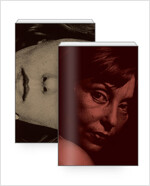
Clarice Lispector was a Brazilian writer. Acclaimed internationally for her innovative novels and short stories, she was also a journalist. Born to a Jewish family in Podolia in Western Ukraine, she was brought to Brazil as an infant, amidst the disasters engulfing her native land following the First World War.
She grew up in northeastern Brazil, where her mother died when she was nine. The family moved to Rio de Janeiro when she was in her teens. While in law school in Rio she began publishing her first journalistic work and short stories, catapulting to fame at age 23 with the publication of her first novel, 'Near to the Wild Heart' (Perto do Coração Selvagem), written as an interior monologue in a style and language that was considered revolutionary in Brazil.
She left Brazil in 1944, following her marriage to a Brazilian diplomat, and spent the next decade and a half in Europe and the United States. Upon return to Rio de Janeiro in 1959, she began producing her most famous works, including the stories of Family Ties (Laços de Família), the great mystic novel The Passion According to G.H. (A Paixão Segundo G.H.), and the novel many consider to be her masterpiece, Água Viva. Injured in an accident in 1966, she spent the last decade of her life in frequent pain, steadily writing and publishing novels and stories until her premature death in 1977.
She has been the subject of numerous books and references to her, and her works are common in Brazilian literature and music. Several of her works have been turned into films, one being 'Hour of the Star' and she was the subject of a recent biography, Why This World, by Benjamin Moser.(less)
“I want the following word: splendor, splendor is fruit in all its succulence, fruit without sadness. I want vast distances. My savage intuition of myself.” ― Clarice Lispector, The Stream of Life
“Things were somehow so good that they were in danger of becoming very bad because what is fully mature is very close to rotting” ― Clarice Lispector, A Hora da Estrela
“And I want to be held down. I don't know what to do with the horrifying freedom that can destroy me.” ― Clarice Lispector, The Passion According to G.H.
“I've never been free in my whole life. Inside I've always chased myself. I've become intolerable to myself. I live in a lacerating duality. I'm seemingly free, but I'm a prisoner inside of me.” ― Clarice Lispector, A Breath of Life
“I write as if to save somebody’s life. Probably my own. Life is a kind of madness that death makes. Long live the dead because we live in them.” ― Clarice Lispector, A Breath of Life
“When I suddenly see myself in the depths of the mirror, I take fright. I can scarcely believe that I have limits, that I am outlined and defined. I feel myself to be dispersed in the atmosphere, thinking inside other creatures, living inside things beyond myself. When I suddenly see myself in the mirror, I am not startled because I find myself ugly or beautiful. I discover, in fact, that I possess another quality. When I haven't looked at myself for some time, I almost forget that I am human, I tend to forget my past, and I find myself with the same deliverance from purpose and conscience as something that is barely alive. I am also surprised to find as I gaze into the pale mirror with open eyes that there is so much in me beyond what is known, so much that remains ever silent.” ― Clarice Lispector, Near to the Wild Heart
“Holding someone's hand was always my idea of joy. Often before falling asleep - in that small struggle not to lose consciousness and enter the greater world - often, before having the courage to go toward the greatness of sleep, I pretend that someone is holding my hand and I go, go toward the enormous absence of form that is sleep. And when even then I can't find the courage, then I dream.” ― Clarice Lispector, The Passion According to G.H.
“I do not know much. But there are certain advantages in not knowing. Like virgin territory, the mind is free of preconceptions. Everything I do not know forms the greater part of me: This is my largesse. And with this I understand everything. The things I do not know constitute my truth.” ― Clarice Lispector
“Oh, living is so uncomfortable. Everything presses in: the body demands, the spirit never ceases, living is like being weary but being unable to sleep–living is upsetting. You can’t walk around naked, either in body or in spirit.” ― Clarice Lispector, The Stream of Life
“How was she to tie herself to a man without permitting him to imprison her? And was there some means of acquiring things without those things possessing her?” ― Clarice Lispector, Near to the Wild Heart
“Where does music go when it’s not playing?—she asked herself. And disarmed she would answer: May they make a harp out of my nerves when I die.” ― Clarice Lispector, Near to the Wild Heart




댓글 없음:
댓글 쓰기