2019년 5월 17일 금요일

Richard Flanagan - Wikipedia

Richard Flanagan - Wikipedia


Richard Flanagan

From Wikipedia, the free encyclopedia
Jump to navigationJump to search
Richard Flanagan
RichardFlanagan 300w.jpg
Richard Flanagan
Born
Richard Miller Flanagan

1961 (age 57–58)
NationalityAustralian
Alma materUniversity of Tasmania
Worcester College, Oxford
Years active1985–present
Spouse(s)Majda Smolej
ChildrenThree
RelativesMartin Flanagan (brother)
AwardsAwards
Richard Miller Flanagan (born 1961) is an Australian writer, "considered by many to be the finest Australian novelist of his generation", according to The Economist. Each of his novels has attracted major praise and received numerous awards and honours.[1] He also has written and directed feature films. He won the 2014 Man Booker Prize for The Narrow Road to the Deep North.[2]
The New York Review of Books described Flanagan as "among the most versatile writers in the English language. That he is also an environmental activist and the author of numerous influential works of nonfiction makes his achievement all the more remarkable."[3]

Early life and education[edit]

Flanagan was born in LongfordTasmania, in 1961, the fifth of six children. He is descended from Irish convicts transported during the Great Famine in Ireland to Van Diemen's Land.[4] Flanagan's father was a survivor of the Burma Death Railway and one of his three brothers is Australian rules football journalist Martin Flanagan.
Flanagan was born with a severe hearing loss, which was not corrected until he was 6 years old.[5] He grew up in the remote mining town of Rosebery on Tasmania's western coast.[6][7][8]
Flanagan left school at the age of 16 but returned to study at the University of Tasmania, where he was president of the Tasmania University Union in 1983. He graduated with a Bachelor of Arts with First-Class Honours. The following year, he was awarded a Rhodes Scholarship at Worcester CollegeOxford, where he was admitted to the degree of Master of Letters in History.

Early works[edit]

Flanagan wrote four non-fiction works before moving to fiction, works he has called "his apprenticeship".[6][7][9] One of these was Codename Iago, an autobiography of 'Australia's greatest con man', John Friedrich, which Flanagan ghost wrote in six weeks to make money to write his first novel. Friedrich killed himself in the middle of the book's writing and it was published posthumously. Simon Caterson, writing in The Australian, described it as "one of the least reliable but most fascinating memoirs in the annals of Australian publishing".[10]

Novels[edit]

His first novel, Death of a River Guide (1994), is the tale of Aljaz Cosini, river guide, who lies drowning, reliving his life and the lives of his family and forebears. It was described by The Times Literary Supplement as "one of the most auspicious debuts in Australian writing".[11] His next book, The Sound of One Hand Clapping (1997), which tells the story of Slovenian immigrants, was a major bestseller, selling more than 150,000 copies in Australia alone. Flanagan's first two novels, declared Kirkus Reviews, "rank with the finest fiction out of Australia since the heyday of Patrick White".[12]
Gould's Book of Fish (2001), Flanagan's third novel, is based on the life of William Buelow Gould, a convict artist, and tells the tale of his love affair with a young black woman in 1828. It went on to win the 2002 Commonwealth Writers' Prize. Flanagan has described these early novels as 'soul histories'. His fourth novel was The Unknown Terrorist (2006), which The New York Times called "stunning ... a brilliant meditation upon the post-9/11 world".[13] His fifth novel, Wanting (2008) tells two parallel stories: about the novelist Charles Dickens in England, and Mathinna, an Aboriginal orphan adopted by Sir John Franklin, the colonial governor of Van Diemen's Land, and his wife, Lady Jane Franklin. As well as being a New Yorker Book of the Year and Observer Book of the Year, it won the Queensland Premier's Prize, the Western Australian Premier's Prize and the Tasmania Book Prize. His sixth novel was The Narrow Road to the Deep North (2013). The life story of Dorrigo Evans, a flawed war hero and survivor of the Death Railway, it has been hailed by The Australian as "beyond comparison ... An immense achievement"[14] and "a masterpiece" by The Guardian.[15] It won the 2014 Man Booker Prize.[16][17]
His most recent novel is First Person,[18] based loosely on his experience early in his writing career ghost-writing the autobiography of John Friedrich. According to the New Yorker "the novel, with its switchbacking recollections and cyclical dialogue, its penetrating scenes of birth and, eventually, death, is enigmatic and mesmerizing"[19] while the New York Review of Books called it a "tour-de-force".[3]

Journalism[edit]

Richard Flanagan has written on literature, the environment, art and politics for the Australian and international press including Le MondeThe Daily Telegraph (London), Suddeutsche ZeitungThe MonthlyThe New York Times, and the New Yorker.[20] Some of his writings have proved controversial. "The Selling-out of Tasmania", published after the death of former Premier Jim Bacon in 2004, was critical of the Bacon government's relationship with corporate interests in the state. Premier Paul Lennon declared, "Richard Flanagan and his fictions are not welcome in the new Tasmania".[21]
Flanagan's 2007 essay on logging company Gunns, then the biggest hardwood woodchipper in the world, "Gunns. Out of Control" in The Monthly,[22] first published as "Paradise Razed" in The Telegraph (London),[23] inspired Sydney businessman Geoffrey Cousins' high-profile campaign to stop the building of Gunns' two billion dollar Bell Bay Pulp Mill.[24][25] Cousins reprinted 50,000 copies of the essay for letterboxing in the electorates of Australia's environment minister and opposition environment spokesperson.[26][27] Gunns subsequently collapsed with huge debt,[28] its CEO John Gay found guilty of insider trading,[29] and the pulp mill was never built. Flanagan's essay won the 2008 John Curtin Prize for Journalism.[30]
A collection of his non-fiction was published as And What Do You Do, Mr Gable? (2011).
In 2015 he published Notes on an Exodus, on the Syrian refugee crisis, arising out of visiting refugee camps in Lebanon, Greece, and meeting refugees in Serbia. The book also features sketches made by the noted Australian artist Ben Quilty, who travelled with Flanagan to meet the refugees.

Film[edit]

The 1998 film of The Sound of One Hand Clapping, written and directed by Flanagan, was nominated for the Golden Bear at that year's Berlin Film Festival.[31]
He worked with Baz Luhrmann as a writer on the 2008 film Australia.

Personal life[edit]

Flanagan is an ambassador for the Indigenous Literacy Foundation,[32] to which he donated his $40,000 prize money on winning the Australian Prime Minister's Literary Prize in 2014.[33] A painting of Richard Flanagan by artist Geoffrey Dyer won the 2003 Archibald Prize.[34] A rapid on the Franklin River, Flanagan's Surprise, is named after him.[35]
Flanagan lives in Hobart, Tasmania with his Slovenian-born wife Majda (née Smolej) and has three daughters, Rosie, Jean and Eliza.
His life was the subject of a BAFTA award-winning BBC documentary, Life After Death.[36]

Works[edit]

Novels[edit]

Non-fiction[edit]

  • (1985) A Terrible Beauty: History of the Gordon River Country[47]
  • (1990) The Rest of the World Is Watching — Tasmania and the Greens[48] (co-editor)
  • (1991) Codename Iago: The Story of John Friedrich[49][50] (co-writer)
  • (1991) Parish-Fed Bastards. A History of the Politics of the Unemployed in Britain, 1884–1939[51]
  • (2011) And What Do You Do, Mr Gable?
  • (2015) Notes On An Exodus
  • (2018) Seize the Fire: Three speeches

Films[edit]

Awards and Honours[edit]

  • (1996) National Fiction Award for Death of a River Guide
  • (1995) Victorian Premier's Prize for Best First Fiction (for Death of a River Guide)
  • (1998) National Booksellers award for Best Book for The Sound of One Hand Clapping
  • (1998) Victorian Premier's Prize for Best Novel The Sound of One hand Clapping)
  • (2002) Australian Literary Society Gold Medal (for Gould's Book of Fish: A Novel in Twelve Fish)
  • (2002) Victorian Premier's Prize for Fiction for Gould's Book of Fish: A Novel in Twelve Fish
  • (2002) The Commonwealth Writers' Prize (for Gould's Book of Fish: A Novel in Twelve Fish)
  • (2008) Western Australian Premier's Literary Award for Fiction (for Wanting[52]
  • (2009) Queensland Premier's Literary Award for Fiction (for Wanting)
  • (2011) Tasmania Book Prize (for Wanting[53]
  • (2014) Western Australian Premier's Literary Award for Fiction (for The Narrow Road to the Deep North)
  • (2014) Queensland Premier's Literary Award for Fiction (for The Narrow Road to the Deep North[54]
  • (2014) The Man Booker Prize for Fiction (for The Narrow Road to the Deep North[55]
  • (2014) Australian Prime Minister's Literary Prize (for The Narrow Road to the Deep North[56]
  • (2015) Margaret Scott Prize (for The Narrow Road to the Deep North)[57]
  • (2016) The Athens Prize for Literature (for The Narrow Road to the Deep North[58]
  • (2016) Lire Prix du meilleur livre étranger (for The Narrow Road to the Deep North[59]

References[edit]

  1. ^ "New fiction: Remembrance - The Economist"The Economist. 3 July 2014. Retrieved 15 October 2014.
  2. ^ Bennhold, Katrin; Alter, Alexandra (23 July 2014). "In First, Americans Are Nominated for Booker Prize"Nytimes.com. Retrieved 9 February 2019.
  3. Jump up to:a b Oates, Joyce Carol (27 September 2018). "The Ghostwriter's Mask"Nybooks.com. Retrieved 9 February 2019.
  4. ^ Dynasties 2: More Remarkable and Influential Australian Families (1 ed.). Books for the Australian Broadcasting Corporation. 2006. pp. 31–32. ISBN 9780733317675.
  5. ^ ABC, Australian Story. Abc.net.au, Retrieved 29 December 2018
  6. Jump up to:a b "Notes for Reading Groups – Richard Flanagan" (PDF)Picador Australia. 3 November 2004. Archived from the original (PDF) on 3 October 2009. Retrieved 8 November 2009.
  7. Jump up to:a b "Richard Flanagan"The British Council. Retrieved 13 January 2016.
  8. ^ Our AuthorsRandom House Australia
  9. ^ "Author Biography"Bookbrowse.com. 30 April 2007. Retrieved 8 November 2009.
  10. ^ "All memoirs are verily unreliable"Theaustralian.com.au. 11 April 2008. Retrieved 9 February 2019.
  11. ^ Smith, Vivian (3 October 1997). "Down the Franklin"The Times Literary Supplement. Retrieved 7 April 2019.
  12. ^ Death of a River GuideKirkus Reviews, 1 March 2001
  13. ^ Kakutani, Michiko (8 May 2007). "A Misunderstanding, and a Simple Life Descends Into a Nightmare"The New York Times.
  14. ^ "Poetry without a shred of pity"The Australian. News Corp Australia. Retrieved 15 October 2014.
  15. ^ Williams, Michael (26 September 2013). "Dinner with Richard Flanagan, a child of the death railway"The Guardian. Retrieved 15 October 2014.
  16. ^ "Richard Flanagan wins Man Booker Prize for The Narrow Road to the Deep North"Daily Telegraph. 14 October 2014. Retrieved 15 October 2014.
  17. ^ "Man Booker Prize 2014: The Narrow Road to the Deep North author Richard Flanagan becomes third Australian to win the literary accolade"Independent. 14 October 2014. Retrieved 15 October 2014.
  18. ^ "New Novel from Richard Flanagan"Penguin.com.au. Retrieved 9 February 2019.
  19. ^ "Briefly Noted Book Reviews"Newyorker.com. 21 May 2018. Retrieved 9 February2019.
  20. ^ Flanagan, Richard (14 January 2013). "Tasmanian Devil"Newyorker.com. Retrieved 9 February 2019.
  21. ^ "Australian Story"Abc.net.au. Retrieved 15 October 2014.
  22. ^ "Themonthly.com"The Monthly. Retrieved 15 October 2014.
  23. ^ Flanagan, Richard (28 June 2007). "Paradise razed"The Daily Telegraph. London.
  24. ^ Ramsey, Alan (6 October 2007). "Vision Ltd: Turnbull yes to mess for 50 years"The Sydney Morning Herald. Retrieved 9 February 2019.
  25. ^ "The corporate assassin"Smh.com.au. Retrieved 15 October 2014.
  26. ^ "Pulp mill fight moves into MPs' backyards – Environment". Sydney Morning Herald. 28 August 2007.
  27. ^ "Garrett hedges bets on mill – Environment". Sydney Morning Herald. 29 August 2007.
  28. ^ "Gunns failure a story of corporate greed and hubris, say mill's critics"Sydney Morning Herald. Retrieved 15 October 2014.
  29. ^ "Commonwealth pursues Gay for proceeds of crime"ABC News. Retrieved 15 October2014.
  30. ^ [1][dead link]
  31. ^ "Berlinale: 1998 Programme"berlinale.de. Retrieved 22 January 2012.
  32. ^ "Archived copy". Archived from the original on 15 July 2015. Retrieved 15 July 2015.
  33. ^ "Archived copy". Archived from the original on 15 July 2015. Retrieved 15 July 2015.
  34. ^ "Archived copy". Archived from the original on 25 March 2009. Retrieved 7 January2009.
  35. ^ Peter Griffiths and Bruce Baxter,(2010) The Ever-Varying Flood. A History and Guide to the Franklin River. (2nd ed.) Preston, Vic. ISBN 0-9586647-1-4 p.57
  36. ^ Cocker, Jack (7 August 2015). "Richard Flanagan: Life After Death". Vimeo. Retrieved 9 February 2019.
  37. ^ MacFarlane, Robert (26 May 2002). "Con fishing"The Guardian. London. Retrieved 8 November 2009.
  38. ^ "Review of Gould's Book of Fish"Complete-review.com. Retrieved 15 October 2014.
  39. ^ González Cueto, Irene (6 March 2017). "Nadando contracorriente con El libro de los peces de William Gould, de Richard Flanagan"Cultural Resuena (in Spanish).
  40. ^ "The Unknown Terrorist official site"Theunknownterrorist.com.au. Retrieved 9 February2019.
  41. ^ ABC.net.au Transcript of interview with Ramona Koval on The Book ShowABC Radio National on his novel "Wanting", 12/11/2008
  42. ^ Themonthly.com, Video: Interview with Richard Flanagan about Wanting and Baz Luhrmann's Australia
  43. ^ Official Australian Wanting book website
  44. ^ Boyd, William (28 June 2009). "Saints and Savages"The New York Times.
  45. ^ Williams, MIchael (26 September 2013). "Dinner with Richard Flanagan, a child of the death railway"The Guardian. Retrieved 31 December 2013.
  46. ^ Williamson, Geordie (28 September 2013). "Poetry without a shred of pity"The Australian. Retrieved 31 December 2013.
  47. ^ "A terrible beauty : history of the Gordon River country / Richard Flanagan"National Library of Australia. Retrieved 8 November 2009.
  48. ^ "The Rest of the world is watching"National Library of Australia. Retrieved 8 November2009.
  49. ^ "Codename Iago : the story of John Friedrich : by John Friedrich with Richard Flanagan"National Library of Australia. Retrieved 8 November 2009.
  50. ^ "Richard Flanagan"Middlemiss.org. 20 December 2004. Retrieved 8 November 2009.
  51. ^ ""Parish-fed bastards" : a history of the politics of the unemployed in Britain, 1884-1939 / Richard ... - National Library of Australia"Catalogue.nla.gov.au. Retrieved 15 October2014.
  52. ^ Australian, c=AU; o=Government of Western Australia; ou=Department of Culture and the Arts;ou=State Library of Western. "Western Australian Premier's Book Awards - 2008"Pba.slwa.wa.gov.au. Retrieved 9 February 2019.
  53. ^ "2011 Tasmanian Book Prizes winners announced - Books+Publishing"Booksandpublishing.com.au. Retrieved 9 February 2019.
  54. ^ "Domain parked by Instra"Qldlitawards.org.au. Retrieved 9 February 2019.
  55. ^ "The Man Booker Prize for Fiction Backlist - The Man Booker Prizes"Themanbookerprize.com. Retrieved 9 February 2019.
  56. ^ "Subscribe to The Australian - Newspaper home delivery, website, iPad, iPhone & Android apps"Myaccount.news.com.au. Retrieved 9 February 2019.
  57. ^ Hodgman, Will (2 December 2015). "Winners of the Premier's Literary Prizes". Department of Premier and Cabinet. Retrieved 1 January 2018.
  58. ^ "Archived copy". Archived from the original on 20 December 2016. Retrieved 5 December 2016.
  59. ^ "Lire: les 20 meilleurs livres de 2016"LExpress.fr. 1 December 2016. Retrieved 9 February 2019.

External links[edit]

Bryce Courtenay: fact or fiction? - ABC News (Australian Broadcasting Corporation)


Bryce Courtenay: fact or fiction? - ABC News (Australian Broadcasting Corporation)


Bryce Courtenay: fact or fiction?
By Karina Carvalho

Updated 16 May 2012, 6:37am


Space to play or pause, M to mute, left and right arrows to seek, up and down arrows for volume.


VIDEO: Bryce Courtenay talks to ABC News Breakfast: Part 1 (ABC News)

Australia's best-selling author Bryce Courtenay has spoken for the first time about claims he lied about his childhood in South Africa.

Courtenay, 78, was reluctant to discuss the revelations made by his sister, Rosemary, who raised doubts about the time he spent in an orphanage and who funded his schooling in South Africa.

He brushed off questions about their relationship when I interviewed him at his home in Canberra, saying he barely knows her.

"She's a deeply religious person of a charismatic faith and we don't have a great deal in common," he said.

"In fact, we never have had a great deal in common.

"We didn't spend a lot of our childhood together, some but not a lot, so I've been careful to have her benefit from my success."

His sister had cancer and he says he spent a great deal of money to help save her.


What does the term real mean? The only thing that's authentic about what a writer writes is his work.
Bryce Courtenay


Courtenay has had his own illness to contend with, after being convinced the stomach cancer he had been diagnosed with a year ago had spread.

His doctor has given him the all-clear - for now at least.

When pushed on why he will not refute outright claims that he has exaggerated some aspects of his childhood, Courtenay was less forthcoming.

"One of the joys of having left a country where things were not always right for me and having come to a country where I've been able to give my utmost is, I want to be known for the 57 years I've been in Australia, not for the 17 years I spent in Africa," he said.

"Judge me on what I have done here and what I have said here and what I have been here and what contribution, if any, I've made whilst I've been here.

"And that's what concerns me, not my childhood."
'I have always tried to be honest'


Space to play or pause, M to mute, left and right arrows to seek, up and down arrows for volume.


VIDEO: Bryce Courtenay talks to ABC News Breakfast: Part 2 (ABC News)


Courtenay has mastered a style of popular fiction that has resulted in more than 20 million book sales, during a writing career that only began 21 years ago with The Power of One.

His debut novel has gone on to sell 9 million copies worldwide.

I put to him a line from his second book, April Fool's Day, which he wrote to dispel the myths about HIV/Aids after his son Damon, a haemophiliac, died at the age of 24 after being infected by a blood transfusion.

Courtenay wrote "I tell myself lies and soon I believe them".

His response is short: "Name me a fiction writer who doesn't. I have always tried to be honest."

I ask if he has blurred the lines between fact and fiction.

"My job, and that's my job, is to dress the naked truth," he said.

"To make it interesting, to make it viable, to make it seem like something you understand and feel and love."

Who is Bryce Courtenay?
Born in Johannesburg, South Africa in 1933. Moved to Australia in 1958.
Studied journalism in London and worked in advertising before becoming a writer at the age of 55.
His first book, The Power of One, was published in 1989.
It has sold more than 9 million copies worldwide.
His second book, April Fool's Day, is a tribute to his son who died at the age of 24 after contracting HIV/AIDS from a blood transfusion.
He has written 20 books in 21 years, which have sold more than 20 million copies.
He was awarded the Order of Australia in 1995.


I press him: "So have you done that with your own life as opposed to just with your writing?"

Courtenay said he could not answer that and I asked him why not.

"Because to me it seems an absurdity, I'm a writer, there are two personas going here," he said.

I question which one is real.

"Oh, come on, what does the term real mean?" he asks.

"The only thing that's authentic about what a writer writes is his work."

I ask if he can separate the two, his writing persona and real life.

"But, of course, [Charles] Dickens was accused of exactly what you are doing, exactly what you are doing to me now," he said.

"Does it make him any less real? He was one of the great writers in the world.

"I would never ever presume to be anywhere in that class, but nevertheless we have the same affectations and so does just about every writer."

As we finish our conversation, he is adamant Australia is still the lucky country.

It is racist, he says, but less so than when he first arrived in 1955 and he is very excited for the next generation of writers.

"I guess my use-by date is just about up but if I could come back as a storyteller now, I would be jumping over the moon because wow, just think what's available."

Courtenay's health problems prevented him from releasing a book last Christmas, which was difficult for someone who has written 20 books in 21 years.

But he says his readers can expect a new title later this year.

Topics: author, books-literature, arts-and-entertainment, australia

First posted 15 May 2012, 6:30am

Jessica (novel) - Wikipedia


Jessica (novel) - Wikipedia


Jessica (novel)
From Wikipedia, the free encyclopedia

Jump to navigationJump to search

Jessica
First edition
Author Bryce Courtenay
Country Australia
Language English
Publisher Viking Australia

Publication date 1 December 1998
Media type Print (hardcover)
Pages 395
ISBN 0-670-88351-4


Jessica is a historical novel based in real facts[1] by Bryce Courtenay. It was published in 1998 and like other works from Courtenay covers several years in the life of the main character: Jessica Bergman. It was adapted into a mini-series starring Leeanna Walsmanand Sam Neill which aired on Australian television in 2004. Jessica was voted Best Mini Series at the 2004 Chicago International Film Festival. It twice won the APA Who Weekly Reader's Choice Award, in 1999 and 2000.


Contents
1Plot
1.1Publication history
2Literary significance and reception
3Adaptations
4References
5External links
Plot[edit]

Jessica is a tomboy, raised to be her father's son to help out on the farm. Her older sister Meg is very much her mother's daughter, and it is Meg's and their mother's mission for Meg to seduce Jack Thomas, the town's wealthiest eligible bachelor. Jessica and her dad work each year shearing at Riverview station for the Thomases - the richest family in the district. In the shearing shed, Jessica becomes close friends with Jack Thomas and William D'arcy Simon. Jessica is teased by the other boys, predominantly for simply being female. Eventually she is attacked, with tar poured over her head and hair. Jack and William defend her, but William is kicked by a horse, causing brain damage and earning him the name Billy Simple. Subsequently, Jessica and Jack's relationship blossoms and they become Billy's sole friends.

Jack gets Billy a job working as a gardener for his rich family, but one day Billy kills Jack's mother and two sisters, because of their constant taunting of him. Jessica takes him on the long journey to the nearest town with a courthouse, endangering herself. Jessica holds off the angry mob of farmers, to give Billy a fair trial. When they finally reach the courthouse, the farmers (including Jack) catch them. However, although Billy has murdered his mother and sisters, Jack holds off the mob and sweeps exhausted Jessica off her feet and carries her into the courthouse. Billy is later sentenced to death, but not without a fight from his lawyer, Richard Runche.

After this Jack starts coming to their house and "walking out" with Jessica. Meg doesn't want anything to do with him because he is no longer going to be rich as his father disinherited him. Jack enlists and finds out that he has to leave to war he also mentions that his mothers will was read and he is now sole inheritor of the whole estate. He asks Jessica to be his wife but she says yes but to keep it a secret until he gets back. That same day Hester then informs Jessica that she cannot talk to him anymore and that Meg and Jack were just being nice and they are an item. Jack is leaving in week and her mom cooks up a scheme when Joe takes Jessica to the doctor to get checked because she has been really sick that Hester leaves and Meg seduces Jack as a going away "present". At the doctors visit Jessica finds out she is pregnant er parents suspect that she had intimate relations with Billy Simple on the way to town, but she will not say who she the father is. Meg then pretends to be pregnant, forcing Jack to marry her before he leaves, although he loves Jessica. He does make Meg sign a paper saying she and Hester will receive none of his estate unless she actually gives birth or has a miscarriage. Her mother tells the town that Jessica has gone crazy, so had to be isolated (during her pregnancy). Hester and Meg have a plan to have a miscarriage with witnesses but the witness sees Jessica's pregnancy while she is there so Jessica's father and mother suffocate her and Hester comes up with a plan to take Jessica's baby after it is born. Jessica's baby is born Christmas Day and Joe has a change of heart and decides not to take her baby. Jessica's father tries to kill Jessica's mother, his wife because he is done with everything but he has a heart attack. They convince Jessica to come back for the funeral with the baby and to go to the funeral without Joey because no one knows she had a baby. Then at the funeral, when they announce that Meg gave birth, Jessica breaks down, screaming that they stole her baby and attacks Hester.

She is put in a mental asylum for 4 years, and makes friends with a Jewish man, Moishe Goldberg. She helps him to get better and when he is released, Moishe contacts Billy's lawyer, Richard Runche who fights and frees Jessica. Meg and her mother agree to give her the land entitlement for their old property plus another 10 acres (40,000 m2) on the condition that she never approaches her son, Joey, or tries to get him back. Her Aboriginal friend, Mary's (who helped her during her pregnancy) half-caste children are taken by the authorities, and Jessica, with the help of Runche and Moishe, gets them back in a court case to make history.

Upon return to her house one afternoon, Jessica finds her dog has been bitten by a snake. She goes off to find the snakes and while Jessica is successful in killing one, its mate bites Jessica before being bludgeoned to death with her rifle. Knowing that death is near, she goes back to her hut and is found dead by Mary. Mary also finds a letter Jessica wrote to Jack, but never sent advising him of being pregnant with his child.
Publication history[edit]
1998, Australia, Viking Australia ISBN 0-670-88351-4, Pub date 1 December 1998, hardcover
1999, Canada, ISBN 1-55278-088-0, Pub date 1 January 1999, hardcover
2000, United Kingdom, Penguin Books ISBN 978-0-14-027960-3, Pub date 27 July 2000, paperback
Literary significance and reception[edit]

The book was very well received, rated at Amazon as 4.2 out of 5.0[2] and at 3.92 out of 5.0 at GoodReads.[3] The book won the APA Who Weekly Reader's Choice Award in both 1999 and 2000.
Adaptations[edit]

Jessica (2004/TV) - 196 Minutes
References[edit]

^ "Jessica, by Brice Courtenay". Retrieved 20 July 2010.
^ "Amazon web page on Jessica, by Brice Courtenay". Retrieved 8 August 2010.
^ "GoodReads web page on the novel Jessica, by Brice Courtenay". Retrieved 8 August2010.
External links[edit]
Author's Web page on the Book


We're not just mourning Bob Hawke – we miss purposeful leadership and big ideas | Lenore Taylor | Australia news | The Guardian


We're not just mourning Bob Hawke – we miss purposeful leadership and big ideas | Lenore Taylor | Australia news | The Guardian


We're not just mourning Bob Hawke – we miss purposeful leadership and big ideas
Lenore Taylor


This generation has probably never felt truly confident that a political leader cared more about the electorate than their own survival

Nation in mourning for Bob Hawke – politics live
The typical Australian who enjoyed extraordinary popularity
Barrie Cassidy: popular forever, the intellectual larrikin
@lenoretaylor

Fri 17 May 2019 14.07 AESTLast modified on Fri 17 May 2019 18.35 AEST


Shares
937
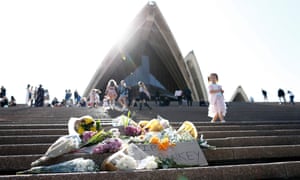
Flowers and a glass of beer left on the steps of the Sydney Opera House in tribute to Bob Hawke. Photograph: Ryan Pierse/Getty Images


Everyone has their memories of Bob Hawke – some formed up close through long working collaborations, some from a distance through the impressions of a child.

He was prime minister as I came to adulthood. At uni I trusted him when I watched the TV at the pub that day Australia won the America’s Cup, and, true to Hawke’s word, the boss at my part-time job did not give me the sack. Later I interviewed him for the student newspaper about the reintroduction of university fees. Predictably, in hindsight, I didn’t get very far.

He was still prime minister when I joined the press gallery some years later.


'Australians knew Bob loved them': tributes paid to PM Hawke

Read more

I watched him in the dusty town of Wentworth in far western New South Wales delivering what was dubbed the “world’s greatest environment statement”, pioneering because it recognised that something was terribly wrong with the nation’s most important river system, and visionary because it understood that farmers and environmentalists were not antagonists but necessary partners in the efforts to fix it. Finding consensus was always his strength.

I watched him weep as he spoke after the massacre in Tiananmen Square, when he said to “crush the spirit and body of youth is to crush the very future of China itself” and offered visa extensions to thousands of Chinese students studying in Australia, a decision we discovered he made without consulting his cabinet when the papers were released some decades on. Last night I learned that our young colleague Naaman Zhou, who liveblogged reaction to Hawke’s death, is the son of two students who benefited from that decision. Compassion has a way of compounding like that.


I followed the intense debates about opening the Australian economy, which unlike similar reforms around the world at the time, kept social equity clearly in mind, even though they paved the way for policies that did not.


We’re mourning the kind of considered, determined, purposeful political change that Bob Hawke and Paul Keating drove

I watched him at his campaign launch at the Sydney Opera House in 1987, when he promised that by 1990 no Australian child would be living in poverty, an admirable aspiration that he would never fulfil and that remains shockingly unmet.

Everyone has memories like these snippets but I don’t think it is just the recollections of Hawke’s achievements or his “knockabout character” or his specific successes and failures that is driving this wave of nostalgia and grief.
Advertisement


We’re mourning the kind of considered, determined, purposeful political change that Bob Hawke and Paul Keating drove – a time when politicians advanced big political ideas and argued their merits, over months, or years, and were given the space to make the argument, even if opinion polls dipped for a while. Even Labor’s political opponents pay tribute to that.

We’re mourning a time when politicians made their case in words and sentences they constructed themselves, and continued to make them when vested interests cranked up their campaigns, a time when a politician could reveal flaws and weaknesses without being immediately disqualified from public life.

Bob Hawke spoke like us – until him the working class only saw themselves mocked on screen
Van Badham


Read more

Of course we should not look back through rose-tinted glasses – leadership rivalries and factional infighting were obviously real and bitter in the 80s and 90s too. Expediency was still rife.

But we can see that Australians have become more disappointed with politics in recent years. This generation has probably never felt truly confident that a political leader cared more about the electorate than their own ratings or survival. They may have never felt confidence in a political leader at all.

Bill Shorten aspires to be a consensus leader in the style of Hawke. He hasn’t inspired the country the way Hawke did, but he has stuck to his guns on big tax and environment policies despite concerted Coalition and business and media attacks.

If Labor wins on Saturday, it will be up to Shorten and his team to rise to the challenge of trying to give back to Australians some of what they miss so much about Bob Hawke.

Play Video
2:31 Bob Hawke: key moments in the life and career of Labor's longest serving PM – video


Since you’re here…