2019년 4월 20일 토요일

I am an adoptee from Eastern Social Welfare Society

I am an adoptee from Eastern Social Welfare Society


INTERCOUNTRYADOPTEEVOICES.COM
Lynelle shares on why we should be rightfully angry about the loses in intercountry adoption.
Comments
  • Minty Ryan smh

    When I read articles like this, this is what I think:See more
    • Lynelle Long Minty Ryan I’m intrigued as to why u think this is about a “pity pot” .. u don’t have KADs who have been deported or don’t have citizenship? Or u think it’s ok that they don’t? Or are u angry to read about valid things in adoption that trigger ur anger? There’s nothing wrong with anger .. it’s a valid emotion.
    • Minty Ryan I know of zero adoptees that were deported from the USA or have problems with citizenship. If proper procedures had been followed to ensure they attained naturalization after adoption then it wouldn't be an issue. What kind of idiot screws that up?
    • Lynelle Long Minty Ryan lots of adoptive families screwed that up .. try reading this paper it shows u 14 Intercountry adoptees who have no citizenship thru no fault of their own!
      https://intercountryadopteevoices.com/.../citizenship.../
      Citizenship should be guaranteed in Intercountry Adoption
      INTERCOUNTRYADOPTEEVOICES.COM
      Citizenship should be guaranteed in Intercountry Adoption
      Citizenship should be guaranteed in Intercountry Adoption
    • Lynelle Long And unlike what u think, instead of sitting here in my pity pot, I’ve been actively helping my fellow adoptees fight for their right to citizenship .. https://intercountryadopteevoices.com/.../us-government.../
      US Government Meetings
      INTERCOUNTRYADOPTEEVOICES.COM
      US Government Meetings
      US Government Meetings
    • Minty Ryan I don't feel bad for them one bit. If you apply for citizenship in another country there are clearly defined procedures one must take to become a citizen of said country. If the procedures weren't followed, that's the adoptive family's responsibility. Things don't magically happen because we want them to. You have to put in the effort to make sure things are taken care of properly.
    • Lynelle Long Yep we have adoptees like u thru out the world sadly ..
    • Minty Ryan "I hate that our original identities are ignored and get obliterated as if they don’t matter!"

      "I hate that we lose our birth culture, language, religion, heritage, customs, kin, community and country."

      "I hate that I had to endure racism and isolation in my community whilst growing up as a child."

      The reality is what it is. You can let it get you down or you can move your life in a positive direction. A few years ago one of my very good friends ran into a situation where he was jobless and nearly broke and homeless. I sat him down and explained to him that yes, his situation sucked. However, he worked his ass off for a year straight, found a good job and now travels around the world. He could have just sat around crying but he motived himself to take control of his life and move it in a positive direction. If you get deported, tough shit. Deal with it. make the best of the situation and move on.
    • Minty Ryan Lynelle Long I'm a high school drop out. I dealt with the cultural isolation and racism when I was younger. It could have gotten me down, but I made the conscious decision to make my life better. When I see middle class people crying about first world problems with all of their limbs intact and in general good health with their basic life needs met, it makes me sick to my stomach. There are people in way worse situations than you could ever imagine and they find a way to make the best of it.
    • Lynelle Long very pragmatic approach .. anyway nice chatting .. wishing u well but just remember some adoptees like validation as well as pragmatism and clearly u don’t know me or follow my blogs because I get the sense u have no idea what we do at ICAV ..


===========

https://intercountryadopteevoices.com/2018/11/15/what-adoptees-lose-in-adoption/?fbclid=IwAR1li_bnBRFsY-PmyDI9JN3OgtSn0xgwCmjVfSfok5M7_Gz97fgswPm6ZLI


NOVEMBER 15, 2018 BY LYNELLELONG
What Adoptees Lose in Intercountry Adoption


I normally tiptoe around adoption and never say the A word because people just don’t respond well to “adoptee anger“. But during the month of November, I feel it is appropriate to air my feelings on what I have anger about, in intercountry adoption.

I hate that our original identities are ignored and get obliterated as if they don’t matter! I’ve never seen my identity papers because they got “lost” in transit and no-one in government at my adoptive country end, nor my adoptive family, thought to go to the ends of the earth to locate them. Perhaps they thought it wouldn’t matter because I was given a “new” life and family – and that’s all I should ever need?!

I hate that we lose our birth culture, language, religion, heritage, customs, kin, community and country. I hate that these important facets of our identity are ignored and denied. As if they don’t matter because what I gained materially from my adoptive country is assumed to make up for all the losses?!

I hate that I had to endure racism and isolation in my community whilst growing up as a child. The shame of looking non-white, the inner hatred I developed as a result because I didn’t see myself mirrored anywhere. The phrase from my adoptive family, “We love you as one of us” showed how little they understood the impacts of intercountry adoption. They couldn’t recognise my journey was any different to theirs nor did they understand the profound impact this would have on me.

I hate that people assume all adoptive homes are awesome and when we get placed in not-so-positive adoptive homes, no-one checks on us, no-one stands up for us, often our story is not believed and/or invalidated, and no-one gives us a safe place to be nurtured, respected, or cared for. As a child I felt so vulnerable and alone. It was a terrible overwhelming feeling that left me in fight or flight responses for years, with scars to wear for the rest of my life.

I hate that we live in an age where a Government apology seems to be the latest fashion accessory but yet for those adopted via illegal or questionable means, we intercountry adoptees will never get closure. A true apology would mean firstly acknowledging the wrong, then a lifelong commitment to making amends including providing financial renumeration to reflect the pain we carry forever, along with the supports required to help us restore our mental well being; and lastly to make the necessary changes to never repeat the same mistakes again.

I hate that some of my adoptee friends adopted to the USA are living a gutted life because they have been deported back to their country of birth like common commodities, shipped in and out with ease, being treated as though they are of no real value and certainly with no choice. In the majority of cases, they were placed in adoptive homes that were very damaging and their lives spiralled out of control. Isn’t adoption meant to be about “permanency“?! This week in the news headlines, an intercountry adoptee in Australia is to be deported back to the Cook Islands. It is immoral and unethical to adopt a child from one country to another when it suits, through no choice of their own, and then be sent back to birth country because they fail to live up to being an adoption success story!

I hate that thousands of my intercountry adoptee friends in the USA are living in fear everyday because they are still not given automatic citizenship. They often have no social security and cannot leave the country for fear of being picked up by immigration officials. Isn’t adoption meant to provide a forever family … and permanency in a home and country?!

I feel this anger today because it is November and around the world, many use this month to celebrateadoption and promote awareness. For me, I don’t celebrate these aspects of adoption, they make me rightfully angry and more so, when I see my experience replicated in the lives of many around the world.


At ICAV, we believe in promoting awareness of the impacts of intercountry adoption ALL year round, not just in November.

I hope after reading this, you will all also be rightfully angry at the things intercountry adoptees LOSEbecause of our adoption.

My goal is to encourage adoptees to turn that rightful anger into an appropriate energy:
to educate the wider community and enhance a deeper understanding of the complexities involved in intercountry adoption;
to push for the much needed social, political, legal, and economic changes that cause inequality and leave many of our families with little choice;
to help prevent adoption where necessary by supporting family reunification initiatives and advocating for this in our birth countries;
and if adoption has to be the last resort, to help improve the way we conduct intercountry adoption such as changing it from our plenary system to simple adoptions; and supporting all triad members throughout the lifelong journey.

I also acknowledge there are many other less scarey emotions and thoughts we can talk about in intercountry adoption, but at ICAV, I like to raise awareness about the issues that don’t normally get aired.

There are plenty who speak of the positives in adoption … but not many who openly share the not-so-positive aspects. In speaking out, I aim to help balance out the discussions in intercountry and transracial adoption.


Share this:

Twitter
Facebook
More


Like this:TAGSA HOME FOR EVERY CHILD, ADOPTEES, ADOPTION, ADOPTION AND PERMANENCY, ADOPTION AWARENESS MONTH, ADOPTION EXPERIENCE, AUSTRALIAN FEDERAL GOVERNMENT INTERCOUNTRY ADOPTION, DEPORTATION, DEPORTED ADOPTEES, FOREVER FAMILY, INTERCOUNTRY ADOPTION, INTERNATIONAL ADOPTION, MILLIONS OF ORPHANS, NATIONAL ADOPTION AWARENESS, RIGHTS OF THE CHILD, TRANSRACIAL ADOPTION, US OFFICE OF CHILDREN'S ISSUES, US STATE DEPARTMENT, WHAT ADOPTEES LOSE IN ADOPTION

One Reply to “What Adoptees Lose in Intercountry Adoption”

Jenny pickles
NOVEMBER 15, 2018 AT 19:17


Well said Lynelle, as always. Keep up the good work, Jenny Pickles
Loading...

Reply

Leave a Reply

2019년 4월 14일 일요일

Have we, Australia, become a country that breeds mass murderers with our words? | Richard Flanagan | Australia news | The Guardian

Have we, Australia, become a country that breeds mass murderers with our words? | Richard Flanagan | Australia news | The Guardian

Australian immigration and asylum

Have we, Australia, become a country that breeds mass murderers with our words?


Richard Flanagan


In this speech given at the Palm Sunday Rally for Refugees, Richard Flanagan says we are better than our politicians’ dark fears


Sun 14 Apr 2019 15.01 AESTLast modified on Sun 14 Apr 2019 17.36 AEST


Shares


2,085


“We are our parliament, which voted for a neo-Nazi slogan, resolving that it is OK to be white.” Photograph: Darrian Traynor/Getty Images


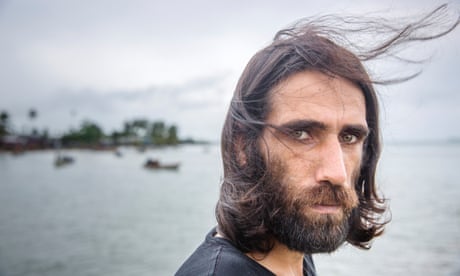
Ihave only ever heard Behrouz Boochani’s voice through speakers. One day, he will stand here before us, and we will hear and see him in the flesh. As a free human being. And I am here today to say that day is coming.


Because change is coming. You can feel it, you sense it. It is coming and it will not be denied. But it needs us to fight for it and to keep fighting for it, and we need to fight for it, not only for the refugees of Manus and Nauru, but for our own salvation.


There is no fineness of oppression. We become the words we use. One small lie inevitably must be paid for with another larger lie, and that with more again. To rob one human of freedom demands that we must rob another, or the crime becomes too obvious. That is why to falsely imprison one human for no crime is a scandal while to kidnap and falsely imprison thousands for no crime is called a national necessity.


We paid $180m for Scott Morrison to have a press conference on Christmas Island


Scott Ludlam


Read more


This was, and always was only about the basest electoral politics, playing to a racist idea of Australia, that over 20 years, gave cover and then legitimacy to increasingly dangerous and murderous groups in our society.


And so it went for two decades until the horror of Christchurch, when New Zealand could truthfully say in atonement, “he is not one of us”.


But he is one of us. And the terrible truth is that we are him. We are our media, which too often promotes neo-Nazis. We are our parliament, which voted for a neo-Nazi slogan, resolving that it is OK to be white. We are our senator, who called for a “final solution” to the so-called problem of immigration.


Play Video


4:32 'A victory for humanity': Behrouz Boochani's literary prize speech in full – video


We are our leaders of both major parties, who for too long competed in open cruelty towards refugees. We are our prime minister, who has said those on Manus and Nauru may be paedophiles, rapists, murderers.


And yet it is the refugees of the camps who suffered sexual abuse, rapes, violence, and the psychological destruction of one human being after another in Australia’s name – our name – in Australian internment centres. And so we became the words we used. In the almost two decades since Tampa, it is we who have become the paedophiles, the rapists, the murderers.


In the 2001 election, we decided who would we become and the circumstances in which we could become a new country. We became the charring flesh of 23-year-old Omid Masoumali as he burnt himself to death on Nauru. We became the screams of Hodan Yasin, who did the same thing a few days later. We became the ignored begging of a woman refugee on Nauru being raped.


The potential of refugee entrepreneurs is huge. But they need our help


Philippe Legrain


Read more


We became these words, we became these things, in the eyes of the world and in our own hearts, and now the shame of it must end, because we can no longer go forward as a nation when Australia’s soul is daily a little more stained by such evil.


Someone is responsible. Someone is guilty. And it is they and not the innocent of Nauru and Manus who should be in jail. That is why there must be a royal commission into these camps – so that Omid Masoumali did not burn himself to death in vain; so that Reza Barati’s murder is not completely meaningless; so that the countless lives and souls destroyed know some justice.


We need to establish the truth of what we did in those camps so that the white nationalists, the racial supremacists, the Islamophobes – those many new disguises for what is an older evil: fascism – cannot argue that it is in our national interest to persecute, vilify and destroy innocent human beings.


Because there are so many unanswered questions about those camps.


Where did the billions of our dollars go? How could so much taxpayers money be spent and the asylum seekers still be unsafe and often hungry? Who is responsible for the numerous human rights violations, the corrupt business deals, the many criminal acts? Who sanctioned the immense suffering? Who promoted it and who covered it up to keep the evil charade going?


This is not a time for pessimism, but optimism. After 20 years, Australia is once more beginning to move. We are not what we were in 2001. We have lived the shame, we have seen the cost in human lives, and we understand we are less free in consequence. It is time Australia once more walked tall in the company of other nations; time that we no longer bred mass murderers with our words.


And I tell you today, we will win. The camps are mired in the stories of their horror and the corruption that fed off the horror. The camps have lost all moral legitimacy and their closure is only a matter of time.


When a Chinese Communist Party-aligned billionaire – previously found by ASIO to represent a serious security risk – is able, on the payment of a $20,000 fee to an ex-Liberal minister, to secure a lunch meeting with the immigration minister to advance his claim for a visa, it’s no longer possible to take a single word that this government says on border security seriously.


Listening to Behrouz Boochani, I thought we should never ever think words don’t matter. Never ever think one person speaking their truth to power won’t be heard if they are brave enough for long enough. If one jailed man and a mobile phone can achieve what Behrouz did, then together we can close the camps.


Behrouz Boochani: detained asylum seeker wins Australia's richest literary prize


Read more


In this election and after, we must push harder than ever. We must fight and continue to fight and never ever give up. Because Christchurch proves one thing: national security does not lie in the fairytale of border security; it does not repose in the ongoing torture of free human beings: it exists in tolerance and human decency.


We are better than our politicians’ dark fears. We are not their hate. We are optimistic about a country built on openness. We are hopeful about our Australia that has as its compass the recognition that strength resides in the willingness to help the weakest.


It is our time, it is our country, and we are no longer marching to the beat of those who would sell it out to the NRA, to the neo-Nazis and the mass murderers.


We become the words we use.


Mr Morrison, Mr Shorten: use different words: love, kindness, compassion, goodness, justice. Mr Morrison, Mr Shorten, tear down those camps.


Close Manus and Nauru now. Close the camps and bring them home.


This is an edited version of a speech by Richard Flanagan given on 14 April 2019.


Topics

2019년 3월 14일 목요일

Book review: Australian Farming Families, Inspiring True Stories of life on the land. | The Manning Community News

Book review: Australian Farming Families, Inspiring True Stories of life on the land. | The Manning Community News


Book review: Australian Farming Families, Inspiring True Stories of life on the land.

Australian Farming Families book cover
By Deb Hunt. Macmillan.
330 pp.
$29.99
As a teenager, my summer holidays were spent jillarooing on a huge property on the Queensland border, where I learned both the enchantment and brutality of large scale pastoral life. The heat, the flies, the endless plains, dust, and how to outrun a big angry goanna.
Then I was just an observer, later on I became a Failed Farmer’s Wife.
Worse, a Failed Pitt Street Farmer’s Wife. Twice!
The second farming experience was with a city husband and a couple of kids. He set out to make a fortune growing poplars for matchsticks, a tax break encouraged by the government. We also had cattle. The poplars grew well on good river flats, then were ruined by rust fungus. The cattle developed blackleg, a blood poisoning, never known in the area before.
Twenty years and another husband later it was 2000 goats on marginal land nine hours out of Sydney. We were going to breed them up and make a fortune selling their cashmere wool. Goats get over any fence, but the problem wasn’t ours getting out. It was the feral rams getting in and having their wicked, wild brown ways with our precious white nannies. I learned to be a good shot. Our barley crop died for lack of water. And we couldn’t compete with Chinese cashmere anyway.
We learned the truth of the saying “Live as if you’re going to die tomorrow, farm as if you’re going to live forever.” And it’s frighteningly hard work, often with little sleep.
This book – Farming Families in Australia – travels across the proverbial wide brown land and talks to eight families who are more than heroic as they deal with the cruel realities of drought, distance, flooding rains and simultaneously all the complexities of any family life. Serious illness, death, money, marriage, intergenerational tensions, deep disappointments, accidents, high hopes and achievements.
These eight families are tenacious, brave, tough as boots, kind and tireless. Without taking that away from them, sometimes a reader might feel their lives are a bit too extraordinary, their resilience too remarkable, to be the whole story. Perhaps that’s churlish, and a result of reading too many reports of farmers being forced off their land, or living in dire and meagre circumstances. The figures are rubbery, but there are many farmers leaving the land, big corporations industrialising agriculture, cattle in huge feedlots, mining giants at the gate.
The book deliberately sets out to be inspiring as the author, Deb Hunt, gives each of eight families a chapter on “the Australian spirit at its best” as the blurb says. It delivers.
For instance, just in bare bones: Ian and Merry Jackson take on a huge property, and have three kids in six years, and in shearing time might get four hours sleep a night. A flood destroys their home. Later a 10 year drought is followed by l0 inches of rain in half a day, and paddocks are inundated. At one stage, hugely in debt, interest rates rise to 18%. Sheep were 20cents each in the 1970s years later they sell for $50 a head.
The eight families have lived through dramatic changes; new marketing, new technologies, new crops, new genetics, new ways of trading. But they struggle, work, survive.
And always, always there’s the weather, the animals, human nature and human tenacity. Unless you’re born into it, you’d have to have rocks.
Kirsten Marcussen.

Life of Australian farmers revealed in Deb Hunt’s gripping tales

Life of Australian farmers revealed in Deb Hunt’s gripping tales


Life of Australian farmers revealed in Deb Hunt’s gripping tales

When Lyn French met Daphne Gear off the train on a hot Queensland day, it was her Mary Poppins moment. Despite having completed only four years of schooling herself, Lyn had been trying to teach her three young children at home on Gilberton Station, many kilometres inland from Townsville. She had survived an abusive childhood, cervical cancer and a house fire that reduced the family’s belongings to ash, but teaching the children was beyond her. The arrival of Daphne was a godsend. Not only did the new governess teach the children to read, she taught Lyn as well and in the process changed her life.
Lyn’s story is one of eight tales in Australian Farming Families. Author Deb Hunt clocked up thousands of kilometres as she headed into rural and remote spots to track down the stories behind the farms and the people behind the drought headlines.
Farmers are a contracting breed, with their numbers having fallen by more than 40 per cent in the past 30 years according the Australian Bureau of Statistics. It may be this drop, meaning fewer Australians have direct family links to rural life, that feeds an ongoing fascination with life on the land and the regular crop of books about this increasingly exotic species.
It’s not only farmer numbers that are falling; a way of life is changing. Farmers were long considered the pioneers. Today, they are adapting to changing conditions and adopting new technologies, while making less from each animal, crop and hectare than their parents did. It is this tension between the modern and the traditional that makes for a fascinating read.
Hunt freely confesses her sentimentality about rural Australia and her ignorance of all things agricultural in the introduction. Her “city girl” approach (slightly disingenuous, given she has also written a memoir about her time living in Broken Hill and working for the Royal Flying Doctor Service) helps bridge the gap between a presumed urban readership and the larger-than-life, almost unbelievably resilient characters on the land. And when the tales become almost too tall to believe, Hunt’s urban-dweller bemusement keeps the reader onside.
The families battle cancer; lose children, spouses, friends; go into terrifying debt; negotiate issues of family farm inheritance; fight for childcare centres and education opportunities; love and struggle with their parents and in-laws; adopt new technologies; and worry about animal welfare and environmental sustainability. Some are vegan, organic or biodynamic; all are mainstream farmers battling tight margins, changing climates and increased regulation to make their living in a complex industry.
Hunt invites readers to marvel along with her at the lives of people such as Tasmanian couple Virginia and Steve Chilcott. Steve spends bitterly cold nights outdoors checking calving cows while Virginia risked everything at age 23 on the purchase of a centre-pivot irrigator to modernise her farm. Their romance has elements familiar to most urbanites: a previous history of unsuccessful relationships, a flurry of texts while courting, and the juggling of two careers. In the Chilcotts’ case, each owned their own farm (80km apart) and the juggling involved taking turns to overnight, with whoever didn’t drive doing the cooking, and 4.30am departures. They kept their farm businesses even after the arrival of three children.
The Hughes family, east of Roma in Queensland, have tried every known strategy for running a beef enterprise. Philip and Adele Hughes managed a station for the Stanbroke Pastoral Company, bought their own family stations, supplied farmers markets and their own butcher’s shop, and established a paddock-to-plate business producing premium beef. Along the way, they’ve tackled the tricky question of farm inheritance and can still laugh, ruefully, when Hunt asks if they have made any money.
Jo and Dave Fulwood met in Melbourne. They both loved cafe culture and Jo assumed they would live and work in London. Instead, a family crisis sent them back to the land, where they now run a hi-tech cropping farm inland from Perth that ‘‘bristles with heavy machinery run by state-of-the-art GPS’’. Jo, who initially hated the farm and its hot summers, threw herself into setting up a local childcare centre and succeeded — against the odds, of course.
As the number of farmers declines, books about rural and outback life increase. Rural romances, biographies, stories of dogs, rabbits, vets and tractors, and tales of ordinary life far from the city continue to build the mystique of Australia’s remote landscapes and the people who can live in them and off them. Such people are unlike city readers and just like them.
This book has gaps. Hunt shies away from the question of what happened when rural settlers came face to face with the continent’s original inhabitants, deciding to leave the subject alone in her interviews when it raises its head. It’s doubtful these eight farming families are typical, if such a thing exists, nor does the book show rural Australia’s cultural diversity. Hunt admits her selection rests on her subjects’ abilities to overcome hardship, battle the odds and emerge victorious. Their stories are intense, their lives epic in quality. It’s hard to imagine all rural families live like this. But the inherent challenges that rural life imposes on Australian farmers make for eight gripping tales.
Jesse Blackadder is a Byron Bay, NSW-based author and reviewer.
Australian Farming Families: Inspiring True Stories of Life on the Land
By Deb Hunt
Macmillan, 330pp, $29.99

2019년 3월 11일 월요일

About The Conversation Our charter


About The Conversation


Who we are

The Conversation is an independent source of news and views, sourced from the academic and research community and delivered direct to the public.

Our team of professional editors work with university, CSIRO and research institute experts to unlock their knowledge for use by the wider public.

Access to independent, high-quality, authenticated, explanatory journalism underpins a functioning democracy. Our aim is to allow for better understanding of current affairs and complex issues. And hopefully allow for a better quality of public discourse and conversations.

We have introduced new protocols and controls to help rebuild trust in journalism. All authors and editors sign up to our Editorial Charter. And all contributors must abide by our Community Standards policy. We only allow authors to write on a subject on which they have proven expertise, which they must disclose alongside their article. Authors’ funding and potential conflicts of interest must be disclosed. Failure to do so carries a risk of being banned from contributing to the site.

Since our launch in March 2011, we’ve grown to become one of Australia’s largest independent news and commentary sites. Around 35% of our readers are from outside Australia.

The Conversation started in Melbourne, Victoria, and the innovative technology platform and development team is based in the university and research precinct of Carlton.

We believe in open access and the free-flow of information. The Conversation is a free resource: free to read (we’ll never go behind a paywall), and free to share or republish under Creative Commons. All you need to do is follow our simple guidelines. We have also become an indispensable media resource: providing free content, ideas and talent to follow up for press, web, radio or TV.

Sincere thanks go to our Founding Partners who gave initial funding support: CSIRO, Monash University, University of Melbourne, University of Technology Sydney and University of Western Australia. Strategic Partners Commonwealth Bank of Australia, Corrs Chambers Westgarth, RMIT University and a growing list of member institutions also provide financial support.

Our Newsroom is based in Melbourne, Australia. We also have editors in Sydney, Canberra, Brisbane, Perth and Jakarta. We are wholly owned by The Conversation Media Trust, a not-for-profit company.


Our charter

We will:

  • Inform public debate with knowledge-based journalism that is responsible, ethical and supported by evidence.
  • Unlock the knowledge of researchers and academics to provide the public with clarity and insight into society’s biggest problems.
  • Create an open site for people around the world to share best practices and collaborate on developing smart, sustainable solutions.
  • Provide a fact-based and editorially independent forum, free of commercial or political bias.
  • Support and foster academic freedom to conduct research, teach, write and publish.
  • Ensure the site’s integrity by only obtaining non-partisan sponsorship from education, government and private partners. Any advertising will be relevant and non-obtrusive.
  • Protect editorial freedom in all commercial agreements.
  • Ensure quality, diverse and intelligible content reaches the widest possible audience by employing experienced editors to curate the site.
  • Set the standard in journalism best practice. Be open, transparent and accountable. Where errors occur correct them expeditiously.
  • Work with our academic, business and government partners and our advisory board to ensure we are operating for the public good.


2019년 3월 3일 일요일

Leading causes of mortality the Aboriginal and Torres Strait Islander population

Leading causes of mortality the Aboriginal and Torres Strait Islander population

1.23 Leading causes of mortality

Why is it important?

Mortality rates are a useful measure of the overall health status of a population, particularly to compare one population with another or to measure improvements over time. The gap between the Aboriginal and Torres Strait Islander population and the rest of the Australian population for particular causes of death provides an indication of the prevention, prevalence and management of particular diseases for Aboriginal and Torres Strait Islander peoples, relative to the rest of the population. This provides a useful indication of the diseases that have a greater impact on Aboriginal and Torres Strait Islander peoples. However, some significant health problems will not be reflected in mortality statistics; many conditions that cause serious health problems may not be fatal (such as depression, arthritis and intellectual disability) and so do not appear as common causes of death. As health status and health services improve for Aboriginal and Torres Strait Islander peoples, it is anticipated that premature mortality will reduce over time.

Findings

During the period 2008–12, in the five jurisdictions with adequate quality data (NSW, Qld, WA, SA and the NT), the most common cause of death among Aboriginal and Torres Strait Islander peoples was circulatory diseases (25% of all deaths), followed by neoplasms (including cancer) (20%) and external causes (15%). Circulatory diseases were also the most common cause of death for non-Indigenous Australians followed by cancer. After adjusting for age, circulatory disease accounted for the largest gap in death rates (24% of the gap) followed by endocrine, metabolic and nutritional disorders (including diabetes) (21%); neoplasms (including cancer) (12%); and respiratory diseases (12%). Deaths due to diabetes were 6 times higher for Indigenous Australians than non-Indigenous Australians and the leading cause of the gap for females. While the pattern of the leading causes of Indigenous deaths were the same across jurisdictions, the leading causes contributing to the gap varied: in NSW and WA the largest gap was in circulatory diseases, in Qld and the NT it was endocrine, metabolic and nutritional disorders (including diabetes) and in SA it was external causes.
For Indigenous Australians, the leading causes of death due to external causes were suicide (32%), transport accidents (26%), accidental poisoning (11%), assault (11%) and accidental drowning (4%). Around 60% of these deaths were for people between 15 and 39 years of age. For non-Indigenous Australians external causes made up 6% of all deaths. For the total Australian population, the leading external causes of death were suicide (27%), accidental falls (22%) and transport accidents (16%) (ABS 2014f). Mortality rates for circulatory diseases showed the largest decline in deaths for both Indigenous Australians and non-Indigenous Australians. Between 1998 and 2012 there was a significant decline of 40% in death rates due to circulatory diseases for Indigenous Australians and a significant narrowing of the gap. A study in the NT found that while there was an increase in incidence of acute myocardial infarction between 1992 and 2004 for Aboriginal and Torres Strait Islander peoples, at the same time there was an improvement in survival due to reductions in death both pre-hospital and after hospital admission (You et al. 2009).
Between 1998 and 2012 there was a significant decline in mortality rates due to respiratory disease for Indigenous Australians (by 27%) and a significant narrowing of the gap. For kidney disease mortality there was a significant decrease in both the Aboriginal and Torres Strait Islander mortality rate and the gap (over the period 2006 to 2012). Since 2006 there has been a significant increase in the age-standardised mortality gap due to cancer, reflecting an increase in mortality rates for Indigenous Australians and a decrease in rates for non-Indigenous Australians. For injury deaths, there was no significant reduction in short-term trends, or in the longer term. No significant changes were detected for diabetes mortality rates or the gap in diabetes mortality between Indigenous and non-Indigenous Australians.

Implications

Chronic conditions account for approximately 70% of Indigenous deaths and 81% of the gap in mortality between Indigenous and non-Indigenous Australians (including circulatory diseases, diabetes, cancer, kidney and respiratory diseases). In the period 1998–2012 there was a significant decline in mortality due to chronic diseases and a significant narrowing of the gap between Indigenous and non-Indigenous Australians. External causes such as suicide and transport accidents are also important contributors to the gap in mortality; however, there have been no significant changes in these deaths over time.
The health system can contribute to sustained improvements, in partnership with Aboriginal and Torres Strait Islander peoples, through identification of Indigenous clients, health promotion, early detection, chronic disease management and specialist and acute care to treat the more severe outcomes. A recent study of the gap in life expectancy between Indigenous and non-Indigenous Australians in the NT found socio-economic disadvantage was the leading factor accounting for one-third to one-half of the gap (Zhao et al. 2013a). Another recent study found chronic disease mortality increased with remoteness, reflecting differentials in health care and socio-economic status across areas. This finding was consistent across Australia and within most states and territories (Chondur et al. 2014). Improved management of chronic diseases can prevent the development of life-threatening complications but cannot cure these diseases. For example, a study of incidence and survival of acute myocardial infarction found improvements in survival for the NT Indigenous population associated with pre-hospital management of conditions. Also within-hospital specialised coronary care services and greater emphasis on post-hospital management was a factor in improved survival rates (You et al. 2009). Another study in the NT found the largest gains for the Indigenous population in avoidable mortality were for conditions amenable to medical care, but only marginal change for potentially preventable conditions such as lung cancer, chronic liver disease and cirrhosis and motor vehicle accidents (Li et al. 2009).
The 20–24 year age group had the highest number of deaths from suicide while deaths due to transport accidents were highest in the 15–19 year age group. Acute care services can save the lives of seriously injured people, and there is scope for improvements in timely access to life-saving emergency care for Indigenous Australians. High levels of intentional self-harm highlight the need for cross-sectoral approaches to healing, self-esteem and social and emotional wellbeing (see measure 1.18).
Closing the gap in life expectancy between Aboriginal and Torres Strait Islander peoples and other Australians within a generation has been adopted as a target by COAG. In the five years since the target was set there has been limited time for investment to impact on population level death rates. For example, reductions in population level smoking rates take five years to impact on heart disease and up to twenty years for cancer. Improvements in educational attainment will take 20 to 30 years to impact on early deaths from chronic disease in the middle years. The results signal the need for significant and concerted efforts to continue improving Indigenous health outcomes, both directly through health interventions and by addressing the social determinants of health