호주, 미국, 카나다, 영국, 브라질, 이민, 원주민 경험

민족 관계, 아이덴티티

태그

  • History
  • Indigeneous
  • Migrant
  • National Identity
  • Politics
  • Religion and Spirituality

2022년 5월 2일 월요일

The Korean-American Dream by James Flanigan - Ebook | Scribd

The Korean-American Dream by James Flanigan - Ebook | Scribd

The Korean-American Dream: Portraits of a Successful Immigrant Community
Start reading

The Korean-American Dream: Portraits of a Successful Immigrant Community

By James Flanigan

258 pages
8 hours

Included in your membership!
at no additional cost

Description

Chairman Yang Ho Cho, head of Korean Air and Hanjin, talks of Los Angeles as a “microcosm of the United States—a land built of immigrants who want to do one thing: improve their lives.”

In The Korean-American Dream, respected and distinguished business journalist James Flanigan uncovers the struggles and contributions of the people who have made Los Angeles the largest Korean city outside of Seoul.

This intimate account illustrates how Korean immigrants have preserved their culture and history as well as adapted to the American culture of E Pluribus Unum, the radical promise of “out of many, one.” Flanigan shows how Los Angeles emerged as a capital of the Asia Pacific region.
At less than 2 million, Korean Americans are a relatively small group compared to new Americans from China, the Philippines, and India. But with energy and drive, they are building landmarks in New York as well as L.A., lobbying for causes in Washington, founding businesses, heading universities and hospitals, and holding public office in all parts of the U.S.

Flanigan’s compelling narrative told largely through personal interviews provides a front-row seat to the economic, business, and cultural developments of the Korean American Community. At a time of spirited debate about immigration, their energy and ambition serve as a ringing reminder of the promise of the American mosaic.
  • Social Science
  • United States
  • Leadership
  • Ethnic Studies
  • All categories

Read on the Scribd mobile app

작성자: Sejin 시간: 오후 8:27 댓글 없음:
이메일로 전송BlogThis!X에 공유Facebook에서 공유Pinterest에 공유

Minor Transpacific by David S. Roh - Ebook | Scribd

Minor Transpacific by David S. Roh - Ebook | Scribd


Home
Ebooks
Ethnic Studies

Start reading
Save for later
Add to list

Download to app
Share

Minor Transpacific: Triangulating American, Japanese, and Korean Fictions


By David S. Roh
336 pages
7 hours

Included in your membership!
at no additional cost

Description


There is a tendency to think of Korean American literature—and Asian American literature writ large—as a field of study involving only two spaces, the United States and Korea, with the same being true in Asian studies of Korean Japanese (Zainichi) literature involving only Japan and Korea. This book posits that both fields have to account for three spaces: Korean American literature has to grapple with the legacy of Japanese imperialism in the United States, and Zainichi literature must account for American interventions in Japan. Comparing Korean American authors such as Younghill Kang, Chang-rae Lee, Ronyoung Kim, and Min Jin Lee with Zainichi authors such as Kaneshiro Kazuki, Yi Yang-ji, and Kim Masumi, Minor Transpacific uncovers their hidden dialogue and imperial concordances, revealing the trajectory and impact of both bodies of work.

Minor Transpacific bridges the fields of Asian studies and Asian American studies to unveil new connections between Zainichi and Korean American literatures. Working in Japanese and English, David S. Roh builds a theoretical framework for articulating those moments of contact between minority literatures in a third national space and proposes a new way of conceptualizing Asian American literature.
Literary Criticism
Ethnic Studies
All categories
작성자: Sejin 시간: 오후 8:26 댓글 없음:
이메일로 전송BlogThis!X에 공유Facebook에서 공유Pinterest에 공유

Book review: Kim Il Sung and the dictators that dance on bones | NK News

Book review: Kim Il Sung and the dictators that dance on bones | NK News


Book review: Kim Il Sung and the dictators that dance on bones
In North Korea, only one version of history exists – a common theme in all authoritarian states, Katie Stallard writes
David Tizzard May 2, 2022


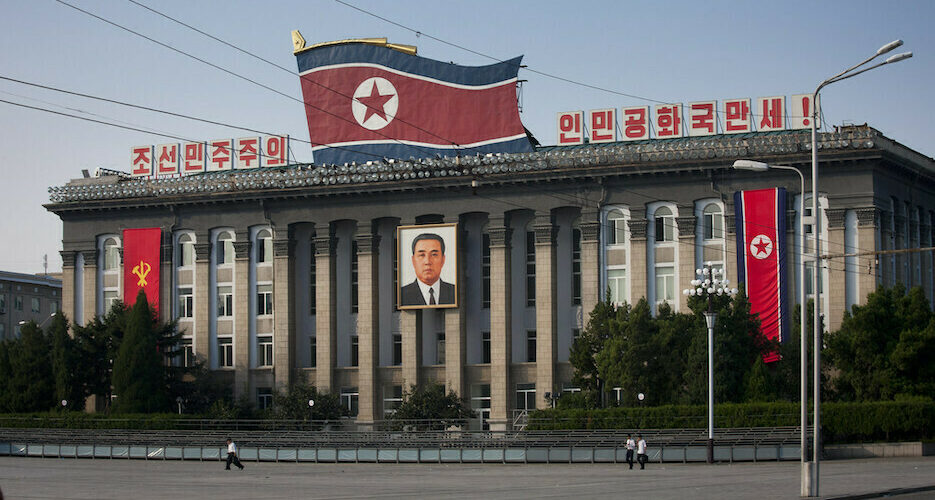
A portrait of DPRK founding leader Kim Il Sung affixed to a government building on central Pyongyang, Sept. 2008 | Image: NK News (file)


As a harbinger of things to come, Dancing on Bones: History and Power in China, Russia, and North Korea by Katie Stallard starts with one of Orwell’s most oft-repeated lines: “Who controls the past controls the future; who controls the present controls the past.” Having read the book, one can’t help but think the more appropriate choice would have been, “If you want a picture of the future, imagine a boot stamping on a human face— forever.”

For this is a book about the human suffering inflicted on innocent populations by 20th-century dictators, the reverberations still being felt in various degrees today.

Stallard says she undertook “a multiyear quest to understand how autocrats exploit history to stay in power” and “how successive authoritarian rulers have co-opted and manipulated the past to serve their political needs.” Thus she describes how the past is mythologized, turned into a religion, which then creates a nation of true believers and sends to the rack all those who do not express devout faith in North Korea, Russia and China. Kim Il Sung propaganda fresco in the liberation war museum, Pyongyang, North Korea, Sept. 2008 | Image: NK News (file)

The authoritarian leaders of these states are greatly afraid of their citizens tasting any amount of freedom. It will not only cause domestic unrest, they believe, and also result in the end of ruling class legitimacy. What Stallard points to therefore is an information war carried out by a state on its own citizens.

This is not about external enemies and confronting a sociological or cultural “other.” Instead, this is about malevolent leaders, drunk on power, attacking their own citizens. In terms of morality, it makes one contemplate whether such acts are more or less reprehensible than when carried out against a foreign population. Throughout her work, Stallard describes how Kim Il Sung, Joseph Stalin, and Mao Zedong bolstered and encouraged each other to see just how far and grandiose they could spin a web of lies and deceit, constructing an ever false version of history.

KIM IL SUNG’S NORTH KOREA

Stallard’s analysis of North Korea was achieved through her own time in Pyongyang as a journalist and through consultations with North Korea specialists. Stallard also draws on the experiences of ambassadors who spent time in Pyongyang as well as one-time master of propaganda, Hwang Jang-yop.

Marxist historian Eric Hobsbawm is quoted to reinforce the constructed and political nature of history and antagonisms. There are also echoes of Barbara Demick’s work and claims that those we see weeping and celebrating in North Korea are simply doing so out of self-preservation rather than any genuine emotion. Thus we are told, “Maintaining the Kim’s cult of personality was as much about maintaining control as it was about inspiring genuine devotion.”

Stallard asserts that North Korea’s elite rule over their impoverished population on the basis of two established lies. First, that Kim Il Sung almost single-handedly liberated the country from Japanese colonization in 1945. Second, that North Korea was invaded by the United States and South Korea in 1950 at the start of the Korean War and Kim successfully defeated the enemy aggressors. These two fabrications have been reinforced over time and disseminated to the population in patriotic memoirs, movies, and songs, all of which solidify the cult of personality built up around the Kim family.

For seasoned readers on North Korea, much of the descriptions of the internecine war and beyond will be little more than a review. However, the explorations into Pyongyang’s propaganda and the various lies it told its citizens about the atrocities carried out upon the people provide a new gruesome dimension.

Stallard skillfully dissects truth from fiction. She presents the official narrative as told in North Korea and then, alongside this, the more verifiable facts of history which continually contradict Pyongyang’s grand story of heroism against evil invading forces. Nowhere else is this more evident in the dichotomy between the ferocious guerrilla fighter portrayed in North Korean legend and the nervous young man who took charge of the country, not even fluent in the language of the people for whom he was said to have fought for. Young North Koreans pose for a photo in Pyongyang, Sept. 2019 | Image: NK News (file)

CARVING FICTION INTO THE SKYLINE

The historical revisionism and deification of Kim Il Sung and his progeny is not just achieved through cultural products but also supported by a host of archaeological fabrications and purported discoveries which then come to life as the “younger Kim carved the regime’s fiction into the capital’s skyline.”

Decades later, while many predicted reforms and the easing of tensions in North Korea with the rise to power of a young Swiss-educated, tech-savvy, basketball-loving leader, Stallard’s work suggests that even if Kim Jong Un wished to traverse such a path, he couldn’t. Simply, “If he wanted to avoid ending up like Gaddafi, Saddam, or Ceausescu, the third Kim understood that he had to double down on the myth and maintain at least the appearance of public support.

For those with a keen eye on current events, Stallard begins and ends her exploration of autocrats by describing her harrowing experiences in Ukraine in 2014 during Vladimir Putin’s ramping up of nationalist sentiment during the illegal annexation of Crimea. She draws parallels with the embellishment of history and creation of fictional pasts there to can be seen in both Beijing and Pyongyang. In that sense, the book serves as a warning.

The tragedy we are seeing unfolding at the moment in Eastern Europe should not necessarily be seen in isolation but instead as part of a larger authoritarian movement whose traces are also visible elsewhere.

Stallard’s conclusion is not that such glorifications of the past are unique to autocrats nor that they are undesirable. Nostalgia, after all, is a powerful drug for many of us. Instead, the warning is that dangers arise when only one version of history is permitted and when those who challenge the narrative are labeled traitors. Such systems only exist to serve those who rule them irrespective of how many bones upon which they dance.

Some will take umbrage with the book’s framework that places disparate cultures and histories in the same category, perhaps drawing parallels with U.S.President George W. Bush’s “Axis of Evil” designation. Yet, I’m sure Stallard would point out that only those who live outside these three mind-crushing states would be able to make such a statement. And that seems to be the point of this book.

Edited by Arius Derr
HISTORY


My Content (1)My searches (0)


Dancing on Bones: History and Power in China, Russia and North Korea
Katie Stallard


ABSTRACT


Dancing on Bones examines how the leaders of Russia, China, and North Korea exploit the history of past wars—specifically World War II and the Korean War—to shore up popular support and frame contemporary challenges and foreign policy. This book traces the history of how successive ruling regimes have approached this period of history from 1945 to the present day, examining the political utility of historical memory and attempts to enforce a collective national narrative through patriotic education, propaganda, memory laws, censorship, harassment of individual historians, and appeals to nationalism and national pride. It draws on research in Beijing, Moscow, Pyongyang, Seoul, Crimea, Shanghai, and Donetsk and covers events such as Russia’s annexation of Crimea, the 2013–2014 Maidan Revolution and subsequent conflict in Ukraine; the Tiananmen crackdown in 1989; Gorbachev’s Glasnost and Perestroika reforms; the collapse of the Soviet Union; Vladimir Putin’s rise to power, his return to the presidency for a third term, and constitutional reforms; and leadership transitions in North Korea from Kim Il Sung to Kim Jong Il to Kim Jong Un. Key figures covered within the book include Joseph Stalin, Nikita Khrushchev, Leonid Brezhnev, Mikhail Gorbachev, Vladimir Putin, Mao Zedong, Deng Xiaoping, Jiang Zemin, Xi Jinping, Kim Il Sung, Kim Jong Il, and Kim Jong Un.

Keywords: historical memory, patriotic education, nationalism, propaganda, World War II, Putin, Xi, Kim, North Korea, Great Patriotic War

BIBLIOGRAPHIC INFORMATION
Print publication date: 2022 Print ISBN-13: 9780197575352
Published to Oxford Scholarship Online: April 2022 

Katie Stallard, author
Fellow, Woodrow Wilson International Center for Scholars


Front Matter

Introduction

1 Myth

2 Victory

3 Enemies

4 Memory

5 Victims

6 Truth

7 Lies

8 Control

9 Heroes

10 Patriots

Conclusion


작성자: Sejin 시간: 오후 4:56 댓글 없음:
이메일로 전송BlogThis!X에 공유Facebook에서 공유Pinterest에 공유
라벨: "North Korea"

Blue Dreams: Korean Americans and the Los Angeles Riots eBook : Abelmann, Nancy, Lie, John: Amazon.com.au: Books

Trustpilot
AUD $ 
My Account
 Wishlists 
FAQ
All
Cart
Highlights
Fiction Books
Non-Fiction Books
Children's Books
Rare Books
Music
DVD & Blu-Ray
Video Games
Free Shipping on all orders in Australia
Over 7 million books in stock
Proud to be B-Corp
  1. Home
  2. Non-Fiction Books
  3. Social Sciences
  4. Politics & government
  5. Blue Dreams By Nancy Abelmann
Blue Dreams By Nancy Abelmann

Blue Dreamsby Nancy Abelmann

Condition - Very Good
$26.49
Only 1 left
Very Good
 Reviews:


Blue Dreams: Korean Americans and the Los Angeles Riots eBook : Abelmann, Nancy, Lie, John: Amazon.com.au: Books


Follow the Authors

Nancy Abelmann
+ Follow

John Lie
+ Follow


Blue Dreams: Korean Americans and the Los Angeles Riots Kindle Edition
by Nancy Abelmann (Author), John Lie (Author) Format: Kindle Edition


3.5 out of 5 stars 3 ratings


See all formats and editions


Kindle$37.28


No one will soon forget the image, blazed across the airwaves, of armed Korean Americans taking to the rooftops as their businesses went up in flames during the Los Angeles riots. Why Korean Americans? What stoked the wrath the riots unleashed against them? Blue Dreams is the first book to make sense of these questions, to show how Korean Americans, variously depicted as immigrant seekers after the American dream or as racist merchants exploiting African Americans, emerged at the crossroads of conflicting social reflections in the aftermath of the 1992 riots.

The situation of Los Angeles's Korean Americans touches on some of the most vexing issues facing American society today: ethnic conflict, urban poverty, immigration, multiculturalism, and ideological polarization. Combining interviews and deft socio-historical analysis, Blue Dreams gives these problems a human face and at the same time clarifies the historical, political, and economic factors that render them so complex. In the lives and voices of Korean Americans, the authors locate a profound challenge to cherished assumptions about the United States and its minorities.

Why did Koreans come to the United States? Why did they set up shop in poor inner-city neighborhoods? Are they in conflict with African Americans? These are among the many difficult questions the authors answer as they probe the transnational roots and diversity of Los Angeles's Korean Americans. Their work finally shows us in sharp relief and moving detail a community that, despite the blinding media focus brought to bear during the riots, has nonetheless remained largely silent and effectively invisible. An important corrective to the formulaic accounts that have pitted Korean Americans against African Americans, Blue Dreams places the Korean American story squarely at the center of national debates over race, class, culture, and community.

Table of Contents:
Preface

  1. The Los Angeles Riots, the Korean American Story
  2. Reckoning via the Riots
  3. Diaspora Formation: Modernity and Mobility
  4. Mapping the Korean Diaspora in Los Angeles
  5. Korean American Entrepreneurship
  6. American Ideologies on Trial
  7. Conclusion

Notes
References
Index

Reviews of this book:

Blue Dreams--a poetic allusion to the clear blue sky that Koreans see as a symbol of freedom--is a welcome exploration by outsiders into the vexing and largely invisible Korean-American predicament in Los Angeles and the nation. [Abelmann and Lie 's] colorful interview subjects offer sharp observations.
--K.W. Lee, Los Angeles Times

Reviews of this book:
An informed and thoughtful examination of Korean immigration to the United States since 1970...[Abelmann and Lie] show that even in a period as short as twenty-five years, there have been successive waves of differently motivated, differently resourced Korean immigrants, and their experiences and reactions have differed accordingly.
--Michael Tonry, Times Literary Supplement

Reviews of this book:
[The authors'] transnational perspective is particularly effective for explicating Korean immigrants' behaviors, activities, and feelings...Interesting and readable.
--Pyong Gap Min, American Journal of Sociology

Reviews of this book:

Beginning with a poetic book title, the authors recount in depth as to how the 'Blue Dreams' of the Korean-American merchants in East Los Angeles had shattered in the midst of [the] 1992 riot that turned out to be 'elusive dreams' in America...The book not only portrays the L.A. riot surrounding the Korean merchants, but also characterizes diaspora of the Koreans in America. The authors have also examined with scholarly insights the more complex socioeconomic and political underplay the Koreans encountered in their 'Promised New Land'.
--Eugene C. Kim, International Migration Review

====
Harvard University Press
Publication date

30 June 2009
====


Product description

Dan rated it liked it  ·  review of another edition
Shelves: history, social-science
Although I do not agree with some of its conclusions, this book still offers an interesting perspective of the L.A. Riots, as well as an informative overview of Korean immigration to the U.S. (appealing to me on a personal level due to my heritage). Despite its subject matter, I have to say this book is not as engrossing a read as Lie's excellent Multiethnic Japan. (less)
flagLike  · comment · see review


morning Os
Apr 14, 2008morning Os rated it liked it
Shelves: korean-history, reviewed
It is nicely written but there was not much new information for me in the book.
flagLike  · comment · see review


Amir
Jul 22, 2007Amir rated it really liked it
This is a book which u should read soon.
Blue Dreams is not a joke, or wish...
===


작성자: Sejin 시간: 오전 10:36 댓글 없음:
이메일로 전송BlogThis!X에 공유Facebook에서 공유Pinterest에 공유
라벨: Australia

2022년 5월 1일 일요일

Jesus Loves Japan by Suma Ikeuchi

Post: Edit

Jesus Loves Japan by Suma Ikeuchi

Uploaded by

Pedro Zambon 

Date uploaded

on Nov 04, 2021
Full description


Jesus Loves Japan: Return Migration and Global Pentecostalism in a Brazilian Diaspora - Kindle edition by Ikeuchi, Suma. Politics & Social Sciences Kindle eBooks @ Amazon.com.


Jesus Loves Japan: Return Migration and Global Pentecostalism in a Brazilian Diaspora Kindle Edition
by Suma Ikeuchi (Author) Format: Kindle Edition


5.0 out of 5 stars 3 ratings

Kindle
from AUD 21.93
Read with Our Free App
Hardcover
AUD 112.59
3 Used from AUD 134.739 New from AUD 112.59


After the introduction of the "long-term resident" visa, the mass-migration of Nikkeis (Japanese Brazilians) has led to roughly 190,000 Brazilian nationals living in Japan. While the ancestry-based visa confers Nikkeis' right to settlement virtually as a right of blood, their ethnic ambiguity and working-class profile often prevent them from feeling at home in their supposed ethnic homeland.

 In response, many have converted to Pentecostalism, reflecting the explosive trend across Latin America since the 1970s. 

Jesus Loves Japan offers a rare window into lives at the crossroads of return migration and global Pentecostalism. 

Suma Ikeuchi argues that charismatic Christianity appeals to Nikkei migrants as a "third culture"—one that transcends ethno-national boundaries and offers a way out of a reality marked by stagnant national indifference. 

Jesus Loves Japan insightfully describes the political process of homecoming through the lens of religion, and the ubiquitous figure of the migrant as the pilgrim of a transnational future.


289 pages
Language

English
작성자: Sejin 시간: 오전 3:45 댓글 없음:
이메일로 전송BlogThis!X에 공유Facebook에서 공유Pinterest에 공유

LA 폭동은 미국 한인 사회를 각성시켰다 < 우리 안의 또 다른 우리 < 교회와 세상 < 기사본문 - 가톨릭뉴스 지금여기

LA 폭동은 미국 한인 사회를 각성시켰다 < 우리 안의 또 다른 우리 < 교회와 세상 < 기사본문 - 가톨릭뉴스 지금여기

LA 폭동은 미국 한인 사회를 각성시켰다
기자명 손인서
입력 2022.04.19

SNS 기사보내기페이스북(으)로 기사보내기 트위터(으)로 기사보내기 카카오스토리(으)로 기사보내기 URL복사(으)로 기사보내기 이메일(으)로 기사보내기 다른 공유 찾기 기사스크랩하기

30주년, 그때 그곳의 이야기가 지금 여기 우리에게 전해 주는 것

LA 폭동의 ‘불편한 진실’, 피해자이자 가해자였던 재미 한인

지금으로부터 30년 전인 1992년 4월 29일, 미국 로스앤젤레스의 사우스 센트럴 지역은 말 그대로 지옥으로 변했다. 흑인과 라틴계 주민 수천 명이 몰려나와 마구잡이로 방화와 약탈을 저질렀고, 지역의 건물들은 순식간에 불길에 휩싸였다. 사태는 무려 6일 동안 지속되었다. 무려 60여 명이 죽었고 2000여 명이 다쳤다. 이곳은 한인 이민자들의 미국 최대 경제 중심지였던 코리아타운이 자리 잡고 있었다. 폭동으로 코리아타운은 일주일도 채 되지 않아 대부분 잿더미가 되었다. 한인 경제는 산산조각이 나고 회복할 수 없는 경제적 피해를 입었다. 폭동의 최대 피해자는 한인들이었다. 하지만 LA 폭동은 단순히 한인 이민자들에게 물질적 피해를 안겨 준 것만은 아니었다. 폭동은 한인들에게 자신은 미국에서 보호받지 못할 유색 인종임을 뼈저리게 깨닫게 해 준 결정적 사건이었다.
1992년 4월 29일, 미국 로스앤젤레스의 사우스 센트럴 지역에서 일어난 폭동은 6일 동안 계속됐다. (사진 출처 = commons.wikimedia.org)

우리는 흔히 LA 폭동을 흑인들이 백인 사회에 품었던 분노가 한인들에게 잘못 투영되어 벌어졌던 사건쯤으로 기억한다. 흑인의 폭력적이고 비문명적인 행태에 분노하고 타국에서 열심히 일하는 한인들을 옹호해 왔다. 물론 폭동의 직접적인 도화선이 되었던 것은 1991년 과속으로 운전하던 흑인 로드니 킹을 백인 LA 경찰 4명이 검거하여 무차별적으로 폭행한 사건에서 비롯되었다. 이 사건으로 기소된 경찰들이 법정에서 무죄 선고를 받은 바로 그날 폭동이 시작되었던 것이다. 하지만 우리가 잘 모르는 사실은, 로드니 킹의 폭행이 있었던 같은 해 LA 빈민가에서 상점을 운영하던 두순자 씨가 15살 흑인 소녀 나타샤 할린스를 절도범으로 오인해 총으로 사살한 사건이 있었다. 그는 재판에서 집행유예 판결을 받았다. 이 사건은 흑인 사회에서 한인에 대한 반감을 불러일으켰고, 폭동의 주요한 배경이 되었다. 재미 한인 작가 캐시 박 홍이 말했듯, 한인은 ‘인종 차별의 피해자이면서 동시에 가해자’였던 것이었다.

흑인과 아시아인을 분열시킨 ‘모범 소수자’ 신화

그러나 LA 폭동의 원인은 그렇게 간단치가 않다. 그 이면에는 한인과 흑인의 갈등을 조장해 온 미국 사회의 뿌리 깊은 인종주의가 있다. 1960년대 흑인 민권운동이 불타오르면서 백인 주류 사회는 아시아계 미국인을 이용해 흑인들의 권리 주장을 잠재우고 백인 우월주의 사회를 합리화하려고 했다. 1960년대 중반부터 주류 미디어는 아시아계 미국인의 성공을 대서특필하면서, 이들의 성공 원인을 노력과 근면을 숭상하는 아시아 문화에서 찾았다. 그 주장의 이면은 흑인들의 빈곤과 어려움을 백인들의 차별이 아니라, 다분히 그들 자신의 미개하고 열등한 문화 탓으로 돌리려는 의도가 숨어 있었다. 이 아시아계 ‘모범 소수자’(model minority)의 신화는 단지 흑인들의 민권운동을 비난하는 것을 넘어 흑인과 아시아계 미국인 사이의 갈등을 키워 가는 역할을 했다.

모범 소수자라는 신화와는 다르게 실제로 한인 이민자들의 삶은 나아지지 않았다. 한인을 비롯한 아시아계 미국인에 대한 사회적 차별은 개선되지 않았던 것이다. 한인 이민자들은 여타 이민자들에 비해 높은 비율로 세탁업이나 식품점 등 자영업에 종사한 이유도 유색 인종 이민자에 대한 차별 때문이었다. 이들은 스스로 코리아타운을 형성해서 그들만의 경제권을 만들거나, 백인 상업 지역을 피해 흑인이나 라틴계 주민의 거주 지역에 상점을 열어 생계를 이어 나갔다. 하지만 주민들은 한인의 진출을 자신들에 대한 또 다른 차별로 받아들였다. 한인 자영업자와 흑인과의 갈등은 이미 1970년대부터 서서히 싹을 키워 가고 있었다.
(이미지 출처 = Pixabay)

뿌리 깊은 흑인에 대한 인종 차별과 백인의 한흑 갈등 조장을 넘어,
재미 한인은 이제 차별을 넘어선 연대의 가치를 깨달았다

LA 폭동에서 보여진 흑인들의 극단적인 분노와 폭력성은 역사적으로 흑인을 향한 미국 주류 사회의 끔찍하고 폭력적인 차별에 기인한다. 흑인들의 비즈니스과 상업은 역사적으로 백인에 의해 철저하게 파괴되었다. 가장 극적인 예는 털사 학살이었다. 20세기 초 오클라호마주의 털사는 '검은 월스트리트'라 불릴 정도로 흑인들의 상업이 발달했던 지역이었다. 그러나 1921년 백인들은 이 지역을 초토화해 버리고 인종 학살을 자행했다. 흑인 수백 명이 학살당한 것으로 전해질 뿐 제대로 된 수사와 보상은 전혀 없었다. 이런 방식으로 흑인들은 미국 사회에서 경제권을 박탈당했다. 자신의 거주 지역에서 상업을 키워갈 수도 없었던 것이다. 게다가 흑인들은 백인들과 거주지도 분리된 채 사회, 경제, 문화적으로 낙후된 지역에서 살아오면서 빈곤의 늪에 빠져들었다. 이런 역사적 배경에서 한인 이민자들의 진출은 흑인들에게 백인에 이은 또 다른 인종의 경제 침탈로 비추어졌다. LA 폭동은 이렇듯 인종주의의 역사 속에서 터진 사건이었다.

미국 정부의 LA 폭동에 대한 대처는 철저하게 인종차별적이었다. 폭동 기간 내내 경찰은 수수방관하는 태도로 일관했다. 증언에 따르면, 부유한 백인 거주 지역으로 향하는 길목만을 막고 있었다고 전해진다. 코리아타운의 피해가 그렇게 컸던 이유도, 그리고 한인들이 상가 옥상에 올라가 스스로 무장하고 방어했던 이유도 공권력이 전혀 개입하지 않았기 때문이었다. 폭동이 끝난 후에 한인들은 거리로 몰려나가 정부의 피해보상 대책을 요구했다. 그러나 아무것도 이루어지지 않았다. 수십 년간 타국에서 쌓아 온 이민자의 노력은 모두 무너졌다.

LA 폭동은 아메리칸 드림의 민낯을 그대로 드러내 주었다. 미국 사회에서 한인은 결코 백인이 될 수 없다는 현실을 가장 적나라하게 보여 준 사건이었다. 하지만 보다 뼈아픈 깨달음은 한인 역시 인종 차별에 동참해 왔다는 사실이다. 폭동의 이면에는 부득이할지라도 흑인과 라틴계 미국인과 거리를 두면서 소수 인종임을 애써 부인했던 한인 이민자들의 외면이 자리 잡고 있다. 폭동 이후 한인 사회는 비로소 흑인을 비롯한 여타 소수 인종과의 공존과 연대를 모색하고, 소수 인종으로서 정치적, 사회적 정체성을 인정받기 위해 노력하기 시작했다.

30년이 흐른 지금 한인 사회는 백인 주류 사회로의 맹목적인 편입을 좇기보다는 인종 간 평등과 공존의 가치를 추구하고 있다. 하지만, 지금 여기 한국은 역으로 이주민과 타 인종을 향한 혐오를 키워가고 있다. LA 폭동은 우리 자신도 타국에서는 한 명의 소수 인종에 불과하며 인종 차별은 타인뿐 아니라 우리 자신의 문제임을 일깨워 준다. 폭동은 30년 전의 일이 아니라 바로 지금 한국의 이야기가 될 수도 있다.


손인서
비정규직 박사 노동자로 고려대 아세아문제연구원 소속.
미국 듀크대학교에서 사회학 박사학위를 받았고 이주민과 성소수자 등 사회적 소수자의 불평등과 차별에 대해 연구하고 있다.

<가톨릭뉴스 지금여기 http://www.catholicnews.co.kr>

작성자: Sejin 시간: 오전 2:01 댓글 없음:
이메일로 전송BlogThis!X에 공유Facebook에서 공유Pinterest에 공유
최근 게시물 이전 게시물 홈
피드 구독하기: 글 (Atom)

블로그 보관함

  • ▼  2026 (384)
    • ▼  8월 (8)
      • Arab, Australian, Other: Stories on Race and Ident...
      • Always Almost Australian: My Journey as the Son of...
      • Koreans in Exile: Younghill Kang and Richard E. Ki...
      • Richard E. Kim - The Martyred, Wikipedia 김은국 순교자 잃...
      • Dongsuk Kim - '앤디 김'스토리
      • 사각지대 놓인 무국적 한인입양인들...“시민권법 통과 위해 함께 기도해주세요”-국민일보
      • “절체절명의 중간선거 앞둔 트럼프…이란과의 전쟁, 6월 중순이 마지노선”
      • Dongsuk Kim 미주한인 이민역사는 1992 'LA폭동' 이전과 이후로 나뉜다.
    • ►  7월 (47)
    • ►  6월 (43)
    • ►  5월 (85)
    • ►  4월 (29)
    • ►  3월 (83)
    • ►  2월 (41)
    • ►  1월 (48)
  • ►  2025 (298)
    • ►  12월 (22)
    • ►  11월 (23)
    • ►  10월 (40)
    • ►  9월 (38)
    • ►  8월 (45)
    • ►  7월 (28)
    • ►  6월 (17)
    • ►  5월 (5)
    • ►  4월 (31)
    • ►  3월 (30)
    • ►  2월 (7)
    • ►  1월 (12)
  • ►  2024 (475)
    • ►  12월 (16)
    • ►  11월 (50)
    • ►  10월 (27)
    • ►  9월 (38)
    • ►  8월 (50)
    • ►  7월 (47)
    • ►  6월 (31)
    • ►  5월 (71)
    • ►  4월 (36)
    • ►  3월 (51)
    • ►  2월 (44)
    • ►  1월 (14)
  • ►  2023 (258)
    • ►  12월 (33)
    • ►  11월 (30)
    • ►  10월 (6)
    • ►  9월 (18)
    • ►  8월 (12)
    • ►  7월 (12)
    • ►  6월 (12)
    • ►  5월 (9)
    • ►  4월 (26)
    • ►  3월 (36)
    • ►  2월 (33)
    • ►  1월 (31)
  • ►  2022 (300)
    • ►  12월 (17)
    • ►  11월 (4)
    • ►  10월 (8)
    • ►  9월 (47)
    • ►  8월 (7)
    • ►  7월 (11)
    • ►  6월 (14)
    • ►  5월 (21)
    • ►  4월 (37)
    • ►  3월 (89)
    • ►  2월 (9)
    • ►  1월 (36)
  • ►  2021 (295)
    • ►  12월 (44)
    • ►  11월 (46)
    • ►  10월 (54)
    • ►  9월 (12)
    • ►  8월 (15)
    • ►  7월 (29)
    • ►  6월 (29)
    • ►  5월 (17)
    • ►  4월 (14)
    • ►  3월 (14)
    • ►  2월 (4)
    • ►  1월 (17)
  • ►  2020 (89)
    • ►  12월 (9)
    • ►  11월 (1)
    • ►  10월 (1)
    • ►  9월 (4)
    • ►  8월 (40)
    • ►  7월 (10)
    • ►  6월 (6)
    • ►  5월 (2)
    • ►  4월 (6)
    • ►  2월 (4)
    • ►  1월 (6)
  • ►  2019 (60)
    • ►  12월 (10)
    • ►  10월 (16)
    • ►  9월 (1)
    • ►  8월 (1)
    • ►  7월 (1)
    • ►  6월 (4)
    • ►  5월 (6)
    • ►  4월 (4)
    • ►  3월 (4)
    • ►  2월 (1)
    • ►  1월 (12)
  • ►  2018 (57)
    • ►  11월 (5)
    • ►  9월 (15)
    • ►  6월 (14)
    • ►  4월 (3)
    • ►  3월 (8)
    • ►  2월 (3)
    • ►  1월 (9)
  • ►  2017 (14)
    • ►  12월 (6)
    • ►  11월 (1)
    • ►  9월 (2)
    • ►  3월 (5)
  • ►  2016 (128)
    • ►  10월 (1)
    • ►  9월 (3)
    • ►  8월 (9)
    • ►  7월 (13)
    • ►  6월 (24)
    • ►  5월 (11)
    • ►  4월 (66)
    • ►  3월 (1)
  • ►  2014 (1)
    • ►  8월 (1)
  • ►  2013 (35)
    • ►  8월 (3)
    • ►  7월 (32)

팔로어

프로필

내 사진
Sejin
전체 프로필 보기

태그

  • "East Goes West" (6)
  • "North Korea" (49)
  • "Viola Davis" (8)
  • 1619 (3)
  • 강용흘 (7)
  • 남기영 (6)
  • 민진 리 (5)
  • 브라질 (50)
  • 브라질 이민 (39)
  • 西 成彦 (7)
  • 아시아계 미국인 (17)
  • 양명득 (5)
  • 이병한 (2)
  • 이창래 (38)
  • 장승호 (11)
  • 차학경 (4)
  • 켄 번즈 (6)
  • 테레사 학경 차 (4)
  • 한길수 (2)
  • Abbott (4)
  • Adani Mine (8)
  • Andrew Hartman (5)
  • Angela W. Buchdahl (2)
  • Anthea Butler (8)
  • Asian Americans (17)
  • Australia (716)
  • Bernie Sanders (4)
  • Biography (7)
  • Breezy (3)
  • Canada (100)
  • Chang-Rae Lee (37)
  • Clint Eastwood (28)
  • Clive Hamilton (4)
  • Connie Chung (5)
  • Crawford report (2)
  • Culture (1)
  • Douglas Murray (5)
  • Ehrenreich (3)
  • Elizabeth Kata (10)
  • Evangelical (54)
  • God is red (1)
  • Hillbilly Elegy (8)
  • History (5)
  • Hyewon Hong (9)
  • Identity (4)
  • Indigeneous (3)
  • J. D. Vance (11)
  • James Baldwin (10)
  • Jeffrey Blutinger (18)
  • Jewish Bund (1)
  • Jimmy Carter (2)
  • John Jeremiah Sullivan (4)
  • Ken Burns (6)
  • Ken Loach (15)
  • Literature (2)
  • Migrant (3)
  • National Identity (1)
  • Outback (1)
  • Paul Couvret (1)
  • Pilger (6)
  • Politics (9)
  • Polotics (1)
  • Popular Culture (1)
  • Randa Abdel-Fattah (10)
  • Refugees (1)
  • Religion and Spirituality (1)
  • Richard Forer (3)
  • Rob Henderson (2)
  • Robert B Reich (12)
  • Sang Hea Kil (10)
  • Seymour Hersh (1)
  • Silent Invasion (4)
  • test1 (1)
  • Text to Speech (1)
  • Theresa Hak Kyung Cha (4)
  • Thomas Jefferson (7)
  • Thomas Sowell (5)
  • Viet Thanh Nguyen (12)
  • Vietnam War (2)
  • Vine Deloria (13)
  • Younghill Kang (6)
깔끔 테마. 테마 이미지 제공: luoman. Powered by Blogger.