2021년 10월 1일 금요일

Japanese Australians - Wikipedia

Japanese Australians - Wikipedia

Japanese Australians

From Wikipedia, the free encyclopedia
Jump to navigationJump to search
Japanese Australians
日系オーストラリア人
Total population
71,013[1]
35,378 (by birth)[2]
50,761 (by ancestry)[2]
Regions with significant populations
Sydney · Melbourne · Brisbane · Cairns · Perth
Languages
Australian English · Japanese
Broome Pearling Lugger Pidgin
Religion
Buddhism (26.3%) · Catholic (4.1%)
Other (12.4%) · No religion (52.6%)[2]
Related ethnic groups
Asian Australians · Japanese New Zealanders

Japanese Australians (日系オーストラリア人Nikkei Ōsutoraria-jin) are Australian citizens and residents who claim Japanese ancestry.

Japanese people first arrived in the 1870s (despite a ban on emigration in place until 1886). During the late 19th and early 20th centuries Japanese migrants played a prominent role in the pearl industry of north-western Australia. By 1911, the Japanese population while small groups had grown to approximately 3,500 people. With the outbreak of . war in the Pacific in 1941, most Japanese in Australia were interned and then deported when the war ended. At the end of the war only 74 Japanese citizens and their children were permitted to remain in Australia. Not until the 1970s did the Japanese population recover to the levels at the start of the 20th Century.[3] As of 2011, of Australia's 35,378 Japan-born residents, more than 65% had arrived from the mid-1990s onwards.[2]

According to a global survey conducted at the end of 2013, Australia was the most popular country for Japanese people to live in.[4]

Demography[edit]

People born in Japan as a percentage of the population in Sydney divided geographically by postal area, as of the 2011 census.
One dot represents 100 Japanese-born residents in Melbourne

The 2011 census recorded 35,378 Japanese-born residents in Australia, with 50,761 people reporting Japanese ancestry (including those who claimed other ancestries). Of this number 29,211 reporting speaking Japanese at home. New South Wales had the largest population of Japanese born (12,108), followed by Queensland (10,317), Victoria (6,820) and Western Australia (3,564).[2]

Only 4,643 Japanese-born residents have since acquired Australian citizenship. In 2011, women represented 68% (24,146) of the Japanese-born in Australia.[2]

Over half of all Japanese-born residents profess no religious affiliation (52.6%), with Buddhism (26.3%) and Catholicism (4.1%) the most commonly identified religions.[2]

History[edit]

The first person from Japan to settle in Australia was recorded in 1871.[2]

Japanese only began to emigrate en masse in the 1880s following the lifting of restrictions. In Australia, the Immigration Restriction Act 1901 temporarily prevented more Japanese from migrating, but subsequent exemptions to the dictation test were applied to Japanese people mitigating restrictions.

Japanese Cemetery of Broome.

In Australia from the late 19th and early 20th Century many worked as pearlers in Northern Australia or in the sugar cane industry in Queensland. They were particularly prominent in the Western Australian Kimberley town of Broome, where until the Second World War they were the largest ethnic group. Several streets of Broome have Japanese names, the town has one of the largest Japanese cemeteries outside Japan and the creole language Broome Pearling Lugger Pidgin contained many Japanese words.

Between December 1941 and September 1945, Australia and Japan were at war. On July 28, 1941, Australian military intelligence indicated that there were 1139 Japanese living in Australia and 36 in Australian-controlled territories. Under the guise of national security, 1141 Japanese civilians (almost the entire population) living in Australia were interned for up to six years throughout WWII. An additional 3160 Japanese civilians arrested in allied countries across the Asia-Pacific Region were also interned in Australia on a user-pay basis; this included 600 Formosans (Taiwanese). An unknown number of Koreans were arrested as Japanese and carried Japanese names. The internment of Japanese in Australia was more racial than political, with Japanese being "evacuated" from their hometowns "for their own good" (ie, to prevent racist attacks against them by non-Japanese). Several months after the cessation of hostilities, all ethnic-Japanese internees who did not possess Australian nationality were repatriated to Occupied Japan, regardless of the locations of their previous abodes, whilst all ethnic-Formosans were repatriated to Occupied Formosa.[5]

The Japanese population in Australia was later replenished in the 1950s by the arrival of 500 Japanese war brides, who had married AIF soldiers stationed in occupied Japan.

The lifting of barriers in Australia to non-European immigration in the 1960s coincided with the Japanese post-war economic miracle which dissuaded Japanese from emigrating. Japan's increasing economic importance to Australia from the 1960s, and rising prosperity and linkages between the two countries, led to an increase in the number of Japanese choosing to live in Australia.

Education[edit]

The Japanese School in Perth and the Hyogo Prefectural Government Cultural Centre (兵庫文化交流センター)
Locations of full-time and part-time Japanese schools in Australia designated by the Japanese Ministry of Education (gray dots refer to closed schools)

Japanese international day schools in Australia include the Sydney Japanese International School (SJIS), the Japanese School of Melbourne (JSM), and the Japanese School in Perth (JSP). There are also weekend supplementary programmes in BrisbaneCairnsCanberraMelbournePerth approved by the Japanese Ministry of Education.[6]

Notable figures[edit]

Gallery[edit]

See also[edit]

References[edit]

  1. ^ "Annual Report of Statistics on Japanese Nationals Overseas" (PDF) (in Japanese). Retrieved 17 July 2016.
  2. Jump up to:a b c d e f g h Department of Immigration and Citizenship (February 2014). "Community Information Summary" (PDF)Department of Social Services. Australian Government. Retrieved 18 July 2019.
  3. ^ Mizukami, Tetsuo (2007). The sojourner community: Japanese migration and residency in Australia. Leiden: Brill. p. 50. ISBN 978-9004154797. Retrieved 18 July 2019.
  4. ^ 2013 End of the Year Survey - Japan WIN/GIA
  5. ^ Nagata, Yuriko (1993). Japanese internment in Australia during World War II (Ph.D). University of Adelaide. hdl:2440/21427.
  6. ^ "大洋州の補習授業校一覧(平成25年4月15日現在)Ministry of Education, Culture, Sports, Science and Technology. Retrieved on February 13, 2015.
  7. ^ "平成 26(2014)年度" (Archive). The Japanese Language Supplementary School of Queensland. Retrieved on April 1, 2015. p. 4.
  8. ^ "学校名称." Adelaide Japanese Community School. Retrieved on April 7, 2015. Old URL
  9. ^ Home page (Archive). Cairns Japanese Language Tutorial Centre Inc. Retrieved on April 7, 2015.
  10. ^ "学校概要" (Archive). Canberra Japanese Supplementary School Inc. Retrieved on 7 April 2015.

Further reading[edit]

  • Sato, Machiko (2001), Farewell to Nippon: Japanese Lifestyle Migrants in Australia, Japanese society series, Melbourne: Trans Pacific Press, ISBN 978-1-876843-72-4

External links[edit]

Korean Diaspora and Media in Australia: In Search of Identities by Gil-Soo Han | Goodreads

Korean Diaspora and Media in Australia: In Search of Identities by Gil-Soo Han | Goodreads


Want to Read

Rate this book
1 of 5 stars2 of 5 stars3 of 5 stars4 of 5 stars5 of 5 stars


Korean Diaspora and Media in Australia: In Search of Identities

by
Gil-Soo Han
liked it 3.00 · Rating details · 1 rating · 0 reviews
An essential dimension of why one becomes an immigrant is based on a quest for identities - who one is, whom one wants to be, and how one wants to live. There is much in common between immigrants of the past and immigrants today in terms of what they seek through diasporic life. 

However, one key difference relates to how they express the processes of searching for their identities. 

This book illuminates the ways in which Korean immigrants in Australia express their identities through autobiographies, novels, church websites, and popular weekly magazines. 

Korean Diaspora and Media in Australia also examines the role of the Korean immigrant church in contributing to the formation of transnational identities. 

Han's in-depth analysis is informed by the concepts of reflexivity and internal conversation from a tradition of critical realism.

 Internal conversation is enabled through human reflexivity (the regular application of mental ability) and is the process for individual agents to work out their best reactions to social conditions. 

Han carefully explains this process and thoughtfully applies it to the Korean community's search for identities in Australia. (less)
===

Review
This book breaks new ground in both migration studies and media studies by examining the role of various forms of media used by Korean immigrants in Australia. Gil-Soo Han draws on recent theories of identity formation, particularly Margaret Archer's model of "internal conversation," and sensitively explores the shifts from Korean to Korean-Australian transnational identities in his case studies. The case studies are drawn from a variety of media and cultural texts produced by Koreans in Australia: autobiography, fiction, journalism and church websites. Supplemented by interview data, and drawing on the author's own trajectory of identity formation as a Korean who migrated to Australia in the 1980s, these studies present a rich palette of migrants, sojourners, students and working holiday makers, from the 1980s to the present. This reveals clearly the shift from the migrant who uprooted herself from Korean society in the 1980s to contemporary young uncommitted visitors who lead fully transnational lives and inhabit transnational social spaces. Han argues that through acculturation all Korean migrants to Australia are continuously developing their transnational identities. The book uses cultural and media texts to produce an ethnography of Korean migrant experience in Australia, illuminating an expanding segment of the multicultural tapestry of Australian society.--Alison Tokita, professor, Tokyo Institute of Technology

Farewell to Nippon - Google Books

Farewell to Nippon - Google Books


Farewell to Nippon

Japanese Lifestyle Migrants in Australia
By Machiko Sato · 2001
Page count:161
Publisher:Trans Pacific Press

佐藤真知子『新・海外定住時代―オーストラリアの日本人』 1993(英訳)
Farewell to Nippon : Japanese Lifestyle Migrants in Australia (Japanese Society Series)
---
This study presents an ethnographic account of a fresh breed of emigrants who have left Japan to settle in Australia in pursuit of a better quality of life. They differ from "economic migrants" who went overseas before the 1970s for economic reasons but represent new types of "lifestyle migrants" who seek to enjoy a more easygoing, carefree life abroad. 
Based on some 200 interviews, the study attempts to portray the participants' joy and sorrow, felicity and frustration as seen through their own eyes and expressed with their own words and phrases. The Japanese version of the book won the Asia-Pacific Publication Award in 1995.
===

基本説明
This book presents an ethnographic account of a fresh breed of emigrants who have left Japan to settle in Australia in pursuit of a better quality of life. Based on some 200 interviews, the study attempts to portray the participants’ joy and sorrow, felicity and frustration as seen through their own eyes and expressed with their own words and phrases. The Japanese version of the book won the Asia-Pacific Publication Award in 1995.

Table of Contents
Prologue: In Search of New Lifestyle               1  (4)
  Female Motivational and Circumstantial           5  (34)
  Migrants
  The Path to Becoming a Professional              39 (27)
  The Class Barrier across National Boundaries     66 (27)
  Living the Good Life, or Making a U-Turn Back    93 (34)
  to Japan?
  The Bright Side and Dark Side of                 127(29)
  Cross-Cultural Marriage
Epilogue: Reluctant Settlers                       156
===

From Japan
KAZU
5.0 out of 5 stars オーストラリアへの精神的移民
Reviewed in Japan on December 5, 2000
「新・海外定住時代」は佐藤氏お得意の教育問題から少し離れて、日本からオーストラリアへ移住してきた人々のその後の生活に関するルポです。

移住には「経済的移民」「政治的移民」があることは勿論ですが、最近の日本からの移住の人は「精神的移民」であると佐藤さんは喝破しています。精神的に、より自由なオーストラリアに移住する人が増えていると言う事実は、日本文化とされた諸々の習慣が実は「文化」に守られた特定の業者や住民の既得権益であったり、慣習であったりした・・・ということを物語っています。

もちろん、オーストラリアに移住したことで、全てがバラ色の人生に変わるハズもなく、日本での地位や収入、つき合いの範囲などはかなりの部分オーストラリアに行っても再現されるのが実体であるようです。少なくとも、オーストラリアでの母国語(もしくは全世界でのグローバルスタンダード)である英語を使えるかどうかによって、その人の暮らしは大きく左右されるということは事実だと思います。 移住を考えている人には、この「新・海外定住時代」はお勧めです。
5 people found this helpful
Helpful
Report abuse


Japan in Australia: Culture, Context and Connection : Chapman, David, Hayes, Carol

Japan in Australia: Culture, Context and Connection : Chapman, David, Hayes, Carol: Amazon.com.au: Books


See this image
Japan in Australia: Culture, Context and Connection Hardcover – 4 December 2019
by David Chapman  (Editor), Carol Hayes (Editor)
==
Kindle$66.38
==
Japan in Australia is a work of cultural history that focuses on context and connection between two nations. It examines how Japan has been imagined, represented and experienced in the Australian context through a variety of settings, historical periods and circumstances.

Beginning with the first recorded contacts between Australians and Japanese in the nineteenth century, the chapters focus on ‘people-to people’ narratives and the myriad multi-dimensional ways in which the two countries are interconnected: from sporting diplomacy to woodblock printing, from artistic metaphors to iconic pop imagery, from the tragedy of war to engagement in peace movements, from technology transfer to community arts. Tracing the trajectory of this 150-year relationship provides an example of how history can turn from fear, enmity and misunderstanding through war, foreign encroachment and the legacy of conflict, to close and intimate connections that result in cultural enrichment and diversification.

This book explores notions of Australia and ‘Australianness’ and Japan and ‘Japaneseness’, to better reflect on the cultural fusion that is contemporary Australia and build the narrative of the Japan–Australia relationship. It will be of interest to academics in the field of Asian, Japanese and Japanese-Pacific studies.


About the Author
Dr David Chapman is Associate Professor of Japanese Studies in the School of Languages and Cultures at the University of Queensland in Australia. His research interests include history, identity and citizenship. He is the author of The Bonin Islanders 1830 to the Present: Narrating Japanese Nationality (2016), coauthor of Koseki, Identification and Documentation: Japan’s Household Registration System and Citizenship (Routledge 2014) and author of Zainichi Korean Identity and Ethnicity (Routledge 2007).

Dr Carol Hayes is Associate Professor of Japanese Language and Studies in the College of Asia and the Pacific at the Australian National University. Her research interests include literature, identity and language teaching methodologies and practice. She is the author of ‘Sashiko Needlework Reborn: From Functional Technology to Decorative Art’ (Japanese Studies 2019) and ‘Women Writing Women: "A Woman’s Place" in Modern Japanese Women’s Poetry’ (JSOA 2016), and coauthor of Reading Embraced by Australia: Oosutoraria ni Idakarete (2016).

Publisher ‏ : ‎ Routledge; 1st edition (4 December 2019)
Language ‏ : ‎ English
Hardcover ‏ : ‎ 248 pages
==
Table of Contents


Prologue: Celebrating Japan in Australia
ALAN RIX

1 Japan in Australia, an introduction
DAVID CHAPMAN AND CAROL HAYES

2 Youthful first impressions: Tsurumi Kazuko and Shunsuke in Australia, 1937
TOMOKO AOYAMA

3 Forging an Australian artistic modernity: how Japanese woodblock prints informed Margaret Preston’s early paintings and prints
PENNY BAILEY

4 Japan-Australia friendship through bat and ball: the Yomiuri Giants’ baseball tour of Australia in 1954
AI KOBAYASHI

5 Japan at the 1956 Melbourne Olympics
MORRIS LOW

6 Japanese sleeping beauties abroad: Australian retellings of Kawabata Yasunari’s fairy-tale novella
LUCY FRASER

7 The irrepressible magic of Monkey: how a Japanese television drama depicting an ancient Chinese tale became compulsory after-school viewing in Australia
REBECCA HAUSLER

8 Nikkei Australian identity and the work of Mayu Kanamori
TIMOTHY KAZUO STEAINS

9 Trans-Asian engagement with Japan in/and Australia
KOICHI IWABUCHI

10 The Australian literary scene and Murakami Haruki: Nobel laureate heir apparent or marketing overhype?
LAURA EMILY CLARK

11 Why introductory Japanese? An Australian case study
CHIHIRO KINOSHITA THOMSON

12 Mobility and Children Crossing Borders
IKUO KAWAKAMI

Coda
ROGER PULVERS

On the streets of our town
VERA MACKIE

Index

====
Editor(s)
Biography
Dr David Chapman is Associate Professor of Japanese Studies in the School of Languages and Cultures at the University of Queensland in Australia.

===

[REVIEW] Japan in Australia: Culture, Context and Connections
David Chapman and Carol Hayes (eds)
Routledge (London), 2020.
248 pages.
Reviewed by
Alexander Brown
University of Technology Sydney and Japan Women’s University
Published August, 2020
Pages 117-120


© The Japan Foundation, Sydney and Alexander Brown, 2020
===
nv-covers-vol-12
New Voices
in Japanese Studies
Volume 12
© The Japan Foundation, Sydney, 2020
===

KEYWORDS
Australia; Australia-Japan relations; cross-cultural representation; transnationalism


The edited collection Japan in Australia: Culture, Context and Connections (2020) brings together twelve substantive essays on the cultural history of the Australia-Japan relationship, with a focus on the way Japan is constructed culturally within the Australian context. Published in Routledge’s Asian Studies Association of Australia (ASAA) East Asia series, the collection is the result of a conference of the same name   held at The University of Queensland in 2016. The conference was one in a series of events marking the fifty-year anniversary of Japanese Studies at the university, a fact which in itself reveals something about the long history of cross-cultural engagement between the two countries. It is dedicated to The Japan Foundation, Sydney which sponsored the 2016 conference and whose funding underpins a significant amount of contemporary Australian research on Japan. It seems appropriate therefore to review the volume in this issue of New Voices in Japanese Studies, the journal established by the Foundation’s Sydney Office to support the development of emerging scholars in the field.

The contributions to the volume cover a wide range of topics. In their introductory overview, editors David Chapman and Carol Hayes situate the essays in the collection within a broader history of the modern encounter between Australia and Japan since the nineteenth century. Essays by Tomoko Aoyama, Lucy Fraser and Laura Emily Clark explore the notion of Australia-Japan through a literary lens. Aoyama documents a 1937 visit to Australia by two prominent post-war intellectuals, the siblings Kazuko and Shunsuke Tsurumi, together with their politician father Yūsuke Tsurumi, and the impact the trip had on both. Fraser examines two contemporary Australian adaptations of Yasunari Kawabata’s novella The House of the Sleeping Beauties: Venero Armanno’s novel Candle Life and Julia Leigh’s film Sleeping Beauty. Laura Emily Clark’s chapter interrogates the construction of Haruki Murakami in Australian book reviews as both a representative of ‘Japanese literature’ and an exemplar of ‘world literature’. Penny Bailey’s chapter on Australian artist Margaret Preston shows how important Japanese woodblock print techniques were to her development of a modern Australian style. Ai Kobayashi and Morris Low both explore sport as an arena of international encounter soon after the end of the Asia-Pacific War. Kobayashi provides a detailed historical account of a 1954 Australian tour by the Yomiuri Giants baseball team, which was intended as a kind of soft-power exercise in diplomacy in a period when Australian attitudes to Japan remained hostile. Low examines Japanese participation in the 1956 Melbourne Olympics, the controversies it generated and the way individual relations between athletes served to stage Japan’s readmission to the world community.

Rebecca Hausler’s chapter on the transnational production of an English-dubbed version of Japanese television drama Monkey was particularly close to my heart. Like the author, I grew up watching the show every day after school in the 1980s. Timothy Kazuo Steains’ chapter is a fascinating exploration of the work of Nikkei artist Mayu Kanamori and her interrogation of Japanese-Australian/Australian-Japanese experiences. Koichi Iwabuchi’s chapter has a more methodological orientation, proposing the extension of his work on trans-Asian engagement to the study of Australia in Japan. Chihiro Kinoshita Thomson and Ikuo Kawakami bring a focus on language and education to the book, which is particularly relevant given the centrality of language to the teaching of Japanese Studies in Australia. Kinoshita Thomson uses surveys of large Japanese language student cohorts at a Sydney university to argue that students in introductory Japanese courses in Australia are often more concerned with ‘consuming’ the language learning experience than in gaining the level of mastery of Japanese which would enable them to use it for the more instrumental purposes often envisaged by government funders. Kawakami’s chapter makes an argument for a more nuanced understanding of mobility when thinking about young people in Australia who use the Japanese language. She proposes a model of ‘Children Crossing Borders’ for conceptualising the complex linguistic and physical journeys that growing numbers of young people take between Australia, Japan and often a third or fourth country. Shorter essays by Alan Rix, Roger Pulvers and Vera Mackie provide more personal and impressionistic accounts of Australia-Japan in academia, the arts and the urban landscape respectively.

The book is framed as an exploration of ‘Japan in Australia’, an approach which attempts to break away from the well-worn scholarly trope of ‘the Australia-Japan relationship’. The latter tends to rely upon and to reproduce ideas of Australia and Japan as well-defined and largely self-contained nation-states rather than as cultural constructs which are mutually constituted through their interaction with one another. The challenge the editors embrace here reflects Tessa Morris Suzuki’s (2000, 22) call for an ‘anti-Area studies’, wherein we treat “people and places in Australia” as part of the research problem, to be “‘read’—in an interconnected series of points upon the earth, not only reflecting but becoming objects of reflection”. The chapters in Japan in Australia rise to this challenge with varying degrees of success. Penny Bailey’s discussion of the influence of woodblock printing on Margaret Preston is a particularly powerful example of how an ‘anti-area’ approach can undermine the certainty of nation-state borders. In this chapter we see how an Australia-Japan encounter, mediated in the first instance through the artist’s exposure to Japanese prints in Europe, literally shaped the development of what we think of as ‘Australian’ modern art. Hausler’s contribution also introduces other places, namely China and Britain, into the Australia-Japan equation. She argues that it was the encounter between a Chinese story, a Japanese television production, a British dubbing studio and Australian audiences which produced Monkey Magic as a cultural phenomenon in Australia in the 1980s and 1990s. Steains’ analysis of Mayu Kanamori’s plays and performance pieces that deal with mourning and belonging further complicates the idea of the Australia-Japan encounter as being defined by the encounter between nation states. He shows how the artist engages with Australian Indigenous and Japanese-Indigenous histories, interrogating the difficult question of how migrant communities relate to Indigenous Australia within the broader historical legacies of White Australia and colonialism. Kawakami’s contribution, too, hammers away at the Japan-Australia binary by thinking about the complexities and subversive potential of children whose young lives involve multiple crossings of the borders of the international nation-state regime.

The sporting chapters are less successful in breaking out of the Australia-Japan relations frame. Perhaps the inherent nationalism of international sporting events makes it difficult for the authors to avoid reproducing a distinct ‘Australia’ and ‘Japan’ in their accounts, though Kobayashi does highlight the ethnically diverse makeup of the Japanese baseball team. Having said that, these chapters are perhaps more concerned with another long-standing problem in Japanese Studies in Australia: the role of orientalism in its perceptions of Japan and the Japanese. Sporting history does help us to understand how perceptions of Japan as the enemy were undermined through sport as cultural diplomacy, helping to enable a new post-war relationship with Japan where friendly rivalry could replace military confrontation. Clark’s essay on Murakami also interrogates orientalism in Australian readings of Japan. She demonstrates that Australian reviewers tend to position Murakami as a ‘Japanese’ author, despite the fact that his novels are frequently criticised in Japan for their lack of Japanese-ness, their orientation towards overseas audiences who read them in translation, and their constant references to American pop culture, jazz and classical music. Fraser’s piece, too, exposes the sometimes subtle orientalism which remains in contemporary Australian retellings of Kawabata Yasunari’s House of the Sleeping Beauties.

Taken as a whole, the collection provides a model for how to do Japanese Studies in a globalising world. Those chapters such as Bailey’s, Hausler’s and Kawakami’s, which most successfully undermine methodological nationalism in their approach, go beyond ‘Australia-Japan’ to track the highly mobile people, images, techniques and things that really open up this problematic. In doing so, they raise a question-mark over the usefulness of ‘Australia-Japan’ as a framework for understanding the transnational construction of Japan in Australia and Australia in Japan. Nevertheless, as academics whose working lives tend to move back and forth between these two countries, it is probably inevitable that we will continue to wonder what our movements in this space mean for the cultural geography of both.

REFERENCES
Morris-Suzuki, T. 2000. “Anti-Area Studies.” Communal/Plural 8 (1): 9–23. https://doi.org/10.1080/13207870050001439.
====


Alexander Brown
University of Technology, Sydney and Japan Women’s University

Alexander Brown is a Japan Society for the Promotion of Science International Research Fellow based at Japan Women’s University and an Honorary Associate at University of Technology Sydney. Alexander has taught at several universities in the Sydney region over the past six years. His research focuses on social movements, particularly the anti-nuclear movement in Japan which is the subject of his monograph, Anti-nuclear Protest in Post-Fukushima Tokyo (Routledge, 2018). He is currently looking at the ways in which transnational social movements connect Japan with the broader Asia-Pacific region. Alexander is also passionate about translating Japanese social science research for English-speaking audiences, most recently Shimizu Hiromu’s Grassroots Globalization (Kyoto University Press and Trans Pacific Press, 2019). Alexander is the Guest Editor of NVJS 12 and has contributed a review of Japan in Australia: Culture, Context and Connections to the volume, in addition to the introductory essay.

(August 2020)
====

Still they sanctify the monster Breaker Morant - and insult the true heroes

Still they sanctify the monster Breaker Morant - and insult the true heroes

OPINION
Still they sanctify the monster Breaker Morant - and insult the true heroes


Peter FitzSimonsColumnist and author
September 14, 2021 — 5.00am

The idea that Breaker Morant should be given a posthumous pardon is a persistent one, as is the idea that he should have his name added to the Boer War Memorial in Adelaide – the latter idea getting a new lease of life in a strong article published in The Advertiser in Adelaide on Saturday.

For the legend is a beauty: Breaker Morant was a Man From Snowy River in Australian uniform: a brilliant horseman, soldier and bush poet who was cruelly put up against the wall by those Pommy bastards, merely for following their orders.


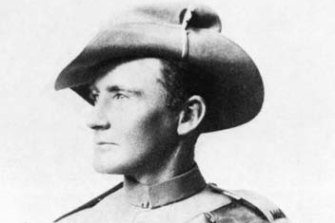
Private Harry "Breaker" Morant in 1900. He was executed by firing squad two years later. CREDIT:AFP

Strong? Seductive?

Yes. So strong and seductive that the article in the ’Tiser records that 70 per cent of their respondents are in favour of Morant’s name being added to the Boer War Memorial. In terms of iconic status, it is of the ilk of the Anzac legend that Education Minister Alan Tudge is insistent must not be questioned in any way in the national history curriculum. As Tudge said last week, the Anzac legend is “not going to be a contested idea on my watch”.


But, based on the book I wrote on Morant, with the help of strong researchers who were able to dig fine detail, let’s contest the Morant legend and look at just one episode of his war career, this one while commanding the roving unit, the Bushveldt Carbineers, in the latter part of the Boer War. The first thing to note is that rather than being Australian, Morant was English and had joined the war effort from Australia after being here for a couple of decades – while the Bushveldt Carbineers was a wholly British unit.


CREDIT:

On September 7, 1901, Morant hears of three unarmed, non-combatant Boers heading their way and wanting to surrender. Morant goes out to meet them in the company of one lieutenant and two other troopers. And there they are, up yonder: Boer farmer Roelf van Staden and his two sons, the youngest of whom, Chris, is 12 and desperately ill.

Morant takes immediate action, using a procedure he has previously developed to get through such matters most efficiently. He tells his men that when they get to the clearing up ahead, they must wait till he says “Lay down your arms”, and as soon as they relax, shoot ’em. Arriving at the clearing, Morant barks: “Dismount.” His men do so, and quickly bring up their rifles. The Boers look at them, horrified. “Lay down your arms!” Morant commands.

As planned, the father and his sons relax just a little . . . only for the Troopers to shoot them dead.
Advertisement


How do we know Morant committed these and other atrocities in which a dozen non-combatants were gunned down? There are many reasons, but they include 14 brave Australian soldiers and a Kiwi soldier risking their lives – for the first two soldiers in the Bushveldt Carbineers to publicly dissent had finished with a bullet in their heads – writing a letter to their commanding colonel, asking for Morant to be court-martialled. He was, during which Morant famously boasted of the atrocity of lining up eight unarmed Boer prisoners and shooting them by the side of a road. “We got them, and we shot them, under Rule .303!”

Of course, Morant was a practised hand at shooting prisoners by this time, having ordered a firing squad to execute a lone, injured prisoner, Floris Visser, to the disgust of men and officers alike. At least Visser was given the farce of a “drum head” court-martial, a kangaroo court improvised by Morant to justify murder as revenge for his friend Captain Percy Hunt.

RELATED ARTICLE


Breaker Morant relics found on rubbish tip

Quoted in the Advertiser on Saturday, the Melbourne lawyer James Unkles said: “Injustices in times of war are inexcusable and it takes vigilance to right wrongs, to honour those unfairly treated and to demonstrate respect for the rule of law. How we respond to this case remains a test of our values and is vitally important.”

Was he speaking in sympathy with the dead Boers? He was not. He was pushing the case for Morant’s posthumous pardon, and for his name to be added to the Boer War Memorial in Adelaide, just as he was a prime agitator behind the Australian Parliament in 2009 voting in favour of petitions being presented to Queen Elizabeth II to review and posthumously overturn Morant’s convictions. Three years later, on the 110th anniversary of the execution of Morant and co-accused Peter Handcock, the Liberal member for Mitchell, Alex Hawke, rose in the House to make a claim for Morant and company’s pardon.


“It is timely for the Australian government to do everything it can to assist the modern-day descendants of these men to access a judicial review of this case. It is the case that the executions were conducted with extreme haste and without appeal.”

RELATED ARTICLE


Analysis
World War I
Disgraced Peter Handcock deserves no war memorial honour

(A point of order, Mr Speaker, if I may. An appeal is something they had in civilian courts, but did not exist with courts-martial.)

”I think it is important,” Alex Hawke continued, “that we seek British government’s assistance in releasing all of the available records in relation to this case so that the modern -day descendants can know what happened and rightly, if necessary, receive a judicial review and pardon. It is an episode that appeals greatly to every Australian because of the doctrine of fairness which says that no-one should be treated differently because of their birth, rank or status. We do know that these men were treated differently because of their birth, rank and status. We certainly need legends in Australian history.”

We do. And we have plenty of bona fide ones, without the need to gloss over the record of a war criminal. But still it goes on!


In February 2018, the Australian Parliament passed a motion expressing “Sincere regret that Lieutenants Morant, [et al] were denied procedural fairness contrary to law and acknowledges that this had cruel and unjust consequences; and . . . sympathy to the descendants of these men as they were not tried and sentenced in accordance with the law of 1902.”

RELATED ARTICLE


Opinion
Secrets of War
Echoes of 'monster' Breaker Morant in dark deeds of SAS forces


Peter FitzSimons

Columnist and author

Any mention of sympathy and sincere regrets for the defenceless Boers, including children, that Morant had gunned down? None at all. Justice for them? No mention. Just an obsessive focus on aspects of the court-martial where t’s weren’t crossed and i’s weren’t dotted. And equal insistence, despite a lack of any evidence at all, that Morant did what he did under British orders.

Bottom line?

Some historical legends, like that of Morant, are so seductive they live on because people want to believe them. And it’s so powerful you even have serious people pushing the tragic absurdity of an Australian Parliament petitioning the Queen and the British Parliament to posthumously pardon an Englishman fighting for a British unit who committed the worst war atrocities of the Boer War!


But how much more inspirational is the truth? Morant was not the Man From Snowy River put up against the wall by those Pommy bastards. He was a vicious Pommy bastard put up against the wall by the men from Snowy River and others who risked their lives to bring him to justice to stop the atrocities.

There are heroes in this story. They are those troopers who risked their lives to turn Morant in. Imagine their thoughts at his name being next to theirs on the Adelaide Boer War Memorial.

There are victims. They are unarmed Boers ruthlessly gunned down on Morant’s orders.

How monstrously unjust to both heroes and victims to simply go with the legend, unexamined, uncontested.

Of course history must be always examined, contested, reviewed, told from diverse sides. Anything less is indoctrination.

Unfolding Nikkei Australian stories: A conversation with Mayu Kanamori

Unfolding Nikkei Australian stories: A conversation with Mayu Kanamori

Unfolding Nikkei Australian stories: A conversation with Mayu Kanamori

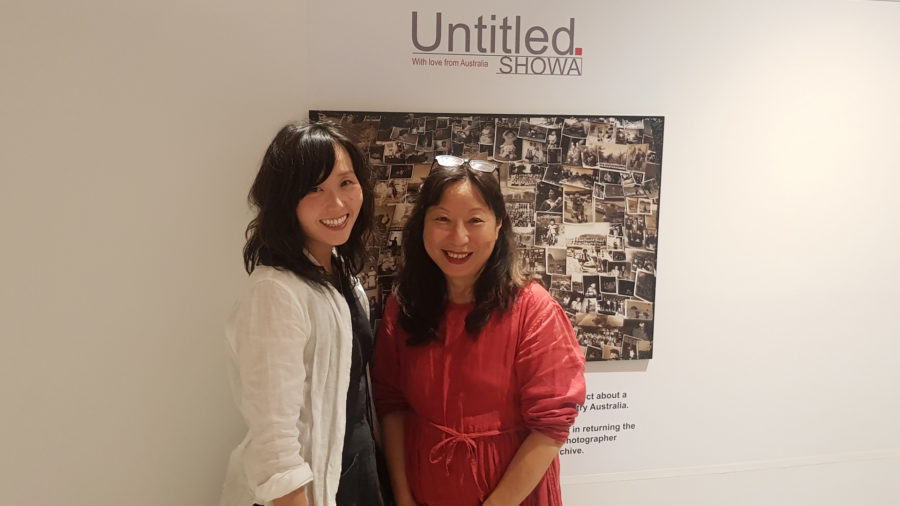
Yuki and Mayu, 2021.


The silent voices of the Japanese in Australia.
I keep hearing them.
Voices of the many forgotten Japanese who have lived here.
Forgotten because of the violence of the war.
It has wiped out the memory of those that came here to work and make this place their home.
I can hear their whispers – to be remembered. Or is it to be recognised?
I hear them in the wind, in the surf, in the deserts, in the fields.
Through their burial here, they are part of the landscape of this place.Mayu
===
 Kanamori in Yasukichi Murakami: Through a distant lens 2015, performed by Arisa Yura

The history of Japanese Australians is unknown to many of us who live in Australia. Even amongst the Japanese diaspora, there is little knowledge or awareness of the immigrant stories of the Japanese who called this place home decades ago.

Nikkei Australia, a community-led information exchange platform, helps to fill this gap across generations and geographical locations. The organisation was founded in 2013 by a group of researchers who promoted community awareness of the civilian internment of the Japanese in Australia during World War II.

The platform shares detailed accounts of Japanese Australian experiences dating back to 1871, when the first recorded Japanese migrant, an acrobat named Sakuragawa Rikinosuke, emigrated to Queensland. Personal stories told by descendants of early Japanese migrants provide an intimate and profound exploration of Australia’s immigration history, offering new perspectives on the colonial past.

As a child of first-generation Japanese migrants, Nikkei Australia has helped me to shape my identity as a Japanese Australian. Born in Osaka, Japan, my parents and I migrated to Sydney in 1991 on a whim. My parents had ambitions to raise me in an English-speaking Western society to ensure I had every chance of becoming a global citizen, a quality they felt the Japanese education system and society did not foster. I had limited interaction with the Japanese diaspora growing up and acculturation took precedence over connecting with my Japanese heritage.

In 2019, I was fortunate to meet Mayu Kanamori, one of the founding members of Nikkei Australia, after responding to a call to action posted on Nikkei Australia’s Facebook page. The post encouraged young people from the Japanese diaspora to ‘voice our Australian Japanese thoughts and concerns’ in a global research project investigating the relationship we have with our Japanese identity. I never imagined that taking part in this survey would open avenues to meet prominent members of the Japanese Australian community.

Mayu Kanamori’s contribution to Nikkei Australia is a fragment of her life’s work as a multidisciplinary storyteller. Her practice centres around unearthing the stories of the Japanese experience, ‘giving a voice’ to individuals. She has presented solo and collective projects across various media, including photography, theatre, video installation, documentary film and community-engaged projects.

Her artistic career spans almost three decades and she has received numerous awards and commendations, including the United Nations Association Media Peace Award in the Promotion of Multicultural Issues for her work as a radio producer, the Broome NAIDOC’s Non-Indigenous reconciliation award in 2001 for her work ‘The Heart of the Journey’, as well as being a finalist for the 2004 Walkley Awards for Excellence in Journalism.

As an arts practitioner, I feel privileged to have met a fellow Japanese Australian whose work I admire, and whom I look up to as a mentor. In the auditorium at the Art Gallery of NSW, I sit with Mayu and she reassures me with her calm and warm manner as we speak about her childhood growing up in Tokyo, the evolution of her artistic practice, her cross-cultural collaborations and our common search to understanding our identity within the Australian landscape.

Mayu Kanamori was born and raised in Tokyo by her Japanese mother and father. She grew up in a family environment where ‘creativity was encouraged’. Her father Kaoru Kanamori was an artist, a renowned theatre scenographer, and at a young age, her mother exposed Mayu to Western cultural values through her choice of schooling. As we exchanged stories about our upbringings, it became apparent that her parents were progressive in their approach to raising Mayu.

‘My mother, when I was two years and ten months old, sent me to a pre-school just around the corner from where we were in Tokyo. It was not a Japanese pre-school; American mothers actually ran it.’

‘When I finished pre-school, and it was time to go to primary school, my mother asked me at the time if I wanted to continue in the American education system. Do I want to go to an American school, or do I want to go to a Japanese school? Apparently, I had said that I preferred the American school and that had an impact on the rest of my life. I went to the American school, the American high school and then I’ve come to Australia.’

She moved to Melbourne in 1981 on a student visa to attend the Footscray Institute of Technology (now known as Victoria University), studying Australian cultural studies and Australian politics, then later writing and philosophy. It was an ‘eye-opening’ experience for Mayu to move from a homogenised American school environment in Tokyo to integrating into the multicultural landscape of Australia. She was ‘surprised’ by the cultural and ethnic diversity in Footscray, which was predominantly working-class migrants from Greek, Italian and Vietnamese backgrounds. She commented, ‘Australians spoke English, but they are very different people’.

In 1989, she moved to Sydney, where she met an investigative journalist who became her romantic partner. He encouraged Mayu to use his analogue camera. She became his documentary photographer while he was assigned to report from Tokyo between 1992 and 1995.

During this period, she captured intimate and unstaged moments of everyday life in Japan. Her photographs were published in The Age and the Sydney Morning Herald and she held her first exhibition titled ‘The Unseen faces of Japan’ in Sydney in 1996. Mayu’s work challenged racial stereotypes and she sought to provide nuanced representations of Japanese people in their various subcultures. The exhibition offered Australian and non-Japanese audiences a chance to form a deeper understanding of the country she came from.

Throughout her career, Mayu has drawn inspiration from the history of the places she has been. She uncovers the marginalised stories of cross-cultural interactions, focusing on the history of Japanese migrants and First Nations people. The catalyst for her award-winning work, ‘The Heart of the Journey’ from 2000, was a non-fiction book that she read on the plane to Broome by Japanese author Fujio Nakano Mari to Masatora (1986), which tells of a romance between an Aboriginal woman and a Japanese pearl diver who was living in Broome.

‘It was one of those things that opened my eyes to this place [Broome]. I was going on a holiday, and it not only had Japanese history but history that crossed between Japanese people and Australia and Indigenous peoples. And it really got me interested. If there was a love story, there would be children, that was what I thought.’

Upon arriving in Broome, she picked up the phonebook to look for Japanese surnames and she met a group of people who had mixed Japanese and Indigenous heritage. She took portraits of them which she printed and sent back once she returned to Sydney.

Lucy Dann was the only person that kept in touch with Mayu after she had sent the photographs. Lucy shared her experience of growing up not knowing her father. In her twenties, she discovered that her biological father was a Japanese man who worked in Broome’s pearling industry. She was eager to find out more about her father and Japanese heritage and Mayu was the key to helping her to unlock her past. With over 350 still images and audio recordings of conversations between Lucy and Mayu, ‘The Heart of the Journey’ follows the story of how Lucy was reunited with her Japanese family and heritage.

Mayu builds trust and collegiality with her subjects, which is reflected in the work she creates. Her process-driven approach allows for conversations to materialise while she forms meaningful relationships with her collaborators. When I asked about her creative collaborations and working with people across different cultures and lived experiences, she responded:

‘I think everybody brings their strengths and weaknesses into a project. Bringing in your strengths is easy, but when we bring our own weaknesses, that’s when we love each other through the collaborative process, be loving of each other, and support each other, whether it’s a large group or small group. Those weaknesses that we bring actually can become a strength if you work with other people.

‘And so when I’m collaborating with somebody, my first instinct is I’ve got to become friends with them so that they can accept my weaknesses. And I think that’s what I did with Lucy. I became friends first, and she had her fears, and I had mine. There were differences between us, but we did have a goal in mind, which was to see if we could find her father and that we would document it no matter what happens.’

Mayu’s projects often start as chance encounters which evolve through exchange and collaboration. One of her most inspiring projects has been ‘In Repose’ from 2010, the outcome of a creative partnership with Japanese koto master, Satsuki Odamura, former principal dancer from the Sydney Dance Company, Wakako Asano, and sound designer Vic McEwan. Iterations of this project were presented as site-specific multi-art works at Japanese gravesites in Townsville, Broome and Thursday Island.

The live performances were presented in remote areas where Japanese people were laid to rest. Audiences were invited to take part in the traditional Japanese practice of kūyo, where participants would give ceremonial offerings of incense, water and prayer to the deceased. Her creative team consulted extensively with local Indigenous Elders and community leaders and there was a pivotal moment that resonated with Mayu when the work was presented on Thursday Island.

‘There was a lot of exchange between the local people, whether they were the Torres Strait Islanders or otherwise, and the artists that went up were very much welcomed because we were able to exchange different views on death and death rituals or death ceremonies.’

‘It was a learning experience for all of us. When we had the actual performance, one of the main things that happened, which I thought was very important, is that we had a Welcome to Country delivered by a local Elder who faced the Japanese graves when he welcomed in language.

‘Now usually, when you think of Welcome to Country, you have an Elder address the audience. We had an audience, but he addressed the graves. That was a poignant moment because it would have been the first time those Japanese people who worked and lived on Thursday Island, now part of the landscape, had been welcomed by the traditional Elders, custodians of the land, where they are now buried and are cared for.’

I have often questioned whether I would choose to be buried with my family and ancestors in Japan, or whether Australia would be my final place to rest. It raises conflicting feelings I have about my Japanese heritage and my Japanese Australian identity. What does it mean to be a migrant in this country when the history of this place is still evolving? Amidst these challenging discussions, Mayu teaches me a Japanese concept, Hone o uzumeru kakukgo. It translates to ‘the preparedness and determination to bury one’s bone’, meaning the decision one makes to reside in another place until their death. During these times of great turbulence and uncertainty where people like Mayu and I are physically distant from our families back in Japan, this statement resonates with us now more than ever.

This article and corresponding interview with Mayu Kanamori were written and recorded on the unceded lands of the Gadigal people of the Eora Nation.
====
This interview is from Diversity Arts Australia’s Pacesetters Creative Archives project, a chronicle of the histories of creative practice of migrant, refugee and culturally diverse communities in Australia. Find out more at www.diversityarts.org.au
Published September 30, 2021Art and artists


Part of Pacesetters Creative Archives: The stories of migrant, refugee and culturally diverse arts practitioners in Australia, chronicled through conversation. The Pacesetters Creative Archives is an initiative of Diversity Arts Australia.All Pacesetters Creative Archives essays →
Yuki Kawakami

Yuki Kawakami is a creative producer who is interested in socially inclusive community-led projects...Essays by Yuki Kawakami →

Mayu Kanamori

Mayu Kanamori is a Sydney-based storyteller working across mediums including theatre, performance, photography, video,...Essays by Mayu Kanamori →


More from Pacesetters Creative Archives


Mayu Kanamori Boey Kim Cheng Mayu Kanamori Boey Kim Cheng
More like this


Related Essays
DOMESTICITY AND CARE ESSAY: GEORGE KOUVAROSON JOHN CONOMOS


The Keys to the House: John Conomos’ The Girl From the Sea


The work of homemaking in which the filmmaker is engaged is thus not only about the creation of a continuity between past and present. It is also about the future – how we remember the person that we will become.

Jul. 2021 • Art and artistsMigrationScreen cultureDomesticity and Care
REVIEW: MARTIN EDMONDON DANIEL THOMAS


Grace In All Simplicity


One of the pleasures of this book is that it introduces you to artists whose work you may not know very much about; another is to read Daniel Thomas on artists whose work you do know and love.

Jun. 2021 • Art and artistsAustralian literatureMemoirNon-fiction
POWERFUL AND MOVING ESSAY: MARTIN EDMONDON TRANS-TASMAN ART EXCHANGES


‘Differant Curioes’:
Trans-Tasman art exchanges 1770-1970


Incoherence, along with a lack of methodological rigour, is particularly apparent in most writing (not that there is much of it) about how practitioners in the visual arts in Australia and New Zealand have interacted with each other since James Cook sailed over the horizon in 1770.

May. 2021 • Art and artistsNZ-AotearoaPowerful and Moving
REVIEW: JOHN ENCARNACAOON MARK MORDUE


The Boy from Wang


Mark Mordue’s compelling biography asserts that Nick Cave’s self-mythology is a product of both genuine artistic obsessions, and of the networks of friends and family uniquely equipped to guide and nurture them.

May. 2021 • Art and artistsAustralian literatureBiographyNon-fiction
PACESETTERS CREATIVE ARCHIVES INTERVIEW: BOEY KIM CHENG


Many Shells in a Windy Place: An Interview with Boey Kim Cheng


For me, the fact that Boey exists as a poet at all, and that he continues to write poetry, is a miracle altogether.

Apr. 2021 • On writingPacesetters Creative Archives


We acknowledge the traditional custodians of the lands on which we work, the Burramattagal people of the Darug nation, and pay our respects to elders past, present, and emerging. Sovereignty was never ceded, and the struggles for justice are ongoing. We acknowledge the traditional custodians of the lands this digital platform reaches.

Subscribe to our free newsletter for weekly updates from the SRB:
Create NSW