The Complicated True Story Behind Marlon Brando's Oscar Refusal

By Jacob Slankard
Updated Mar 7, 2024
 Image by Jefferson Chacon
 Summary
Brando's refusal of his Oscar through Sacheen made a bold statement about Native American mistreatment.
Brando prioritized social justice over his acting career, feeling that the world's problems deserved more attention.
Despite backlash, Brando and Sacheen's actions paved the way for celebrities to use their platforms for important social issues.
The Oscars, which are now in their 96th year, have a history full of surprises, snubs, and scandal. One of the most undisputed Oscar wins in history was Marlon Brando winning Best Actor for The Godfather, with his portrayal of Vito Corleone getting more than enough praise and analysis on why it's so brilliant. What's more interesting, however, is what happened after the performance. Namely, Marlon Brando refused the Oscar and recruited a woman named Sacheen Littlefeather to show up in his place, give a speech on the mistreatment of Native Americans by America, and leave everyone stunned.
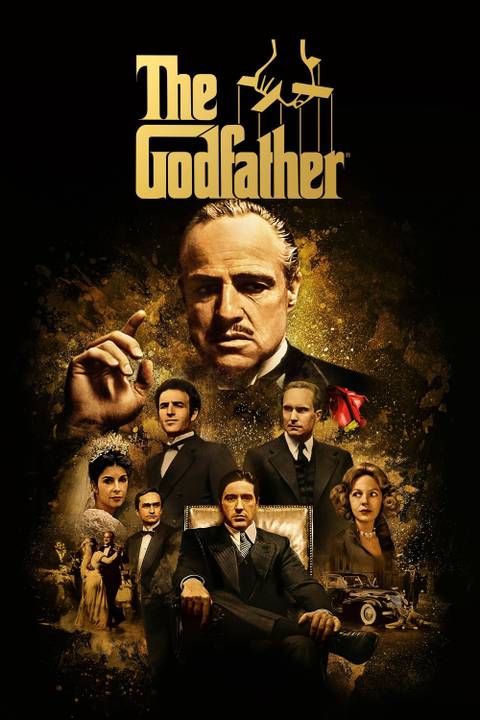
9.3/10
The Godfather
10 stars9 stars8 stars7 stars6 stars5 stars4 stars3 stars2 stars1 star
RDrama
Crime
Release DateMarch 24, 1972
Runtime175 minutes
DirectorFrancis Ford Coppola
WritersMario Puzo, Francis Ford Coppola
Sequel(s)The Godfather Part II, The Godfather Part III
Franchise(s)The Godfather
Marlon Brando Wasn't Interested in Fame
The Godfather served as a big comeback for Brando, who had hit a major dry spell with his career in the previous decade, due in part to his behavioral issues and the controversies of films like One-Eyed Jacks, Mutiny on the Bounty, and A Countess From Hong Kong. His name had effectively been tarred and feathered, and so you would think that he'd be exceedingly grateful to be greeted with some of the best reviews of his career and the highest award in the entertainment industry being given to him by his peers and supporters. Alas, he had bigger things on his mind.
In William J. Mann's definitive biography of Brando, The Contender: The Story of Marlon Brando, a common theme is how, throughout his entire life, Brando felt more committed to sociopolitical and social justice causes than he ever felt committed to his acting career. He would espouse the belief that "acting was not an important vocation in life when the world was still facing so many problems," that the only reason he committed to an acting career was as a promise to his dying mother, Dodie. He also said the idea that he was at all loyal to "the Method" as an acting philosophy was a lie spread by Lee Strasberg, the legendary acting teacher and chief faculty member of the studio where the Method became popular. In Brando's mind, Strasberg spread such misinformation in order to boost the number of students who'd come to learn it, since he only dropped in a few times for fun. He later found the continued insistence on him using the Method insulting.
✕Remove Ads
In short, Brando took his internal craft seriously but took all the external career/fandom/media aspects of his life with little to no seriousness at all, if not with downright disdain. Even when he won his first Oscar for On the Waterfront, he would many years later say it was an "error in judgment" and "silly" to accept that award, that it felt like a flagrant hypocrisy on his part. So imagine flashing forward 18 years to an older, increasingly jaded and more socially conscious than ever Marlon Brando being given another award he didn't actually want in the first place. You really want to shove that guy front and center again?
What Happened on Oscar Night?
Marlon Brando Prevented a Promising Actor From Being in ‘The Godfather’
Play Video
1:09
Brando didn't even bother showing up to the Academy Awards show. According to The Contender, everybody knew Marlon wouldn't show up and that he was going to send a mysterious "someone" to accept his award. When he was officially announced as the winner, the camera swooped across the Dorothy Chandler Pavilion and settled on...a young woman with long black hair and a traditional Native American buckskin dress. She went up to the stage, silently refused to take the award, and proceeded to speak about how the American film industry had historically mistreated the Native American community and made a mockery of them. This led to a mixture of nervous applause and thunderous boos.
What just happened? Who was this woman that nobody had heard of before?
Why would Marlon Brando, the most famous actor in the world, choose somebody with no social clout at all to carry out his most important social message in his life? At the Oscars, of all places? Surely nothing more controversial could ever happen at the Oscars since then. Right?
How Did Marlon Brando Meet Sacheen Littlefeather?
Accounts of how Brando and Littlefeather met vary. Littlefeather herself, when interviewed by the Akron Beacon Journal in 1974, claimed they met when she applied to work for Francis Ford Coppola, who then referred her to Brando because he allegedly knew Brando's interest in the Native American experience. However, in 2021, she changed the claim and said that she got to know Brando by hiking in the San Francisco hills with him, and subsequently she inquired about his interest in Native American issues. Once they became acquainted, she would repeatedly come over to his house, so she could further educate him on Native American issues.
2:43
This voting bloc lost their Oscar voting privileges.
Whatever the case, Mann's book makes it clear that Brando felt deeply invested in fighting for the rights of Native Americans. It particularly spiked after seeing the incident at Wounded Knee on February 27, 1973, when the American Indian Movement took the settlement of Wounded Knee in South Dakota, holding 10 hostages at gunpoint in order to "demand that the U.S. Senate begin investigations into the treatment of native peoples and the rampant corruption in the management of tribal affairs."
As a lifelong advocate for social justice change himself, Brando felt inspired by seeing such radical action. He saw the way America historically treated Native Americans as part of the "same deep, corrosive racism that refused to extend civil rights to African Americans," and he felt far more invested in dealing with those kinds of ongoing issues than with whether he should accept an Oscar. In other words, anybody who knew Marlon Brando as a human being knew he was never going to accept that award, and may even have slightly suspected he would use his platform to make an important statement.
Marlon Brando's 'The Godfather' Oscar Refusal Caused Drama
Predictably, there was some pushback. By Mann's account, while Marlon got some congratulations from people like his children and Jack Nicholson, the majority of mainstream media condemned it as a shameless affront to American values in an act of what we would perhaps call empty virtue signaling. Numerous television and newspaper/tabloid outlets were quick to call him things like "coward," "colossal bore," and to suggest that he should retreat from the public eye entirely; gossip columnists would claim that all the letters they received were unanimously against Brando's actions.
How Did Marlon Brando Meet Sacheen Littlefeather?
Accounts of how Brando and Littlefeather met vary. Littlefeather herself, when interviewed by the Akron Beacon Journal in 1974, claimed they met when she applied to work for Francis Ford Coppola, who then referred her to Brando because he allegedly knew Brando's interest in the Native American experience. However, in 2021, she changed the claim and said that she got to know Brando by hiking in the San Francisco hills with him, and subsequently she inquired about his interest in Native American issues. Once they became acquainted, she would repeatedly come over to his house, so she could further educate him on Native American issues.
2:43
This voting bloc lost their Oscar voting privileges.
Whatever the case, Mann's book makes it clear that Brando felt deeply invested in fighting for the rights of Native Americans. It particularly spiked after seeing the incident at Wounded Knee on February 27, 1973, when the American Indian Movement took the settlement of Wounded Knee in South Dakota, holding 10 hostages at gunpoint in order to "demand that the U.S. Senate begin investigations into the treatment of native peoples and the rampant corruption in the management of tribal affairs."
As a lifelong advocate for social justice change himself, Brando felt inspired by seeing such radical action. He saw the way America historically treated Native Americans as part of the "same deep, corrosive racism that refused to extend civil rights to African Americans," and he felt far more invested in dealing with those kinds of ongoing issues than with whether he should accept an Oscar. In other words, anybody who knew Marlon Brando as a human being knew he was never going to accept that award, and may even have slightly suspected he would use his platform to make an important statement.
Marlon Brando's 'The Godfather' Oscar Refusal Caused Drama
Predictably, there was some pushback. By Mann's account, while Marlon got some congratulations from people like his children and Jack Nicholson, the majority of mainstream media condemned it as a shameless affront to American values in an act of what we would perhaps call empty virtue signaling. Numerous television and newspaper/tabloid outlets were quick to call him things like "coward," "colossal bore," and to suggest that he should retreat from the public eye entirely; gossip columnists would claim that all the letters they received were unanimously against Brando's actions.
On top of that, Littlefeather's name got dragged through the mud by people pointing out things like how she wasn't an actual Apache princess (even though she never claimed to be a princess in the first place), that her original last name was Cruz (as if that would immediately negate her Native American heritage), and that she entered a Dark Shadows promotional contest specifically to raise awareness for the Alcatraz tribe (as if that was somehow dirt on her name). The experience left Littlefeather discouraged and heartbroken, convinced that she was "exploited in a cruel and vicious way by the media."
The strangest part of the whole thing might be what happened on March 31, 1973. The American Film Institute paid tribute to the career and legacy of John Ford, a moment so important that President Richard Nixon himself showed up to give a speech about how Mr. Ford was a great man who made films that showed "the good picture of America." Was it a coincidence that this event took place just a week after Marlon's refusal? Most likely. Was it a coincidence that the media decided to put coverage on this event after Marlon and Sacheen made a statement denouncing the exact kind of racist rhetoric and stereotyping of Native Americans that John Ford's films were guilty of spreading and codifying for an entire generation of Americans? That's quite doubtful.
What made the optics appear even worse in regard to Brando's involvement is that he ultimately chose not to appear at Wounded Knee in order to provide support, even though he had fully intended to. According to The Contender, friends convinced him that it would be embarrassing for him to go to Wounded Knee and get inevitably arrested by the law enforcement, which the press would turn into a massive loss for Brando and his efforts.
The strangest part of the whole thing might be what happened on March 31, 1973. The American Film Institute paid tribute to the career and legacy of John Ford, a moment so important that President Richard Nixon himself showed up to give a speech about how Mr. Ford was a great man who made films that showed "the good picture of America." Was it a coincidence that this event took place just a week after Marlon's refusal? Most likely. Was it a coincidence that the media decided to put coverage on this event after Marlon and Sacheen made a statement denouncing the exact kind of racist rhetoric and stereotyping of Native Americans that John Ford's films were guilty of spreading and codifying for an entire generation of Americans? That's quite doubtful.
What made the optics appear even worse in regard to Brando's involvement is that he ultimately chose not to appear at Wounded Knee in order to provide support, even though he had fully intended to. According to The Contender, friends convinced him that it would be embarrassing for him to go to Wounded Knee and get inevitably arrested by the law enforcement, which the press would turn into a massive loss for Brando and his efforts.
With this logic in mind, he decided to simply stand by what he said, but predictably, the press used his not going as evidence of him being a hypocrite.
Despite this, there were some journalistic sources that stood up for Brando and praised him for bringing attention to such an important issue, and the Native American activists at Wounded Knee were deeply appreciative of his actions.
Marlon Brando and Littlefeather Made History
 Image via Paramount Pictures
Brando's life, more or less, was unaffected by this scandal, an odd footnote amidst an illustrious and legendary lifetime. People eventually moved on from it, and so did he. In the case of Littlefeather, however, her legacy grew complicated due to some allegations from her family. For the San Francisco Chronicle, Navajo author Jacqueline Keeler interviewed Littlefeather's sisters, Rosalind Cruz and Trudy Orlandi, and her sisters claimed that their family has no Native American heritage, and that she stole her backstory from their father, who had a history of an abusive childhood and poverty. Considering that Littlefeather herself acknowledged she had a history of mental illness, it is tragically plausible that her private struggles contributed to how she interpreted her life.
Whatever the case, Marlon Brando and Sacheen Littlefeather teamed up to blaze a trail that future celebrities would follow. Nowadays, it's considered much more the norm, if not the downright expectation, for people in the film industry with platforms to use their power to bring awareness to important social issues. It's seen as actively irresponsible and disrespectful if a public figure doesn't do so. Knowing full well the criticism that they were likely to endure, Brando and Littlefeather staked a moment in history that would pave the way for all future activism, and for that, our current generation should be immensely grateful.
The Godfather is available to watch on Paramount+ in the U.S.
Marlon Brando and Littlefeather Made History
Image via Paramount PicturesBrando's life, more or less, was unaffected by this scandal, an odd footnote amidst an illustrious and legendary lifetime. People eventually moved on from it, and so did he. In the case of Littlefeather, however, her legacy grew complicated due to some allegations from her family. For the San Francisco Chronicle, Navajo author Jacqueline Keeler interviewed Littlefeather's sisters, Rosalind Cruz and Trudy Orlandi, and her sisters claimed that their family has no Native American heritage, and that she stole her backstory from their father, who had a history of an abusive childhood and poverty. Considering that Littlefeather herself acknowledged she had a history of mental illness, it is tragically plausible that her private struggles contributed to how she interpreted her life.
Whatever the case, Marlon Brando and Sacheen Littlefeather teamed up to blaze a trail that future celebrities would follow. Nowadays, it's considered much more the norm, if not the downright expectation, for people in the film industry with platforms to use their power to bring awareness to important social issues. It's seen as actively irresponsible and disrespectful if a public figure doesn't do so. Knowing full well the criticism that they were likely to endure, Brando and Littlefeather staked a moment in history that would pave the way for all future activism, and for that, our current generation should be immensely grateful.
The Godfather is available to watch on Paramount+ in the U.S.

댓글 없음:
댓글 쓰기