2020년 12월 11일 금요일

The moment that forever changed my perspective on Anzac mythology | First world war | The Guardian

The moment that forever changed my perspective on Anzac mythology | First world war | The Guardian

The moment that forever changed my perspective on Anzac mythology

This article is more than 2 years old

The Surafend massacre shows that the core business of good history must always be the preservation of memory
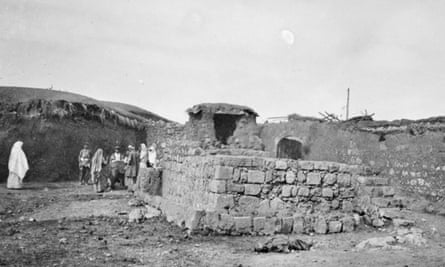
Surafend, Palestine circa 1918. An Australian soldier with some locals inside the ruins of an ancient building site.
Surafend, Palestine circa 1918. An Australian soldier with some locals inside the ruins of an ancient building site. Photograph: Australian War Memorial

One winter’s morning a decade ago while in the late stages of archival research for a book about the Australian Light Horse in the Middle East during the first world war, I came across a file that would forever alter my perspective on Anzac mythology.

In the Australian War Memorial that morning I read an anodyne description of a voice file – a recording of Private Edward “Ted” Harold O’Brien from C Squadron of the 3rd Light Horse Regiment, most of whose members hailed, like him, from Tasmania.

A summary said that O’Brien talked about horses, his work after the war, his time as a linesman in Palestine and of his visits to the pyramids in Egypt. Interesting - but nothing extraordinary, given all I’d already read about the battlefield experiences of his fellow horsemen.

I was about to look elsewhere when another sentence caught my eye: “New Zealanders and Australians went to Bedouin village and killed the men with bayonet and broke up the buildings.”

My book was at that point LARGELY about the remarkable achievements of the light horsemen (who were for all their agility, stealth, bush-craft and warrior skill, effectively the Special Air Service of their day) as they helped drive the Ottoman troops from the Suez canal in early 1916 across Palestine and to final defeat at Damascus and beyond in late 1918.

O’Brien’s words, recorded in 1988 when a very old man, described how the Australian horsemen, based on the coastal plain of Palestine after war’s end in December 1918, “went out to this village and they went through it with a bayonet”.

Oh yes, our squadron was there. I was down there. I don’t know what I did with it, I was cranky and that. But they had a good issue of rum and they did their blocks.”

Just how badly the Anzacs did their blocks when it came to murdering all of the males older than 16 in the Arab village of Surafend 100 years ago would become evident to the British, Australian and New Zealand military officials in the days and months afterwards during a series of secretive inquiries that swept the truth into the corners of history.

This event was to me starkly at odds with the heroic reputation of the light horsemen as I’d known it, based on most of the official – and many unofficial – records I’d come across to that point.

While the Surafend massacre had been relegated to the furthest edge of the Anzac record, including in Henry Gullett’s official history of Australian troops in the Middle East, it naturally caused me to rethink the book, Beersheba, and, not least, to re-examine the primary sources and literature I’d already read.
Surafend, Palestine. c. 1917. Members of the 5th Light Horse Field Ambulance on parade. (Donor I. Smith)
Surafend, Palestine. c. 1917. Members of the 5th Light Horse Field Ambulance on parade. (Donor I. Smith) Photograph: Australian War Memorial

I spent more months in the Australian and British archives trawling through patchy accounts of private military inquiries and the letters and diaries of government and military officials. At the 100th anniversary of the massacre, it’s worth recalling – given the $600m worth of remembering Australia had dedicated to the bravery and “sacrifice” of the Anzacs – just how they behaved, and what apparently inspired them, at Surafend.

It helps to understand the Anzac attitude to the nomadic Bedouin and the town Arabs of Palestine. The Australians did not distinguish between them. The letters and diaries of the Australian horseman are replete with critical impressions of both.

Gullett wrote how the Bedouin “prowled round [sic] the edge of the battlegrounds ready to tear uniforms and boots from the fallen and even to dig up and strip the dead”.

They were, he wrote, “Scarcely higher in civilisation than the Australian blacks – these wretched tribes presented a miserable and starved appearance.”

I found Gullett’s racially-charged comparison of the Bedouin to Indigenous people from Australia echoed everywhere in the private writings of the soldiers and their Australian commanders. In the context of Surafend they would later point me to a homegrown attitude, especially in rural Australia (from where the earliest light horse regiments were drawn and where massacres proliferated throughout the 19th and well into the 20th centuries) that rendered the dark-skinned inferior and easily dispensable.

The warrior wordsmith Ion Idriess, a member of the 5th Light Horse Regiment, wrote: “They snip our wounded and dig up our dead, and steal everything they can lay their hands on. But far worse than this they are spies ... And yet we are warned to leave the Bedouins strictly alone.”

After the 1918 armistice the Australians and New Zealanders from the three brigades of the Anzac Mounted Division were camped near the Jewish settlement of Richon le Zion, close to the Mediterranean and Tel Aviv. The Australians particularly were well known and liked by the Jews, if not the local Arabs. There was plentiful food and alcohol and while the men waited to repatriate, they were kept busy with drill, horse racing, football and cricket games.

The Bedouin were on the outskirts of the camp, which was also near the Arab village Surafend whose residents, it was said, stole where they could from the Anzacs.

On the night of 9 December 1918, 21-year-old New Zealand Trooper Leslie Lowry chased a thief who’d tried to steal his kitbag. He caught the robber who shot Lowry through the chest. Lowry died.

According to a letter written in 1936, Trooper Ambrose Stephen Mulhall of the 1st Australian Light Horse Regiment, reckoned Lowry “told his comrades before he died the thief and his murderer was a Bedouin and that he had gone to the Bedouin [Arab] village”.

Patsy Adam-Smith, who in her seminal book The Anzacs perhaps did more than any other mid-late 20th century Australian writer to lionise and mythologise the “diggers”, deals with what happened next perfunctorily, with questionable accuracy and in prose that searches for equivalence.

The troops, a mixed bunch of Australians, New Zealanders and Scots, raided the village in their anger and undoubtedly killed men there. One report states that they threw villagers down a well and rolled a large grindstone down on top of them. Their excuse was that they were sick of the natives stealing; for five years they’d put up with their small private possessions from home being stolen as well as their uniforms and gear, were weary of their men being ambushed and killed while the authorities did nothing.”

The revered Australian bush bard, Banjo Paterson – who served the 1st Australian Imperial Force remounts in Egypt – brought more light and shade to his description than Adam-Smith could summons. Yet he still sought to diminish the role of the Australians in his account of how the New Zealanders “and their blood brothers the [Scottish] Highlanders organised a revenge party”.

A few Australians went along with them – there couldn’t be any trouble on any front without an Australian being in it – and the revenge party followed the thief to his village, recovered the stolen goods and killed every able-bodied man in the village. Then they threw the bodies down the well, filled the well up, burnt the village, and retired in good order …”

Paterson fails to capture the premeditated nature of the revenge attack that was planned after the Arab chiefs refused to surrender the thief/murderer on the day of the 10th. The reprisal was carefully planned for 7pm on the evening of the 10th, and the men – including a good many Australians – determined to arm themselves with bayonets, axe handles and sharpened sticks, to get all of the women and children out of the village, to kill all males over 16 and to burn the village.

Afterwards they also killed men at the nearby Bedouin camp and torched it.
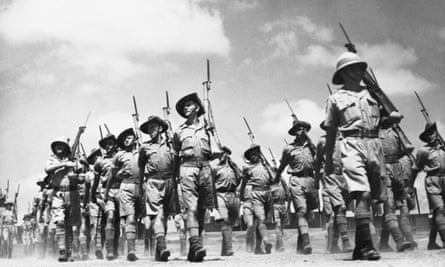
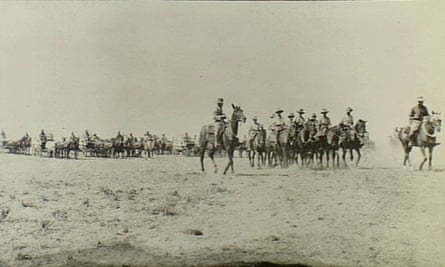
Surafend, Palestine. Australians from the Palestine recruit training depot marching. (Negative by Parer).
Surafend, Palestine. Australians from the Palestine recruit training depot marching. (Negative by Parer). Photograph: Australian War Memorial

The Scots blamed the New Zealanders. The New Zealanders blamed the Australians. The Australians blamed the New Zealanders and the Scots.

The official inquiries were a whitewash, so comprehensively did most of the men lie to protect one another. Accounts vary as to the death toll. The evidence suggests it was between about 40 and 100. No Anzac or Scottish soldier was ever held responsible for the murders at Surafend or the Bedouin camp, or for the destruction of the village. The Empire did not, however, let the matter go, insisting Australia and New Zealand compensate the British (which had the mandate on Palestine) for the cost of replacing the village (£2060.11.3) if not for the actual killings.

In 1921 Australia (which never contested its liability) got in early with a successful compensation offer of £515.2.9. New Zealand, which had insisted it should pay no more than an equal share, eventually paid £858.11.5 (a tacit admission in covert diplomatic terms at least, that New Zealand had played a greater part in the massacre). It was blood money.

The issue lingered on the edge of the public sphere well into the 1930s when the former light horseman, Mulhall, badgered a raft of MPs (among them Robert MenziesGullett, and the former commanders of the 1st and 3rd Light Horse Regiments, Charlie Cox, by then a senator, and George Bell, speaker of the house) in a deluded attempt to prove the Australians had played no part in the massacre. The politicians knew the truth and fobbed Mulhall off.

A few days after the massacre the British commander of the Egyptian Expeditionary Force, Edmund Allenby, addressed the Anzac Mounted Division. He was whistled at and counted down as he stood in his stirrups atop his black stallion, Hindenburg, to declare that they were a bunch of murderers. He wiped his hands of them for good.

Harry Chauvel, the Australian cavalryman and commander of the Desert Mounted Corps (the biggest mounted column of men and beasts to traverse the Middle East since Alexander the Great) leant on Gullett to omit the massacre from the official history. Gullett, to his credit, having sought guidance from the chief war historian Charles Bean, included a four-page account in his 848-page official history.

Chauvel later wrote, “There are a few ‘incidents’ in the Australian official history. I would miss out anything about the Surafend affair. It should never have been mentioned in the Australian Official History and has been long forgotten in Australia.”

But good history can never be preoccupied with forgetting. Its core business must always be the preservation of memory.

Australian crimes against humanity such as Surafend (it would have been a war crime had it not occurred after the armistice) rated no mention in the $600m commemoration of the first world war. The war memorial does not feature what happened in its displays.

But its archive does hold part of the truth, in its archival documents and recorded voices.

Not least that of old Ted O’Brien, who said, “They all went for the men with the bayonet and they got it.”

2020년 12월 6일 일요일

In My Blood It Runs Filmmaker Q&A | FanForce TV

In My Blood It Runs Filmmaker Q&A | FanForce TV


IN MY BLOOD IT RUNS FILMMAKER Q&A
Get Access Now
or sign in to continue

Add to Favorites

Share
Autoplay
About Comments
About


In My Blood It Runs Filmmaker Q&A!


Please note this is a Q&A ONLY.


All prices are displayed in USD.

In My Blood It Runs : ABC iview

In My Blood It Runs : ABC iview

Home
Channels & Categories
ABC Kids
Programs A-Z
Find a program. Start typing and choose from the list below.
Log InMore from ABC


PLAYduration: 1 hour 21 minutes1h 21m

LAST CHANCE

In My Blood It Runs
ABCDOCUMENTARYREGIONAL AUSTRALIA
Add to watchlist
Share


The critically acclaimed documentary told through the eyes of charismatic 10-year-old Arrernte/Garrwa boy, Dujuan and his family, revealing the challenges Dujuan faces both in his school and on the streets of Alice Springs. (2019)


Director
Maya Newell, With Hoosan/Turner/Mawson & Anderson Families
Cast
Arrernte & Garrwa Families, Dujuan Hoosan

Related
In My Blood It Runs Website
Full Production Credits


This program was published 4 weeks ago, available until 7:00am on 8 Dec 2020.


More Like This

Returning to the ‘Scene of the Crime’ | Workers BushTelegraph

Returning to the ‘Scene of the Crime’ | Workers BushTelegraph

Returning to the ‘Scene of the Crime’

In 2014, our friends Greg Rolles, Tim Webb. Sam Quinlan, and Dave Sprigg were brutally assaulted by SAS soldiers on Swan Island, a highly secretive training base off the coast of Victoria. They were hooded, stripped naked, threatened with rape and drowning, dragged along the ground kicked and walked on. (Journalist Kieran Finnane has written an excellent article about it here.)

swan island activists at gates with banners guardian photo

Last weekend, I returned with Greg to Swan Island along with Dominican priest, Fr Peter Murnane and a friend, Shane Anderson. We went once again to offer ongoing witness and resistance to Australia’s war crimes in the Middle East.

The response from security agencies to our action was radically different from that experienced by Greg and colleagues six years ago. There was no violence towards us, nor threats of violence. It seems the Brereton Report has – at least for now – made an impact.

The Australian military is facing the most shameful exposure in its history. A long investigation has concluded SAS troops murdered at least 39 unarmed Afghanis, often for no other reason than the desire to kill another human being.

This is Australia’s Mai Lai.

SAS execute a civilian in a grassy field

For ten years prior to the release of this report, a group of Christians had been offering nonviolent resistance to Australia’s illegal and immoral wars, by blocking the gates or walking or Swan Island, to place their bodies in front of the war machine.

While being assaulted in 2014 more than one of the victims told later of a thought going through their mind, ”If this is what they do to us, imagine what they do to Afghans and Iraqis?”.

Now we know.

As I said above, our own reception last weekend was nothing like this. I believe the change reflected the universal shame the military and Australian people are feeling right now.

We entered the Swan Island base before dawn, walked to the training area right near the scene of the assaults, and held our banner, “Stop Training Killers – Abolish the SAS”                                       

When we were finally spotted by a security guard, he calmly told us the police were coming. Soon after we heard over the loudspeakers, “There are peace protestors on the base. All personnel are to remain in their quarters till further notice.”  Greg live streamed all our activities. No attempt was made to stop him. In fact, he continued to record in the back of the police van.

The police were ultra polite. They drove us off the base and released us. Summonses for trespass would be sent in the mail they said.

Is there no one to condemn us?

On the same day as we entered Swan Island the Chinese published the artwork depicting an Australian soldier cutting the throat of an Afghan boy holding a lamb. Indeed, one of the charges from the enquiry is that the SAS cut the throats of two 14-year-old boys and left them on the side of the road “for others to clean up the mess”.  The Prime Minister immediately demanded an apology. But none is forthcoming. The China /Australia diplomatic war has just opened up its most shocking front.

On the long drive home to Brisbane, Greg and I turned on the radio for the first time, and there was Senator Jackie Lambie demanding the head of Defence Chief Angus Campbell resign over the whole issue. Mostly though, she was talking about the terrible problem of Defence Force suicides. The recent developments can only exacerbate the problem.

It is indeed a tragedy.

But the solution is not to cover up the horror of war with empty platitudes about our brave and noble troops. Such platitudes help ensure each succeeding generation of youth, who have not seen the horror of war, will bravely sign up for it.

We need to see a time when the truth is told. That war is a terrible evil, that dehumanises all who take part. We need to face up to the war crimes not just of individuals, or even the generals who Jackie Lambie seeks to blame.

Surely the first war criminals are the politicians who sent young men off to kill people who posed no threat to us.  As someone once said, “War is about killing people who are not our enemies for people who are not our friends.” The Howards, Abbotts, Gillards, Morrisons of this world should all be put on trial for instigating and/or continuing this mindless bloodshed: blood shed for the rich and powerful to become more rich and powerful.

Once the initiators of the primary war crimes are held accountable, maybe we can honestly face the shame. Let’s #AbolishtheSAS

Peace activists at the gate 2020
swan island 4 2020

Watch parts of the live streamed video Anti-war activists of faith shut down Swan Island SAS training base where we share our motivation and insights. 

Jim Dowling

Jim Dowling is a long time activist from the Catholic Worker movement based in Brisbane. Amongst many acts of resistance, he entered the Pine Gap military base in 2005 and again in 2016 facing Supreme Court trials in Alice Springs on both occasions.

References: Best Articles on the SAS War Crimes

The Conversation: Why Australian Commanders Need to Be Held Responsible 

The Guardian : Key Findings

The ABC: Angus Campbell’s speech in full.


2020년 12월 5일 토요일

Australian war crimes and racist fantasies in Afghanistan

 At last somebody said it. There was nothing... - Vladimir Tikhonov


Vladimir Tikhonov
3h · 


At last somebody said it. There was nothing 'good' about the Western invasion of Afghanistan from the beginning. Its legality was/is doubtful at best: the official justification was the necessity to kill/capture Bin Laden/his lieutenants, but the Western occupation of Afghan land continued long after the US forces murdered Bin Laden in Pakistan (since the killing wasn't accompanied by any legal procedure, I guess that it would be right to refer to it as 'murder'). Taliban may or may not be an atrocious bunch of religious fanatics, but, under the current international law, there is NO justification whatsoever for the armed foreigners to interfere with how an alien country is governed and by whom. The idea of uniformed and (mostly) white Westerners 'saving' Afghan women from their fathers/husbands was a racist, white-supremacist fantasy from the beginning. As we understand now, nobody was going to 'save' anybody in any case: armed white males were playing out their lethally sadistic racist fantasies on the local population, in full knowledge that in their home societies, they were not going to stand trial for the loss of non-white lives in a faraway place.

Western imperialism is on a marked decline. The 'saviors of Afghan women' were not able to establish a stable neo-colonial government in the country they attempted to conquer, and will have to retreat from their, sooner or later. But the beast in agony is still a very, very dangerous beast.....


Australians continue to believe they are fighting a good war in Afghanistan, despite mounting evidence to the contrary.

ALJAZEERA.COM

Australian war crimes and racist fantasies in Afghanistan
Australians continue to believe they are fighting a good war in Afghanistan, despite mounting evidence to the contrary.
===
Australian war crimes and racist fantasies in Afghanistan
Australians continue to believe they are fighting a good war in Afghanistan, despite mounting evidence to the contrary.

Sahar Ghumkhor's research explores the intersections of race, gender and psychoanalysis.

3 Dec 2020

Australian and British troops stand at attention during an ANZAC day ceremony at Camp Armadillo in Afghanistan on April 25, 2008 [Reuters/Omar Sobhani]

Last week the distressing details of a four-year inquiry into the Australian Defence Force’s war crimes in Afghanistan were finally released to the public. The country grappled with the scale of the violence: at least 23 deadly incidents; 39 Afghan civilians, including children, killed; at least 25 Australian soldiers of the Special Air Service Regiment (SAS) involved.

The report described a savage practice of “blooding”, where young special forces soldiers were instructed by senior commanders to make their “first kill” and a “culture of secrecy”, where witnesses remained silent and murderers covered up their crimes by planting weapons and radios on dead bodies.

While the details of the crimes have been widely reported on, there has been a curious reluctance in Australia to explain the violence and trace its racist origins. The local media coverage of the revelations had a defensive tone.

Military, academic and mental health experts appeared on Australian TV screens to buffer the allegations by speaking of the integrity of the military and concerns over the impact on the image and morale of the defence forces. Australian officials and commentators tried to present the war crimes as an act of a few “bad apples” just as their American counterparts did with the uncovered torture and murder at Abu Ghraib prison in Iraq.

Even when the horror of the war crimes was on full display and the sheer scale of the war crimes and depraved practices undeniable, white innocence was still desperately gasping for redemption.

But what struck me the most as an Afghan living in Australia watching this fiasco unravel was how the coverage of the inquiry on Australian TV ended with the promotion of a mental health helpline for members of the military and their families. This, in a year of protests against uniformed men terrorising civilian populations and basking in impunity taking place around the world.

The tone deafness was incredible and the narcissism – diabolical. Absent in the media coverage was any concern for the victims and the feelings of Afghans and Afghan Australians. Many of us carry the scars of war and many were certainly retraumatised by these findings.

Army Chief Angus Campbell did offer an apology to Afghans on the day of the report’s release. But he also curiously repeated the report’s conclusion that these crimes did not occur in the “heat of battle”. That is, we have 39 illegal murders and an untold number of others which must be “legal”, as they occurred in what the Australian army decided was the “heat of battle”.

This is how the spellbinding fog of the so-called “war on terror” transforms civilians into “collateral damage” or suspect terrorists, monsters into heroes, freedom fighters into terrorists and terrorists into Muslims. The racial economy of the “war on terror” has made Black and brown lives cheap, disposable, not worth acknowledging or grieving. More than half a million people have been killed in Afghanistan, Pakistan and Iraq in the “heat of battle”, but the gruesome details of their murders will not make it into any report.

This normalisation of violence by the West in certain parts of the world creates spaces where practices like “blooding” – the merciless murder of civilians and detainees as a rite of passage – flourish. It is where the slaughter of defenceless people as a bonding ritual to make white men into warriors is deemed acceptable. It is where white men, drunk on their own saviour fantasy, come to see themselves as all-powerful, as untouchable.


But why “blooding”? There is something primal about the word. It has a dehumanising effect, reducing locals to animals to be sacrificed for a higher purpose – a manifest destiny – in a coming-of-age ritual. “Blooding”, “warrior culture” and “Zulu” – the name some SAS units adopted – are steeped in histories of colonial violence.

Australians should be intimately familiar with these themes. After all, this nation has a prolific history of “blooding” rituals, dispossession and naked violence against native populations.

Today the white men return to the former imperial frontier to pursue boyhood ideals of adventure, discovery and unbridled aggressions. Afghanistan is not a graveyard of empires as the mythology insists, it is where the imperial imagination is set free to act out its darkest fantasies with no legal or moral restraint.

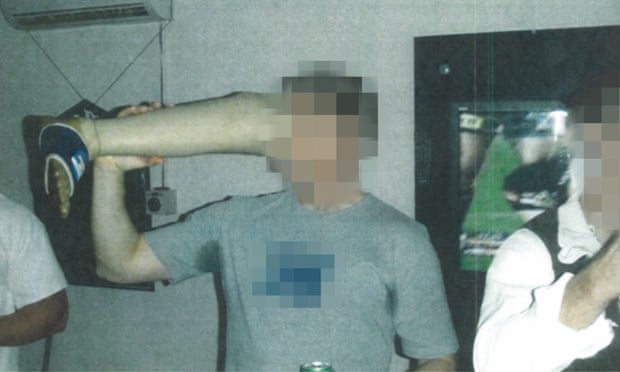
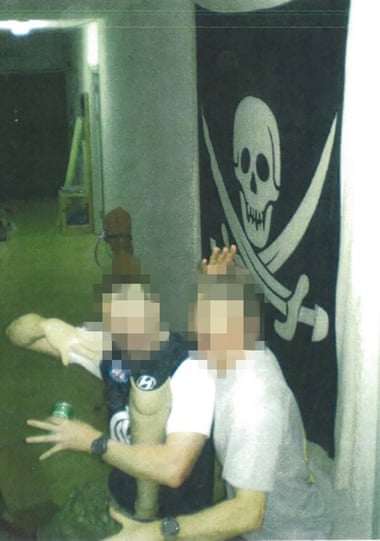
And just like in colonial times, when white men went after trophies, including human ones, today they collect body parts of dead Afghan civilians and their prosthetics to use as drinking vessels.

The desire for possession of body parts, even plastic ones, is a dark pathology, especially when they are snatched from a land covered with landmines and inhabited by so many broken bodies, where prosthetic parts are inaccessible to many. I wonder about the Australians who witnessed the theft of a dead Afghan man’s prosthetic leg or knew where it came from, but nevertheless, relished drinking beer from it.

I think about the mutilated face of Aisha Mohammedzai, the Afghan girl who appeared on the front cover of Time magazine in 2010, who was then flown to the US and offered a plastic nose. Plastic body parts are powerful commodities in Afghanistan: white men can give them as a gift and can take them away as punishment.

Perhaps the even more insidious part of this story is how the white men can kill at will, mutilate corpses, steal body parts and still come away feeling like heroes.

Indeed, despite the reports of war crimes piling up and murder of civilians spiking, the overarching Western narrative of the Afghan war has continued to present Western armies as saviours.

The war in Afghanistan has been considered the “good war”, unlike the invasion of Iraq which some eventually denounced as the “bad war”, the one built on lies. One has to wonder, however, how the anti-war movement came to believe that the same people who lied to us about Iraq somehow had the best of intentions in Afghanistan.

There is nothing that makes Westerners feel more powerful than the official rationale for the invasion of Afghanistan: going to war for the sake of Muslim women, to protect them from Muslim men.

But people forget that the original justification was not the protection of Afghan women. The US and its allies initially declared they were invading as an act of self-defence because Afghanistan was harbouring al-Qaeda and its leader Osama bin Laden, who was accused of ordering the 9/11 attacks.

But none of the conditions for self-defence were sufficiently met to secure legal approval. There was no ongoing armed threat against the US by the time of the invasion, the Security Council did not meet in time to sanction it, Afghanistan was not an aggressor nation, harbouring bin Laden did not warrant a military intervention and the Taliban was actually open to negotiate.

Once the war began, America and its allies were in murky legal territory and they knew it. The motives for the war quickly shifted from self-defence to defending Afghan women and removing the Taliban. The new paradigm of militant humanitarianism (responsibility to protect) became the cover-up narrative for the illegal origins of the war.

This humanitarian pretence has disarmed Afghans of the right to self-defence and self-determination. The idea of the “good war” has been so tenuously guarded that the plight of Afghan women has become dogma and Afghan political will that does not align with the humanitarian paradigm and its vision for the future of the country has been automatically labelled a threat.

As evidence of horrendous war crimes mounts, Westerners, including Australians, continue to hold on to the racist fantasy that they are fighting a “good war” in Afghanistan, that they have the moral right to demarcate the boundaries of the battleground, that they can decide who is a civilian and who is Taliban.

In “the heart of darkness”, these delineations do not really mean anything, they are mere cloaks for monsters and the nations that birth them. For many Afghans, this is the real revelation of the Australian inquiry.

The views expressed in this article are the author’s own and do not necessarily reflect Al Jazeera’s editorial stance.

Sahar Ghumkhor

Sahar Ghumkhor's research explores the intersections of race, gender and psychoanalysis.
----------

2020년 12월 1일 화요일

[나우뉴스] 사망한 적군 의족을 맥주 잔으로…호주 특수부대 만행 또 폭로돼

[나우뉴스] 사망한 적군 의족을 맥주 잔으로…호주 특수부대 만행 또 폭로돼


사망한 적군 의족을 맥주 잔으로…호주 특수부대 만행 또 폭로돼


입력 : 2020.12.01 17:59 ㅣ 수정 : 2020.12.01 17:59


▲ 2009년 아프가니스탄 파병 당시 교전으로 사망한 탈레반 반군의 의족에 술을 담아 마시는 호주 특수부대원의 모습(사진=가디언)


호주의 특수부대 병사들이 아프가니스탄에서 반군조직 탈레반 소속의 사망자가 착용했던 의족에 술을 담아 마시는 모습의 사진이 폭로돼 충격을 주고 있다.

영국 가디언의 1일 단독 보도에 따르면 해당 사진은 2009년 호주군 특수부대가 아프가니스탄에서 탈레반과 교전을 펼쳤던 우르즈간주 타린코우트의 한 비공식 술집에서 촬영된 것으로 알려졌다.

사진은 신발도 벗겨지지 않은 의족에 맥주를 담아 마시고 있는 호주 군인의 모습을 담고 있으며, 의족의 주인은 2009년 4월 탈레반 전투기에 탑승하고 있다 교전으로 사망한 탈레반 반군의 것으로 추정된다고 가디언은 전했다.

호주 특수부대 병사들은 사망한 탈레반 반군의 시신에서 일종의 전리품으로 의족을 챙겼고, 문제의 술집에 보관하면서 술잔으로 이용해 온 것으로 알려졌다.

전직 군인은 가디언과 익명으로 한 인터뷰에서 “술잔으로 사용된 탈레반 반군의 의족은 자주 특수부대의 비행기에 실려 있었다”면서 “승인되지 않은 술집은 전쟁터가 이동할 때마다 생겨났고, 해당 술집이 어디에 있든 특수부대의 고위 군인은 부하에게 이를 사용해 술을 마시게 했다”고 말했다.

가디언은 “호주 특수부대 사회에서 고위 장교가 사망한 적군의 의족 등에 술을 담아 마시는 풍습은 오래전부터 있어 왔다고 알려져 있었지만 실제 사진 등의 자료가 공개된 것은 이번이 처음”이라고 전했다.


▲ 2009년 아프가니스탄 파병 당시 교전으로 사망한 탈레반 반군의 의족에 술을 담아 마시는 호주 특수부대원의 모습(사진=가디언)


이러한 자료는 아프가니스탄에 파병된 호주 특수부대(SASR)원 등 25명이 2005년부터 2016년까지 민간인 39명을 불법으로 살해한 뒤 이를 은폐한 사실을 확인했다고 밝힌 오스트레일리아국방군 감찰실(IGADF)의 보고서가 발표된 지 한 달도 채 되지 않은 시점에서 공개된 것이라 더욱 충격을 주고 있다.

보고서에 따르면 당시 호주 특수부대원들은 신참 병사들이 살인을 경험하도록 고참 병사가 강제로 살인을 명령하는 ‘블러딩’(blooding)이란 신고식 관행에 따라 민간인이나 포로를 살해한 것으로 확인됐다.


당시 아프가니스탄으로 파병됐던 특수부대와 관련한 논란은 이 뿐만이 아니다.

호주 당국은 지난달 30일 아프가니스탄 아이의 목에 칼을 대고 있는 호주 군인의 사진을 게재한 중국 외교부와 진위 여부를 두고 날 선 공방을 벌이고 있다. 외교 분쟁으로까지 번질 것으로 보이는 상황에서 ‘의족 술잔’ 폭로의 여파는 쉽사리 가라앉지 않을 것으로 보인다.

송현서 기자 huimin0217@seoul.co.kr


[출처: 서울신문에서 제공하는 기사입니다.] https://nownews.seoul.co.kr/news/newsView.php?id=20201201601013&wlog_tag3=naver&fbclid=IwAR0IDG74sdcd6xPkr-ndb6d32T86_QByH7NulsswubM0A9RSFfV9xaiS_hE#csidxe75d7bcf5ceaa56bd3a4fb1c1830d89 

SAS war crime perpetrators 'are not one of us': Australian soldiers

SAS war crime perpetrators 'are not one of us': Australian soldiers
NationalDefence
OPINION
'They are not one of us': SAS soldiers condemn war crime perpetrators
For the first time in SASR history, a group of 12 current and former soldiers have stepped out from the shadows to remind the country what they are, and what they are not.
By SAS Soldiers
November 16, 2020 — 7.45pm

We are the soldiers, the ‘Operators’ as we are known, who have served or are continuing to serve in the Special Air Service Regiment.

We have decided to speak, as one, to the Australian public, who have trusted us and invested in us to defend our country for over 60 years.

An Australian Special Operations task group soldier on patrol in Afghanistan.
An Australian Special Operations task group soldier on patrol in Afghanistan.CREDIT:ADF

All of us have been carefully selected for the privilege of serving our country in the SASR. Our government has invested millions of dollars of public money in each one of us to provide you with unique and specialised capabilities in the defence of our nation.

Our regiment is now the subject of the longest inquiry into allegations of war crimes conducted by the Australian Defence Force. Accusations and allegations of war crimes as well as failures of leadership cut to the very core of the SASR. Such actions go against the very purpose of who we are as an organisation, and against the very nature of who we are as individuals.

We are not indifferent to human suffering. We do not have a callous disregard for human life. We are, however, selected for our unwavering moral compass, on which we proudly hang our Sandy Berets. We are not out of control. In fact, we have spent the majority of our professional soldiering careers in the SASR drilling and exercising, specifically to avoid casualties among non-combatants.

An SAS soldier awaits the arrival of a UH-60 Blackhawk helicopter in Afghanistan.

We define SASR mission success by how precisely we can apply the minimum amount of force to achieve a desired strategic outcome with the absolute minimum loss of human life. This is evident in the tens of thousands of missions and programs we have carried out around the world.

We are all singularly bound by the principle of "truth in reporting". This principle underpins our single most important regimental capability: long-range surveillance and reconnaissance. Truth in reporting enables the SASR to act as the operational eyes and ears of the Australian Defence Force and the Australian government. Without truth in reporting, we are nothing.

As early as 2006, it was our commitment to truth in reporting that instigated what has now resulted in the four-year-long Brereton inquiry into allegations of war crimes in Afghanistan. Truth in reporting is why we speak up then and now.

The matters before us are of an extremely grave nature, and we accept that the impact of the Brereton inquiry may adversely affect former and current serving members and their families, as well as our strategic relationships with other coalition forces around the world. Whatever the outcome, we prefer our regimental history to reflect hard truths over comforting fantasy. If it can be destroyed by the truth, it deserves to be destroyed by the truth.

We also believe that the same principle of truth in reporting should be embraced by the media, so as not to unduly impugn the reputation of the SASR as a whole, or inadvertently imply improper behaviour committed by former or current serving members. Equally, we applaud accurate portrayals of misconduct provided it is supported by appropriate context and evidence.

Just as we embrace truth in reporting, we demand our leadership to do the same. Leaders are bound in their duty to convey what we have seen and reported and we hold them to the same standards to which we hold ourselves.

Australian Special Forces task group (Special Air Service or SAS) soldiers take part in a training exercise.

We hold our leadership to the same unforgiving standards to which we hold our teams, and ourselves, individually. It is our relentless pursuit of individual and organisational excellence that defines us as an organisation and a regiment.

We lead by example. On combat operations, we were forced to sacrifice many of our technological advantages over highly adaptive adversaries who knew no rules or bounds. We accepted continually shifting goal posts and decisions made by governments in the absence of a defined campaign outcome in Afghanistan. We begrudgingly accepted these strategic decisions while attempting to effectively operate in an environment characterised by uncertainty, danger and our own casualties.

We are not war criminals, nor have we ever set our morality aside. We are professional volunteer soldiers who frequently upheld the values of the Australian Army during a 10-year expeditionary campaign in the Middle East, despite the absence of any clear definition of victory.

We believe in the same legal principles that underpin the very fabric of Australian society, something that we have sworn to defend with our lives.

We support the removal from the regiment and legal prosecution of anyone found guilty of breaching the laws of armed conflict, the Geneva Convention or the rules of engagement. We outright reject and despise criminality in all its forms, especially in the context of soldiering. We support unbiased investigatory due process, the rule of law and the burden of proof. There is absolutely no place in the ADF, least of all in the SASR, for any individual who believes they are untouchable or above the law.

Australian SAS Soldiers on patrol near Bagram air base, Afghanistan.

Having had full legal representation, should it be proven that any former or current serving individuals within the SASR have acted outside the law or the expected standards and behaviours demanded of an Australian soldier, we underline that we will wholeheartedly support their prosecution and removal from the regiment. They have acted against everything the SASR fights and stands for. They are not one of us.

We are committed to accepting the outcomes and consequences of the Brereton inquiry and to action its recommendations. Then we will return to the shadows where we belong. We do not seek to be glorified for our actions or demonstrating our moral courage. We only seek the validation that truth in reporting is who we are and what we do.

We are proud of the internal examinations into our regiment that have highlighted a culture of toughness and professionalism of the extraordinary men and women who do extraordinary work under extraordinary circumstances.

We are the tactical, operational and strategic eyes and ears for the ADF and the Australian government, with strategic and innovative capabilities to reach out and strike our adversaries when required.

We are soldiers, we are professionals, and we are Australians. We are committed to upholding the values of the Australian Defence Force. We believe in truth in reporting, moral courage and constant vigilance from the shadows in defence of Australia.

We are the SASR. Who Dares Wins.