Tuesday, November 25, 2025

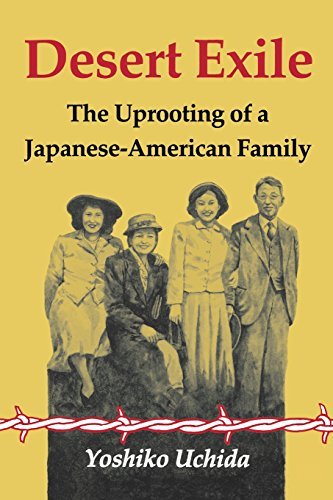
Desert Exile: The Uprooting of a Japanese American Family by Yoshiko Uchida | Goodreads

Desert Exile: The Uprooting of a Japanese American Family by Yoshiko Uchida | Goodreads

Rate this book

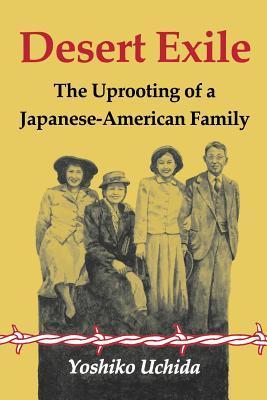
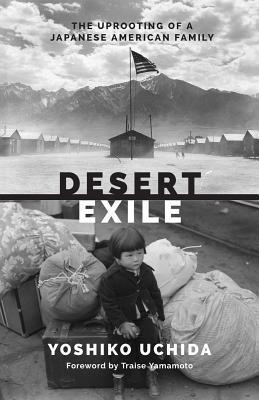
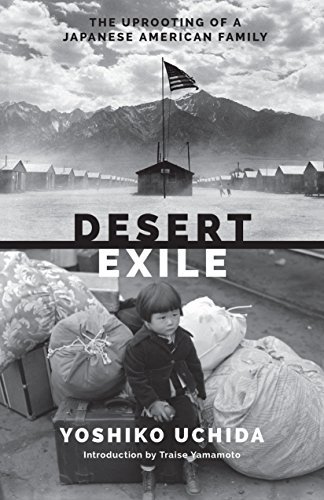
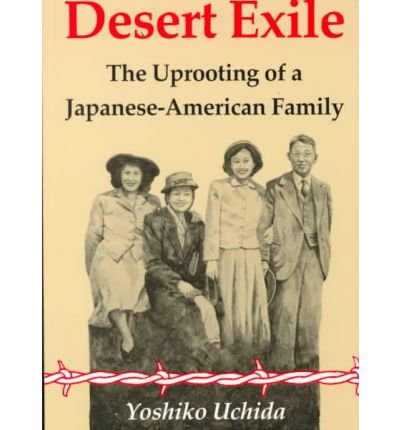
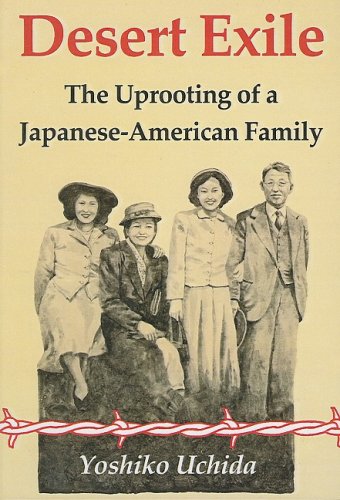
Desert Exile: The Uprooting of a Japanese American Family

In the spring of 1942, shortly after the United States entered into war with Japan, the federal government initiated a policy whereby 110,000 persons of Japanese ancestry were rounded up and herded into camps. They were incarcerated without indictment, trial, or counsel - not because they had committed a crime, but simply because they resembled the enemy. There was never any evidence of disloyalty or sabotage among them, and the majority were American citizens. The government's explanation for this massive injustice was military necessity.

Desert Exile tells the story of one family who lived through these sad years. It is a moving personal account by a woman who grew up in Berkeley and was attending the University of California when the war began.

To better unerstand how such a gross violation of human rights could have occurred in America, and how the Japanese reacted to it, the author takes a backward look at her parents' early years in this country and her own experiences as a Nisei growing up in California. She evokes the strong anti-Asian climate of the years preceding the war, and provides an intimate glimpse of life in one Japanese American household.

With the attack on Pearl Harbor, everything changed in Yoshiko Uchida's life. She tells of her father's abrupt seizure by the FBI; one of the family's frantic efforts to vacate their home on ten days notice; of being forced to live in a horsestall, deprived of every human privacy; and of being sent on to a bleak camp in the Utah desert, ringed by barbed wire and armed guards and plagued by terrifying dust storms.

But this is not simply an account of the day-to-day life in the Tanforan and Topaz concentration camps where the author lived; it is also the story of the courage and strength displayed by the incarcerated Japense. In particular, it is about the Issei (first generation immigrants) who, having already endured so much in a hostile society, still retained a remarkable resiliency of spirit as they established a sense of community, saw to the education of their children, and tried to live productive lives even behind barbed wire.

This is a beautifully crafted book, written with clarity, conviction, and insight. It should be read by all Americans so they will know and never forget what once happened in this country, and through that knowledge will never allow such a travesty of justice to happen again.

Replaced by ISBN 9780295994758
49 people are currently reading
1401 people want to read

About the author

Yoshiko Uchida

51 books94 followers
Yoshiko, born on November 24, 1921, was the second daughter of Japanese immigrant parents Takashi and Iku. Her father worked as a businessman for Mitsui and Company in San Francisco, and Iku wrote poetry, passing along her love of literature to her girls. Though the Great Depression raged, the Uchida family enjoyed comforts because of Takashi's well-paying job and their own frugality. Yoshiko loved to write, and her stories played out on pieces of brown wrapping paper. She also kept a journal to record her thoughts and events.

Enveloped in love and tradition at home, Yoshiko weathered the prejudice she sometimes faced. Many white students at University High School in Oakland didn't invite her to their parties and wouldn't socialize with her, deeming her a foreigner. Even while attending the University of California at Berkley, Yoshiko often faced the same dilemma of being ostracized. She found friendships with other Japanese American students and was preparing to graduate when Pearl Harbor was bombed, changing her life.

The United States government rounded up 120,000 people of Japanese descent and put them into camps. The Uchida family first resided in a horse stall at a racetrack in California, surrounded by barbed wire and armed guards. Though difficult to endure, the next move was worse. Almost 8,000 Japanese were sent to a relocation concentration camp called Topaz in the Utah desert. The detainees suffered from violent dust storms, scorpions, snakes, and exceedingly poor living conditions. Yoshiko taught second grade children there until she received a fellowship from Smith College to earn a master's degree in education.

Yoshiko and her sister both left the camp in May of 1943, with their parents gaining release later that year. Teaching for several years in a Quaker school outside of Philadelphia, Yoshiko decided to quit teaching and find work that allowed more time for writing. She moved to New York City and began as a secretary, penning stories in the evenings. Asked to contribute to a book about Japanese folk tales, Yoshiko discovered that though the book didn't come to be, with time she could create a full collection of folk tales. Writing a few pieces for adults, Yoshiko realized she was better suited for children's books.

A Ford Foundation fellowship sent her to Japan to research the culture and their stories. Spending two years, Yoshiko found her time to be healing as she learned about her own ancestry. The pain of the concentration camps lessened, and she began writing about the experiences in fictional books such as Journey to Topaz and Journey Home. Her career as an author soared as people regarded her as a pioneer in Japanese American children's literature. The author of almost forty works, including Japanese folk tales and stories of Japanese American children making their way in the world, Yoshiko traveled extensively, lectured, and wrote. After suffering from a stroke, Yoshiko passed away on June 25, 1992, in Berkeley, California.

Ratings & Reviews

My Review

Profile Image for Sejin.
3 reviews
Want to read.
Rate this book

Friends & Following

No one you know has read this book. Recommend it to a friend!

Community Reviews

5 stars
228 (27%)
4 stars
351 (41%)
3 stars
204 (24%)
2 stars
36 (4%)
1 star
19 (2%)
Displaying 1 - 10 of 95 reviews
Profile Image for Mai H..
1,332 reviews782 followers
May 23, 2025
ANHPI Heritage Month 2025 #13
Profile Image for TPK.
88 reviews8 followers
November 18, 2018
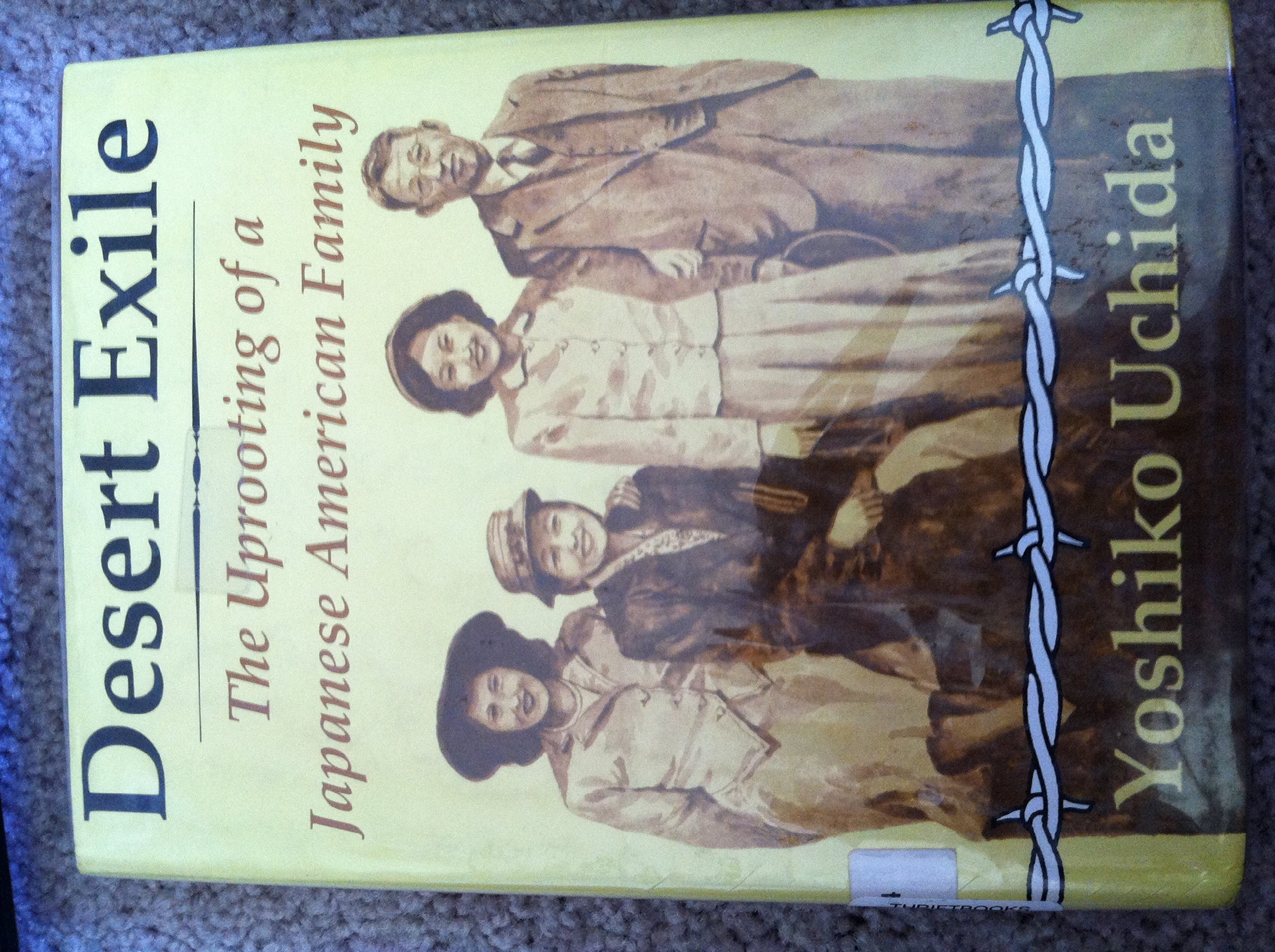
OK, I'll be honest -- the amateurish cover design of this book at first made me doubt whether the contents would be worth the read. Fortunately, this book is one of the sterling examples of the wisdom inherent in the phrase "Don't judge a book by its cover." Uchida's first-person narrative of her family's internment during World War II begins well before the war, affectionately describing her often idyllic childhood in Berkeley, California and the way her Issei parents raised both her and her older sister with a blend of both Japanese and American cultures. This background information, told with loving details, makes the shock of Pearl Harbor, America's entry into the war and the almost immediate detention of Japanese people in the United States all the more brutal and poignant to readers.

Uchida mentions some of the widespread rumors -- that Japanese people in America had helped conduct espionage for the Japanese government, that they cut arrows into the sugarcane fields to guide the Pearl Harbor bombers, and other scurrilous stories that were later completely refuted -- that led American military commanders and American citizens alike to condone the suspension of Japanese American constitutional rights and the process of internment "for their own protection." Many people who came of age during this time, including my own grandfather, believed in such rumors to their dying day and never trusted people of Japanese ancestry again. Others, born long after the war ended, have never even heard of the American concentration camps where thousands of Japanese nationals and American citizens were warehoused and hidden away, and where some of them died. For these and other reasons, I wish this book were better known and more widely read. American citizens in particular need to know what their government did under the influence of a race-based panic, how horrific it was, and how careful we should be never to do it again. What was done to one group could easily be done to any group at all; what threatens the rights of one group thus threatens everyone's rights.
6,149 reviews39 followers
January 25, 2016
Yoshiko Uchida, 1982

The author originally grew up in Berkeley, California. She starts off writing about her life there and gives some of her family history. She also has her own share of tragedies; one cousin died in Japan during the war; one died at Heart Mountain due to a heart condition, and an uncle became blind due to inadequate care while he was at one of the interment camps.

She continues with personal memories of her education in the U.S. and how she, as a Nisei, felt she wasn't really fully Japanese and wasn't really fully American, either. The day Pearl Harbor was attacked her father was taken by the FBI. There's a lot of very personal details of what was happening, including the fact that the parents of a friend of hers were shot and killed by an anti-Japanese fanatic.

She and the rest of her family were subject to evacuation and she tells the story of how they had to get rid of things, including even giving their pet collie away. They were shipped to the Tanforan Assembly Center. She describes the living conditions there, including the horse stalls they lived in, latrines with no privacy, etc. She also described the type of life her father had where he was being held, and these details are something few if any other books have.

She describes more details about life at Tanforan, including the activities, classes, the setting up of the post office, etc. As with the other evacuees she and her family were moved to a relocation center, in their case Topaz. They even had a sheet of instructions to follow on what words to use in Topaz (reminding me of an episode of The Prisoner with similar sayings), including to use the word Safety Council, instead of Internal Police, and Residents instead of Evacuees.

It's also obvious from what she writes that Topaz was not at all ready for use when the evacuees got there. Many buildings were not even finished being built, the laundry lacked water and lights didn't work. She writes about how elementary schools were supposed to start but nothing was there except an empty building. She also visited a white teacher at her staff lodgings and found out that the staff were in much, much more comfortable buildings than the internees.

Although the schools finally did get started they had to close in November due to the fact that they weren't actually finished and so terrible cold kept getting in to the schoolrooms. She also writes about the increasing tensions and bitterness in the camp and how this affected the way people behaved.

She finally did get to leave the camp and continue her education outside.

This is a very personal book and extremely good, giving a lot of good in-depth insight into what was actually happening at the assembly centers and internment camps. Definitely worth reading.
Profile Image for Elisse.
12 reviews
March 30, 2009
I liked this book quite a bit. I have studied the Japanese internment camp that was in Delta Utah for the past few semesters in different history classes, and this book finally made it real for me. I was outraged at the treatment of these US citizens, and awed by the fortitude and perserverence of Yo and her family. Everyone should read this book, so that this horrible and embarrassing event in American history is not repeated.
Profile Image for Stuart.
Author 3 books9 followers
February 15, 2015
An eye-opening piece of American history we were never taught in school. Our own country imprisoned thousands of its own citizens and locked them away in camps, depriving them of their homes and livelihood during WWII. Japanese men, women and children were deemed a threat to national security and imprisoned in camps away from the West Coast. Some things should never be forgotten and never glossed over if we want to truly understand our history and the type of people we aspire to be.
696 reviews19 followers
July 13, 2020
This book told the personal story of Yoshiko Uchida & her family who were sent to an internment camp during WWII because they were Japanese Americans. It is heart-breaking to realize that American citizens (Nisei) were sent to camps, in violation of the Constitution and their civil rights. This story tells the personal perspective of this family from Berkeley, California that is sent to Talforan and then, Delta, Utah. I'm so impressed with the positive attitude of this family, despite their mistreatment. I was also impressed with Yo's father's consistent drive to improve and lead in each situation, no matter how terrible. This story tells much about the Japanese culture, and some customs, and the dedication to America of these people, despite the horrendous injustice. A good read for youth and adults.
Profile Image for Elisabeth White Shirley.
74 reviews2 followers
January 6, 2022
This was a required text for me in my history class this past semester. It was my least favorite of the 3 books we read throughout the semester. The narrative follows a young Japanese-American family and their experience during America's involvement in WWII. It follows the family as they make sense of a new world where they experience a cultural shift of racism and prejudice towards them after Pearl Harbor. I felt that there were many spots where a lot of unnecessary information was given than needed to make the point which led to the text feeling very slow and boring at times. Regardless, this was a great short nonfiction read full of lessons for our culture and informative eye-opening information.
Profile Image for April.
71 reviews6 followers
August 15, 2008
An account of the Japanese Internment. This is written very well. I absolutely love her attitude as her family suffers all sorts of atrocities due to their Japanese heritage. I think this is a very important story to read so we can understand what America truly is and what it means to us. Also, what can happen when we group and begin to judge people based on their ethnicity and/or their appearance. A real eye opener.
For me, this is a subject that was only briefly touched on in high school history class. Yet, it is something that greatly impacted many of our fellow Americans and will continue to impact them and their descendants.
Profile Image for Valarie.
593 reviews15 followers
June 24, 2010
I'm not really sure why this is a separate book from Journey to Topaz, apart from the fact that they are written for different age groups. Both books tell the story of the author's internment during WWII, which is very interesting and well-written.


===

Rate this book

Desert Exile: The Uprooting of a Japanese American Family

In the spring of 1942, shortly after the United States entered into war with Japan, the federal government initiated a policy whereby 110,000 persons of Japanese ancestry were rounded up and herded into camps. They were incarcerated without indictment, trial, or counsel - not because they had committed a crime, but simply because they resembled the enemy. There was never any evidence of disloyalty or sabotage among them, and the majority were American citizens. The government's explanation for this massive injustice was military necessity.

Desert Exile tells the story of one family who lived through these sad years. It is a moving personal account by a woman who grew up in Berkeley and was attending the University of California when the war began.

To better unerstand how such a gross violation of human rights could have occurred in America, and how the Japanese reacted to it, the author takes a backward look at her parents' early years in this country and her own experiences as a Nisei growing up in California. She evokes the strong anti-Asian climate of the years preceding the war, and provides an intimate glimpse of life in one Japanese American household.

With the attack on Pearl Harbor, everything changed in Yoshiko Uchida's life. She tells of her father's abrupt seizure by the FBI; one of the family's frantic efforts to vacate their home on ten days notice; of being forced to live in a horsestall, deprived of every human privacy; and of being sent on to a bleak camp in the Utah desert, ringed by barbed wire and armed guards and plagued by terrifying dust storms.

But this is not simply an account of the day-to-day life in the Tanforan and Topaz concentration camps where the author lived; it is also the story of the courage and strength displayed by the incarcerated Japense. In particular, it is about the Issei (first generation immigrants) who, having already endured so much in a hostile society, still retained a remarkable resiliency of spirit as they established a sense of community, saw to the education of their children, and tried to live productive lives even behind barbed wire.

This is a beautifully crafted book, written with clarity, conviction, and insight. It should be read by all Americans so they will know and never forget what once happened in this country, and through that knowledge will never allow such a travesty of justice to happen again.

Replaced by ISBN 9780295994758
49 people are currently reading
1401 people want to read

About the author

Yoshiko Uchida

51 books94 followers
Yoshiko, born on November 24, 1921, was the second daughter of Japanese immigrant parents Takashi and Iku. Her father worked as a businessman for Mitsui and Company in San Francisco, and Iku wrote poetry, passing along her love of literature to her girls. Though the Great Depression raged, the Uchida family enjoyed comforts because of Takashi's well-paying job and their own frugality. Yoshiko loved to write, and her stories played out on pieces of brown wrapping paper. She also kept a journal to record her thoughts and events.

Enveloped in love and tradition at home, Yoshiko weathered the prejudice she sometimes faced. Many white students at University High School in Oakland didn't invite her to their parties and wouldn't socialize with her, deeming her a foreigner. Even while attending the University of California at Berkley, Yoshiko often faced the same dilemma of being ostracized. She found friendships with other Japanese American students and was preparing to graduate when Pearl Harbor was bombed, changing her life.

The United States government rounded up 120,000 people of Japanese descent and put them into camps. The Uchida family first resided in a horse stall at a racetrack in California, surrounded by barbed wire and armed guards. Though difficult to endure, the next move was worse. Almost 8,000 Japanese were sent to a relocation concentration camp called Topaz in the Utah desert. The detainees suffered from violent dust storms, scorpions, snakes, and exceedingly poor living conditions. Yoshiko taught second grade children there until she received a fellowship from Smith College to earn a master's degree in education.

Yoshiko and her sister both left the camp in May of 1943, with their parents gaining release later that year. Teaching for several years in a Quaker school outside of Philadelphia, Yoshiko decided to quit teaching and find work that allowed more time for writing. She moved to New York City and began as a secretary, penning stories in the evenings. Asked to contribute to a book about Japanese folk tales, Yoshiko discovered that though the book didn't come to be, with time she could create a full collection of folk tales. Writing a few pieces for adults, Yoshiko realized she was better suited for children's books.

A Ford Foundation fellowship sent her to Japan to research the culture and their stories. Spending two years, Yoshiko found her time to be healing as she learned about her own ancestry. The pain of the concentration camps lessened, and she began writing about the experiences in fictional books such as Journey to Topaz and Journey Home. Her career as an author soared as people regarded her as a pioneer in Japanese American children's literature. The author of almost forty works, including Japanese folk tales and stories of Japanese American children making their way in the world, Yoshiko traveled extensively, lectured, and wrote. After suffering from a stroke, Yoshiko passed away on June 25, 1992, in Berkeley, California.

Ratings & Reviews

My Review

Profile Image for Sejin.
3 reviews
Want to read.
Rate this book

Friends & Following

No one you know has read this book. Recommend it to a friend!

Community Reviews

5 stars
228 (27%)
4 stars
351 (41%)
3 stars
204 (24%)
2 stars
36 (4%)
1 star
19 (2%)
Displaying 1 - 10 of 95 reviews
Profile Image for Mai H..
1,332 reviews782 followers
May 23, 2025
ANHPI Heritage Month 2025 #13
Profile Image for TPK.
88 reviews8 followers
November 18, 2018
OK, I'll be honest -- the amateurish cover design of this book at first made me doubt whether the contents would be worth the read. Fortunately, this book is one of the sterling examples of the wisdom inherent in the phrase "Don't judge a book by its cover." Uchida's first-person narrative of her family's internment during World War II begins well before the war, affectionately describing her often idyllic childhood in Berkeley, California and the way her Issei parents raised both her and her older sister with a blend of both Japanese and American cultures. This background information, told with loving details, makes the shock of Pearl Harbor, America's entry into the war and the almost immediate detention of Japanese people in the United States all the more brutal and poignant to readers.

Uchida mentions some of the widespread rumors -- that Japanese people in America had helped conduct espionage for the Japanese government, that they cut arrows into the sugarcane fields to guide the Pearl Harbor bombers, and other scurrilous stories that were later completely refuted -- that led American military commanders and American citizens alike to condone the suspension of Japanese American constitutional rights and the process of internment "for their own protection." Many people who came of age during this time, including my own grandfather, believed in such rumors to their dying day and never trusted people of Japanese ancestry again. Others, born long after the war ended, have never even heard of the American concentration camps where thousands of Japanese nationals and American citizens were warehoused and hidden away, and where some of them died. For these and other reasons, I wish this book were better known and more widely read. American citizens in particular need to know what their government did under the influence of a race-based panic, how horrific it was, and how careful we should be never to do it again. What was done to one group could easily be done to any group at all; what threatens the rights of one group thus threatens everyone's rights.
6,149 reviews39 followers
January 25, 2016
Yoshiko Uchida, 1982

The author originally grew up in Berkeley, California. She starts off writing about her life there and gives some of her family history. She also has her own share of tragedies; one cousin died in Japan during the war; one died at Heart Mountain due to a heart condition, and an uncle became blind due to inadequate care while he was at one of the interment camps.

She continues with personal memories of her education in the U.S. and how she, as a Nisei, felt she wasn't really fully Japanese and wasn't really fully American, either. The day Pearl Harbor was attacked her father was taken by the FBI. There's a lot of very personal details of what was happening, including the fact that the parents of a friend of hers were shot and killed by an anti-Japanese fanatic.

She and the rest of her family were subject to evacuation and she tells the story of how they had to get rid of things, including even giving their pet collie away. They were shipped to the Tanforan Assembly Center. She describes the living conditions there, including the horse stalls they lived in, latrines with no privacy, etc. She also described the type of life her father had where he was being held, and these details are something few if any other books have.

She describes more details about life at Tanforan, including the activities, classes, the setting up of the post office, etc. As with the other evacuees she and her family were moved to a relocation center, in their case Topaz. They even had a sheet of instructions to follow on what words to use in Topaz (reminding me of an episode of The Prisoner with similar sayings), including to use the word Safety Council, instead of Internal Police, and Residents instead of Evacuees.

It's also obvious from what she writes that Topaz was not at all ready for use when the evacuees got there. Many buildings were not even finished being built, the laundry lacked water and lights didn't work. She writes about how elementary schools were supposed to start but nothing was there except an empty building. She also visited a white teacher at her staff lodgings and found out that the staff were in much, much more comfortable buildings than the internees.

Although the schools finally did get started they had to close in November due to the fact that they weren't actually finished and so terrible cold kept getting in to the schoolrooms. She also writes about the increasing tensions and bitterness in the camp and how this affected the way people behaved.

She finally did get to leave the camp and continue her education outside.

This is a very personal book and extremely good, giving a lot of good in-depth insight into what was actually happening at the assembly centers and internment camps. Definitely worth reading.
Profile Image for Elisse.
12 reviews
March 30, 2009
I liked this book quite a bit. I have studied the Japanese internment camp that was in Delta Utah for the past few semesters in different history classes, and this book finally made it real for me. I was outraged at the treatment of these US citizens, and awed by the fortitude and perserverence of Yo and her family. Everyone should read this book, so that this horrible and embarrassing event in American history is not repeated.
Profile Image for Stuart.
Author 3 books9 followers
February 15, 2015
An eye-opening piece of American history we were never taught in school. Our own country imprisoned thousands of its own citizens and locked them away in camps, depriving them of their homes and livelihood during WWII. Japanese men, women and children were deemed a threat to national security and imprisoned in camps away from the West Coast. Some things should never be forgotten and never glossed over if we want to truly understand our history and the type of people we aspire to be.
696 reviews19 followers
July 13, 2020
This book told the personal story of Yoshiko Uchida & her family who were sent to an internment camp during WWII because they were Japanese Americans. It is heart-breaking to realize that American citizens (Nisei) were sent to camps, in violation of the Constitution and their civil rights. This story tells the personal perspective of this family from Berkeley, California that is sent to Talforan and then, Delta, Utah. I'm so impressed with the positive attitude of this family, despite their mistreatment. I was also impressed with Yo's father's consistent drive to improve and lead in each situation, no matter how terrible. This story tells much about the Japanese culture, and some customs, and the dedication to America of these people, despite the horrendous injustice. A good read for youth and adults.
Profile Image for Elisabeth White Shirley.
74 reviews2 followers
January 6, 2022
This was a required text for me in my history class this past semester. It was my least favorite of the 3 books we read throughout the semester. The narrative follows a young Japanese-American family and their experience during America's involvement in WWII. It follows the family as they make sense of a new world where they experience a cultural shift of racism and prejudice towards them after Pearl Harbor. I felt that there were many spots where a lot of unnecessary information was given than needed to make the point which led to the text feeling very slow and boring at times. Regardless, this was a great short nonfiction read full of lessons for our culture and informative eye-opening information.
Profile Image for April.
71 reviews6 followers
August 15, 2008
An account of the Japanese Internment. This is written very well. I absolutely love her attitude as her family suffers all sorts of atrocities due to their Japanese heritage. I think this is a very important story to read so we can understand what America truly is and what it means to us. Also, what can happen when we group and begin to judge people based on their ethnicity and/or their appearance. A real eye opener.
For me, this is a subject that was only briefly touched on in high school history class. Yet, it is something that greatly impacted many of our fellow Americans and will continue to impact them and their descendants.
Profile Image for Valarie.
593 reviews15 followers
June 24, 2010
I'm not really sure why this is a separate book from Journey to Topaz, apart from the fact that they are written for different age groups. Both books tell the story of the author's internment during WWII, which is very interesting and well-written.
==
Amazon.com: Customer reviews: Desert Exile: The Uprooting of a Japanese American Family (Classics of Asian American Literature)

From the United States
One person found this helpful
Helpful

Just a Girl
5.0 out of 5 stars For those who think "things like that can't happen here."
Reviewed in the United States on June 22, 2002
Verified Purchase
While everyone has heard of the Holocaust and of the horrors inflicted upon the Jewish peoples during World War II, fewer people seem aware of the shameful treatment of the Japanese and Japanese-Americans in the United States following Pearl Harbor. While the American 'internment camps' did not play the same role as the concentration camps of Germany, and while the Issei and Nisei were not exterminated en masse as the Jews were, the actions taken by the American government with regard to "enemy alien" Japanese was nonetheless deploreable, and should not be forgotten, lest such a thing happen again.
Yoshiko Uchida had been living a fairly normal life with her Nisei sister and Issei family in Berkeley, California. Though she was aware of her Japanese heritage (sometimes moreso than others), Yoshiko never considered herself to be anything but an American. So when the American government tells her and her family that they have 10 days to report for relocation, Yoshiko suddenly finds her entire identity thrown into turmoil. If she isn't American, and she isn't Japanese, then who is she?
Much of this story was familiar to me, because I have read The Invisible Thread, another book by Uchida covering the same topic, but written for children. In each book, she speaks with anger, with sadness, and with fondness. She speaks of the confusion felt by the Nisei at being treated as criminals - actually, with less rights than criminals - by their own country. She speaks of the horrific living conditions at Tanforan and Topaz. She speaks of the fortitude of the Issei and Nisei, who meet the challenges present to them with typical Japanese aplomb.
There are any number of books out there by survivors of the Japanese internment during World War II. Uchida's is particularly well told, and should be read by anyone who think that "things like that couldn't happen in America." This is particularly pertinent now, when we seem to be in danger of following the same slippery slope.
8 people found this helpful
Helpful
Report

Topaz
5.0 out of 5 stars Emotionally moving
Reviewed in the United States on November 10, 2024
Format: PaperbackVerified Purchase
...a book from the heart...and heart breaking
Helpful
Report

Mike
4.0 out of 5 stars Good, but skippable.
Reviewed in the United States on October 12, 2015
Format: PaperbackVerified Purchase
This is good one, but if you know the basics about the Japanese internment camps its kind of a waste. Its one woman's story about her families internment, and its an uneventful one. There are no plot twists. Its just a very average story from that time, and the end she just wants us to be aware this atrocity of justice had happened. If you want to read a story of this time, read something with a family that is a little less well off at the time, or took a stance against the American government. This lady was well off from the get go, and she just took it. It would a better story at least.
Helpful
Report

Diane Dettmann
5.0 out of 5 stars An Eye Opening Read
Reviewed in the United States on June 22, 2016
Verified Purchase
An excellent, heart touching personal account of the injustices and hardships Yoshiko Uchida and her family struggled to overcome after the bombing of Pearl Harbor. Desert Exile carries the reader along with the Uchida family as they and thousands of Japanese Americans are removed from their homes and incarcerated in internment camps along the west coast. It's a piece of America's history that is relevant even today. An informative and eye opening read.
One person found this helpful
Helpful
Report

England's own.
5.0 out of 5 stars Very good book.
Reviewed in the United States on June 12, 2011
Verified Purchase
I know I say this often but I think books about Japanese-Americans during WW11 should be required reading in our schools and for others too. We need to know what can happen, what did happen and never allow it to happen again. We need to recognize prejudice and never allow it to cloud our judgments. I feel, I, myself, have learned a lot. We can all learn.
3 people found this helpful
Helpful
Report

ghostdog
3.0 out of 5 stars Three Stars
Reviewed in the United States on March 14, 2017
Verified Purchase
okay
Helpful
Report

Grandma Bella
5.0 out of 5 stars A must Read for all generations.
Reviewed in the United States on July 28, 2015
Verified Purchase
A subject we don't see discussed much anymore. Well written without bitterness. It was amazing to see what this group of mistreated people could accomplish to improve a pathetic existence during their exile. Some of our welfare recipients should read it to see just what can be accomplished with determination and pride.
One person found this helpful
Helpful
Report

altofriend
4.0 out of 5 stars Sad But True
Reviewed in the United States on December 29, 2013
Verified Purchase
This story was always one that held interest for me but yet one that I wasn't sure I really wanted to own as a proud American. Two things I carry with me now, one being where the school kids still stood and recited the Pledge of Allegiance to the US of A flag after interned. The other that many families felt like they were doing their part for the war in peacefully following the orders of being imprisoned..at least at first.
Overall an interesting and heart warming true story with some humor and heart.
2 people found this helpful
Helpful
Report

Ronnie Bruner
4.0 out of 5 stars Great book!
Reviewed in the United States on October 7, 2013
Verified Purchase
Concerning a subject that is often overlooked, the Japanese Americans interred during WWII is a very interesting subject. This is a great representation of the topic as it humanizes the poor people who faced such horrible conditions. We need more insight from these people as some of them are still alive. This is a very good book, with lots of insight and stories of happiness and hardship. This in my opinion would make an excellent movie!
3 people found this helpful
Helpful
Report

No comments:

Post a Comment