Monday, April 26, 2021

Think Indigenous: Native American Spirituality for a Modern World by Doug Good Feather

Post: Edit
Format: Kindle Edition


4.8 out of 5 stars 6 ratings

162 pages

A guide to integrating indigenous thinking into modern life for a more interconnected and spiritual relationship with our fellow beings, Mother Earth, and the natural ways of the universe.

With each generation, we have drifted further and further away from our ability to recognize and connect with the source of our original design. In this modern world, we spend our attention in ways that benefit the powers that be, and not ourselves or the earth. This book's intention is not to teach you to "be Native American," but instead to use the indigenous culture of the Lakota to help you connect with your own indigenous roots and help you remember your ancestral knowing that all beings are divinely connected.
Thinking indigenously centers around three concepts:
1) The way of the seven generations--conscious living
2) The way of the buffalo--mindful consumption
3) The way of the village--collective impact
Author Doug Good Feather, with Doug Pineda, shares the knowledge that has been handed down through his Lakota elders to help you connect with your purpose in life, personal power, and place in this interconnected web with Spirit, Mother Earth, and humanity as a whole.


Customers who bought this item also bought
Page 1 of 6Page 1 of 6
Previous page

The Journey of Soul Initiation: A Field Guide for Visionaries, Evolutionaries, and…
Bill PlotkinBill Plotkin
4.8 out of 5 stars 78
Kindle Edition
1 offer from $9.44
Consciousness Is What I Am
Joel S. GoldsmithJoel S. Goldsmith
4.5 out of 5 stars 27
Kindle Edition
1 offer from $8.99
Elements of Indigenous Style: A Guide for Writing By and About Indigenous Peoples
Gregory YoungingGregory Younging
4.7 out of 5 stars 81
Kindle Edition
1 offer from $9.89
Indigenous Food Sovereignty in the United States: Restoring Cultural Knowledge,…
Devon A. MihesuahDevon A. Mihesuah
4.9 out of 5 stars 52
Kindle Edition
1 offer from $24.95
Medical Medium (Revised and Expanded Edition): Secrets Behind Chronic and Mystery…
Anthony WilliamAnthony William
4.9 out of 5 stars 418
Kindle Edition
1 offer from $14.99
Next page


Customers who viewed this item also viewed
Page 1 of 2Page 1 of 2
Previous page

365 Days Of Walking The Red Road: The Native American Path to Leading a Spiritual Life…
Terri JeanTerri Jean
4.6 out of 5 stars 674
Kindle Edition
1 offer from $7.99
Journeying Between the Worlds: Walking with the Sacred Spirits Through Native American…
Eagle SkyfireEagle Skyfire
4.8 out of 5 stars 112
Kindle Edition
1 offer from $13.49
The Wisdom of the Native Americans: Including The Soul of an Indian and Other…
Kent NerburnKent Nerburn
4.7 out of 5 stars 545
Kindle Edition
1 offer from $11.48
Braiding Sweetgrass: Indigenous Wisdom, Scientific Knowledge…
Robin Wall KimmererRobin Wall Kimmerer
4.8 out of 5 stars 6,289
Kindle Edition
#1 Best Sellerin Nature Writing
1 offer from $9.99
Some Days
María WernickeMaría Wernicke
4.1 out of 5 stars 1,952
Kindle Edition
1 offer from $4.99
Next page
Amazon Business : For business-only pricing, quantity discounts and FREE Shipping. Register a free business account


From the Publisher


Editorial Reviews

About the Author
Doug Good Feather is a full-blooded native American Lakota, born and raised in the traditional indigenous ways of his elders on the Standing Rock Indian Reservation in South Dakota. He is a direct descendant of Grandpa Chief Sitting Bull. He is the executive director and spiritual leader of the Lakota Way in Colorado and the co-founder of Spirit Horse Nation. You can visit Spirit Horse Nation online at spirithorsenation.org.

Doug Red Hail Pineda is an entrepreneur, spiritual leader, and environmental freedom fighter. He is the co-founder of Spirit Horse Nation, an organization that brings the ideas of conscious living, mindful consumption, and collective impact to the forefront of human consciousness. Doug and his wife, Amy, live in the Colorado Rocky Mountains with their two children. --This text refers to the paperback edition.

Product details

ASIN : B08PP868PR
Publisher : Hay House Inc. (April 13, 2021)
Publication date : April 13, 2021
Language : English
File size : 5386 KB
Text-to-Speech : Enabled
Enhanced typesetting : Enabled
X-Ray : Not Enabled
Word Wise : Enabled
Print length : 162 pages
Page numbers source ISBN : 1788171861
Lending : Not Enabled
Best Sellers Rank: #115,351 in Kindle Store (See Top 100 in Kindle Store)
#60 in New Age Mysticism (Kindle Store)
#84 in Native American Religion
#87 in Occult Spiritualism
Customer Reviews:
4.8 out of 5 stars 6 ratings


Customer reviews
4.8 out of 5 stars
4.8 out of 5
6 global ratings

Top reviews from the United States


AR

5.0 out of 5 stars Beautifully writtenReviewed in the United States on April 26, 2021
Verified Purchase
This is an amazing book and inclusive of all different cultures, or lack thereof.


HelpfulReport abuse

Max

5.0 out of 5 stars Simply The Best Spiritual Book I Have Read In A Long TimeReviewed in the United States on April 14, 2021

This book is written for anyone who needs or feels the need to connect to the Greater Powers that make life so beautiful and true. I have spent many years on a path for meaning and the minute I started reading I knew I found my reconnection to a good way of life. When I was young I walked in more balance but time, crisis, deaths, and my own faults made me doubt God and whether there is anyone who walks that way anymore or even is looking. There is someone who has learned many good things and it is the author of this book. I feel honored that he is not selfish but cares for all creatures and the harmony that is possible still. From the start there are simple activities that anyone can do or improvise for their condition or needs. I went for a walk today but remembered the importance of the four directions and began looking again and listening also I walked the Red Road many years ago and have not had the connection due to moving and the very few people who shared the love of nature and the Creator that I had once felt. Please do yourself a favor and buy this book and read . Your life will change and being happy again will be very possible. Mitakaye Oyasi, we are all related. This book and the teachings are a blessing and a treasure. Thank you Good Feather.


HelpfulReport abuse

Steve Daily

5.0 out of 5 stars Heartfelt explanation of the Indigenous ViewReviewed in the United States on April 13, 2021

If you resonate with or are interested in the Indigenous spiritual viewpoint or true spirituality in general. you will not be disappointed with this book. Written with true humility and heart, and definitely needed for the times we are in.

2 people found this helpful

HelpfulReport abuse

See all reviews
Report an issue

Sunday, April 25, 2021

John Menadue - Wikipedia

John Menadue - Wikipedia


John Menadue

Language
Download PDF
Watch
Edit


Learn more

This article needs additional citations for verification.


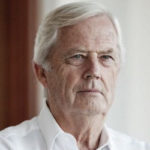
John Laurence Menadue AO (born 8 February 1935) is an Australian businessman and public commentator, and formerly a senior public servant and diplomat. He served as Secretary of the Department of Prime Minister and Cabinet from 1975 to 1976, working under the Whitlam and Fraser governments. He was later appointed by Malcolm Fraser as Australian Ambassador to Japan, in which position he served from 1977 to 1980.

John Menadue

AO

7th Australian Ambassador to Japan
In office
1977–1980
Preceded by Mick Shann
Succeeded by James Plimsoll
Secretary of the Department of the Prime Minister and Cabinet
In office
1 February 1975 – 30 September 1976
Preceded by Sir John Bunting
Succeeded by Alan Carmody
Personal details
Born
John Laurence Menadue
8 February 1935 (age 86)
South Australia
Nationality Australian
Spouse(s) Cynthia née Trowbridge (d.1984)
Alma mater University of Adelaide
Occupation Public servant
Website http://www.johnmenadue.com/


Contents


BiographyEdit

Menadue was born in South Australia on 8 February 1935,[1][2] the son of a Methodist minister, and was raised in that faith. He later converted to Catholicism. He attended 12 schools, and had lived in 17 houses by the age of 22. He graduated from the University of Adelaide in 1956 with a Bachelor of Economics.[citation needed]

From March 1960 to October 1967 Menadue was private secretary to Gough Whitlam, deputy leader of the Labor Opposition in the federal parliament (Whitlam became leader in February 1967). In 1966 Menadue stood unsuccessfully as Labor candidate for the NSW federal seat of Hume.[3] After leaving Whitlam's employ, he moved into the private sector for seven years as general manager at News Limited, publisher of The Australian.[citation needed]
Public service and diplomatic careerEdit

Menadue was head of the Department of Prime Minister and Cabinet from 1974 to 1976, working under prime ministers Whitlam and Malcolm Fraser. He was closely involved in the events of 11 November 1975, when Whitlam was dismissed by the Governor-General.[citation needed]

He was Australian Ambassador to Japan from 1976 to 1980.[4]

Menadue returned to Australia in 1980 to take up the position of Secretary of the Department of Immigration and Ethnic Affairs. In March 1983, he became Secretary of the Department of the Special Minister of State. He was appointed Secretary of the Department of Trade in December 1983.[citation needed]
Business careerEdit

Menadue was Chief Executive Officer of Qantas from June 1986 to July 1989. He was a Director of Telstra from December 1994 to October 1996, a Director of NSW State Rail Authority from 1996 to 1999, and Chairman of the Australia Japan Foundation from 1991 to 1998.[citation needed]

Menadue is an adviser to several companies. He chaired the NSW Health Council, which reported to the NSW Minister for Health in March 2000 on changes to health services in NSW. He also chaired the SA Generational Health Review which reported to the South Australian Minister for Human Services in May 2003.[citation needed]

In October 1999, Menadue published his autobiography Things You Learn Along the Way.[5] He was the founding Chair of New Matilda (NewMatilda.com), an independent weekly online newsletter which was launched in August 2004. He is the founder and fellow of public-interest think tank, the Centre for Policy Development.[6] He also publishes the public affairs blogsite Pearls and Irritations.[7]
HonoursEdit

Menadue was made an Officer of the Order of Australia (AO) in 1985 for public service.[8] In 2003 he was awarded the Centenary Medal 'for service to Australian society through public service leadership'.[9] In 1997, he received the Japanese Imperial Award, The Grand Cordon of the Order of the Sacred Treasure (Kun-itto Zuihō-shō), the highest honour awarded to foreigners who are not head of state or head of government.[10]
PersonalEdit

Menadue's first wife Cynthia née Trowbridge died of cancer in October 1984 aged 49.[11] Menadue has remarried and has four children and ten grandchildren.[citation needed]
NotesEdit

^ Birth Notice, The Adelaide Chronicle, 21 February 1935. Retrieved 12 July 2015
^ John Menadue, Things You Learn Along the Way, p. 4. Retrieved 12 July 2015
^ Barnes, Allan (3 October 1975). "Happy revolution around the PM". The Age. p. 5.
^ John Menadue, Australian Broadcasting Commission, archived from the original on 25 April 2013
^ "John Menadue", PM, Australian Broadcasting Commission, archived from the original on 3 November 2012
^ About John Menadue, Centre for Policy Development, archivedfrom the original on 14 August 2013
^ Pearls and Irritations homepage, by free subscription.
^ "Officer of the Order of Australia: Menadue, John Laurence". It's an Honour. Australian Government. 10 June 1985.
^ "Centenary Medal: Menadue, John Laurence". It's an Honour. Australian Government. 1 January 2001.
^ "Alumni awards", Adelaidean, University of Adelaide, September 2009, archived from the original on 30 March 2014
^ Slee, John (18 August 1985). "Wattle blossom diplomat". The Sydney Morning Herald. p. 63.. Cynthia Menadue wrote a book about her experiences in Japan, especially during the time she was there when her husband was the Australian ambassador in Tokyo. Her book was published as Cynthia Menadue, 1985, Shadows on the Shoji: A Personal View of Japan, Sydney: John Ferguson, ISBN 0 909134 82 0.
References and external linksEdit

Colvin, Mark (7 October 1999). "John Menadue interview transcript". ABC Radio National.
John Menadue, University of Western Sydney, archived from the original on 23 August 2006
Government offices
Preceded by
Jim Scully
Secretary of the Department of Trade
1983 – 1986
Succeeded by
Vince FitzGerald
New title
Department established
Secretary of the Department of the Special Minister of State
1983
Succeeded by
Darcy McGaurr
Preceded by
Lou Engledow
Secretary of the Department of Immigration and Ethnic Affairs
1980 – 1983
Succeeded by
Bill McKinnon
Preceded by
John Bunting
Secretary of the Department of the Prime Minister and Cabinet
1975 – 1976
Succeeded by
Alan Carmody
Diplomatic posts
Preceded by
Mick Shann
Australian Ambassador to Japan
1977 – 1980
Succeeded by
James Plimsoll

The Anzac Myth - Pearls and Irritations

The Anzac Myth - Pearls and Irritations


The Anzac Myth
By John MenadueApr 25, 2017


Conservatives and militarists want us to cling to a disastrous imperial war. They encourage us to focus on how our soldiers fought in order to avoid the central issue of why we fought.

The four-year and well-funded carnival celebrating Anzac and WWI is now rolling. The carnival will depict WWI as the starting point of our nation, as our coming of age!

It was nothing of the sort. It was a sign of our international immaturity and dependence on others. What was glorious about involving ourselves in the hatreds and rivalry of European powers that had wrought such carnage in Europe over centuries? Many of our forebears came to Australia to get away from this. But conservatives, our war historians and colonel blimps chose deliberately to draw us back to the stupidities and hatreds of Europe. Conservatives and militarists want us to cling to a disastrous imperial war. They encourage us to focus on how our soldiers fought in order to avoid the central issue of why we fought.

It seems that the greater the political and military stupidity of wars that we have been involved in, the more we are encouraged to hide behind the valour of our service people at Gallipoli, the Western Front and elsewhere.. The ‘leadership’ of Winston Churchill and General Ian Hamilton were catastrophic both for the British and for us. Australian and New Zealand forces at Gallipoli were commanded by a British General. No hiding behind the sacrifice of troops can avoid the facts. We should not have been there and it was a disaster.

Unfortunately the more we ignore the political and military mistakes of the past, the more likely we are to make similar mistakes in the future. And we keep doing it. If we had a sense of our calamitous involvement in wars in the past like WW1 we would be less likely to make foolish decisions to involve ourselves in wars like Vietnam, Iraq and Afghanistan.

Our history is littered with tragic military adventures, being led by the nose by either the UK or the US. And it goes on through the Boer War, the Sudan War and more recently, Vietnam, Iraq and Afghanistan. In all these cases, and just like WWI, we have desperately tried to hide behind the valour of our service people.

The most important and justified war in which we have fought as a nation was WWII, in defence of our own people and land. But WWII is rated by the Australian War Memorial and so many others as of much less significance. WW1 Is the Holy Grail.

On April 25 each year we are told that the great sacrifice of WWI was in defence of freedom and the right. But I don’t think that they even believe it themselves. It just does not ring true. Tony Abbott says it was a ‘just war’. But he is yet to explain what was ‘just’ about it. It is claimed that it united this country, but it divided us in a way that we had never been divided before or since with Billy Hughes exploiting the anti-Irish and anti-Catholic sentiment in the country. Only 30% of eligible men chose to enlist. WWI was a great divider. It was not a unifier despite the platitudes of Anzac Day.

Some claim that WWI was to bring peace to Europe. But the war and its aftermath laid the ground for even greater death and destruction in WWII.

In relation to our population, our greatest loss of lives was in the Frontier Wars where over 30,000 indigenous people died in defence of their own land. But we ignore it in favour of the myths of Anzac. Best we forget the Frontier Wars.

Yet it was the Frontier Wars -the forcible occupation of a vast continent- and not the wars of Gallipoli or the Somne that made Australia.

The first time Australians and New Zealanders fought together was against the Maoris in New Zealand in the 1850s and 1860s. The ANZAC connection was not forged at Gallipoli but half a century before in the Maori Wars. It’s best that we forget that too. It doesn’t do our self-respect much good to recall that we fought together with New Zealanders in a race war to quell the Maori people.

The early and remarkable achievements of this young country at the turn of the century and early in the 19th Century are blotted out by the blood and blather of WWI, ANZAC and Gallipoli. We talk endlessly about the Gallipoli landings. A more honest description would be the invasion of Turkey.

Federation in 1900 was a remarkable achievement, pulling together our six colonies into a nation. We led the world in universal suffrage, the rights of women, industrial democracy and the minimum wage. The ‘Australian ballot’ or secret ballot was progressively adopted in the Australian states in the latter half of the nineteenth century. We were a world leader. Our ballot was adopted in New Zealand, Canada, UK and US

In 1904 we had not only Australia’s first Labor Government. It was the first in the world. The rights of working people as expressed in the Harvester Judgement of 1907 put Australia as a leader on the world stage. We were an advanced social laboratory. Before WWI there were two decades of remarkable nationhood and advancement for ordinary people.

But conservatives were frightened of the future. They wanted to drag us back to the heart break of the past. And they succeeded with the help of Billy Hughes and other Labor renegades

In the process we broke our own heart – or as Marilyn Lake has expressed in a blog on April 23 this year ‘WWI fractured the nation’s soul’.

It is time we were honest with ourselves and discounted the myths of WWI, ANZAC and Gallipoli.

Instead we should celebrate the two remarkable decades of progress before the catastrophe of WWI. And never forget the Frontier Wars.

See also ‘The Wars we would rather forget.’

The Anzac myth and the Frontier Wars we wilfully ignore. - Pearls and Irritations

The Anzac myth and the Frontier Wars we wilfully ignore. - Pearls and Irritations


The Anzac myth and the Frontier Wars we wilfully ignore.
By John MenadueApr 22, 2021

Credit - Unsplash

Conservatives and militarists want us to cling to a disastrous imperial war. They encourage us to focus on how our soldiers fought in order to avoid the central issue of why we fought. We fought in WW1 for Britain’s imperial interests not our own.The AIF was the Australian Imperial Force. It could not be clearer.

And we won’t face up to the genocide of our Frontier Wars.


World War I is depicted as the glorious starting point of our nation, our coming of age! It was nothing of the sort. It was a sign of our international immaturity and dependence on others. What was glorious about involving ourselves in the hatreds and rivalry of European powers that had wrought such carnage in Europe over centuries? Many of our forebears came to Australia to get away from this. But conservatives, our war historians and colonel blimps choose deliberately to draw us back to the stupidities and hatreds of Europe. They encourage us to focus on how our soldiers fought in order to avoid the central issue of WHY we fought.

It seems that the greater the political and military stupidity of wars that we have been involved in, the more we are encouraged to hide behind the valour of our service people at Gallipoli, the Western Front and elsewhere.The ‘leadership’ of Winston Churchill and General Ian Hamilton were catastrophic both for the British and for us. Australian and New Zealand forces at Gallipoli were commanded by a British General. No hiding behind the sacrifice of troops can avoid the facts. We should not have been there and it was a disaster.

Unfortunately the more we ignore the political and military mistakes of the past, the more likely we are to make similar mistakes in the future. And we keep doing it. If we had a sense of our calamitous involvement in wars in the past like WW1 we would be less likely to make foolish decisions to involve ourselves in wars like Vietnam, Iraq and Afghanistan and maybe Taiwan.

Our history is littered with tragic military adventures, being led by the nose by either the UK or the US. It goes on through the Boer War, the Sudan War and more recently, Vietnam, Iraq and Afghanistan. In all these cases, and just like WWI, we desperately hide behind the valour of our service people.

The most important and justified war in which we have fought as a nation in the last century was WWII, in defence of our own people and land. But WWII is rated by the Australian War Memorial and so many others as of much less significance. WW1 Is the Holy Grail.

Pope Francis describes arms manufactures as ‘merchants of death’. Yet these merchants of death generously fund the AWM to help fill the minds of young and old alike to the glories and hardware of imperial wars.It rejects any real memorial to the Frontier Wars, the most significant wars in our short European history. The AWM governance believes that Frontier Wars are a matter for the Australian Museum. What planet do those people think we live on!

On April 25 each year we are told that the great sacrifice of WWI was in defence of freedom and the right. But I don’t think that they even believe it themselves. It just does not ring true. Tony Abbott said it was a ‘just war’. But he did not explain what was ‘just’ about it. It is claimed that it united this country, but it divided us in a way that we had never been divided before or since with Billy Hughes exploiting the anti-Irish and anti-Catholic sentiment in the country over conscription. Only 30% of eligible men chose to enlist. WWI was a great divider. It was not a unifier despite the platitudes of Anzac Day.

We sent soldiers to Afghanistan at the ‘request’ of the US. We are now withdrawing them because the US realises after 20 years that it was all in vain and at terrible cost particularly for the Afghan people. And then to justify our involvement in a war triggered initially by the invasion of Iraq, Scott Morrison says that in Afghanistan our soldiers ‘served in the name of freedom’. What nonsense. What a cover up for our complicity in helping to promote US imperialism and it’s determination to secure oil supplies from the Muslim lands of the Middle East.

In relation to our population, our greatest loss of lives was in the Frontier Wars where over 30,000 First Nation People died in defence of their own land. But we ignore it in favour of the myths of Anzac. Best we forget the Frontier Wars.

The Frontier Wars were the beginning of a great genocide in Australia . The frontier killings were followed by policies of assimilation to breed out the indigenous race. Our First Nation People were herded into missions.Children were separated from their families.This was genocide in our own land. At least we have now moderated from genocide to human rights abuses.

Yet the genocide we hear about most today is alleged genocide in China. What hypocrites we are.

The first time Australians and New Zealanders fought together was against the Maoris in New Zealand in the 1850s and 1860s. The ANZAC connection was not forged at Gallipoli but half a century before in the Maori Wars. It’s best that we forget that too. It doesn’t do our self-respect much good to recall that we fought together with New Zealanders in a race war to quell the Maori people.

The early and remarkable achievements of this young country at the turn of the century and early in the 19th Century are blotted out by the blood and blather of WWI, ANZAC and Gallipoli. We talk endlessly about the Gallipoli landings. A more honest description would be the invasion of Turkey to support Imperial Britain.

Federation in 1900 was a remarkable achievement, pulling together our six colonies into a nation. We led the world in universal suffrage, the rights of women, industrial democracy and the minimum wage. The ‘Australian ballot’ or secret ballot was progressively adopted in the Australian states in the latter half of the nineteenth century. We were a world leader. Our ballot was adopted in Canada, UK and US. NZ was a few years ahead of us.

In 1904 Australia’s Labor Government was the first in the world. The rights of working people as expressed in the Harvester Judgement of 1907 put Australia as a leader on the world stage. We were an advanced social laboratory. Before WWI there were two decades of remarkable nationhood and advancement for ordinary people.

But conservatives were frightened of the future. They wanted to drag us back to the heart break of the past. And they succeeded with the help of Billy Hughes .

In the process we broke our own heart – or as Marilyn Lake has expressed it: ‘WWI fractured the nation’s soul’.

It is time we were honest with ourselves and discounted the myths of WWI, ANZAC and Gallipoli.

Instead we should celebrate the two remarkable decades of progress before the catastrophe of WWI. And never forget the Frontier Wars.

See also ‘The Wars we would rather forget.’


John Menadue
Website


John Menadue is the publisher of Pearls & Irritations. He has had a distinguished career both in the private sector and in the Public Service.

Saturday, April 24, 2021

Asian Americans - Wikipedia

Asian Americans - Wikipedia

A Little Life: Yanagihara, Hanya: 9780804172707: Amazon.com: Books

A Little Life: Yanagihara, Hanya: 9780804172707: Amazon.com: Books

borderzkai
4.0 out of 5 stars A tragic and memorable tale
Reviewed in the United States on September 3, 2016
Verified Purchase
You know when someone talks to you about a “sad book,” and you immediately think, “well, someone precious is going to die at the end?” A Little Life has been called tragic, depressing, a masterpiece that you cannot get through without a wad of tissues nearby, and so naturally, I assumed someone would die at the end. I went into this book prepared to not get too attached to the characters, but it’s inevitable to not connect with people who are the subjects of an 800-page book with minimal spacing and tiny font. I’d like to think I went into this book prepared, but my preparation got me nowhere.

This novel does not lead up to a sad ending. Let me explain. Calling this novel “sad” is a massive understatement. It is 800 pages of tragedy after tragedy, because the “sad” doesn’t follow the pattern we are used to. It’s not happy and pleasant until the end where something sad happens- no, this book is a depressing hunk of paper with very little happiness in it. A Little Life is a long, winding tunnel spotted with skylights. You walk forward in the darkness with a couple of friends, and you are struck with sadness after sadness. Your friends get lost in the tunnel, you fall and break your arm, and then the tunnel gives you a foot of light where you can look around and take a breather before plunging yourself into the darkness. You don’t know what’s at the end, because the tunnel gives you no hints. You don’t know if you’ll exit into the open. You don’t know if you’ll hit a dead-end, but you keep on walking because by this point, your masochism has kicked in and you’re addicted to the torture.

We follow the stories of four characters, all college-friends who have moved from Boston to New York City in order to fulfill their dreams. Malcolm is an aspiring architect- timid and shy, whose overbearing parents are his pride and shame. JB is a painter- arrogant, optimistic and full of life, JB is the only one among his friends who is certain he will make it in life. Willem is an actor, calm and steady who has no family but his three best friends. But while the three have their own lives, their bond is strengthened by the presence of one Jude St. Francis. Jude is enigmatic. Despite having been friends for years, nobody knows anything about him; not his ethnicity or his sexuality. They don’t know anything about his childhood or his years before attending university. Jude has an injury; an accident severely limited the use of his legs, but nobody even knows how this came to be. But Jude is quiet, and he is kind and generous and dependent. And so the three friends lend their shoulders silently for him to lean on. This book is not set in one time period: years and decades pass, and each character matures, develops and experiences success and the perils of life, sometimes together, other times apart. As the narrative progresses, one thing becomes crystal clear: Jude has gone through an unspeakable childhood trauma. He is fragile and broken, battling so hard with inner demons that never seem to leave him.

If you’re looking for a fast-paced, action-packed, plot-centered novel, put this book down and walk far, far away. A Little Life reads more like an in-depth character study than anything else. Despite there being a large, diverse, well-fleshed out cast of characters- make no mistake: this novel is about Jude. This novel is about Jude’s life, his depression, his experiences, his feelings of pain and insurmountable shame. It is a story about Jude’s relationships and his impact on the people around him. It is a story about love and loss, of betrayal and friendship, of perseverance and giving in. And because it follows the story of such a broken, intense young man, it is a difficult read.

It is a difficult read in more ways than one. Firstly, it is 800 pages long with very little action, with large chunks of paragraphs detailing the little moments in life, detailing theorems and laws and art and literature. Large chunks that talk about family, sex, career and the meaning of love- things that may not even need to be in the book. These large chunks familiarize you with our characters’ backgrounds, their introspections and streams of consciousness, their experiences with each other and outside of their immediate relationships. The characters in this novel feel real; more than once, I felt like I could reach out and touch them. They feel like friends, comrades you’ve known for a long, long time. Their happiness genuinely excites you, and their sadness genuinely devastates you. You also become so invested in their relationships with each other, almost as if you’re a mediator.

Apart from the thematic material, what makes this novel so hard to digest is the characters. I’m not exaggerating when I say that they feel like friends- watching them suffer through unimaginable things hurt me. I have never felt this way before. Halfway through the book, I had already cried at least twice, excluding the point where I sobbed for ten pages straight. And then again after. Yanagihara’s empathetic portrayal of human nature, of human decency and monstrosity is so spot-on. I don’t know what else I can say.

Secondly, it is brutal in its honest, unflinching portrayal of mental illness. There were several moments in this novel where I had to set the book aside and steady my breathing. It is uncomfortable. It depicts self-harm and depression graphically but not gratuitously, with sensitivity without doing it for “the shock factor.” Finally, the constant jumps in time frame makes this book far from a casual read. You need to keep up. Each ‘section’ takes place a few years after the previous one, but sometimes Yanagihara alternates time within paragraphs as well. One time you’re seeing the friends’ lives when they are 35, and you jump back in the middle of a paragraph to when they are 28. It can be quite jarring if you’re not paying attention.

But having said that, Yanagihara’s writing is easy to keep up with. Daunting as it may be with its intelligent discussion of many themes (some of which I mentioned above) and the sheer scale of the book, her writing is welcoming. Complex, full of emotion and genuine feeling, full of ‘quotable’ things without it ever being overbearing or ‘too much.’ Authors writing in the literary fiction genre so often give off the impression that they need to prove something, but Yanagihara writes with effortless grace and poise. She’s not trying to prove anything; this is her in 800 pages- take it or leave it.

But despite all my praises, this is not a perfect book. My main complaint is the length. Bear with me. I have no problems with lengthy books, as long as the length is justified. Many will probably disagree with me, but I felt that the novel could have been cut short by at least 50 or 100 pages. For example, towards the beginning, we get such an in-depth look into JB and Malcolm’s characters, much of which doesn’t come back after the first section. Perhaps their backgrounds could have been weaved more seamlessly into the narrative as the book went along. A lot of the objective discussions about science and mathematics were beautifully written, sure, but didn’t feel like they needed to be there. But I’ve got to give Yanagihara this: despite the length, and despite the discussions on objective topics, I was hanging on to her every word. I didn’t skim a single page- I was just that invested.

So, here we are. You and me at the mouth of the tunnel. I made it out, and you’re asking me if you should take the chance. “It’s difficult. It’s long. It’s even terrifying at times, but-” and I prod you into the darkness, “it’s also exhilarating and beautiful and one hell of an experience.”
Read less
772 people found this helpful
Helpful
Report abuse
The Smiths
4.0 out of 5 stars If you work in human services, this may or may not be for you...
Reviewed in the United States on September 1, 2017
Verified Purchase
I liked this book for many of the reasons already espoused. Particularly because of the field I work-I appreciated the illustration of the hidden life and thoughts of a traumatized character. I work with abused and traumatized children and adults. If you work in the field or closely with those around chronic sexual abuse you may decide to skip this read as it may feel too overwhelmingly like work... And it will. For me, it increased my motivation to work with this population... Particularly as this work highlights how vital it is for early age interventions (though that is not the intent or focus of the book that is my personal takeaway).

I feel after reading through various negative reviews I would like to clear up a common / thread in the negative reviews. Many of the 1 stars continually stated how long the book was and "there was no way one person could go through that much trauma... Meet that many perverts and paedophiles..." Sure the book is long, I've got nothing to clear up there; but for any of you who work in "the system," as I do, you absolutely know that the level of abuse depicted in the book is not only in the realm of reality but sadly the history of several of my clients. You may decide you can't handle the subject matter; too many traumatic details; too much cutting; you hate it because of some of the other story lines or clichés in the art community; too frustrated with Jude's inability to see himself as something different Etc. But please don't write it off because you find his level of abuse and self-loathing as "unbelievable." It may be unimaginable for most of the readers (and it should be) but for some reading the book it was a reality and some who work with traumatized clients we experience it second hand. Several 1 star raters only wrote about "how unbelievable it would be for a counselor to do that" or the 'unbelievable" crazy doctor--and to that I say look up complex trauma and the testimony of domestic sex slaves (ie Jude). True most of those I work with do not end up with Jude's career but Jude was also highly educated and later has positive, healthy relationships by 16. We know relationships are a number one factor in resiliency in traumatized patients. The book is heavy and there are happy moments but no happy ending. What I appreciated about Jude being a seemingly successful New Yorker was how it challenged the reader on how hidden the traumatized soul can be. I realize this review doesn't get into the likes but after reading so many of the 1 stars saying how "melodramatic" and "lifetime movie" Jude's story was I felt like another perspective was warranted. You may find other characters (particularly of the art scene) clichés (not necessarily unreal) or take issue with length and jarring transitions (which I found added to the intensity and disorientation in a positive way) but please rethink the 1 star because you don't find his childhood at all believable.
Read less
297 people found this helpful
Helpful
Report abuse
C. Petri
1.0 out of 5 stars Bloated, boring, and repetitive
Reviewed in the United States on December 12, 2018
Verified Purchase
UGH. I just finished A Little Life (finally!) and I thought it was AWFUL. I cannot understand the praise given to this bloated, droning, depressing piece of work. The narrative is unrealistic, the characters are completely one dimensional, and the same self indulgent torture porn gets retold over and over and over again. It’s repetitive, cliche, and unoriginal and the same awful story could have been told in 500 pages instead of 800.

I’ve heard people say the story sucks, but “it’s so well written!” I absolutely disagree. The tone is pretentious throughout and the author is so terrified of making a grammatical error that she writes stuff like “listening to the radio with which you would both sing along loudly” in order to avoid ending a sentence with a preposition. The amount of “in which” “of whom” “with whom” language made this stiff and un-relatable.

0/10 do not recommend.
130 people found this helpful

America Is in the Heart: A Personal History (Classics of Asian American Literature)

Amazon.com: Customer reviews: America Is in the Heart: A Personal History (Classics of Asian American Literature)

America Is in the Heart: A Personal History (Classics of Asian American Literature) Paperback – February 21, 2014
by Carlos Bulosan  (Author), & 2 more
4.6 out of 5 stars    235 ratings

First published in 1943, this classic memoir by well-known Filipino poet Carlos Bulosan describes his boyhood in the Philippines, his voyage to America, and his years of hardship and despair as an itinerant laborer following the harvest trail in the rural West.


 See all formats and editions
Kindle
from $14.49
327 pages


Editorial Reviews
Review
"America came to him in a public ward in the Los Angeles County Hospital while around him men died gasping for their last bit of air, and he learned that while America could be cruel it could also be immeasurably kind. . . . For Carlos Bulosan no lifetime could be long enough in which to explain to America that no man could destroy his faith in it again. He wanted to contribute something toward the final fulfillment of America. So he wrote this book that holds the bitterness of his own blood."―Carlos P. Romulo, New York Times

"Bulosan's gripping memoir-novel of a young Filipino immigrant long ago secured its place in Asian American literature. . . . An outstanding introductory essay extends the historical discussion (and in some ways brings it full circle) in this third edition. . . . [Bulosan's] call to action resonates with the same urgency today as it did seven decades ago."―Greg Lewis, Pacific Northwest Quarterly

"To resist the call to heartlessness, let's heed the call to idealism expressed by Bulosan in America Is in the Heart."―Tyron Beason, Seattle Times

"The premier text of the Filipino-American experience."―Greg Castilla
Review
"America came to him in a public ward in the Los Angeles County Hospital while around him men died gasping for their last bit of air, and he learned that while America could be cruel it could also be immeasurably kind. . . . For Carlos Bulosan no lifetime could be long enough in which to explain to America that no man could destroy his faith in it again. He wanted to contribute something toward the final fulfillment of America. So he wrote this book that holds the bitterness of his own blood."―Carlos P. Romulo, New York Times

"Bulosan's gripping memoir-novel of a young Filipino immigrant long ago secured its place in Asian American literature. . . . An outstanding introductory essay extends the historical discussion (and in some ways brings it full circle) in this third edition. . . . [Bulosan's] call to action resonates with the same urgency today as it did seven decades ago."―Greg Lewis, Pacific Northwest Quarterly

"To resist the call to heartlessness, let's heed the call to idealism expressed by Bulosan in America Is in the Heart."―Tyron Beason, Seattle Times
Book Description
"It was a crime to be a Filipino in California. . . . The public streets were not free to my people: we were stopped each time these vigilant patrolmen saw us driving a car. We were suspect each time we were seen with a white woman. And perhaps it was this narrowing of our life into an island, into a filthy segment of American society that had driven Filipinos . . . inward, hating everyone and despising all positive urgencies toward freedom."

-- Carlos Bulosan
Read less
Product details
Publisher : University of Washington Press; revised edition (February 21, 2014)
Language : English
Paperback : 327 pages
ISBN-10 : 0295993537
ISBN-13 : 978-0295993539
Reading age : 18 years and up
Lexile measure : 850L
Item Weight : 15.2 ounces
Dimensions : 8.5 x 5.4 x 1.1 inches
Best Sellers Rank: #53,380 in Books (See Top 100 in Books)
#21 in Asian American Studies (Books)
#195 in Asian American Literature & Fiction
#308 in Biographical Historical Fiction
Customer Reviews: 4.6 out of 5 stars    235 ratings

From the United States
JustinHoca
5.0 out of 5 stars Definitely a classic. A must-read for any American who has ever lived/worked in the Philippines
Reviewed in the United States on January 2, 2021
Verified Purchase
America is in the Heart by Carlos Bulosan

"They've all come to look for America..." -- Simon and Garfunkel's lyric from "America" was the constant soundtrack in my mind as I read this book. Few books are written by those in extreme poverty, much less by immigrants for whom English is a new language. While Steinbeck captured The Depression in The Grapes of Wrath, Bulosan actually experienced it firsthand, and barely survives to tell the tale. As an immigrant, he has the unique vantage of experiencing the intense poverty and racism in America as still preferable to the unending poverty of his family's tenant-farming community in Binolonan, Pangasinan, Philippines. “You shouldn’t have come to America. But you can’t go back now. You can never go back, Allos.”

This work was published in 1946, on the eve of Philippines' independence. Much like reading various histories of America's (only) colonial project in the Philippines, Bulosan's depiction of stowing away in railroad boxcars looking for the next opportunity, the next meal, or escaping the last brutality, I find that this story is of an America forgotten, and hardly known, and deeply relevant in a year (2020) when both civil rights, police reform, and socialist movements are back in the forefront of activism. While many details may be fictionalized, or names and places altered or obscured, it is still autobiographical and quite vivid. Very few people from the depths publish a book their experiences, much less an immigrant in times when the U.S. Congress, and California, specifically passed laws limiting what Asian immigrants could do or own. Americans today are aware of the Japanese being interned in World War II, fewer are aware of laws that excluded Japanese from owning lands, from Asians holding office, or even marrying white U.S. citizens. This is part of what gives the book such great value.

"I came to know afterward that in many ways it was a crime to be a Filipino in California. I came to know that the public streets were not free to my people: we were stopped each time these vigilant patrolmen saw us driving a car. We were suspect each time we were seen with a white woman. And perhaps it was this narrowing of our life into an island, into a filthy segment of American society, that had driven Filipinos like Doro inward, hating everyone and despising all positive urgencies toward freedom."

Bulosan's story is one of repeated survival, maintaining a love of life, and finding one's purpose. Carlos Bulosan was an Ilocano raised in Binalonan in Pangasinan. The tragedies his family experience there is a great window into village life in the Philippines even today. Wealthy, politically-connected landowners who live in Manila make decisions that ruin the lives of those sharecropping the estates. Bulosan watches as his father sells the only bits of land he owns in order to send one son to school. He details the tragedies of livelihoods lost after one bad flood wipes out the rice crop, or when illiterate farmers get cheated in contracts they don't understand.

"Some of my uncles were already dispossessed of their lands, so they went to the provincial government and fought for justice; but they came back to the village puzzled and defeated. It was then that one of my uncles resorted to violence and died violently, and another entered a world of crime and criminals. But my father believed in the eternal goodness of man...The peasants did not know to whom they should present their grievances or whom to fight when the cancer of exploitation became intolerable. They became cynical about the national government and the few powerful Filipinos of foreign extraction who were squeezing a fat livelihood out of it."

Bulosan sells wares with his mother in neighboring villages, or breaks his leg climbing trees to cut coconuts, scrapping to put food on the table and continue his brother's education, in the hopes that he will make it out. He lists no dates in the book, so one has to guess at the years based on the events as he observes them as a child. He had a brother who fought in World War I, others who trained with the Philippines Scouts, and is vaguely aware of political movements in the gradual transition from U.S. colony to U.S. commonwealth toward full independence. In these hardships, Filipinos rely on their large families, and the love and sacrifice is evident. After immigrating to the USA, Bulosan repeatedly reconnects with his brothers in various (often criminal) circumstances, initially making personal sacrifices for them, and watching them do the same for him later. It's a beautiful picture of family and love, while also a tragic picture-- they can never go home again.

"I wanted to cry because my brother was no longer the person I had known in Binalonan. He was no longer the gentle, hard-working janitor in the presidencia. I remembered the time when he had gone to Lingayen to cook for my brother Macario! Now he had changed, and I could not understand him any more. “Please, God, don’t change me in America!” I said to myself, looking the other way so that I would not cry."

The author's journey in America begins with the typical storybook optimism--surely life will be better here. Bulosan quickly experiences Alaskan commercial fishing, canning factories in Washington, and various fruit picking and restaurant kitchen jobs from California to Idaho, while also becoming a successful gambler. He witnesses seasoned migrants exploiting newcomers, different Asian nationalities competing with and exploiting one another, legislated discrimination, and abject police brutality that essentially cripples him for life.

"In San Diego, where I tried to get a job, I was beaten upon several occasions by restaurant and hotel proprietors. I put the blame on certain Filipinos who had behaved badly in America, who had instigated hate."

“Listen to the brown monkey talk,” said one of the detectives, slapping Alonzo in the face. “He thinks he has the right to be educated. Listen to the bastard talk English. He thinks he is a white man. How do you make this white woman stick with you, googoo? The divorcée was driven out of town, warned never to see Filipinos again."

"It was then a simple thing for the state legislature to pass a law forbidding marriage between members of the Malayan and Caucasian races. This action was followed by neighboring states until, when the war with Japan broke out in 1941, New Mexico was the nearest place to the Pacific Coast where Filipino soldiers could marry Caucasian women."

"I knew that our decadence was imposed by a society alien to our character and inclination, alien to our heritage and history. It took me a long time, then, to erase the outward scars of these years, but the deep, invisible scars inside me are not wholly healed and forgotten."

Despite it all, Bulosan develops friendships with Americans who are also critical of the injustices they see. His strong desire to live propels him forward with the hope that things can and will be better. He is always struck by the two Americas he is always facing-- kindness and opportunity with cruelty and discrimination. Amazingly, Bulosan maintains his faith in the idea of America:

"And yet in this hospital, among white people—Americans like those who had denied us—we had found refuge and tolerance. Why was America so kind and yet so cruel? Was there no way to simplifying things in this continent so that suffering would be minimized? Was there no common denominator on which we could all meet? I was angry and confused, and wondered if I would ever understand this paradox."

"(T)he American earth was like a huge heart unfolding warmly to receive me. I felt it spreading through my being, warming me with its glowing reality. It came to me that no man—no one at all—could destroy my faith in America again. It was something that had grown out of my defeats and successes, something shaped by my struggles for a place in this vast land, digging my hands into the rich soil here and there, catching a freight to the north and to the south, seeking free meals in dingy gambling houses, reading a book that opened up worlds of heroic thoughts. It was something that grew out of the sacrifices and loneliness of my friends, of my brothers in America and my family in the Philippines—something that grew out of our desire to know America, and to become a part of her great tradition, and to contribute something toward her final fulfillment. I knew that no man could destroy my faith in America that had sprung from all our hopes and aspirations, ever."

I bought this book after Amazon kept recommending it to me, especially after I bought Gina Apostol's Insurrecto. I've worked in the Philippines and studied its history, particular its American period, pretty closely (see my other reviews) but I had never heard of this book, much less was I aware there was a Penguin Classic by a Filipino author. A poll of my university-educated Filipino friends found only one had read it--and she owns a bookshop that specializes in Filipino literature (she said "Bulosan is canon.") Apparently this book was "rediscovered" in the 1970s and made popular again. I recommend skipping the Introduction, a lengthy dissertation by a modern Bulosan scholar, until after completing the book. I highly recommend this book to Americans working in the Philippines for a perspective they will not otherwise have on rural poverty, the real problem of land ownership and corruption, the unique desperation of Filipinos trying to immigrate to the United States, and the breadth and trials of the Filipino immigrant diaspora.

Unsurprisingly, recently unclassified files show that Bulosan's associations and writings drew the interest of the FBI as a Communist agitator. The book gives insight into the labor organization movements of migrant agricultural workers in the 1930s, and Bulosan indeed befriends many Leftist Communists, intensely interested in the fight in Europe against fascism and at least one of whom returned to Russia.

It is difficult to keep in mind that Bulosan was illiterate for much of his life and was unable to record his thoughts in English until much later. Unable to attend school, he essentially becomes self-taught and it was befriending those in the literary diaspora while dealing with a long hospital stay for tuberculosis that he becomes a voracious reader. This also connected him to other Asian immigrant authors, and Bulosan lists several authors and works that I might check out later. Bulosan starts to have a desire to record the folk tales and other stories from the Philippines, as he realizes much of their literature is lost or unrecorded. His mind also sets to civil rights activism both for working class migrants, but always with a desire to return to help Filipinos in their own homeland.

"(I)f, at the end of my career, I could arrive at a positive understanding of America, then I could go back to the Philippines with a torch of enlightenment. And perhaps, if given a chance, I could help liberate the peasantry from ignorance and poverty...I think this is really the meaning of life: the extension of little things into the future so that they might be useful to other people.”

Five stars.
8 people found this helpful
Helpful
Report abuse
Dr. William C. Ayers
5.0 out of 5 stars An Essential Book for These Times on the Border
Reviewed in the United States on July 31, 2019
Verified Purchase
Just finished “America is in the Heart,” a memoir by the Filipino poet Carlos Bulosan, first published in 1946 and reissued this year by the University of Washington Press in a new series called Classics of Asian American Literature. It’s a harrowing read, the story of a peasant boy in the Philippines, dirt poor and on the verge of starvation, who musters all his strength and courage and resourcefulness to find his way to the fields, canneries, and fisheries of the West Coast of the US. There his dreams of freedom crash into the hard realities of discrimination, racism, exploitation, cruelty, and violence. He sees it all—the casual brutality of the cops, the hatred of the vigilantes, the thievery of the bosses, the angry mob chanting, “Why don’t they ship those monkeys back where they came from,” but also the generosity of an emergency room nurse and doctor, the kindness of several chance encounters, and the support of fellow artists. He and his brothers become labor organizers and join the Young Communist League. His experiences—brutal and raw—are an essential part of the complex narrative that is our country. Bulosan persists, certain that the America of his dreams—a place where people take care of one another and cooperate to build a world based on love and respect and justice—is still possible. This story is part of his attempt to make it so.

Woody Guthrie:

The crops are all in and the peaches are rotting
The oranges are piled in their creosote dumps
They're flying you back to the Mexico border
To pay all your money to wade back again.

My father's own father, he waded that river
They took all the money he made in his life
My brothers and sisters come working the fruit trees
And they rode the truck till they broke down and died.

Good-bye to my Juan, good-bye Rosalita
Adios mis amigos, Jesus y Maria
You won't have a name when you ride the big air-plane
And all they will call you will be deportees.

Some of us are illegal, and others not wanted
Our work contract's out and we have to move on
But it's six hundred miles to that Mexican border
They chase us like outlaws, like rustlers, like thieves.

We died in your hills, we died in your deserts
We died in your valleys and died on your plains
We died 'neath your trees and we died in your bushes
Both sides of the river, we died just the same.

Good-bye to my Juan, good-bye Rosalita
Adios mis amigos, Jesus y Maria
You won't have a name when you ride the big air-plane
And all they will call you will be deportees.

A sky plane caught fire over Los Gatos canyon
Like a fireball of lightning, it shook all our hills
Who are all these friends, all scattered like dry leaves?
The radio says they are just deportees.

Is this the best way we can grow our big orchards?
Is this the best way we can grow our good fruit?
To fall like dry leaves to rot on my topsoil
And be called by no name except deportees?

Good-bye to my Juan, good-bye Rosalita
Adios mis amigos, Jesus y Maria
You won't have a name when you ride the big air-plane
And all they will call you will be deportees.
12 people found this helpful
Helpful
Report abuse
Party Angel
4.0 out of 5 stars An Important Read
Reviewed in the United States on December 25, 2017
Verified Purchase
An important read for Filipino-Americans (especially recent immigrants), for anyone who wants to truly understand the state of the nation during the Great Depression, and for anyone interested in the history of civil rights.

As a Filipino-American (recently naturalized), even though I have lived in the US for about 17 years, I was completely unaware of this aspect of our history as Filipinos and Filipino-Americans. I was spurred into reading this by my curiosity about a grand-uncle who, as it turns, out came to the US at the same time under similar circumstances, and likely experienced many of the same things described here.

I came to appreciate how lucky I am living at this time in history while realizing that I could have been him or others like him if I had come here just decades earlier. People like them, in their ceaseless struggle, paved the way for minorities like me, to enjoy certain rights and privileges that they could never have enjoyed. It makes one appreciate the arc of history as well as the fragility things.

There are some stylistic shortcomings, in my opinion, but when one realizes the circumstances under which Bulosan has written his vast body of works or received his writer's education, one can only marvel at this talented outlier.

Also, his poetry is fantastic. I've read those that appeared in Poetry magazine. It may be better than his prose.

I'm bothered by the fact that some say this is a 'memoir' and others a 'novel,' even in the same book (the edition I read had both in the description). I know though of authors who have written books on the history of Asian immigration who consider this to be a memoir. If anyone can cite reasons or evidence for either side, I'm all ears. It seems to me to be creative nonfiction, but that is just my opinion.

All in all, it is a valuable reference on the life of Asian immigrants, especially Filipinos, at the time from the perspective and first-hand experiences of someone who lived it.
12 people found this helpful
Helpful
Report abuse
Juan
5.0 out of 5 stars Overcoming obstacles against all odd.
Reviewed in the United States on February 2, 2020
Verified Purchase
I first heard of this book last year during an NPR podcast and it grabbed my interest so deep that I knew I had to read it. The book is broken into 4 sections in which the Author, Carlos (Allos as he is called by his family in the Philippines) Bulosan writes about his early childhood in the Philippines and the poverty he and his family faced; migrating to the U.S., and the racism he encountered throughout the country while all he wanted to do was work and make a living; finding his love for reading and being able to put his own personal journey and struggles of other migrants on paper; and finally to his involvement with the movement for better wages and treatment of migrant workers by the U.S.. Bulosan died very young from Tuberculosis and complications from living in miserable conditions since the day he arrived to the US. Such a great book that is filled with sadness, joy, accomplishment, and most of all resiliency. .
.
From America is in the heart (1943) by Carlos Bulosan: "It is but fair to say that America is not a land of one race or one class of men. We are all Americans that have toiled and suffered and known oppression and defeat. America is not bound by geographical latitutdes. America is not merely a land or an institution. America is in the hearts of men that died for freedom; it is also in the eyes of men that are building a new world. America is a prophecy of a new society of men; of a system that knows no sorrow or strife or suffering. America is a warning to those who would try to falsify the ideals of freemen.
America is also the nameless foreigner, the homeless refugee, the hungry boy begging for a job, and the black body dangling from a tree. America is the illiterate immigrant who is ashamed that the world of books and intellectual opportunities are closed to him. We are all that nameless foreigner, that homeless refugee, that hungry boy, that illiterate immigrant, and that lynched black body. All of us, from the first Adam to the last Filipino, native born or alien, educated or illiterate - We are America!"
2 people found this helpful
Helpful
Report abuse
Em Bennett
1.0 out of 5 stars Missing 30 Pages
Reviewed in the United States on July 10, 2020
Verified Purchase
Interesting book that I cannot finish because the copy I received was a misprint missing thirty pages. Be careful of buying editions with this cover.
Customer image
3 people found this helpful
Helpful
Report abuse
Malati Shinazy
5.0 out of 5 stars This book was so riveting and poignant, I refused ...
Reviewed in the United States on July 7, 2017
Verified Purchase
This book was so riveting and poignant, I refused to stop reading it, despite its length and sheer weight. While I usually pack lightly for business travel, other items came out of my carry-on luggage to make room for America is in the Heart.

The book truly pulled me in to Mr. Bulosan's life, and the lives of other Pinoy migrant farm workers and organizers, a group few of us know anything about.

Read it and then share it with someone else! -- Malati Marlene Shinazy, MEd
5 people found this helpful
Helpful
Report abuse
David Wade
3.0 out of 5 stars Interesting as history
Reviewed in the United States on June 4, 2019
Verified Purchase
I read this for a college class. I was going to give it just one star because the writing is not that great, but his documentation of immigrant life in the 1930's makes it a good anthropological/historical document. The life immigrants were subjected to during this time was harsh. Sometimes it was brutal. But, Carlos Bulosan never seems to have lost his hope that the world would turn out to be a good place.
Helpful
Report abuse
Neil modino
5.0 out of 5 stars A wonderful story about Filipino immigrants
Reviewed in the United States on September 19, 2020
Verified Purchase
It was a great story about the lives of the Filipinos in America. It's an eye opening about the struggles and oppression that Filipinos have endured in America. It's a fight for equality and a fight to assimilate and experience the American dream. It is a must read for readers who wants to understand and know the history of Filipino immigrants in America.
One person found this helpful
Helpful
Report abuse
SIPIN
5.0 out of 5 stars WONDERFUL READING
Reviewed in the United States on May 12, 2017
Verified Purchase
The only thing missing in this wonderful book are photos.
These pdople have a little known history due to there ammount of people who came to the USA. But they had a big inpact in our history, why has there not been much about them? Wonderful reading!!!
4 people found this helpful
Helpful
Report abuse
Nancy Luna
5.0 out of 5 stars Required Reading for Filipino- Americans.
Reviewed in the United States on November 17, 2017
Verified Purchase
History of Filipinos in America- before & after WWII. I had no idea that this author was involved in the birth of labor unions. Our country has a lot to be grateful for because of the hardships him and his colleagues had endured.
4 people found this helpful