Audiobook $14.95
Paperback $45.32 (!)
https://archive.org/details/godisred00delo

God Is Red: A Native View of Religion Kindle Edition
by Vine Deloria Jr. (Author) Format: Kindle Edition
4.6 4.6 out of 5 stars (310)
Quality issues reported
First published in 1972, Vine Deloria Jr.'s God Is Red remains the seminal work on Native religious views, asking new questions about our species and our ultimate fate. Celebrating three decades in publication with a special 30th-anniversary edition.
Print length 345 pages
==
God Is Red
God is Red: A Native View of Religion, by Vine Deloria, Jr. (Standing Rock Sioux), is a nonfiction book that discusses traditional Native American religious views, particularly their relation to Western Christianity.[1] It also details the hardships faced by Native Americans as their country was quickly flooded with foreigners eager for land and other resources. Deloria links the anthropocentrism of Christian orthodoxy and subsequent American economic philosophies with increasing environmental upheaval. Deloria also explains how religious views are rooted to "place" as opposed to being universal.[1]
The book was first published in 1973, then 1992, and 2003.[1]
See also
Notes
- Tinker, George E. "God is Red: A Native View of Religion, 30th Anniversary Edition." Archived 2019-09-13 at the Wayback Machine Spirituality and Ecological Hope. 27 June 2008 (retrieved 31 Aug 2010)
External links
- God is Red at the Internet Archive
- God Is Red: A Native View of Religion, on Google Books


Product description
Review
"The flagship book on Native American spirituality remains Vine Delora's "God Is Red. He does an outstanding job of translating complex spiritual issues into very simple truths.
"Deloria's thinking on the subject of religion has lost none of its rage or relevance...since "God is Red" was first published. This book is broader than its subtitle suggests. It is a trenchant and often witty critique on non-Native religion through Native eyes." Awkekon Journal
"Deloria's handling of the contrast between Christianity and the naturalistic religion of the American Indians is rich in perceptiveness." Choice
"Vine Deloria, Jr. could be one of the most important living Native American writers, and insofar as there can be any hope of human survival in the face of civilization's insane onslaught, one of the most important writers ever to exist." -- The Bloomsbury Review
"The flagship book on Native American spirituality remains Vine Deloria's "God is Red." He does an outstanding job of translating complex spiritual issues into very simple truths." Wilma P. Mankiller, Former Principal Chief, Cherokee Nation
"--This text refers to an alternate kindle_edition edition.
Vine Deloria Jr., was a leading Native American scholar, whose research, writings, and teaching have encompassed history, law, religious studies, and political science. He is the former executive director of the National Congress of American Indians. --This text refers to an alternate kindle_edition edition.
Publication date : 1 December 2016
==
Print length : 345 pages
ISBN-13 : 978-1682751152
Page Flip : Enabled
Best Sellers Rank: 210 in Native American Studies1,219 in Religious Philosophy (Books)
1,264 in Comparative Religion
Customer Reviews:
4.6 4.6 out of 5 stars (310)
Religion
Vine Deloria Jr.
Customer reviews
4.6 out of 5 stars
Mario Parent
5.0 out of 5 stars Five Stars
Format: PaperbackVerified Purchase
Amazing analysis of the temporal and spacial history of the world.
Report
Amazon Customer
5.0 out of 5 stars Great Theology - But Disregard the Pseudoscience
Format: KindleVerified Purchase
Vine Deloria's views were extremely helpful to me in my research into indigenous and first religions around the world. His explanation of the practices of American Indian religions aligned well with my own experience and understanding of spirituality centered on the natural world and all our divine relations.
His critique of modern Christianity was as fascinating and entertaining as it was important and cogent. His critique documents activities of U.S. Christians from the late 20th century that modern readers might find shocking and even LOL-worthy, while simultaneously offering profound and far-reaching insights into the question of *why* Christianity has taken so many strange turns on American soil.
The only weak point of the book is that the reader would do well to disregard Deloria's chapters on pseudoscience. He was a social scientist - not a physical scientist - and a few chapters of this book are spent in wildly incorrect speculation about astronomy and biology. Deloria seems to have given into the temptation to speak from his own inexpert understanding on some ideas that seemed appealing to him.
As someone who specializes in the physical sciences, I can 100% promise that Deloria's beloved Velitkovsky was wildly incorrect in his astronomical calculations, and that there is no alien DNA in any population of living things on Earth. We know how to verify these things with certainty now, and they're just not there.
That being said, this book was well worth the read for the unique cultural, historical, and religious insights Deloria brings to a theological field that has been dominated by Abrahamic and atheist thought to the almost complete exclusion of the first religions of every region of the world.
We'll be much more well-informed in understanding our religions and ourselves when we understand how and why human religion naturally arises, and how and why indigenous religions are still experience and practiced today.
Read more
Report
Cook
4.0 out of 5 stars Great book
Format: KindleVerified Purchase
Nice read. Some good points about religion and science. Some not so good points, I think some of the science is simplified, but a good read nonetheless.
Report
Anonymous
5.0 out of 5 stars
Format: PaperbackVerified Purchase
I learned about the philosophical and historical underpinnings of Native American religious practices beliefs from Deloria's original, thoughtful, and resistant account. It places the struggle for Native American communities' religious freedom in the context of American history, contrasting it with the Civil Rights movement, Black Power, Evangelical Fundamentalism, and traditional institutionalized Christianity. Very engaging.
Report
William S Jamison
5.0 out of 5 stars Excellent summary of cultural warReviewed in the United States on 12 March 2009
Format: PaperbackVerified Purchase
This is written from the point of view of an intellectual well versed in Western philosophy and religion but who is also well versed in American Indian Native religion. The chapters detail the stark differences between what he develops as warring cultures as he step by step describes the impact of Greek philosophy on Christian religion and how that molds the sense of individuality viewed as the modern individual in the West today. In contrast to this he describes the nature of community as seen through the eyes of natives and native religions that are land based instead of abstract conceptual systems.
====

Clif Hostetler
1,283 reviews1,040 followers
Follow
January 10, 2024
This book makes the case that traditional American Indian religion is best suited to meet human needs because of its emphasis on place and community. Christianity in contrast is based on time and history—a history that grew out of another land. Thus Indians can better cope with ecology and community issues. The Christian concept of God working in history through individual relationships with God leads to exploitation and indifference to community relationships.
This recent 2023 fourth edition of this book is unchanged from the 2003 third edition. Thus the summary history of the American Indian Movement and the literature/media review provided in the early chapters do not account for recent history since 2003. The body of the book after these introductory chapters concentrate on comparing traditional religions with Christianity with most comparisons intended to show the deficiencies of the Christian religion.
The book’s narrative is long, circular, and wanders occasionally into extraneous subjects where the author argues that scientists should pay more respectful attention to Indian creation myths. Thus there is discussion of astronauts from outer space, pre-Columbian contacts between the continents, and mythical cosmological happenings involving planets and stars.
religion
25 likes
3 comments
Like
Comment

Jessaka
1,008 reviews228 followers
Follow
March 26, 2023
This scholarly work by Vine Deloria, Jr. is a difficult read. You must really have a desire to learn Native American history accurately, and Vine Deloria is the right person for this endeavor as he was a Native American author, theologian, historian, and activist. I can imagine that this book is being used in colleges in their Native American classes, and I believe I would have preferred to have studied this with a professor than to have read it on my own, as I would have learned so much more than I had.
While this book took in the history of the Native Americans, even the political movement of the 70s, I will stick with the religious aspects of the book.

White Belly, photo by Edward Curtis
Many Native Americans rejected Christianity for various reasons but many were forced into Christianity. Holy grounds had been taken away, as were their religious ceremonies. Still, those who were the strongest, held onto their beliefs and fought for their rights.
There are many differences in Native American spirituality and the Christian religion, but I don't wish to take up all of them. For one thing, the Native Americans didn't have a personal God in the same sense as the Christians, nor did they believe that they needed a personal savior. It was never in their teaching; it didn't make sense to them.
"The Great Spirit tells me to take care of the Indians, to feed them. The water says the same thing. Feed the Indians well. The grass says the same thing. Feed the Indians well. The ground says, The Great Spirit placed me here to produce all that grows on me, trees and fruit. The same way the ground says, It was from me man was made. The Great Spirit, in placing men on earth, desired them to take good care of the ground and to do each other no harm."
When Young Spirit said that the trees talk to him, he meant just that, for Walking Buffalo remarked,
"Did you know that trees talk? Well they do. They talk to each other, and they'll talk to you if you listen. Trouble is, white people don't listen. They never learned to listen to the Indians, so I don't suppose they'll listen to other voices in nature. But I have learned a lot from trees; sometimes about the weather, sometimes, about animals, sometimes about the Great Spirit."
Vine Deloria believes that white man has become alienated from nature and believes he must tame it. As a result the earth is being destroyed.
Chief Luther Standing Bear wrote:
"We did not think of the great open plains, the beautiful rolling hills, and the winding streams with tangled growth as 'wild.' Only to the white man was nature a 'wilderness' and only to him was the land infested with 'wild' animals and 'savage' people. To us it was tame. The earth was beautiful and we were surrounded with the blessings of the Great Mystery."
As for a need to analyze or understand God, there is no reason to do so to the Indian. Deloris writes,
"There is no discernible reason for primitive or tribal peoples to abandon their ceremonial life and spend their time trying to arrive at a clear description of a deity and its several powers. Religion for them is an experience and they have no reason to reduce it to systematic thought and the elaboration of concepts."
And as for death. Indians believe that they will return to nature and that their bodies will become dust but that their souls will either go on another journey or will come back to their tribe.
My thought is, if you are close to nature and believe in caring for it and for all life on it, you are close enough to God.
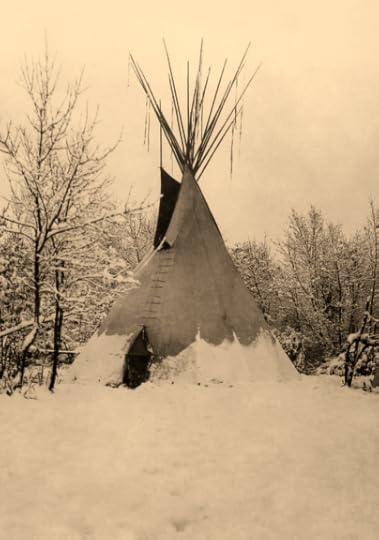
Winter Apsaroke, photo by Edward Curtis
native-people
23 likes
4 comments
Like
Comment

Brian
670 reviews87 followers
Follow
August 6, 2016
This is a dense book that deals with a lot of issues, and I'm not going to be able to cover them all here because I have limited space and my reviews are long enough anyway. So, I'm not going go into depth on Native American history leading up to the 1970s, the legal basis for depriving the Native Americans of their land (though see Conquest by Law for an in-depth treatment on that), the romanticization of long-dead Indians while ignoring modern Indians' struggle for justice, and so on. They are in there, though.
The main interest I had in this book was in the religious analysis, which probably isn't surprising considering the title, so the initial modern history lesson in the beginning of the book kind of threw me off. But after setting the stage, it veers off and starts talking about Christianity in relation to Native religions, and that's where my interest really picked up.
G-d Is Red has a pretty uniformly negative view of Christianity. It starts off talking about a difference between religions with a temporal focus, like Christianity's view of the creation of the world, its doctrine as a series of revealed truths which resonate down to the present day, and its teleological and eschatological focus, and religions with a spacial focus that have a specific land where its practitioners live and specific holy places where the rites are practiced, like the old sacrificial cult of the Temple in pre-exilic Israelite religion--and I'm not just inserting that for egotistical reasons, because Deloria does make a connection that Judaism is one of the few mainstream religions that still has a lot of the characteristics of a tribal religion.
Deloria heavily criticizes this temporal focus, both for its supposed tendency to make Christians focus on the concerns of the next world at the expense of this one, and for its lack of any tie to the land along with the focus on stewardship or subduing the earth, leading to a lack of ecological awareness and directly contributing to the upcoming ecological catastrophe.
The main criticism, though, is about Christianity's universality. If Christianity is universal and is the true and correct religion, then how come its history is so filled with horrors? And if all those horrors were committed by people who aren't real Christians, then where are the real Christians and why didn't they stand up and try to stop all the murderers, or at least to speak out? This is an old criticism and dealt with extensively elsewhere, but what I liked was Deloria's mention that in claiming no innate cultural attributes, Christianity is vulnerable to taking on attributes of whatever culture it's practiced in. It's very easy to see the American culture in megachurches, television faith healers, stadium prayer revivals, and Christian rock, but a more nefarious example is how Christianity has been used to justify bigotry, torture, murder, slavery, and genocide throughout history. It's supposed to be transformative, but there's little evidence of that. In his words, Christianity can describe ideal behavior but cannot produce it.
The book then contrasts tribal religion with that, saying that since tribal religion is focused on the needs of a particular people and isn't generalizable outside that group, it doesn't produce the religious animus that Christianity does. Since the important point of the religion is the daily practice and the tribal rituals, and not the absolute truth of its claims about the past, increasing scientific discoveries do not automatically produce the somewhat-uncomfortable attitude that Christianity has with modernity. Tribes might war, and they might conquer each other, but they wouldn't try to impose their own religion on each other because the very idea makes no sense. The other tribe has different ancestors, so the idea of imposing on them other practices wouldn't even make sense. And the tie of tribes to particular land means that Native Americans are the spiritual owners of America, which is part of why the image of the Indian is evoked so often in ecological terms.
There are some obvious problems here, of course. Plenty of Christians are concerned with daily practice, plenty of Christians manage to maintain their religion while treating its claims as metaphors, and Deloria himself mentions that modern Native Americans with a more Western worldview are concerned about the scientific truth behind the claims of their ancestral religions. Some of these objections are dealt with, but in the interests of space I'll just mention that and go on.
I admit I've had some of these thoughts before, but in the modern world it's harder to talk about ancestral religions without dealing with the modern concept of race, and that leads you to creepy neopagan groups that bristle when black people want to join or the various neo-Nazis that give Asatru a bad name. The lack of community in Western culture is something that a lot of sociologists have noticed in books like Bowling Alone: The Collapse and Revival of American Community, though. I admit that one of the best places I ever lived was in a small mountain town in Japan, where our students' grandparents farmed rice and the graves of their ancestors dotted the mountainsides around the town, but modern global capitalism is engaged in a relentless assault on the ability to live that kind of lifestyle with its requirements that everyone be always ready to learn a totally new skill and relocate to somewhere far away from friends and family. And it might have just as likely ended up with me being shut out of community life for being an outsider. At least if I'm experiencing modern alienation, I can be assured that my neighbors and I are together in our apartness.
There are some major flaws in the book, though.
Another one is how Deloria talks about tribal religions being designed for a particular people inhabiting a particular place, and not having the kind of universal claims that Christianity does, but then he treats them as some kind of block group with universal characteristics set up in contrast to Christianity. As one example, the Aztecs went out and conquered other tribes around them, and they did subject those tribes to their religion by demanding members of those tribes be surrended for their sacrificial rituals. That's part of why Cortés had such an easy time of it, because all the surrounding tribes hated the Aztecs so much that they were happy to help anyone who might be trouble. I don't know enough about the breadth of Native religions to provide an accurate commentary, but considering the hundreds of tribes that existed I wouldn't be surprised if it were possible to find counterpoints to all of Deloria's points just by looking hard enough even if the general shape of his arguments is correct.
G-d Is Red is thought-provoking and dense, but I'm not really sure that it's that deep. It's also quite dated in its analysis of modern culture: the comments on the shape of women's rights and the loss of Christianity's influence look hilarious in light of the Republican Party's hatred of all that is good and pure, for example. Nonetheless, I'm glad I saw a recommendation to read it when I went to the National Museum of the American Indian, and if any of arguments within interest you I'd suggest that you read it too.
history nonfiction north-america
...more
18 likes
Like
Comment

Michaela Wood
31 reviews25 followers
Follow
April 22, 2008
I really was amazed with the things Vine Deloria Jr. can tell you that you never thought to ask. His writing is a strong call to the kind of self-analysis that helps white Americans to grow up, examine their values, and shamed-faced ask the questions that have never occurred to them before. I feel like I could listen to these thoughts for the rest of my life on loop and only be the better for it.
15 likes
3 comments
Like
Comment

Plagued by Visions
218 reviews819 followers
Follow
December 29, 2023
It uproots western theology with totality of wisdom. An astounding feat.
11 likes
Like
Comment

Katherine
2 reviews
Follow
October 6, 2007
I put this on the back burner, as it's not exactly "read for 10 minutes before bed" material, but it has given me many new things to think about. So far, his main point has been the difference between an emphasis on history and an emphasis on place. He argues that Native American religious belief is based on a strong connection to place, while many other belief systems emphasize history (especially Christianity, but he also mentions many other major religions). I'm pretty sure you could say the same for most indigenous belief systems. He argues that this greatly affects the ethical and moral behavior of the believers; Native American beliefs are more directed towards community, place, and current needs, while the rest of us are more directed towards moral codes that we usually don't feel a need to follow very closely. He believes that a return by Native Americans to their indigenous belief systems will help bring communities back together and work to heal some problems. At least that's what I've gathered from the first few chapters! In addition, one of the things that has really struck me is his statement that in this land (the US), God is red--ie, the indigenous belief system of all the land that we drive over, build houses, malls, and schools on, and generally foul up is that of its indigenous people. The rest of us are aliens! This book especially struck me on this point, as I picked it up at a bookstore on the Umatilla Reservation in Eastern Oregon and read it while in what was the homeland of the Nez Perce (until the white people decided it was choice territory and forced them into Idaho).
10 likes
1 comment
Like
Comment

Nathan
523 reviews4 followers
Follow
November 28, 2009
Angry and polemical. Deloria has some painfully valid points, but he throws the baby out with the bath water along with the tub, shampoo and shower curtain. In relegating all but native religion to a nightmarish Oral Roberts/Jerry Falwell bogeyman of conservative evangelicalism, he damns his own thesis which, ostensibly, calls for respect and mutual flexibility. I don't deny the horrors that American Christianity has brought upon the First Peoples, but I do resent Deloria's assumption that Christianity is merely the sum of its worst adherents.
franklin-library
10 likes
1 comment
Like
Comment
Jody
274 reviews
Follow
May 17, 2011
I really was expecting to hear the native view of God with stories from the various tribes. Instead it seemed to be an attack on Christian religions, and while I think there's a lot to be criticized about the way Christian religions are run, I could read that in any number of other books. I wanted a NATIVE view. I probably should have give this 1 star.
7 likes
3 comments
Like
Comment

Reiden
155 reviews7 followers
Follow
September 17, 2012
The view of religion presented in this book was unlike anything I have heard taught in school (or church). I started reading this book while taking a comparative religions class. I wish I would finished it before the class ended; it would have given me much more to discuss. For instance, in class we learned about the evolution of religion, and how religions naturally go through several stages, ending in a monotheistic savior-God style of religion... hmm. Deloria attacks this type of thinking and shows how academic religious studies have primarily been conducted with a bias towards Western religions.
The book also explores the strong relationship Natives Americans have with the geography in which they have lived, as well as the plant and animal kingdom they encounter. Their religions are meant to help people survive harmoniously with the land. Also, unlike Western religions, those of the Native Americas lack theological dogma. Deloria shows how this lack of theology created healthier societies that were able to survive sustainably for long periods of time.
While he doesn't come out and say one style of religion is better than the other, he does build a case against Western religion - Christianity in most cases. I don't think this book would be an enjoyable read for anyone who follows a strong Christian belief system. Having said this, I think it would be a great read for anyone who lives in the US, as it offers a deeper understanding of why Natives to this day value their ancestral land so dearly.
native-american
5 likes
Like
Comment

Steve Wiggins
Author 9 books92 followers
Follow
July 17, 2021
For those of us in North America (and likely South too), a residual guilt remains over our treatment of American Indians. It’s a guilt that can become consuming, but it is something we clearly must face. Not only the past, but the reprehensible treatment of these First Nations peoples continues to this day. While Vine Deloria’s classic deals mainly with religion, it is primarily about Indians and their lives. This is a book that has been on my reading list for years, and it disturbed me as much as I feared it would.
There are places for debate, of course, but Deloria shows (as noted elsewhere: Sects and Violence in the Ancient World) what Christianity looks like from the outside. It has become an imperialistic, unforgiving, nearly inhumane religion. Offering theological justification for genocide and environmental degradation, it has brought us to the precipice of global warming and uncontrolled pollution of our only home. Deloria indicates that the Indian way was more holistic and that it has the capacity to heal the world. Of course, the Christian narrative predominates.
It’s difficult to summarize this important book in the usual space I allow myself in these reviews. It is wide-ranging but focused. And it is applicable anywhere that native peoples have been displaced by Christian conquerors. Deloria had a strong theological background and could speak to this aspect eloquently. Reading the book in the early post-Trump years revealed that it was in many ways ahead of its time. I will be going back to this book again. Often.
4 likes
Like
Comment
Displaying 1 - 10 of 238 reviews
More reviews and ratings
==
세진님, 요청하신 <신은 붉다: 종교에 대한 원주민의 관점>(God Is Red: A Native View of Religion)에 대한 요약과 평론입니다.
<신은 붉다: 종교에 대한 원주민의 관점> 요약 및 평론
1. 요약: 공간의 종교 vs 시간의 종교
바인 델로리아 주니어(Vine Deloria Jr.)의 <신은 붉다>는 서구 기독교 문명의 근간을 이루는 세계관을 비판하고, 아메리카 원주민의 영성과 철학이 현대 사회의 위기를 해결할 대안임을 역설하는 선언적 저작이다. 저자는 인류의 종교적 태도를 크게 두 가지 범주인 <시간 중심적 종교>와 <공간 중심적 종교>로 구분한다.
시간 중심의 서구 기독교 기독교를 포함한 서구의 근대 사상은 역사를 선형적이고 목적론적인 과정으로 파악한다. 이 관점에서 신은 특정한 역사적 사건(성육신, 부활 등)을 통해 자신을 드러내며, 인간은 종말이라는 완성된 미래를 향해 나아가는 존재다. 이러한 시간 중심적 사고는 필연적으로 <진보>라는 개념을 낳았고, 이는 자연을 정복의 대상으로 보거나 타 문명을 미개한 과거의 단계로 치부하는 제국주의적 태도의 근거가 되었다.
공간 중심의 원주민 영성 반면 아메리카 원주민의 종교는 특정한 <장소>와 그곳에 깃든 생태적 관계를 핵심으로 한다. 신성함은 먼 과거의 역사적 사건이나 미래의 약속에 있는 것이 아니라, 지금 발을 딛고 서 있는 구체적인 땅과 그 안의 생명체들과의 관계 속에 존재한다. 원주민에게 땅은 소유할 수 있는 재화가 아니라, 인간과 상호작용하는 살아있는 유기체이며 도덕적 책임의 대상이다.
현대 사회의 위기와 원주민의 대안 델로리아는 서구 사회가 직면한 환경 파괴, 공동체 붕괴, 실존적 소외의 원인이 바로 이 <공간과의 단절>에 있다고 진단한다. 그는 기독교가 주장하는 보편적 진리가 실제로는 추상적 관념에 불과하며, 인류가 생존하기 위해서는 자신이 살고 있는 지역의 생태적 특성을 이해하고 존중하는 원주민식 <장소의 신학>으로 회귀해야 한다고 주장한다.
2. 평론: 땅의 회복을 향한 신학적 선언
<신은 붉다>는 단순히 원주민의 풍습을 소개하는 인류학 보고서가 아니다. 이는 서구 형이상학의 근간을 뒤흔드는 근원적인 철학적 투쟁이다. 델로리아의 논지는 오늘날 기후 위기와 포스트모더니즘의 혼란 속에서 더욱 강력한 설득력을 얻는다.
첫째, 세계관의 전복적 전환이다. 델로리아는 서구의 기독교적 직선 사관이 어떻게 생태적 재앙을 정당화했는지 날카롭게 파헤친다. <생육하고 번성하여 땅을 정복하라>는 명령이 시간의 흐름 속에서 기술적 진보와 결합했을 때, 지구는 한갓 자원 창고로 전락했다. 이에 반해 <공간>을 중심에 두는 그의 주장은 인간을 역사의 주역에서 생태계의 일원으로 재배치한다. 이는 인간 중심주의를 탈피하려는 현대 생태 철학의 흐름과 궤를 같이한다.
둘째, 구체성과 보편성의 대결이다. 저자는 기독교의 보편주의가 실제로는 유럽 중심의 지역적 신념을 강요한 것에 불과하다고 비판한다. 원주민의 종교는 보편적 교리를 전파하려 하지 않는다. 대신 자신이 뿌리 내린 땅의 고유한 신성함에 집중한다. 이러한 <지역적 특수성>의 강조는 글로벌 자본주의가 초래한 획일화된 삶의 양식에 대한 강력한 저항 담론이 된다.
셋째, 정체성과 회복의 정치학이다. 이 책은 1960~70년대 '레드 파워(Red Power)' 운동의 지적 토대가 되었다. 델로리아는 원주민들이 백인의 기독교를 수용함으로써 자신들의 정체성을 상실했음을 지적하고, 전통적 가치로의 회귀가 단순한 과거 집착이 아닌 미래를 향한 생존 전략임을 명시한다. 그는 원주민의 권리 주장을 정치적 차원을 넘어 우주적 질서의 회복이라는 차원으로 격상시켰다.
결론적으로, <신은 붉다>는 인류가 지구라는 공간에서 어떻게 공존해야 하는가에 대한 엄중한 질문이다. 저자의 문체는 신랄하고 공격적이지만, 그 이면에는 소멸해가는 대지에 대한 깊은 애정과 책임감이 서려 있다. 비록 서구 문명에 대한 비판이 다소 이분법적이라는 지적을 받을 수 있으나, 그가 제시한 <장소의 신성함>은 뿌리 잃은 현대인들에게 우리가 돌아가야 할 곳이 하늘이 아니라 바로 우리가 딛고 선 이 땅임을 일깨워준다.
세진님, 이 요약과 평론이 원하셨던 깊이를 담고 있는지 궁금합니다. 혹시 이 책의 특정 챕터나 델로리아 주니어의 다른 저작에 대해서도 더 자세히 알고 싶으신가요?
세진님, 요청하신 <신은 붉다>(God Is Red)의 각 장별 요약입니다.
제1장: 인디언 운동 (The Indian Movement)
1960년대와 70년대에 분출된 원주민 권리 운동의 정치적, 사회적 배경을 다룬다. 단순히 권익 주장을 넘어, 원주민들이 자신들의 정체성을 재발견하고 백인 사회의 동화 정책에 저항하기 시작한 과정을 설명한다. 이 운동은 원주민들이 자신의 문화적 뿌리와 영적 유산을 회복하려는 거대한 흐름의 시작이었으며, 법적·정치적 투쟁이 어떻게 종교적 각성으로 이어졌는지 분석한다.
제2장: 미국적 상상력 속의 인디언 (The Indians of the American Imagination)
백인 주류 사회가 만들어낸 원주민에 대한 왜곡된 이미지와 고정관념을 비판한다. 대중 매체와 학문이 원주민을 '고귀한 야만인' 혹은 '사라져가는 종족'으로 박제화했음을 지적한다. 이러한 허구적 상상력은 실제 원주민의 삶과 목소리를 지우는 결과를 초래했다. 저자는 백인들이 만든 인디언 상(像)을 해체하고 실제 원주민의 실존적 현실을 직시할 것을 요구한다.
제3장: 종교적 도전 (The Religious Challenge)
기독교가 현대 사회의 도덕적, 영적 위기에 적절한 답을 주지 못하고 있음을 비판한다. 서구 기독교는 제도화와 교리 수호에 매몰되어 인간과 자연의 근원적 관계를 상실했다. 원주민의 영성은 단순한 유물이 아니라 기독교의 한계를 극복할 수 있는 실질적인 대안으로 제시된다. 기독교 중심의 종교 지형에 원주민적 가치가 던지는 도전장을 논의한다.
제4장: 시간과 공간 안에서의 사고 (Thinking in Time and Space)
서구의 <시간 중심적> 사고와 원주민의 <공간 중심적> 사고를 극명하게 대비시킨다. 기독교는 역사의 선형적 흐름과 종말을 중시하지만, 원주민은 구체적인 <장소>와 그 안의 관계를 중시한다. 시간 중심적 사고는 자연 정복과 제국주의를 정당화했으나, 공간 중심적 사고는 생태적 책임과 상호 존중의 토대가 된다. 이 철학적 차이가 두 문명의 결정적 분기점임을 역설한다.
제5장: 창조의 문제 (The Problem of Creation)
기독교의 일회적·추상적 창조론과 원주민의 장소 기반 창조 설화를 비교한다. 기독교는 인류 전체를 아우르는 보편적 창조를 주장하지만, 원주민에게 창조는 특정 지형과 공동체가 연결된 구체적 사건이다. 이러한 차이는 인간이 자연을 대하는 태도를 결정한다. 원주민의 창조관은 인간을 만물의 영장이 아닌, 특정 생태계의 책임 있는 일원으로 위치시킨다.
제6장: 역사의 개념 (The Concept of History)
서구의 역사는 승리자의 기록이자 목적론적인 진보의 과정으로 그려진다. 반면 원주민에게 역사는 특정 장소에서 일어난 사건들의 순환과 기억의 보존이다. 저자는 기독교적 역사관이 타 문명을 배제하고 환경을 파괴하는 논리로 작용했음을 비판한다. 추상적이고 선형적인 역사에서 벗어나, 살아있는 땅의 기억을 회복하는 것이 진정한 역사의 의미임을 강조한다.
제7장: 역사의 공간적 문제 (The Spatial Problem of History)
역사적 사건이 발생한 <장소>의 중요성을 망각한 서구 신학을 비판한다. 기독교는 성지라는 개념을 추상화하거나 과거의 유물로 취급하지만, 원주민에게 땅은 지금도 신성함이 발현되는 현재적 공간이다. 역사가 공간과 분리될 때 인간은 뿌리 뽑힌 존재가 된다. 특정 장소에 얽힌 종교적 경험이 어떻게 공동체의 정체성과 도덕적 지침을 형성하는지 고찰한다.
제8장: 종교의 기원 (Origin of Religion)
종교가 추상적인 계시나 교리에서 시작된 것이 아니라, 인간이 특정 환경과 상호작용하며 겪은 구체적인 경험에서 기원했음을 논한다. 서구 종교학이 종교의 기원을 진화론적 단계로 파악하는 것을 비판한다. 원주민에게 종교는 자연의 리듬과 장소의 부름에 대한 인간의 직접적인 응답이다. 이러한 원초적 관계의 회복이 종교의 진정한 본질임을 주장한다.
제9장: 자연적 민족과 혼성적 민족 (Natural and Hybrid Peoples)
자신이 살아가는 땅과 유기적 관계를 맺는 <자연적 민족>과, 인위적 이데올로기나 기술로 결합한 <혼성적 민족>을 구분한다. 원주민은 전자, 서구 문명은 후자에 해당한다. 혼성적 민족은 땅과의 유대감이 약해 파괴적 성향을 띠기 쉽다. 저자는 현대 사회가 겪는 소외와 불안의 원인이 자연적 뿌리를 상실한 혼성적 구조에 있음을 지적한다.
제10장: 죽음과 종교 (Death and Religion)
죽음을 사후 세계로의 이동이나 심판의 과정으로 보는 기독교적 시각과, 생명의 순환과 땅으로의 회귀로 보는 원주민의 시각을 대조한다. 서구 종교는 죽음에 대한 공포를 기반으로 내세를 약속하지만, 원주민 영성은 죽음을 자연스러운 질서의 일부로 수용한다. 이는 현재의 삶을 어떻게 살 것인가에 대한 태도로 이어진다. 죽음관의 차이가 삶의 윤리를 어떻게 바꾸는지 분석한다.
제11장: 인간의 인격 (Human Personality)
서구적 인격 개념이 개인의 독립성과 자율성에 치중되어 있음을 비판한다. 원주민에게 인간의 인격은 공동체와 자연, 그리고 특정 장소와의 관계 속에서 비로소 완성된다. 고립된 자아는 진정한 인격을 형성할 수 없으며, 타 존재와의 상호의존성을 자각할 때 인간은 온전해진다. 관계 중심적인 원주민의 인간관이 현대의 개인주의적 소외를 치유할 열쇠임을 제시한다.
제12장: 집단 (The Group)
부족(Tribe)이라는 공동체 단위가 갖는 종교적·사회적 의미를 탐구한다. 서구의 교회 조직은 자발적 가입과 교리 공유를 기반으로 하지만, 부족은 혈연과 땅, 공유된 경험으로 묶인 유기적 집단이다. 이러한 집단성은 개인을 보호하고 삶의 의미를 제공하는 강력한 토대가 된다. 부족적 연대감이 어떻게 현대의 원자화된 사회에 대안적인 공동체 모델을 제시할 수 있는지 논한다.
제13장: 기독교와 현대 미국 문화 (Christianity and Contemporary American Culture)
기독교가 미국 자본주의 및 소비자 문화와 결합하여 본래의 영성을 잃어버렸음을 신랄하게 비판한다. 종교가 사회의 도덕적 나침반 역할을 하기보다, 기존 질서를 정당화하고 위로를 판매하는 상품이 되었음을 지적한다. 기독교의 쇠퇴는 그것이 현대인의 삶과 땅의 현실로부터 유리되었기 때문이다. 미국 문화의 공허함 이면에 있는 기독교적 세계관의 파산을 진단한다.
제14장: 부족 종교와 현대 미국 문화 (Tribal Religions and Contemporary American Culture)
소외된 부족 종교의 가치가 오히려 현대 미국의 공허함을 메울 수 있는 잠재력이 있음을 논한다. 자연과 조화를 이루고 생태적 균형을 중시하는 원주민의 지혜는 환경 위기 시대의 필수적인 가치다. 주류 문화가 원주민 영성을 단순히 장식품으로 소비하는 것을 경계하며, 그들의 가치관이 사회 구조의 근본적인 변화를 이끌어낼 수 있는 가능성을 탐색한다.
제15장: 원주민 세계와 기독교 역사 (The Aboriginal World and Christian History)
기독교의 보편 역사관이 원주민의 독자적인 역사와 세계관을 어떻게 억압하고 지워왔는지 분석한다. 서구의 선교 역사는 문명화라는 미명 아래 원주민의 땅과 영혼을 침탈한 과정이었다. 저자는 기독교 역사의 폭력성을 고발하며, 이제는 원주민의 시각에서 세계사를 재구성해야 한다고 주장한다. 억압받았던 원주민의 세계관이 역사의 전면에 나서야 할 때임을 강조한다.
제16장: 신성한 장소와 도덕적 책임 (Sacred Places and Moral Responsibility)
신성한 장소에 대한 존중이 인간의 도덕적 행위와 직결됨을 역설한다. 땅을 신성하게 여기는 마음은 그곳을 함부로 파괴하지 않는 윤리적 책임을 낳는다. 서구의 추상적 도덕론은 구체적인 실천력이 부족하지만, 장소 중심의 원주민 윤리는 생태적 보존과 직결된다. 우리가 발 딛고 있는 땅에 대한 신성함을 회복하는 것이 지구를 구하는 유일한 길임을 주장한다.
제17장: 오늘날의 종교 (Religion Today)
미래의 종교는 더 이상 추상적인 교리나 먼 미래의 구원에 머물러서는 안 된다고 결론짓는다. 인간과 대지, 모든 생명체와의 관계를 복원하는 <지구의 영성>이 필요하다. 원주민의 전통은 과거의 유산이 아니라 미래의 생존 전략이다. 인류가 생존하기 위해서는 시간 중심의 오만함을 버리고, 공간 중심의 겸손한 지혜로 돌아가야 한다는 마지막 경고와 희망을 전한다.
세진님, 각 장의 핵심을 짚어보았습니다. 특히 공간과 시간의 대비는 이 책을 관통하는 가장 중요한 주제이니 유념해서 보시면 좋을 듯합니다. 더 궁금하신 점이 있다면 말씀해 주세요.
세진님 요청에 따라 <God Is Red>의 각 장을 약 100단어 정도로 핵심만 정리했습니다.
<God Is Red> 장별 요약
Chapter 1 – The Indian Movement
이 장에서 Vine Deloria Jr.는 1960–70년대 미국 원주민 운동의 배경을 설명한다. 그는 미국 사회가 원주민을 “사라진 민족”처럼 취급했지만 실제로는 정치적·문화적 저항이 계속되어 왔다고 주장한다. 특히 토지 권리, 자치권, 종교 자유 문제는 단순한 정치 문제가 아니라 세계관의 문제라고 본다. 원주민 운동은 단지 권리 회복이 아니라 자신들의 종교와 삶의 방식을 회복하려는 시도였다. 따라서 원주민 종교는 민속이나 과거의 유물이 아니라 현재 살아 있는 철학이며, 현대 사회가 배워야 할 지혜를 포함한다고 그는 주장한다.
Chapter 2 – The Indians of the American Imagination
이 장은 미국 문화 속 “상상된 인디언” 이미지를 분석한다. 델로리아는 문학, 영화, 역사 서술에서 원주민이 두 가지 극단적 이미지로 묘사된다고 말한다. 하나는 “야만적 적”, 다른 하나는 “고귀한 야만인”이다. 두 이미지 모두 실제 원주민 사회를 왜곡한다. 이런 상상은 원주민을 역사 속에서 사라질 존재로 만들며, 실제 정치적 요구를 무시하게 만든다. 그는 특히 학계와 인류학도 이런 고정관념을 강화했다고 비판한다. 결과적으로 미국 사회는 원주민을 이해하기보다 자신들의 문화적 상상 속 인디언을 소비해 왔다.
Chapter 3 – The Religious Challenge
이 장에서 델로리아는 원주민 종교가 서구 종교에 제기하는 도전을 설명한다. 서구 종교는 교리와 믿음을 중심으로 구성되지만 원주민 종교는 삶의 방식과 공동체 관계 속에서 나타난다. 따라서 종교는 신념 체계라기보다 자연과 인간 사이의 조화다. 그는 기독교 선교가 원주민 종교를 미신으로 취급하며 파괴해 왔다고 비판한다. 그러나 원주민 전통은 자연과 공동체를 중심으로 하는 종교적 지혜를 유지하고 있으며, 이것이 현대 문명에 중요한 대안을 제공할 수 있다고 주장한다.
Chapter 4 – Thinking in Time and Space
이 장은 책 전체의 핵심 개념을 제시한다. 델로리아는 종교를 “시간 중심”과 “공간 중심” 사고로 구분한다. 기독교는 역사적 사건과 구원의 시간적 서사에 집중한다. 반면 원주민 종교는 특정 장소와 자연 환경에 뿌리를 둔다. 신성은 시간 속 사건이 아니라 땅과 공간 속에서 경험된다. 그는 서구 문명이 시간 중심 사고 때문에 자연과 장소의 의미를 잃었다고 주장한다. 이 구분은 이후 장에서 역사, 창조, 사회 조직 등을 분석하는 핵심 틀이 된다.
Chapter 5 – The Problem of Creation
이 장에서는 창조 개념을 비교한다. 기독교 전통은 세계가 특정 순간에 창조되었다고 보는 반면, 많은 원주민 전통에서는 창조가 지속적인 과정으로 이해된다. 자연은 단순히 인간을 위해 만들어진 대상이 아니라 살아 있는 관계망이다. 델로리아는 서구 창조 신학이 인간 중심주의를 강화했다고 비판한다. 반면 원주민 창조 이야기는 인간이 자연 질서의 일부라는 인식을 강조한다. 그는 이러한 창조 이해가 환경과 인간의 관계를 근본적으로 다르게 만든다고 설명한다.
Chapter 6 – The Concept of History
이 장에서 그는 서구의 역사 개념을 비판한다. 서구 문명은 역사를 직선적 발전 과정으로 이해하며, 이것이 진보 이념과 결합했다고 본다. 그러나 원주민 사회에서는 역사보다 전통과 장소의 지속성이 더 중요하다. 델로리아는 서구 역사관이 다른 문화를 “발전 단계”로 평가하게 만든다고 주장한다. 이러한 역사관은 식민주의를 정당화하는 역할도 했다. 그는 역사 자체보다 공동체 기억과 장소의 경험이 더 중요한 의미를 가진다고 강조한다.
Chapter 7 – The Spatial Problem of History
이 장은 역사와 공간의 관계를 더 깊이 분석한다. 서구 사회는 역사를 중심으로 사고하기 때문에 장소의 의미를 잃었다. 그러나 원주민 사회에서는 특정 산, 강, 평원이 신성한 의미를 가진다. 이러한 장소는 단순한 지리적 공간이 아니라 공동체 기억과 종교적 경험이 축적된 곳이다. 델로리아는 역사 중심 사고가 토지 박탈을 정당화했다고 본다. 반면 공간 중심 사고는 인간과 자연 사이의 윤리적 책임을 강조한다.
Chapter 8 – Origin of Religion
이 장에서는 종교의 기원을 다룬다. 서구 학계는 종교를 원시적 미신에서 발전한 것으로 설명해 왔다. 델로리아는 이런 진화론적 설명을 비판한다. 그는 종교가 인간이 자연과 관계를 맺는 방식에서 비롯된다고 본다. 원주민 종교는 자연 세계와의 경험에서 발전했으며, 이는 철학적으로도 깊은 의미를 가진다. 따라서 종교를 단순한 문화 단계로 보는 서구 학설은 편견이라고 주장한다.
Chapter 9 – Natural and Hybrid Peoples
이 장에서는 인간과 자연의 관계를 설명한다. 델로리아는 “자연적인 인간”과 “혼합된 인간”이라는 개념을 사용한다. 자연적인 인간은 자연 질서 속에서 살아가는 존재이며, 원주민 사회가 여기에 가깝다고 본다. 반면 현대 문명은 인간과 자연을 분리하는 세계관을 만들었다. 이러한 분리는 생태적 위기를 낳는다. 그는 인간이 자연과 다시 연결되지 않으면 문명 자체가 위기에 빠질 것이라고 경고한다.
Chapter 10 – Death and Religion
이 장은 죽음에 대한 종교적 이해를 비교한다. 기독교는 죽음을 이후 세계의 시작으로 보는 경향이 강하다. 반면 많은 원주민 전통에서는 죽음이 자연 질서 속 순환의 일부다. 죽은 사람들은 공동체 기억과 자연 세계 속에서 계속 존재한다. 델로리아는 이러한 관점이 인간의 삶을 자연과 연결한다고 설명한다. 죽음은 두려운 종말이 아니라 관계의 변화다.
Chapter 11 – Human Personality
이 장에서는 인간 존재에 대한 이해를 다룬다. 서구 종교는 개인 영혼을 중심으로 인간을 이해하는 경향이 있다. 반면 원주민 사회에서는 인간을 공동체와 자연 관계 속 존재로 본다. 개인 정체성은 사회적 관계와 자연 환경 속에서 형성된다. 델로리아는 이러한 관점이 인간 책임을 더 넓게 이해하게 만든다고 주장한다.
Chapter 12 – The Group
이 장에서는 공동체의 중요성을 강조한다. 원주민 사회에서는 개인보다 공동체가 더 중요한 단위다. 공동체는 정치 조직이 아니라 종교적 관계망이다. 공동체 의식은 자연과 조상, 미래 세대까지 포함한다. 델로리아는 현대 개인주의가 사회적 책임을 약화시켰다고 비판한다. 원주민 전통은 공동체 중심 윤리를 통해 더 균형 잡힌 사회를 만든다고 본다.
Chapter 13 – Christianity and Contemporary American Culture
이 장에서 그는 현대 미국 문화와 기독교의 관계를 분석한다. 그는 기독교가 미국 사회에서 점점 세속화되었지만 여전히 문화적 영향력을 가지고 있다고 본다. 그러나 그 종교적 메시지는 자주 정치적 권력과 결합한다. 델로리아는 기독교가 환경 문제나 원주민 문제에 충분히 대응하지 못했다고 비판한다.
Chapter 14 – Tribal Religions and Contemporary American Culture
이 장에서는 원주민 종교가 현대 사회에 줄 수 있는 교훈을 설명한다. 원주민 종교는 자연과 공동체 중심 세계관을 제공한다. 델로리아는 현대 환경 위기와 사회적 분열을 해결하는 데 이러한 전통이 중요한 통찰을 줄 수 있다고 주장한다.
Chapter 15 – The Aboriginal World and Christian History
이 장은 원주민 세계와 기독교 역사 사이의 충돌을 다룬다. 기독교 선교와 식민주의는 원주민 문화와 종교를 파괴하는 역할을 했다. 그러나 그는 원주민 전통이 여전히 살아 있으며 새로운 종교적 대화를 가능하게 한다고 본다.
Chapter 16 – Sacred Places and Moral Responsibility
이 장에서는 신성한 장소의 의미를 설명한다. 특정 장소는 공동체 역사와 종교 경험이 결합된 곳이다. 델로리아는 이러한 장소를 보호하는 것이 윤리적 책임이라고 주장한다. 토지 보호는 단순한 환경 문제를 넘어 종교적 의무다.
Chapter 17 – Religion Today
마지막 장에서 그는 현대 종교의 방향을 논한다. 델로리아는 종교가 교리 논쟁을 넘어 인간과 자연 관계를 재정립해야 한다고 주장한다. 미래 종교는 자연과 장소를 존중하는 세계관을 포함해야 한다. 그는 원주민 종교가 이러한 새로운 종교적 방향에 중요한 역할을 할 수 있다고 본다.
원하시면 다음도 정리해 드리겠습니다.
1️⃣ 이 책의 핵심 개념 10개 (공간 종교, 역사 종교 등)
2️⃣ 기독교 신학자들의 이 책에 대한 비판과 평가
3️⃣ 현대 생태철학에서 이 책의 위치
4️⃣ 세진님이 읽으신 F. David Peat의 사상과 이 책의 공통점 (이 부분이 매우 흥미롭습니다).
<한국어>
원주민 종교와 불교는 겉보기에는 많이 다릅니다. 하나는 특정 땅과 조상, 공동체에 깊이 묶여 있고, 다른 하나는 인도에서 시작되어 아시아 전역으로 퍼진 성찰적 전통입니다. 그런데 조금 깊이 들어가면 둘 사이에는 꽤 중요한 <공명>이 있습니다. 다만 <같다>기보다 <서로 다른 길에서 만나는 지점이 있다>고 보는 편이 더 정확합니다.
가장 큰 공통점 하나는 <인간을 세계의 주인으로 보지 않는다는 점>입니다. 많은 원주민 종교에서는 인간이 땅, 강, 산, 동물, 조상, 계절과 관계를 맺는 존재입니다. 불교에서도 인간은 독립적 실체가 아니라 인연 속에 잠정적으로 성립하는 존재입니다. 원주민 종교가 “우리는 땅과 떨어져 살 수 없다”고 말한다면, 불교는 “우리는 모든 존재와 조건에 의존해 잠시 성립한다”고 말합니다. 표현은 다르지만, 둘 다 인간 중심주의를 약화시킵니다.
둘째, <관계론적 세계관>입니다. 원주민 종교에서는 존재란 관계망 안에서 이해됩니다. 조상과 후손, 인간과 비인간, 공동체와 장소가 분리되지 않습니다. 불교의 연기 역시 독립적 자아나 독립적 사물이 없다는 점을 강조합니다. 물론 연기는 철학적 개념이고, 원주민 종교의 관계성은 더 생활세계적이고 의례적입니다. 그래도 “홀로 존재하는 것은 없다”는 통찰은 매우 가깝습니다.
셋째, <겸손>입니다. 서구 근대 문명은 자연을 분석·지배·개발의 대상으로 보는 경향이 강했는데, 원주민 종교와 불교는 대체로 그런 태도에 제동을 겁니다. 원주민 전통에서는 사냥, 채집, 농사, 의례 모두가 자연에 대한 예의와 균형을 전제로 합니다. 불교에서는 탐욕이 괴로움의 원인이며, 집착과 지배욕은 무지를 심화시킵니다. 둘 다 “많이 소유하고 많이 통제할수록 더 낫다”는 생각을 의심합니다.
넷째, <삶의 방식으로서의 종교>라는 점입니다. 원주민 종교는 대체로 신조를 암송하는 체계라기보다, 어떻게 살고 어떻게 먹고 어떻게 기억하고 어떻게 죽은 이를 대할 것인가의 문제입니다. 불교도 본래는 단순한 신앙 고백이 아니라 수행과 생활의 길입니다. 자비, 절제, 마음챙김, 의례, 공동체 규범이 중요합니다. 다시 말해 둘 다 종교를 머릿속의 믿음만으로 환원하지 않습니다.
다섯째, <고통을 다루는 방식>입니다. 원주민 종교는 상실, 질병, 죽음, 계절 변화, 공동체 위기를 우주적 관계의 틀 안에서 이해하려 합니다. 불교는 고통을 존재의 기본 조건으로 직시하고, 그것이 집착과 무지, 조건적 발생과 어떻게 연결되는지 탐구합니다. 둘 다 고통을 단지 제거해야 할 사고로만 보지 않고, 삶의 깊은 질서를 배우는 자리로 보게 합니다.
여섯째, <의례와 반복의 중요성>입니다. 원주민 종교에서 춤, 노래, 계절 의례, 장소 방문은 세계와 관계를 다시 맞추는 행위입니다. 불교에서도 예불, 염불, 좌선, 공양, 순례는 단순한 형식이 아니라 마음과 세계를 재정렬하는 실천이 됩니다. 둘 다 의례를 미신으로만 보지 않고 인간을 바르게 놓는 기술로 이해할 수 있습니다.
하지만 차이도 매우 중요합니다.
첫째 차이는 <장소성>입니다. 많은 원주민 종교는 아주 구체적인 땅, 강, 산, 조상사와 결합되어 있습니다. 어느 장소를 떠나면 종교 자체도 큰 상처를 입습니다. 반면 불교는 비교적 이동 가능한 전통입니다. 물론 불교에도 성지가 있지만, 불교는 근본적으로 특정 민족이나 특정 땅에만 묶인 종교는 아닙니다. 이 점에서 원주민 종교는 더 <토지-구체적>이고, 불교는 더 <이동 가능하고 번역 가능한> 전통입니다.
둘째 차이는 <자아 이해>입니다. 불교는 무아를 매우 강하게 말합니다. 집착하는 “나”는 실체가 없고, 그것을 통찰하는 것이 해탈의 핵심입니다. 원주민 종교는 꼭 이런 식의 무아론을 전개하지는 않습니다. 오히려 개인은 조상, 씨족, 동물, 장소와 연결된 존재로서 정체성을 갖는 경우가 많습니다. 즉 둘 다 관계적이지만, 불교는 형이상학적으로 자아 해체 쪽이 더 강하고, 원주민 종교는 관계적 정체성 쪽이 더 강합니다.
셋째 차이는 <역사관과 해탈관>입니다. 불교는 윤회, 업, 해탈, 깨달음 같은 구도론을 발전시켰습니다. 원주민 종교는 보통 그런 보편 철학 체계를 세우기보다, 공동체와 땅의 조화, 조상과의 연속성, 의례적 균형에 더 무게를 둡니다. 불교는 내면 수양의 체계가 더 정교하고, 원주민 종교는 공동체적·생태적 균형이 더 전면에 나옵니다.
세진님 관심과 연결해서 말하면, 원주민 종교와 불교가 만나는 가장 중요한 지점은 아마 이것입니다. <세계는 정복의 대상이 아니라 관계의 장이라는 생각>입니다. 그리고 둘 다 인간의 오만을 줄이고, 존재를 더 넓은 관계 속에서 보게 합니다. 이 점은 생태위기, 식민주의 비판, 근대 문명 비판과도 깊이 연결됩니다.
아주 짧게 압축하면 이렇습니다.
<비슷한 점>
원주민 종교와 불교는 모두 인간 중심주의를 약화시키고, 관계·겸손·의례·조화·절제를 중시합니다.
<다른 점>
원주민 종교는 더 땅과 조상과 공동체에 뿌리박혀 있고, 불교는 더 철학적·수행적·보편 전파 가능한 전통입니다.
그래서 둘은 같은 종교는 아니지만, <근대 서구 문명이 잃어버린 감각을 서로 다른 방식으로 보존해 온 두 전통>이라고 말할 수 있습니다.

댓글 없음:
댓글 쓰기